





Aaron Philip Clark shared their story and experiences with us recently and you can find our conversation below.
Good morning Aaron Philip, it’s such a great way to kick off the day – I think our readers will love hearing your stories, experiences and about how you think about life and work. Let’s jump right in? What do the first 90 minutes of your day look like?
The start of my day is somewhat uneventful and routine, which I prefer. I get dressed and drive over to the gym, where I train in either boxing or Muay Thai.
Can you briefly introduce yourself and share what makes you or your brand unique?
My name is Aaron Philip Clark, and I’m a USA Today Bestselling novelist, screenwriter, professor, and host of The Culture Point Podcast. I write fiction that explores themes of race, justice, identity, and redemption, often set against the moody backdrop of Los Angeles. I’ve had the pleasure of collaborating on novels with entertainment mogul Curtis “50 Cent” Jackson and renowned civil rights attorney Ben L. Crump.
Great, so let’s dive into your journey a bit more. What breaks the bonds between people—and what restores them?
What often breaks the bond between people is a breach of trust. Trust is essential in any relationship, and a relationship that isn’t built on a foundation of trust will inevitably break. In both my business and personal life, I prefer working with individuals who possess integrity, communicate honestly, and are transparent. That isn’t always easy when dealing with people in the entertainment industry, as relationships are often transactional in nature. This means people rarely tell you exactly how they feel about you or their work, unless they believe they can gain something from it. I’m fortunate that the people I interact with the most, especially within the publishing industry, are honest and comfortable being open with me, which is essential for me to trust an individual fully. I would much rather contend with honesty than have someone be inauthentic in an effort to spare my feelings.
Was there ever a time you almost gave up?
A few times, I have doubted my writing journey. It may sound cliché, but trying to make a living as an artist isn’t easy. I worked as an educator for years, mostly as an adjunct professor, which meant teaching at multiple colleges and universities. I kept writing but couldn’t gain much traction, and later I joined the LAPD. After my brief time in law enforcement, I realized my true calling was to write, so I dedicated my time and energy to pursuing that goal. That involved investing in myself and writing more than I ever had before. I networked, reached out to other writers I admired, and started attending writing conferences, where I eventually met and signed with an agent to represent my novel, Under Color of Law, the first Detective Trevor Finnegan mystery/thriller.
I think our readers would appreciate hearing more about your values and what you think matters in life and career, etc. So our next question is along those lines. Is the public version of you the real you?
I’m not sure I’ve developed a ‘public version.’ What you see is genuinely who I am, regardless of the setting. I don’t share much on social media that isn’t related to writing and publishing. Personally, I’ve never thought that social media is the best place for debates or real conversations. There’s an element of artificiality online and on social media, and while I may show up as the real me, the people I’m interacting with might not be their authentic selves. If people meet me at book signings or attend a course I’m teaching, I aim to be authentic. Otherwise, if I can’t be myself, what’s the point of participating?
Okay, we’ve made it essentially to the end. One last question before you go. What will you regret not doing?
In some instances, taking the easier route would have meant remaining in the corporate world, where I could’ve made far more money earlier in life than working as an educator and writer. However, I know with certainty that I would’ve been miserable. I recall reading that one of my favorite authors, Walter Mosley, was working in the tech industry. I recall he was a computer programmer. Mind you, this was the late 1980s and early 90s, and he recounted how he would often discuss books and other topics with his coworkers that he found interesting. However, it reached a point where the ‘water cooler’ talk was all that interested him, and the job became moot. He knew then that he no longer fit well in the traditional workplace because he was seeking something more that the work environment could provide. I can’t speak for Mr. Mosley, but maybe it was something more cerebral and intellectually stimulating? A more meaningful way to spend eight hours of the day? It’s a notion I related to, having worked in environments where people would disappear into their cubicles for hours, only to emerge for meetings, lunch and learns, and to use the restroom. One of my last corporate jobs was working within a finance department. I knew from the outset that I was out of place in terms of my thinking and approach to the work, but I thought my creativity would be an asset. However, I soon learned that it’s hard to bring a creative vision into a very traditional and almost monotonous environment. I realized that people often feel safe doing tasks as they’ve always done them, and it takes an open and receptive person and team to see beyond that, which requires a great deal of energy and forward-thinking leadership. The experience, though frustrating, reminded me to focus on what fulfills me, which is teaching and writing, and hopefully imparting wisdom along the way.
Contact Info:
- Website: https://www.aaronphilipclark.com/
- Instagram: @realapcbooks
- Twitter: @realapcbooks
- Facebook: https://www.facebook.com/AaronPhilipClark
- Soundcloud: https://soundcloud.com/authorsontheair/sets/the-culture-point



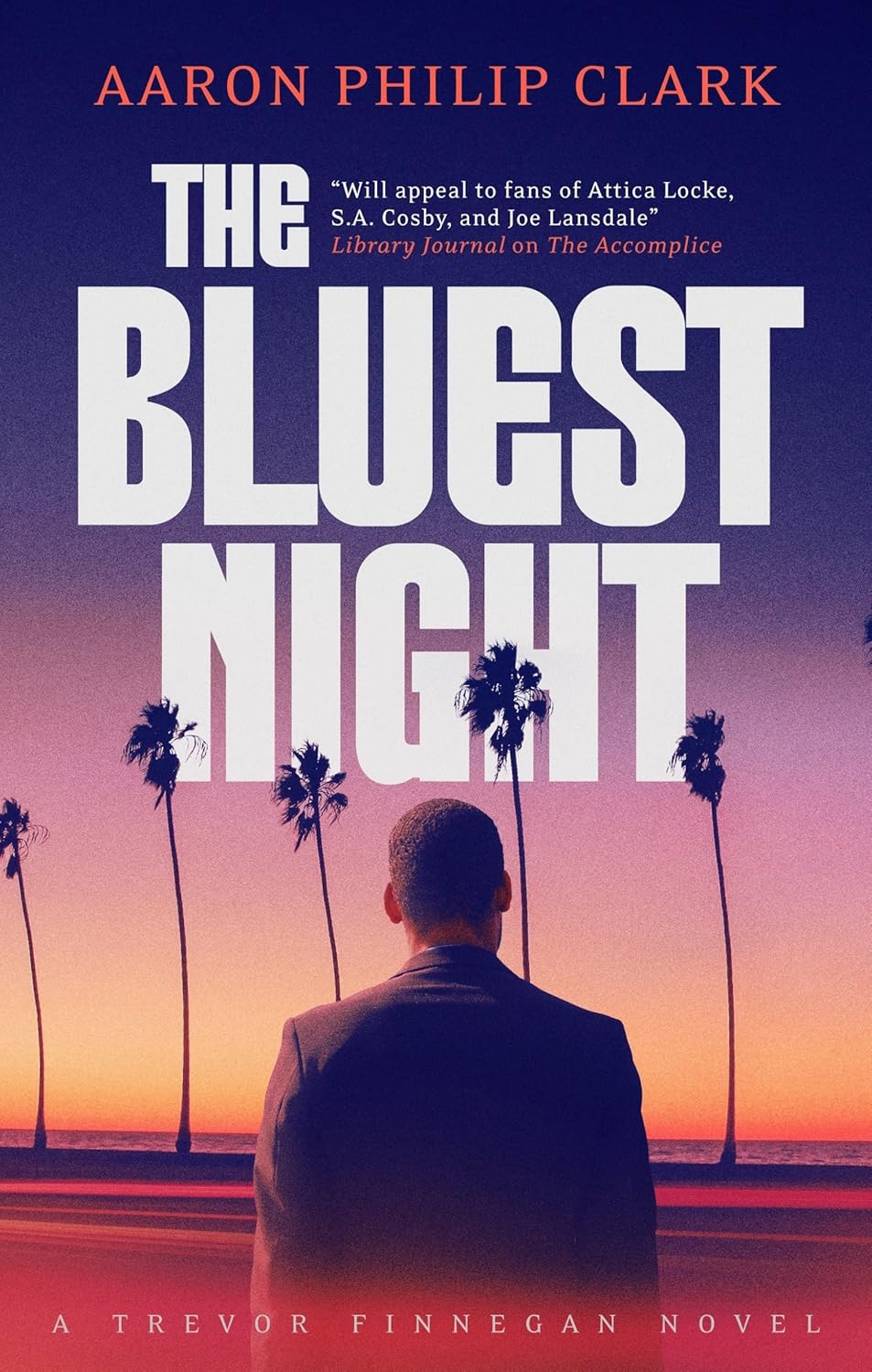

Image Credits
Stanley Wu (B&W Images)
Thad Reid (Color Image)
Popular
-

Portraits of the Valley
-

LA’s Most Inspiring Stories
-

Rick Norris Learned That Building a Successful Business Means Building a Life You Actually Want to Live
-

How Olivia Rush Turned Survival Into a Mission to Help Others Keep Going
-

How Bibi Goldstein Is Helping Entrepreneurs Reclaim Their Time by Embracing the Power of Delegation
-

Victoria Hasson is Redefining Voice Coaching Through Community and Collaboration


