




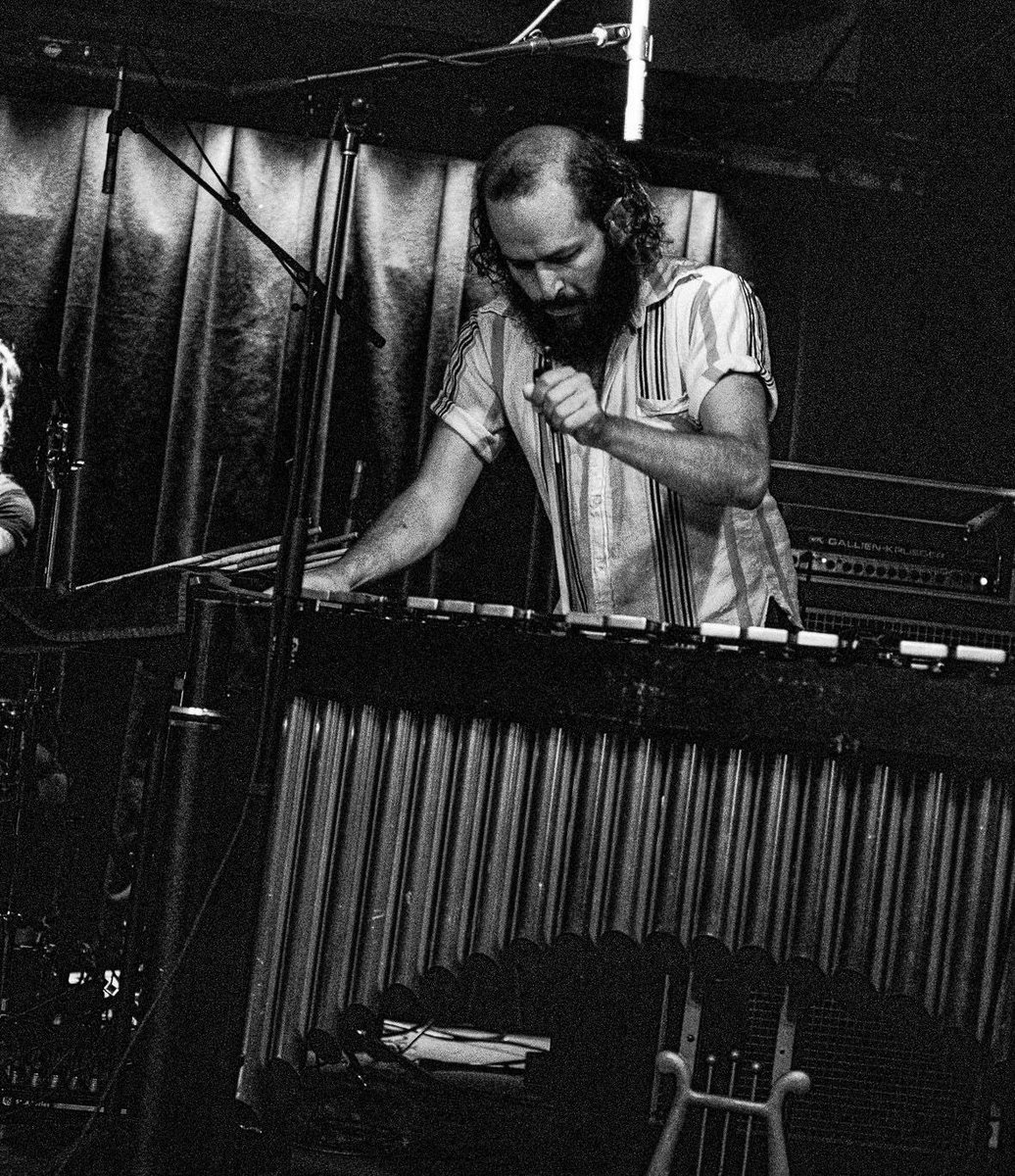
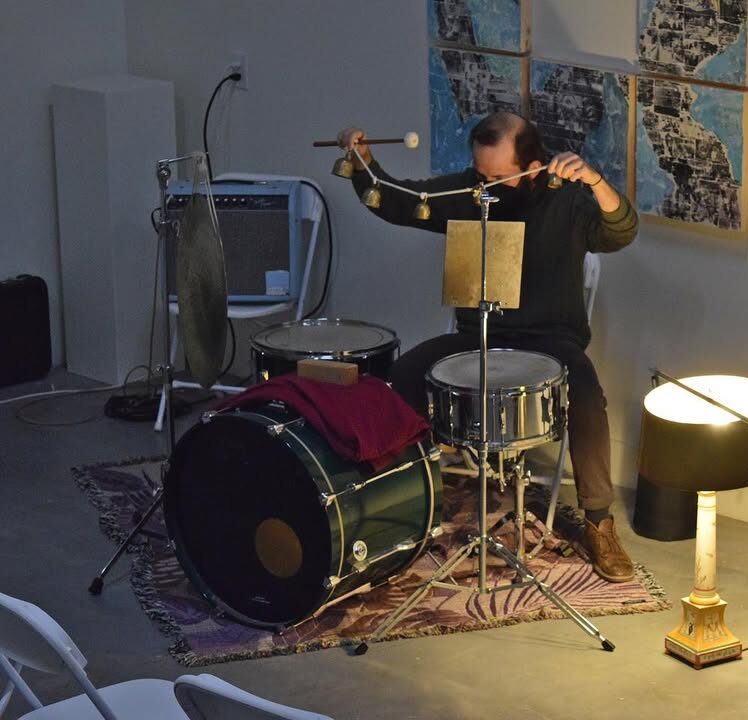
Today we’d like to introduce you to Adam Lion.
Alright, so thank you so much for sharing your story and insight with our readers. To kick things off, can you tell us a bit about how you got started?
Well, I grew up in Ashland Oregon, a really small town. It was an amazing place to be a kid and its isolation in the mountains made me feel like I was in my own world, which has its positives and negatives. I didn’t do so well in school, but had a lot of friends, and had a natural talent for percussion. My family is artsy and was always supportive of my creativity. My mother is a writer and my father a theater director, so I feel privileged to have received good encouragement. Eventually when it was time for college, I stayed in town and went to the local university which just happened to have a really supportive percussion teacher with great taste. My grades were so poor in high-school I actually had to go to community college for a semester just to be admitted in the first place!
Once I eventually enrolled, I fell in love with percussion music and began to take it very seriously. I was exposed to fascinating percussion pieces by a slew of composers including John Cage, Iannis Xenakis, and Alvin Lucier. My mind was blown. After my classical studies I put all my energy into exploring experimental music. I moved across the country to pursue a masters degree in 2016, and unfortunately I had a terrible time because I was forced to study music I didn’t like. My mentor was critical and overworked me because he was only concerned with making me “employable” in a conventional sense, which was not the primary reason I wanted to study music. After this experience I ended up in Asheville, North Carolina, which is where I moved here from. It’s a nice community with some infrastructure to support what I do, and I met some really great artists there. It was a pivotal period of my life where my practice grew tremendously, and I gained a lot of confidence as a performer. I was gigging with friends who really pushed me to grow as an artist, and it was super fun.
This was the moment I began to improvise and write my own music. My entire life beforehand was dedicated to performing percussion repertoire, and for a long period I was performing professionally in a small regional orchestra. I was also commissioning new music from some of my composer friends. I think I got burnt out because as I got older and developed my own taste, the politics in this community became overbearing and much of the music uninteresting. The classical music world is extraordinarily conservative, and sometimes even the avant-garde camp very closed off.
When I began to improvise I found a freedom and a voice I’ve never had before. It was incredibly liberating, and I had opportunities to collaborate and perform which promoted a lot of growth. The Black Mountain College Museum supported me very early on, I was able to perform at the Big Ears festival a few times, and I toured much of the Midwest, East, and South. All of these experiences were life changing, and instrumental in creating the artist I am today. My practice has always been very low budget and DIY, and it takes a lot of self-determination to make it all happen. But the community I have found along the way encourages me constantly, and without other people I wouldn’t have the strength to make the weird music I’m naturally drawn to.
For many years my main focus has been free improvisation, but since coming to California I’ve been writing my own music and collaborating with others to play theirs. I also collaborate in lots of configurations, not just with musicians. I’m really interested in investigating percussion and finding sounds, techniques, and methods to expose hidden properties of the instrument.
We all face challenges, but looking back would you describe it as a relatively smooth road?
Big question here! My gut response was no. It has not been smooth. But when I think about it, things always seem to ebb and flow. Unfortunately, being an artist is a struggle for most of us. Especially when you are involved with something really experimental.
Firstly, money is hard to come by. Finding funding for provocative work is hard to do. I am extremely grateful to have worked with many organizations and venues, and some are nonprofits with good funding or have institutional support. But these opportunities can be difficult to find, and are very competitive. I do a lot of collaboration in DIY settings where the spirit is more anarchic and money isn’t as important. I enjoy being in these spaces, and will work with a friend who’s making interesting art for little to no money out of love. This can make survival extremely complex. Even in popular music, talented musicians struggle to fill up the gas tank. It’s a strange practice because nobody making experimental music is doing it for the money, yet we all need to survive. A lot teach- but that’s not for everybody. The current administration continues to slash arts funding, which is not only a threat to us existentially, but also a direct attack on our ability to exist.
Speaking of struggles, figuring out what I want to make has been a rocky road and often a challenge. When you start to study music at a young age like me, you form a strong identity to the practice. It can be neurotic, and if you don’t take care of yourself, your mental health can tank. This pursuit is difficult, and since we perform, it always feels like somebody’s watching. I tried out all kinds of music before I found what fits, mainly because I was only trying to make other people happy. It is lifechanging to make music and realize it aligns with you spiritually, aesthetically, and sonically. You feel it all over your body. You walk away from the performance glowing.
The road can definitely be smooth as well. I love what I do and it has given my life meaning. Experimental music (and art) is wildly exciting, thought provoking, and challenging. It constantly makes me rethink what is possible, which is why I love it so much.
As you know, we’re big fans of you and your work. For our readers who might not be as familiar what can you tell them about what you do?
As you can tell from my previous answers, I am a musician. I come from a diverse background and am classically trained, but my specialization is in experimental music. I am an improviser but work in a variety of collaborative settings as a performer, and I also compose.
Improvisation is one of my main focuses, and it’s really fun most of the time. This practice is not necessarily attached to any genre, and it’s a radically open invite for artists to create something extremely unique, which could only possibly be made by them. Any sound is possible, and any performance event is welcome. While performing, an amorphous structure forms based off of the collaborative sensitivity of the group, and sound organizes naturally yet unpredictability. In this space it is usually impossible to anticipate what will happen, and artists autonomously come together to create something novel. To a lot of people “not knowing” is a really scary idea, but I believe it can be the beginning of an epiphany. As John Cage says, “somethings are always created out of nothings.” We can think about this in other settings as well… consider deciding where to eat with friends. Nobody knows where the group is heading, and it all begins with awkward silence leading into conversation. Friends bicker as stomachs growl, and there is a period where negotiations occur and nobody knows what’s happening. An unpredictability lingers. But in the end everybody lands on a spot. Before you know it, you are at a table drinking martinis. This is improvisation.
This is a huge focus but I have other interests as well. I write my own pieces and perform other peoples music, and sometimes I have interdisciplinary projects. I’m drawn to music that can blur how we perceive time and distort how we perceive acoustic space. I am not interested in expressing my emotions through music, or really expressing anything at all besides sound itself. Its raw materiality tells its own story and I’m not trying to push it around too much. My goal is to create new frameworks that allow sound to occupy space in an interesting manner, and if the collaborative opportunity entails principles remotely similar to this, I’m game.
I am mostly proud of choosing a life in art. I could list resume bullet points here, but to be super real, it is the honor of a lifetime to get to be creative in the first place. There are so many things you can do with a life and there are a lot of valid paths. But advocating with passion and intensity for imaginative thinking feels extremely important. Having an experimental practice accentuates this even more! I think a big point of experimental music is to expose hidden potential in what is already known to be true, and in this experience new knowledge emerges, helping us navigate the the present which can be overwhelming. Deciding to be an artist is hard, and is always political. But devotion to my craft is what keeps me going, and I admire any artist for their own self-determination and bravery. It’s the good fight.
What sets me apart is exactly who I am. When people reach out to me for collaboration, or I get offered a gig, they aren’t looking for any percussionist. I have an approach to the instrument that is unique and uncommon, so when I get asked to perform, they are asking for my artistry specifically. I’ve been performing experimental music for 15 years, which has created a solid foundation that has allowed me to develop my own idiosyncrasies as an artist. I like to think I’m easy to work with, and my enthusiasm and passion has gotten me far as well.
What matters most to you? Why?
Well there are lots of things! One is this: I try and respect everything just how it is, and don’t get in the way unless I ABSOLUTELY have to. Many things (people, experiences, nature, etc.) are fine just as they are and usually receive too much tampering. There is a beauty to stillness and minimalism that I really value, and these tenants have always guided me. I prefer to observe and see everything exactly as it is from a purely objective view, and define it in that sense. Things come together how they are meant to and sometimes it’s an awkward struggle, but allowing things to blossom and develop independently opens new doors for growth. I know working hard is important, but I tend to actually lean more towards a relaxed attitude that is based on inner self-determination. “Trying” to make something happen is one billion times harder than “letting” something happen, and I’ve found that if I pursue the latter I am much much happier. This is definitely translated into my music as well.
For example when I feel like I’ve failed, I allow time to process negative feelings. But more importantly, I see it as an event that has fluid meaning. I get to determine that meaning, and no one else has that right. I can extend this further and say it’s important for me to respect what things mean to other people and how they arrive there, even if it doesn’t vibe with me. I try to trust the process, understand that most are trying their best, and that everybody has the right to find meaning and express themselves however they choose, as long as it is not harmful. There are tons of benefits to this framework, but one is that it helps me to not take things too personally, which I’m still trying to work on.
In this vein, I am generally very skeptical when people try to tell me what to do without consent. Sometimes people push their version on how things MUST be done, or what things HAVE to mean, and then shove HOW to do it down my throat without any openness or curiosity on alternatives. This is a huge red flag to me and I avoid these people like the plague.
Having fun is really important to me as well. Going to shows, checking out a new bar, finding a new hike, or traveling makes me super happy. I’m a huge runner and am in Griffith Park 4-5 times a week. My life as a whole is what inspires me to be creative, and if I don’t have a life at all, what I make will inevitably be boring. In the end I’m trying to reconsider what is possible while also catching a happy hour from time to time.
Contact Info:
- Website: https://adam-lion.com
- Instagram: https://www.instagram.com/liiiiiioooooooonnnnnn
- Other: https://adamlion.bandcamp.com/album/when-a-line-bends
Popular
-

Robin Olive on Building an Inclusive Performing Arts Movement and Expanding Opportunities for Every Student
-

Portraits of the Valley
-

LA’s Most Inspiring Stories
-

Que Johnson on Building Brands That Last: From Visibility to True Market Authority
-

Christina Wren Steps Into the Director’s Chair to Tell Stories That Feel Like Home
-
JordanL on ‘Breathe,’ Belief, and Building a Movement Beyond the Music


