Diana, you recently became a massage therapist to expand the care you offer as a birth worker—what motivated you to add this tool to your practice?
Becoming a massage therapist felt like a natural evolution of my work. For over a decade, I’ve supported families through pregnancy, birth, and postpartum, but I kept noticing how much of the birth story lives in the body. Tension, fear, trauma, exhaustion — it all settles somewhere.
I didn’t want to just witness it. I wanted to help release it.
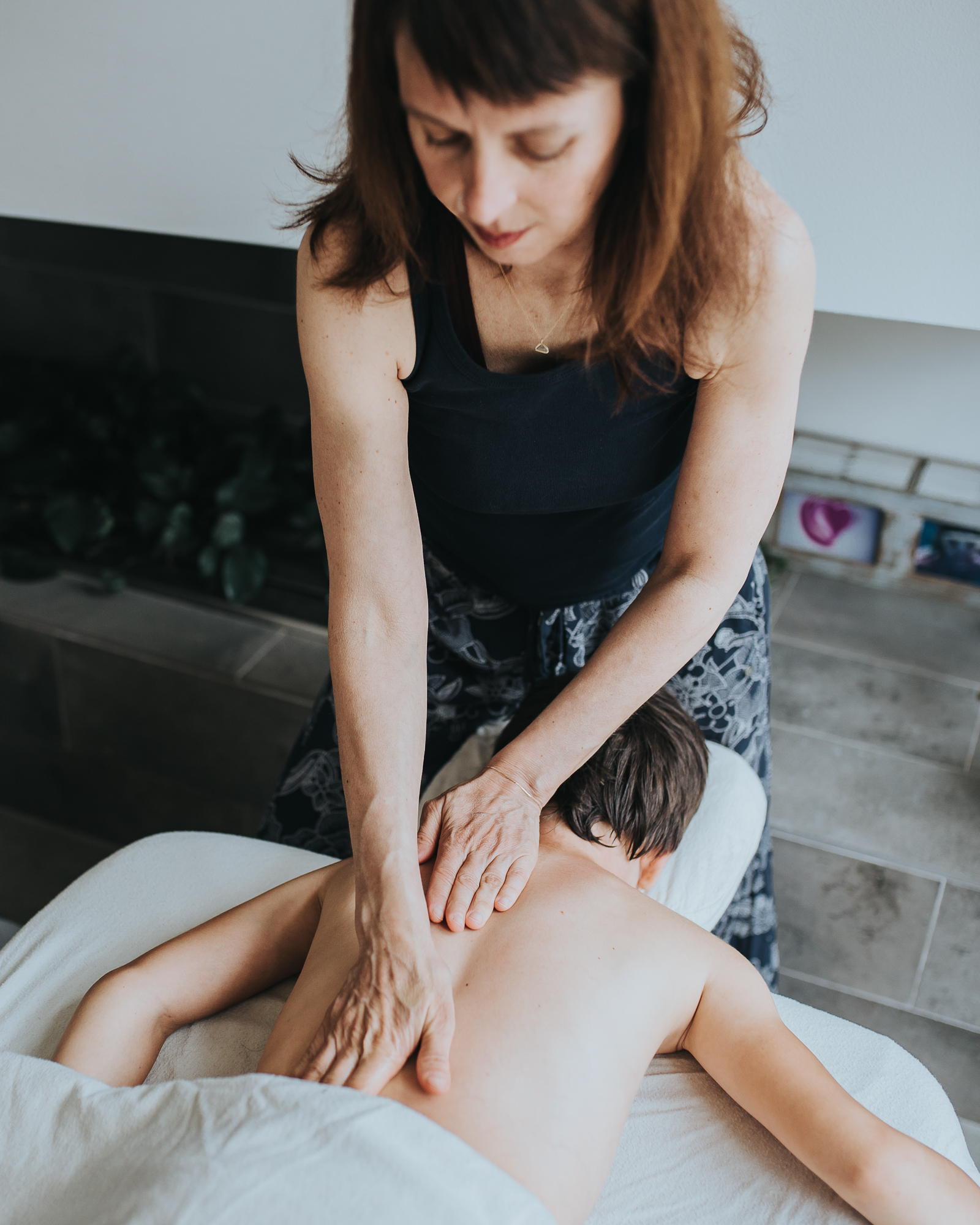
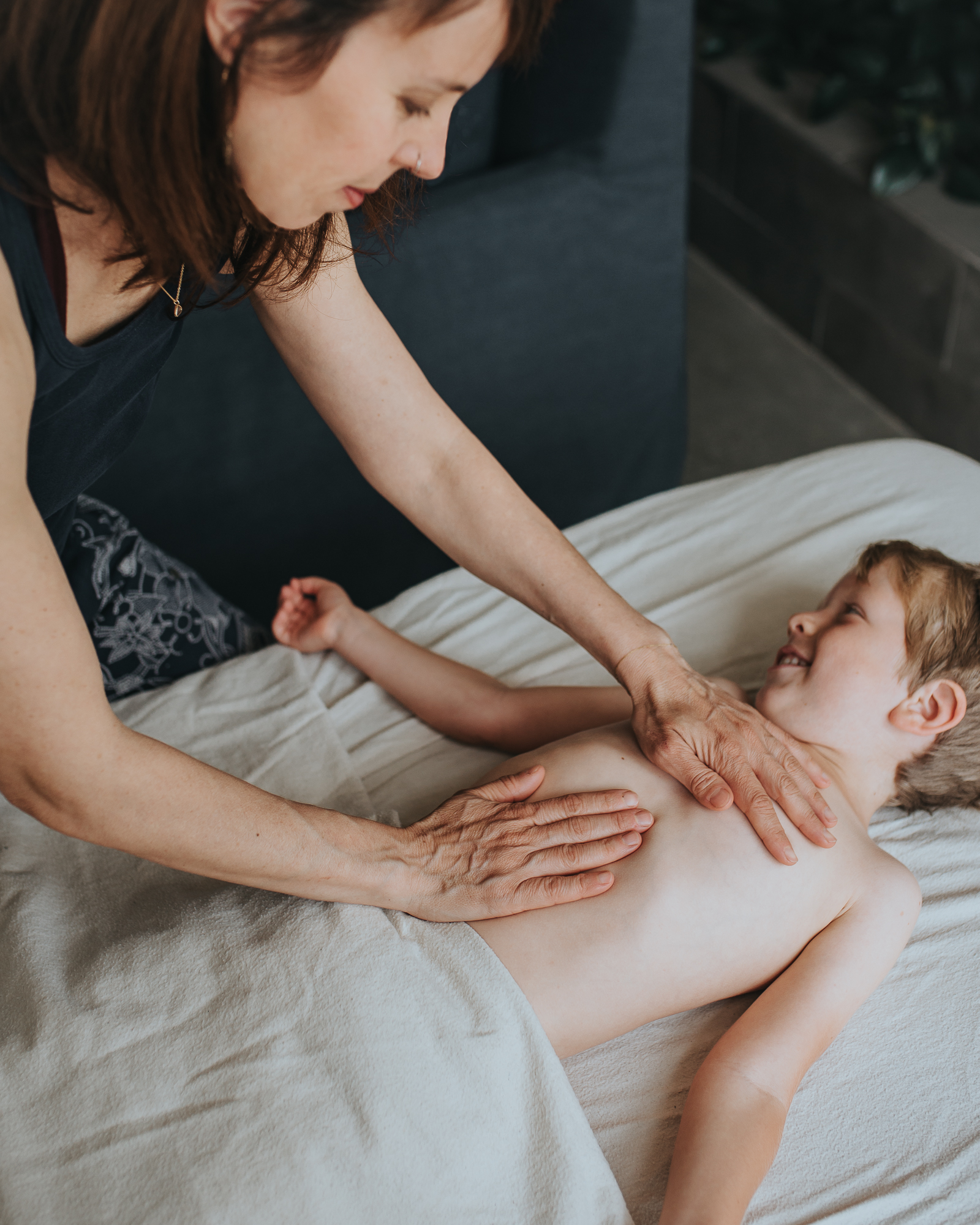
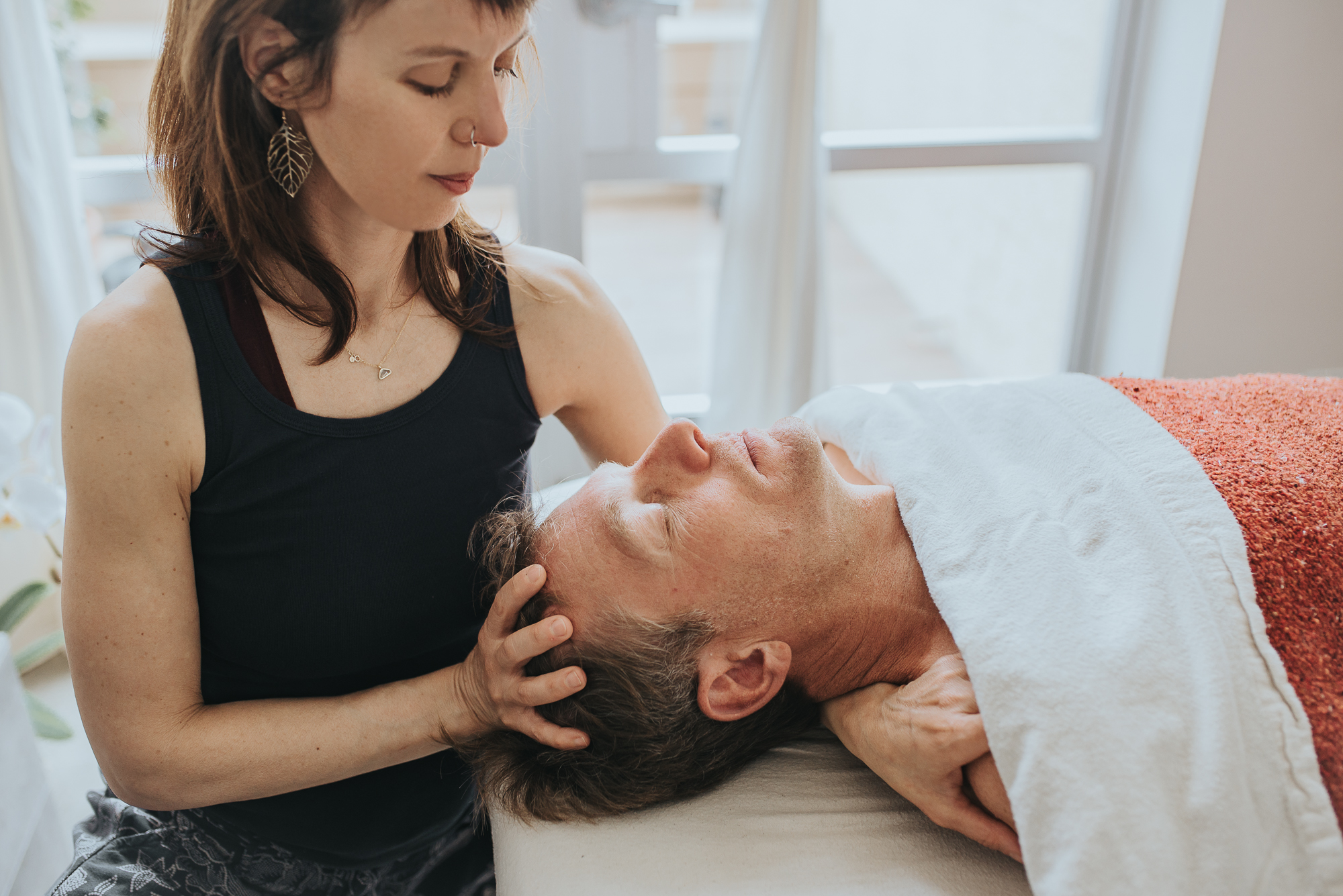
Massage and bodywork allow me to support families not only emotionally and educationally, but physically. It gives me another language — the language of touch — to help mothers soften, babies settle, and nervous systems recalibrate.
How does integrating massage, bodywork, and cranial sacral therapy enhance the support you provide to clients and their babies?
Birth is not just an event. It’s an imprint.
When I integrate massage, bodywork, and Craniosacral therapy, I’m working directly with the nervous system. I see mothers who finally exhale. I see babies who struggled with feeding or tension begin to relax into their bodies. I see partners soften too.
It enhances my support because I’m no longer only holding space — I’m helping regulate it.
This kind of preventative and restorative care can shift the entire postpartum experience. It allows healing to happen earlier, more gently, and often more completely.
You’ve been supporting families for the past three years through education, documentation, and now preventative care—how have you seen this holistic approach impact their overall experience?
I have actually been a birth worker for over almost 15 years! When families feel supported on multiple levels — informed, seen, documented, and physically cared for — their confidence grows.
I’ve watched mothers move from uncertainty to embodiment. I’ve seen partners become more connected. I’ve seen babies thrive in calmer homes.
Documentation preserves the memory.
Education builds understanding.
Bodywork restores balance.
Together, it creates continuity. Families don’t just survive birth — they integrate it.
What does it mean to you, personally, to be able to spend more time with your clients and witness their growth and well-being?
It means everything.
There is something sacred about continuity of care. Being invited into someone’s pregnancy, witnessing their birth, and then continuing to support their physical recovery and their baby’s regulation — it deepens the relationship.
I’m not just arriving for a single moment. I’m walking alongside them.
As a mother of four, I know how quickly the seasons change. Being present for these early days — and helping families feel steadier in them — feels like meaningful work. It’s intimate. It’s human. It’s honest.
Looking ahead, how do you hope this expanded skill set continues to shape the way you show up for the families you serve?
I hope it allows me to offer deeper healing and more preventative care.
I hope families feel that they don’t have to piece together their support from ten different providers. That they can receive grounded, experienced, trauma-informed care in one place.
And personally, I hope it keeps me evolving.
Birth work has always been about witnessing transformation. Expanding my skill set ensures that I’m not only capturing transformation — I’m actively supporting it in the body, in the nervous system, and in the long arc of family life.