




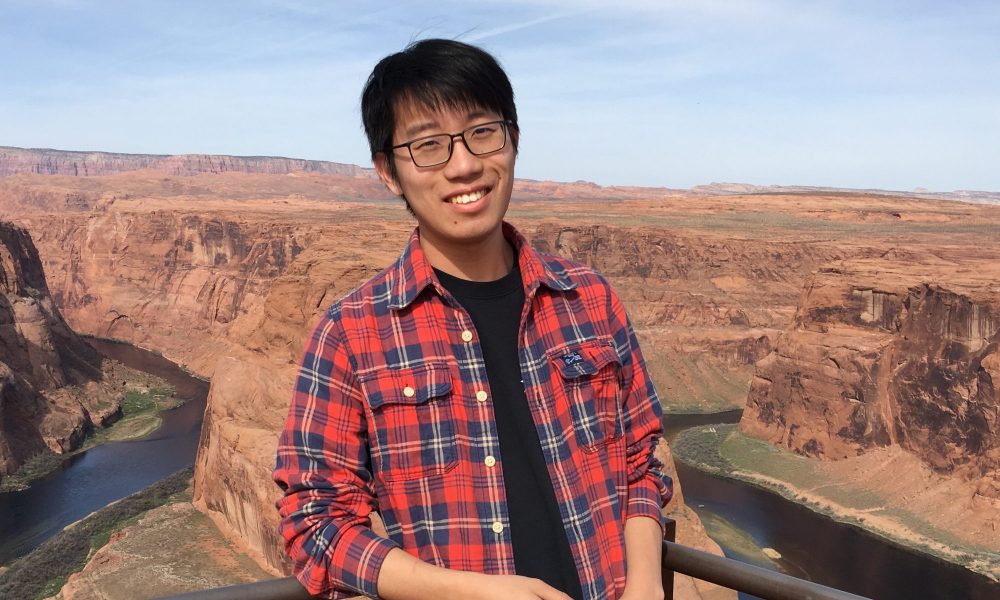
Today we’d like to introduce you to Ruozhou (Tim) Zhang.
Hi Ruozhou (Tim), can you start by introducing yourself? We’d love to learn more about how you got to where you are today?
My name is Ruozhou (Tim) Zhang. Tim is my preferred name, as my first name is hard to pronounce in English. I am a second-year international graduate student from the University of Southern California, majoring in Computer Science Game Development Track. I will graduate this May and enter the game industry as a Gameplay Engineer in the game studio Raven Software under ACTIVISION.
I am originally from the southeast of China, born in a city called Ningbo, close to Shanghai geographically and culturally. While coming to the US and broadening my horizons is more like a route my family (especially my well-educated father) planned and supported, I made my own decision to enter the game industry. Before I came to the US, I interned at Tencent and ByteDance and worked as a full-time software Engineer at Alibaba. My previous working experience is all about mobile iOS app development, but that’s not what I’m looking forward to. I’m always a gamer; starting playing digital games at age eight and starting (learn how to develop) developing games at age 10. Unity and Unreal were not that famous then, and I used Virtools (a game engine), C++ & SDL library, and even Flash with Photoshop and 3ds Max (I turned to Maya until I went to college, lol). Making games is always my childhood dream, and Programming/Computer Science is what I’m good at, so I picked the major “Computer Science Game Development” major when I applied for USC.
USC Games could be ranked top 3 in the US for entertainment or digital game education. I do meet a lot of talented game developers here in LA. As a major gameplay engineer and designer, I attended the Global Game Jam 22 with my friends from USC Games and made the game “Journey To Home.” (https://globalgamejam.org/2022/games/journey-home-5) This 2D pixel-style game is about a cat’s soul getting back home with the help of shadow, and controlling shadow to find a path is the main innovation mechanic of this game. Another game, “John’s Road” I made with my friend Yiyang Li for Interactive Design and Production course, is a 3D first-person storytelling driving game under a relaxing style control system.
I am also the Lead Engineer of the game “Manas” starting from June 2022. Manas is a 3D third-person action-adventure game based on the Central Asian Epic — the legendary of Manas (https://twitter.com/manas_game/status/1655987105372467202?s=20, https://www.uscgamesexpo.com/expo-games-2023). It is one of the 2022 AGPs (Advanced Game Project, about ten games each year) under USC Games and will be shown at USC Game Expo on May 9th. There will be an IGN stream for the Expo on Youtube as well. Manas is the first Unreal Engine 5 Ggme in AGP history, which I’m pretty proud of. When we started prototyping Manas last year, UE 5 was just released, and we’ve overcome many compatibility issues from 5.0 to 5.1.
As for my career path, the connections and game development knowledge USC Games provided immensely helped me. I started looking for a game developing intern since Aug. 2021 and luckily got an offer from Raven Software, ACTIVISION. I worked there as a gameplay engineer intern in 2022 Summer. During my internship, I was working on Call of Duty games. I implemented super cool game mechanics and gained a lot of experience on how game development goes in the industry. I really like the studio’s culture and am thankful for the guidance provided by my coworkers. I’ll return to Raven as a full-time gameplay engineer after I graduate. The greatest part is I finally got my first step into the game industry, a chance to realize my childhood dream.
Would you say it’s been a smooth road, and if not what are some of the biggest challenges you’ve faced along the way?
One of the biggest challenges was communication. I’m not a native speaker, so it’s a little bit hard for me to understand an implicit slang-like expression, which doesn’t usually happen during the working process but still frustrates me sometimes (same thing when I want to express my “fancy” ideas). This situation has been way better compared to two years ago when I just arrived in the US. Another challenge that comes to my mind is that as an Engineer, sometimes it’s hard to put your design or idea (on mechanics, narrative, …) into the game, partly because of the role as an Engineer (let Designers do the design and Engineer’s do the code). I really like the saying, “Everyone is a designer.”, which means giving feedback or engaging in mechanic design should be part of the engineers’ (as well as producers, …) duty and ability. I hope to see programmers playing a bigger role in game design in the future game industry, and that’s also what I’m trying to achieve.
As you know, we’re big fans of you and your work. For our readers who might not be as familiar what can you tell them about what you do?
For this part, I would like to talk in more detail of my lead Engineer experience in the game Manas. The team members are all USC students, about 40 people. There are three engineers and a volunteer engineer in the team, and we made this game from sketch to a complete and enjoyable 20-minute gameplay, including combat, horse riding, cinematic control, game-flow manager, crowd animation, and so on. As I said, it’s the first Unreal Engine 5 project in USC Games AGP (Advanced Game Project) history, so we’ve overcome a lot of compatibility issues and source code compiling issues, especially with plug-ins and SDKs all the way from 5.0 to 5.1. As the lead Engineer, I tried my best to let the engineers work professionally. Each of our engineers is working as an expert in some specific areas (animation, NPC AI, …), which helps the game systems expand and maintain in an efficient way. I’ve also made many efforts on version control and convention design, making the development process iterate healthily.
What sort of changes are you expecting over the next 5-10 years?
From my perspective, AI is definitely providing the biggest influence on Game Industry. It plays a role as a part of the development pipeline, which means it’s more like an efficient tool instead of a magic wand that gives you a final result (maybe one day it will be, but it still has a long way to go). Like with AI’s help, you could easily set up a game prototype and quickly test whether the mechanic works or not instead of spending several days making a framework. It’s significant for employees to get familiar with these tools and for employers to pay more attention to data protection and AI usage standardization. The more efficiency you get, the more iterations your games will develop, and the higher possibility your game will be good.
Contact Info:
- Linkedin: https://www.linkedin.com/in/timzhangrz/
- Youtube: https://youtube.com/@ruozhouzhang9797
- Other: https://github.com/TimZRZ


Image Credits
Manas Project related photo taken by Giavanna Lang
Popular
-

Maagic Collins on Building a Fearless Publishing Platform for Truth, Advocacy, and Underrepresented Voices
-

Los Angeles Barea on Turning Green Superheroes into a Global Movement for Youth-Led Change
-

Trisha DuVivier on Bridging the Franchisor–Franchisee Divide with Workhero and “Franulate”
-

Portraits of the Valley
-

LA’s Most Inspiring Stories
-

Cedar Boschan on Elevating Black Music Rights and Driving Urgent Conversations Around Credit, Equity, and Artist Protection


