





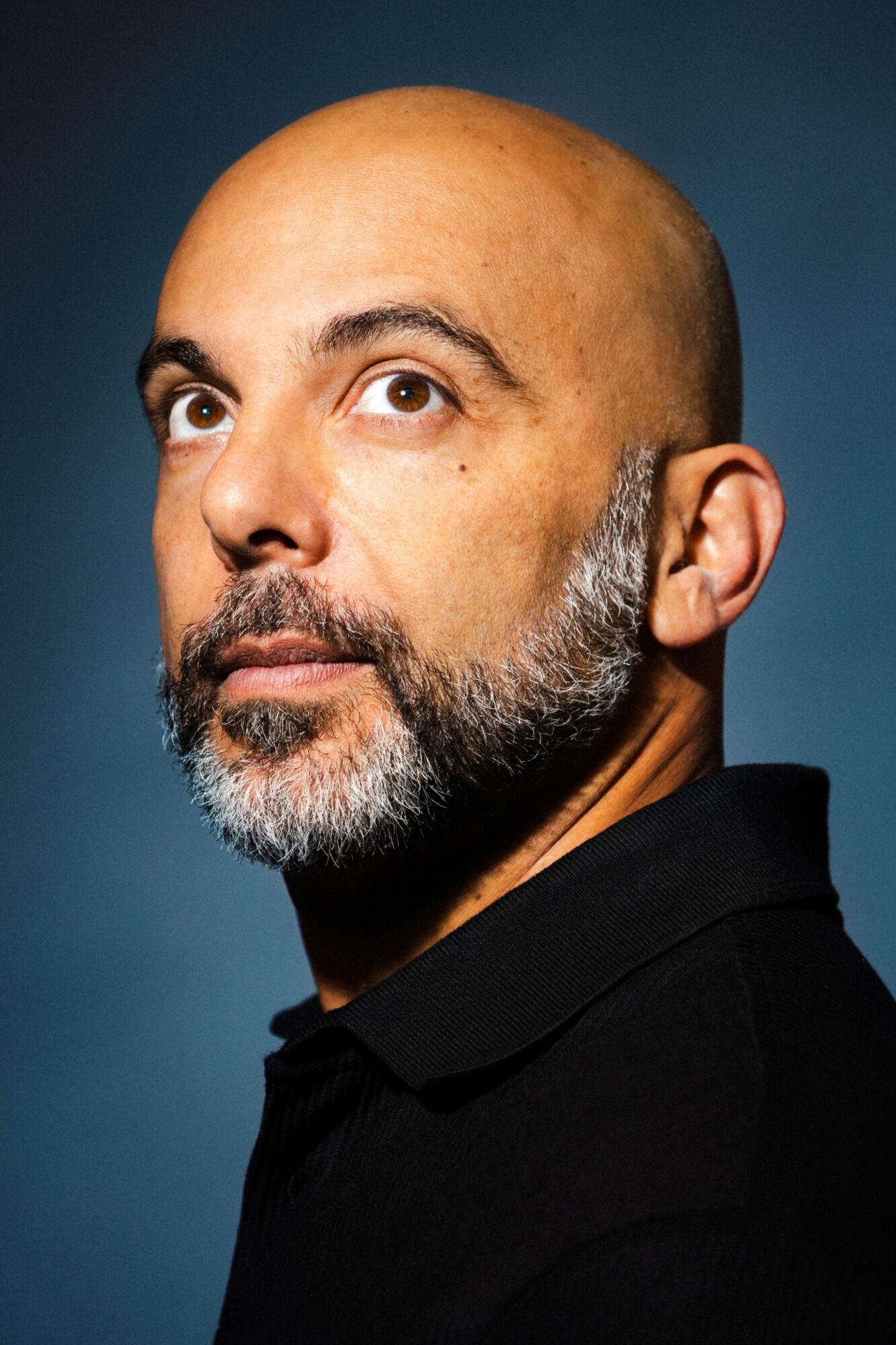
We recently had the chance to connect with Shaahin Cheyene and have shared our conversation below.
Shaahin, really appreciate you sharing your stories and insights with us. The world would have so much more understanding and empathy if we all were a bit more open about our stories and how they have helped shaped our journey and worldview. Let’s jump in with a fun one: What’s the most surprising thing you’ve learned about your customers?
ou know, the most surprising thing I’ve learned about my customers is how intensely human they are. Let me explain.
When I first started building businesses, I thought customers were looking for the obvious things: price, value, speed. But over the years, what’s astonished me is that—again and again—what they’re really searching for is connection. They don’t just want a product; they want to feel like they belong to a story bigger than themselves.
Take PodcastCola, for example. I thought we were simply booking people on podcasts. But what I’ve discovered is that our clients see it as a stage where their life’s work finally gets its moment of resonance. It’s not about microphones or downloads—it’s about being heard, in that Gladwellian “tipping point” kind of way.
The funny part? Sometimes the things that resonate most with audiences are not the polished elevator pitches, but the little quirks—the human stumbles, the unexpected jokes, the moments where someone admits, “Yeah, I burned out… and here’s what I learned.” Customers—whether in e-commerce, health, or storytelling—are hungry for those unpolished truths.
So the surprise is this: the more I stop selling and start connecting, the more customers lean in. It’s not transactional, it’s relational. And in that sense, it’s not just about building companies—it’s about building trust, one conversation at a time.
Can you briefly introduce yourself and share what makes you or your brand unique?
I’m Shaahin Cheyene, and my story starts in the most unlikely of places—an immigrant kid in Los Angeles who stumbled, almost accidentally, into creating a billion-dollar herbal “smart drug” empire before I was out of my teens. Since then, I’ve spent the better part of three decades building brands, scaling companies, and asking myself one mischievous question over and over: *What happens if we push just a little past what everyone else assumes is possible?*
These days, I run **PodcastCola**, which is part matchmaking service, part storytelling laboratory. We connect people with the right podcasts—not just to promote themselves, but to spark conversations that shift culture. What makes it unique is that it’s not about volume. It’s about precision: finding those few conversations that create ripple effects. Think of it like Gladwell’s “tipping point,” but in audio form.
What makes my work interesting is that I’ve always lived at the intersection of hustle and curiosity. From launching Amazon’s first matcha tea brand to exploring psychedelics and biohacking, I’ve been fascinated with how ideas spread and how people transform. PodcastCola is just the latest chapter in that: giving entrepreneurs, thinkers, and rebels the stage they deserve—without the velvet rope of old-school media.
And what am I working on right now? Pushing the boundaries again. Exploring what happens when you fuse celebrity, wellness, and storytelling into one irresistible cocktail. Because if there’s one thing I’ve learned, it’s that the right story, told in the right moment, can change not just a business, but a life.
Thanks for sharing that. Would love to go back in time and hear about how your past might have impacted who you are today. What breaks the bonds between people—and what restores them?
What breaks the bonds between people, I think, is rarely something dramatic. It’s not usually betrayal or anger or even conflict. More often, it’s something quieter—neglect. It’s the slow erosion that happens when we stop listening, when we let the small misunderstandings calcify into distance. Like an elastic band that’s been stretched just a little too long, it loses its snap.
And what restores those bonds? Curiosity. The act of leaning in and saying, “Tell me more. I don’t quite understand, but I want to.” That simple gesture, that willingness to set aside being right in favor of being present, has a kind of alchemy to it.
In my own work with PodcastCola, I see this all the time. Guests go on shows thinking they’re there to market something, but what really forges connection isn’t the pitch—it’s the story they almost didn’t tell. The failure. The late-night doubt. The thing that makes them sound less like a brand and more like a person. Audiences respond not to polish, but to presence.
So maybe the bonds break when we forget each other’s humanity. And they’re restored the moment we choose to remember it.
What did suffering teach you that success never could?
Suffering teaches you the texture of time.
Success moves fast—like champagne bubbles rising to the surface, everything feels light, sparkling, inevitable. But suffering? It slows everything down. It makes you sit in the waiting room of your own life, hearing the clock tick. And in that uncomfortable pause, you discover things success never bothered to show you: your resilience, your blind spots, your capacity to endure silence without applause.
When I was younger, I built a billion-dollar brand almost overnight. That was success. But when it collapsed, and I had to start again from scratch—that was suffering. And what I learned in that valley has stayed with me far longer than anything I picked up on the peak. Success gave me momentum. Suffering gave me depth.
And here’s the curious thing: those who’ve suffered tell better stories. That’s why at PodcastCola, we look for guests who’ve stumbled, who’ve broken and rebuilt. Because audiences don’t connect to glossy perfection; they connect to the scar that healed crooked, the mistake that became the punchline.
So what did suffering teach me? That success is admired, but suffering—survived and spoken aloud—is what actually binds us together.
So a lot of these questions go deep, but if you are open to it, we’ve got a few more questions that we’d love to get your take on. Whom do you admire for their character, not their power?
Alan Watts.
Not because he had power—he didn’t wield much of that at all—but because he had this uncanny ability to hold life lightly. In a world obsessed with control and accumulation, Watts reminded us that we’re all just “wiggling with the universe,” as he liked to say. He could take something as intimidating as mortality or suffering and, with a laugh and a sip of whiskey, make it feel like a dance instead of a death sentence.
What I admire is that his character was rooted in curiosity, not conquest. He didn’t try to dominate the world; he tried to understand it—and to help the rest of us laugh at the cosmic joke. That humility, that irreverence, is what makes him unforgettable.
At PodcastCola, I see echoes of Watts all the time. The guests who move audiences most aren’t the ones listing achievements—they’re the ones willing to show wonder, to admit doubt, to laugh at themselves. In other words, the ones with character.
“Success may impress us, but character—the ability to laugh with the universe—moves us.” Alan Watts
Okay, we’ve made it essentially to the end. One last question before you go. What is the story you hope people tell about you when you’re gone?
The Egyptians believed that every person dies twice: once when the body dies, and again when the last person who knows your name speaks it for the final time.
I’ve always loved that idea. Because it means your real legacy isn’t the car you drove, the house you built, or the spreadsheet of your net worth—it’s the story people carry about you when you’re no longer in the room.
What I hope they say about me isn’t that I built big businesses—though I’ve built my share. I hope they say, *“Shaahin was a catalyst.”* Someone who made audacious ideas feel possible. Someone who opened doors, connected people, and reminded them they had a story worth telling.
That’s why I built **PodcastCola**. Not to create another marketing service, but to build a kind of storytelling infrastructure—a place where voices that might otherwise go unheard get amplified. If, long after I’m gone, someone who once worked with us tells their kid, “You know, Shaahin believed in me before anyone else did”—that would be my second life, the one that keeps going after the first one ends.
**Pull-quote:** *“My hope is that my name lingers not as a brand, but as a spark that helped other people tell their stories.”*
Contact Info:
- Website: https://www.shaahincheyene.com
- Instagram: @shaahincheyene
- Linkedin: https://www.linkedin.com/in/shaahincheyene
- Twitter: https://x.com/shaahincheyene
- Facebook: https://www.facebook.com/shaahincheyene/
- Youtube: https://www.youtube.com/channel/UCX59Z1-L4LBe7-qKEz_-QzA


Popular
-

Portraits of the Valley
-

LA’s Most Inspiring Stories
-

Rick Norris Learned That Building a Successful Business Means Building a Life You Actually Want to Live
-

How Olivia Rush Turned Survival Into a Mission to Help Others Keep Going
-

How Bibi Goldstein Is Helping Entrepreneurs Reclaim Their Time by Embracing the Power of Delegation
-

Victoria Hasson is Redefining Voice Coaching Through Community and Collaboration


