




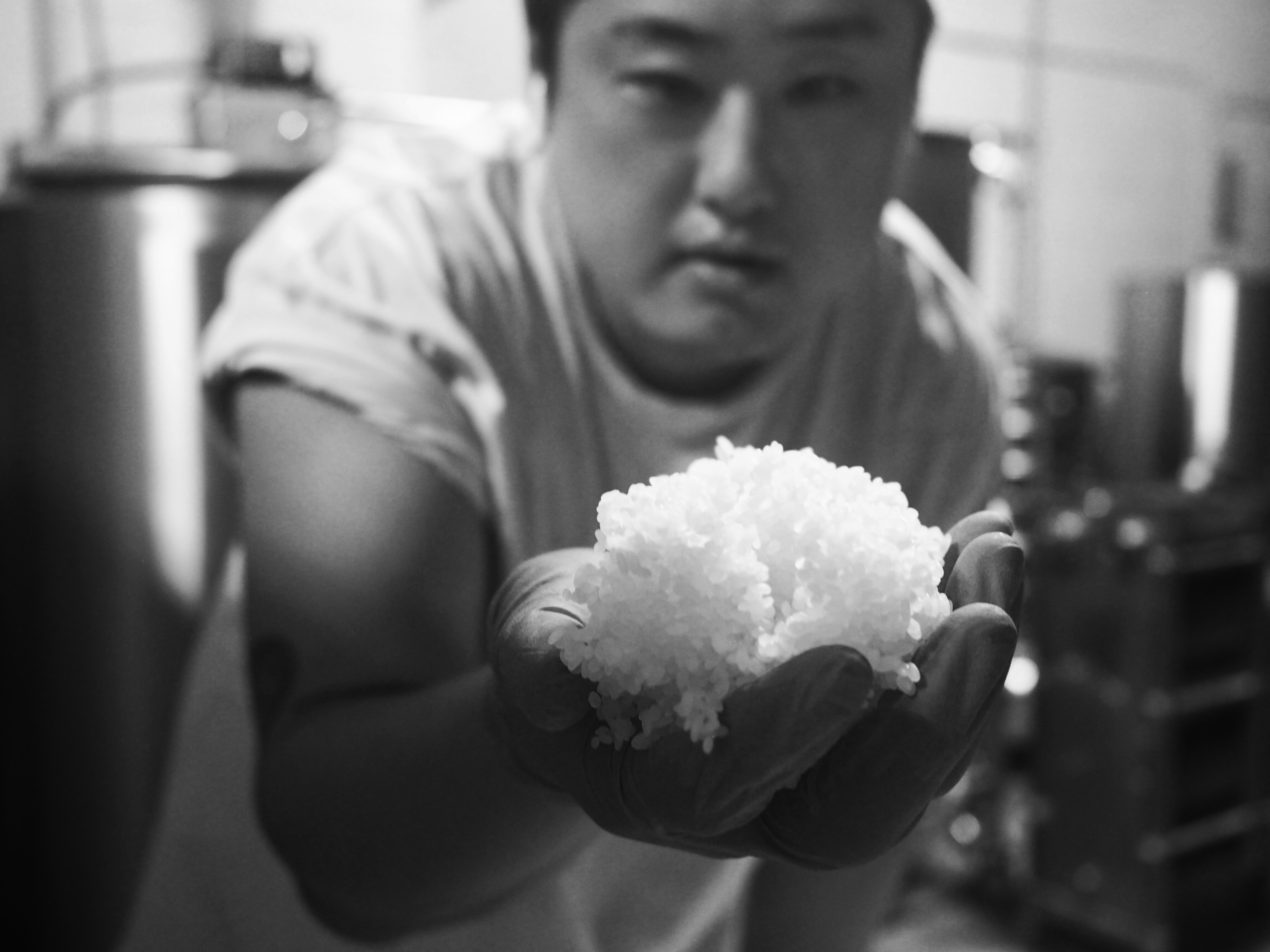
Today we’d like to introduce you to James Jin.
Hi James, so excited to have you on the platform. So before we get into questions about your work-life, maybe you can bring our readers up to speed on your story and how you got to where you are today?
Me and my partner Emiko Tanabe met while studying to get Sake Sommelier certification at Sake School of America located in Downtown. We both had a lot of interest in sake and as Japanese native, Emiko was more interested in promoting Japanese foods and culture while I was more interested in how rice and water turns into this beautiful beverage known as sake. I was born in LA, grew up mostly around LA/OC area and graduated from UCLA as Japanese major. I’ve always had great interest in Japanese foods and culture since high school and spent a lot of my time cooking Japanese foods, studying the culture and language, and visited/lived in Japan several times. While working at a Japanese food and sake distribution company called Mutual Trading Co., I started home-brewing beer because I love to drink and I realized brewing it myself would yield me a lot more than buying craft beer which can get quite pricey.
One day at a home-brew shop, I found sake yeast and electricity ran through my body. I had a rough idea how sake is made as production is one of the chapters in the textbook while studying to be sake sommelier. I purchased the yeast, bought cooking purpose koji (type of fungus required to ferment sake) at the supermarket, steamed rice and threw everything together in a jar along with water. I would keep staring at it all day to see if anything is happening and noticed sounds of bubbles, carbon dioxide burning my nose and the smell started to change and that’s when this whole new world of fermentation opened up. This hobby grew into buying the koji spores and turning an icebox into an incubation room to grow the fungus myself, buying a spinning dryer to see if I can filter the fermented sake using centrifuge method, and coming home in the middle of my work to see if the fungus is growing properly.
Next thing I know, I quit my job as sales/sake specialist and I’m in Japan taking apprenticeship at a beautiful sake brewery under the mountain in the countryside in Ibaraki prefecture, Japan where head brewer warns me of wild boars in the vicinity that some times charge at you. While I’m in Japan, Emiko purchased an old winery in Covina and starts the paperwork to acquire sake brewing license, and after three months of training/researching sake and beer brewing, I come back to LA and I’m building a koji room – basically a bigger version of that icebox I used at home to make a big batch of koji. After months and months of licensing, planning and R&D, resourcing raw materials, turning wine/beer equipment to be used for sake brewing, we finally released our first batch of sake in 2020 to become LA’s first craft sake brewery & tasting room since 70 years ago, and both our sake ‘Gravity’ and ‘Eclipse’ won awards at a wine and spirits competition in 2021. Although I was meant to brew only sake, our beer brewer left us during COVID and I had to start brewing beer as well. I thought to myself, if I’m making beer, I want to have fun and make things nobody else is making so I focus on making beer with sake yeast and using Asian ingredients like yuzu, sansho peppers, hojicha, Japanese brown sugar and etc.
Alright, so let’s dig a little deeper into the story – has it been an easy path overall and if not, what were the challenges you’ve had to overcome?
The biggest obstacle of running a sake brewery in America is that the craft sake industry is very small. It’s so small that there are no sake brewing equipment manufacturers, no koji manufacturers, no yeast lab focused on sake yeast, and there are limits to the rice strains available here. I feel lucky that California has so many rice farms and grows some of the best rice in the US, but the variety is very limited and I do not like using rice strains that was imported from Japan as if I did, I feel there would be no point of being a sake brewery based in California. Since there are no sake brewing equipment made here, you have to either import from Japan and invest huge sum of money, or think like an engineer and build your equipment out of what is available here. Due to we are independently owned nano sized brewery with limited finance, we are stuck with the latter.
Also, in Japan there are active brewing communities in each area where brewers come together to taste each other’s sake, share knowledge and new trends, and have discussions about the industry. In the US, there are many wineries and beer breweries so it’s easy to find answers to questions about wine and beer by asking someone in the industry, joining associations, buying books, or even googling, but when it comes to sake brewing there aren’t many resources out there. Fortunately, I speak, read and write Japanese so I was able to acquire a lot of information and resources from Japan, but I remember one of the biggest struggles I went through was trying to stay awake through a 10-hour long video presentation of old Japanese men talking about datas and charts about koji research.
Most breweries in Japan are at least 100 years old and are led by toji (master brewers) with at least ten years of experience. American sake industry is still at its infancy and the challenge is taking what limited resources and equipment available here and trying to meet the standard of quality that is expected when being compared to Japan made sake.
Thanks for sharing that. So, maybe next you can tell us a bit more about your work?
I am the head brewer at Nova Brewing Co., a craft sake and craft beer hybrid brewery. My job is to lead the production such as creating recipes for sake and beer, maintaining hygienic brewery environment, ordering raw materials, building and maintenance of equipment, brewing and fermenting sake and beer, designing labels and packaging, canning/bottling and labeling the finished products, controlling consistency and quality of products and etc. We are known as the only craft sake brewery and tasting room in the LA county promoting and educating the culture of sake. We also specialize in brewing beer with sake yeast and our ‘Ginjo 7’ beer series explores what classic Belgian style beers can taste like when fermented with sake yeast. I do not like to follow trends and make trendy beer styles or making same beer that all other breweries are making. I believe progress and innovation is crucial for craft brewery and I aim to make unique and new recipes that no other makes.
My brain process when thinking of creating a new recipe stems from my experience of being a home chef since I was young. I would imagine a particular beer style that I personally enjoy, and imagine what spices, tea or fruits would taste good in it and combine it with the type of malts, yeast and hops that I think would go well. I was inspired when I visited beer breweries in Japan, Korea and China of all the beers made with their local ingredients and I realized how versatile beer brewing can be when used with different ingredients. I like to use Asian ingredients that are not commonly used in beer brewing and that’s how we set our self apart from other breweries. When it comes to sake, I make sake that is very different from Japanese traditional sake and try to implement a wine-like expression by increasing acidity and sweetness, strong aroma and bold flavor. Our goal is for Americans to fall in love with sake just as we did, so when someone who does not drink sake or does not like sake comes by our brewery, tastes our sake and takes home a bottle, that’s my proudest moment. Sake has over 2000 years of history and went through many changes in its quality and taste. It’s unfortunately a dying art in Japan that is rather gaining more and more attention outside of Japan, and I feel honored to be part of its history on its way to a modern revival.
Is there something surprising that you feel even people who know you might not know about?
I had depression since I was in high school. It started from just a kid feeling lonely and feeling there’s no reason for my existence to becoming an alcoholic in my mid-20s and attempting self asphyxiation in the middle of the countryside in Thailand. It was like music in that it had highs and lows. I didn’t know where and why it started but important thing is that I didn’t know how to control it. When I started studying to become a sake sommelier, learning about the history and the process of how these beverages are made allowed me to appreciate the flavors instead of just drinking to get drunk.
As for the depression, my father once told me “the partner you choose to be with will have a great influence on what kind of man you’ll become.” I did not agree with him and ignored his words but when I was pessimistic and said I cannot brew sake or beer, my partner would be the optimistic one and tell me “well then learn how to brew.” Looking back, whenever I felt like I cannot go on and felt depressed, Emiko would snap me out of it and together, we would always find a solution. This made me realize that although I’ve had minor depressions, I have never thought of suicide since meeting my partner and together achieved things that I never thought I would achieve.
Contact Info:
- Email: [email protected]
- Website: novabrewingco.com
- Instagram: novabrewingco
- Facebook: novabrewingco


Popular
-

Local Highlighter Series
-

If you could say one kind thing to your younger self, what would it be?
-

Who taught you the most about work?
-

What is something outside of work that is bringing you joy lately?
-

Have any recent moments made you laugh or feel proud?
-

What fear has held you back the most in your life?


