





Today we’d like to introduce you to Brittany Friedman.
Hi Brittany, it’s an honor to have you on the platform. Thanks for taking the time to share your story with us – to start maybe you can share some of your backstory with our readers?
I grew up knowing even before I had the proper language for it that the world was full of chaotic contradictions: beauty and violence, tenderness and surveillance, possibility and constraint. That tension, trauma, and vision shaped me very early on. I became a sociologist because I wanted to understand the emotional architecture of power and how systems script our lives and how people resist, refuse, and remake themselves in the face of it. I became a writer with a passion for jotting down my discoveries for the everyday person because I needed a place where analysis could meet imagination and inspire minds.
My path to earning a PhD in sociology was really a path of curiosity and listening. I was always listening to communities, to archives, and to the unspoken truths at the edges of institutions. Graduate school sharpened my tools but it was the stories of people living through incarceration, policing, and economic abandonment that truly sharpened my purpose and mission. Those years taught me how to pair rigorous research with deep emotional clarity and how to hold both accountable in the same work of writing.
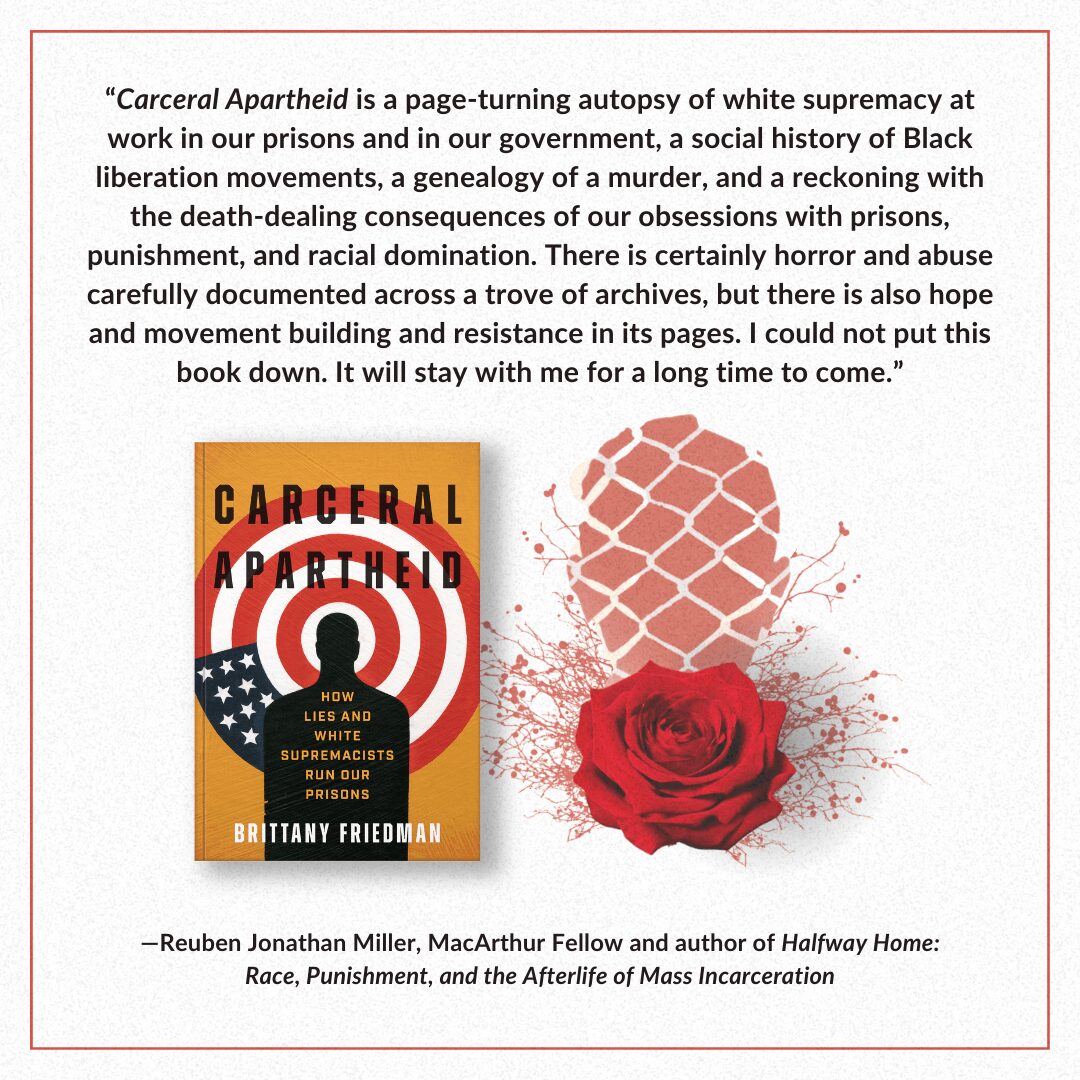
That journey ultimately shaped my book, “Carceral Apartheid: How Lies and White Supremacists Run Our Prisons.” The book argues that the carceral state is not an accident or a malfunction but instead a political project designed to govern through lies, containment, distortion, and division. Writing it required me to trace how institutions identify and target populations for violence and how this practice becomes normalized as “helping.” It also required me and pushed me to write complicated scholarly ideas in poetic and accessible prose that illuminates the openings and places where people imagine and refuse to accept the state’s containment as fate.
As my intellectual work grew, so did my commitment to creating spaces where people could reconnect with their intuition, magic and inner freedom through authenticity. That’s what led me to merge my scholarly background with ritual and creativity through my formal and ancestral training in herbalism. I am a spiritual herbalist and launched Liberation Apothecary from that fusion and it is a space where I create tools, practices, and handmade herbal offerings that reflect a careful understanding of the heart and spiritual needs of a person and community. I am excited that this Winter Solstice, December 21, 2025, Liberation Apothecary will re-open online with a new limited edition line of handmade herbal offerings inspired by the winter season.
Ultimately, I arrived at where I am today by following the questions that felt alive to me and trusting the pull of my purpose even when the path was unclear.
We all face challenges, but looking back would you describe it as a relatively smooth road?
At times the road has been joyful, bubbly and juicy and other times the road has been an exercise in continual heartbreak that I had to heal and transmute as an alchemist. But I don’t think totally smooth roads are where real transformation happens. My path has been uneven and full of unexpected ruptures and sharp turns but it has also been full of unbelievable triumph – this is why for me having an open and loving heart doesn’t mean someone hasn’t walked through the fires of death and had to rise like a phoenix – instead I take all of life’s spiral and honor it with gratitude.
To make some struggles public, I mean one challenge was navigating the emotional weight of studying carcerality and other people’s pain while carrying my own family’s histories, community stories, and ongoing realities of systemic and gendered violence. Doing this work without losing myself required strong boundaries and a deep spiritual practice.
Thanks for sharing that. So, maybe next you can tell us a bit more about your work?
My work sits at the crossroads of public intellectualism, abolitionist thought, ancestral storytelling, and spiritual imagination through herbalism. I am known for bringing analysis and artistry together. Whether through my book “Carceral Apartheid,” my essays, public talks, or the offerings I create for Liberation Apothecary, I try to build spaces where people can understand the structure of the world while also remembering their own brilliance and inner freedom. My work is known as both rigorous and deeply felt on a soul level. I am just as committed to emotional truth as a I am political clarity.
What I am most proud of is that my work has helped people feel seen. I hear from readers, students, community members who tell me that my writing and offerings have given them language or a solution for something they’ve carried silently for years. To me that is the real measure of impact, when someone recognizes themselves more fully because of something I created.
What sets me apart is the way I blend social scientific scholarship with intuition, imagination, and ritual practice. I am a balanced creator through the intellectual, spiritual, political and poetic. I treat each as an equally essential language for understanding myself and the world.
Do you have recommendations for books, apps, blogs, etc?
I love to read all kinds of books from nonfiction science books to novellas and poetry. One book that I just picked up is Jenny Odell’s “How to Do Nothing” and I can’t wait to read it.
Contact Info:
- Website: https://www.brittanyfriedman.com/
- Instagram: https://www.instagram.com/curlyprofessor/
- Other: https://liberationapothecary.com/
Popular
-
Cedar Boschan on Elevating Black Music Rights and Driving Urgent Conversations Around Credit, Equity, and Artist Protection
-

Portraits of the Valley
-

LA’s Most Inspiring Stories
-

Robin Olive on Building an Inclusive Performing Arts Movement and Expanding Opportunities for Every Student
-

Que Johnson on Building Brands That Last: From Visibility to True Market Authority
-

Christina Wren Steps Into the Director’s Chair to Tell Stories That Feel Like Home


