



Today we’d like to introduce you to Alistair Milne.
Hi Alistair, so excited to have you on the platform. So before we get into questions about your work-life, maybe you can bring our readers up to speed on your story and how you got to where you are today?
Accidental game designer
How do you credit yourself for your creative success or even simple progress for that matter? Inevitably, we all want to ascribe our success to agency; vision, commitment, grit and hard work. While there may be some of that, when I reflect upon my ‘journey’ the significant moments largely presented as a series of opportunities and turns that seemingly occurred without my bidding. Moments primarily distinguished by an absence of intent which have unlocked a door through which I stumble not knowing where I am or what I’m doing. In other words, something like an accident.
Thirty five years ago on a beach in Montauk, New York, was just such moment. I’d arrived at the Edward F. Albee Foundation for a month long residency having recently closed an exhibit in Houston at the Glassell School of Art Core Program, 2 year residency for emerging artists. Montauk represented the beginning of a new body of work. For several years my work had developed from an interaction with whatever localized materials were in abundance. I’d noticed that unlike my peers I didn’t really have ideas; my output depended on process much more than conscious intent. With as empty a mind as I could muster I would manipulate whatever materials were at hand and allow myself to be dragged by that interaction towards some sort of discovery. Something out of nothing.
As a consequence my first days at ‘the Barn’ were spent foraging for materials. Eventually I came across a half dozen busted up lobster floats on a rocky beach. I gathered them up and headed back to the studio. Lobster floats are bullet shaped styrofoam objects about 15” long and 5” in diameter with a hole that runs vertically through which you pass a rope to secure the float to a trap. There were no tools in the studio so I went to the kitchen, got a bread knife and cut the float horizontally into slices. Styrofoam bagels. After a few futile minutes stacking and rearranging I cut a ‘bagel’ in half then another into thirds and started joining them end to end. A wiggly-line ran across the table. Progress! Most interestingly each time it was reconstructed the line sprinted off in a different direction. It was as though it were a living thing. I distinctly remember thinking, “This seems like a game.” But I didn’t play games, I made sculpture. At the end of the month the segments of wiggly-line went into a box which went into an attic which , a couple of years later, was thrown in the trash. I no longer remember what precipitated the return of the wiggly-line but first in 2001 then again fifteen years later the Wiggly-line rose back into my consciousness and steps began taken to realize the thought I’d had a decade and a half earlier, “This seems like a game.”
To anyone who hasn’t made a game it is a singularly confounding proposition that is not for the impatient or faint of heart. It is said ignorance is bliss and I will attest to that. Confronted with a monumental task, ignorance can be a powerful asset. Superficially making a game seems like just another art project but quickly you discover maybe it’s more engineering than art. The game has to work. Much like a car that doesn’t drive isn’t really a car similarly, a game that doesn’t play isn’t a game. And then there are rules. Now you are writing laws and creating boundaries and a multitude of butterfly effects ripple through your carefully crafted mechanics. You nail that down and then there’s the last test….is it still fun?
Many who design entered ‘the hobby’ by playing a lot of games. That wasn’t me. For me it was like learning a language without the aid of a text book, teacher or native speaker. It was a free climb with a lot of falls but ultimately it was the most gratifying project I’ve ever tackled. About a year ago, the voice in my head that constantly turned over new ideas on rules and mechanics and art suddenly went quiet. The game was finished, or perhaps I was finished with the game. A stunning moment either way not least because now I found myself standing in front of three more completely foreign lands; marketing, production and distribution. Yikes!
So what’s the plan? When you have worked on a single project, albeit sporadically, over 7 years can you hand it over to a publisher to carry it the rest of the way and possibly make changes you disagree with? I’m not sure I can. Currently the plan is to build a crowd and take the game to Kickstarter. Will it ever happen? We’ll know in the next six months and if it doesn’t, there have been a hundred or so people who have played the game and maybe that’s enough…..although the notion of a complete stranger buying my game is an intoxicating thought. If you are interested in following along with the project or know somebody who might be there is of course a website where you can join the mailing list and see how it all pans out.
More than likely you’ll get to witness another accident….or several.
www.ninefathomdeep.com
Alright, so let’s dig a little deeper into the story – has it been an easy path overall and if not, what were the challenges you’ve had to overcome?
The obstacles and challenges are enumerated in the ‘Your story’ section. Essentially it is about falling into something and finding my way out.
Can you tell our readers more about what you do and what you think sets you apart from others?
Again this is included in the ‘Your story’ section. I chose to focus on the game design since hit is the front burner project currently and including everything was a bit confusing.
In my first pass I endeavored t0 cover the full range of creative activities. My ‘work’/creative activities are quite varied from the day job making set and prop illustrations to sculpture, jewelry, dancing*, book making, costumes and game design. The original thread expanded the theme of ‘accident’ since almost every lurch into a different creative field was essentially accidentally.
* dancing is very much a hobby, nobody would pay me to dance but for years it functionally existed as a creative activity, when the day job was sucking up all my time, and was discovered accidentally when I attended a jewelry convention in New Orleans.
What’s next?
Again contained in “your story” . Essentially the plan is to attempt to launch a kickstarter to publish the game.
Here’s an index of the photos uploaded. All images were shot or created by me. I don’t actually know the three people in the play through video. If this is a potential legal issue just don’t use that one.
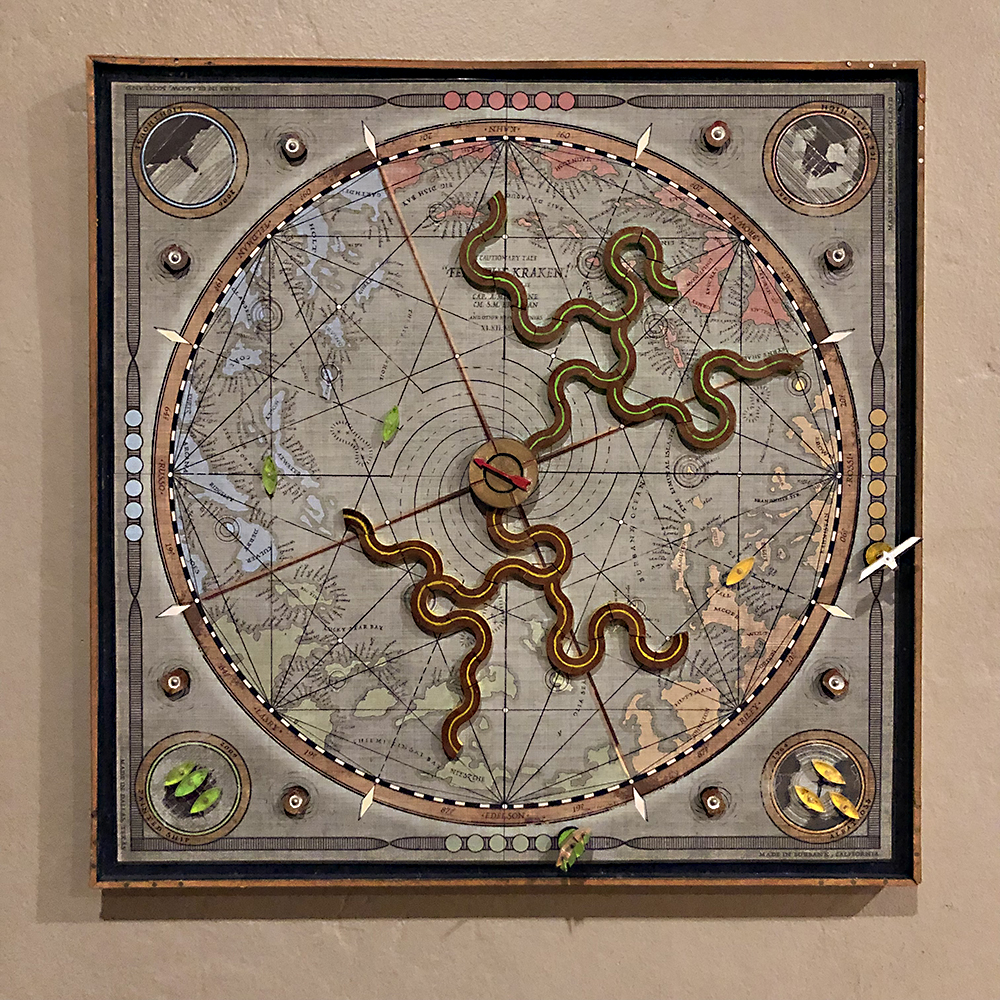
#1 9 Fathom Deep ( At the time named Fear the Kraken) Game board, 2022(ish)
#2 The original Wiggly-line, 1990, lobster floats attached to the wall with straight pins
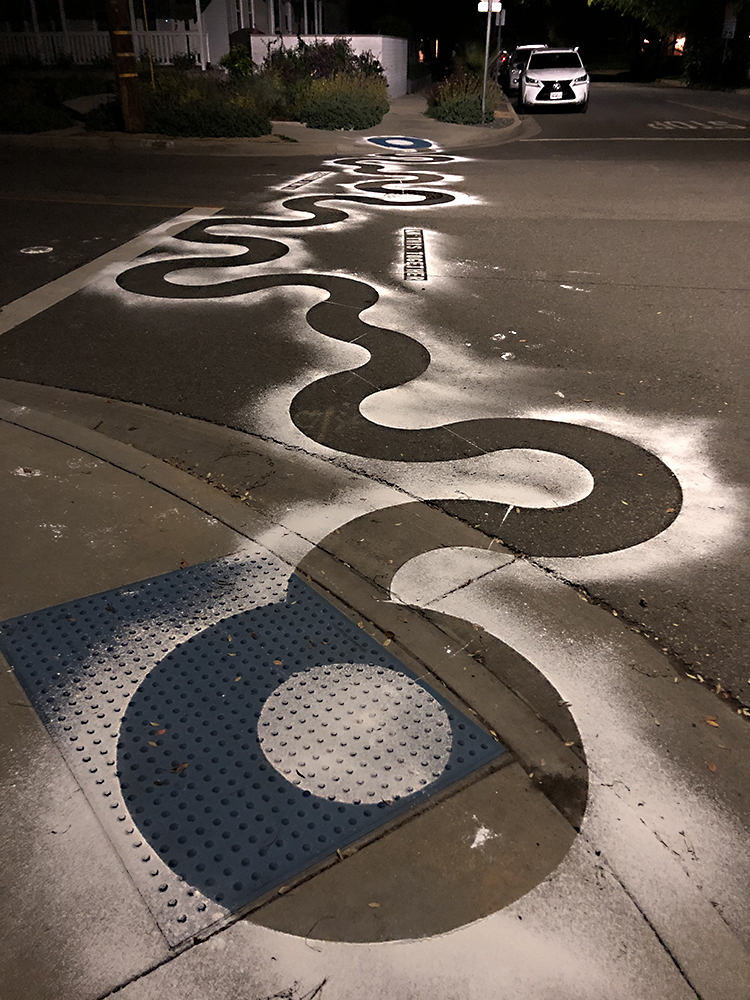
#3 “In this together”, 2020, Cornstarch stencil drawing made at the corner of our street during the Covid lockdown)
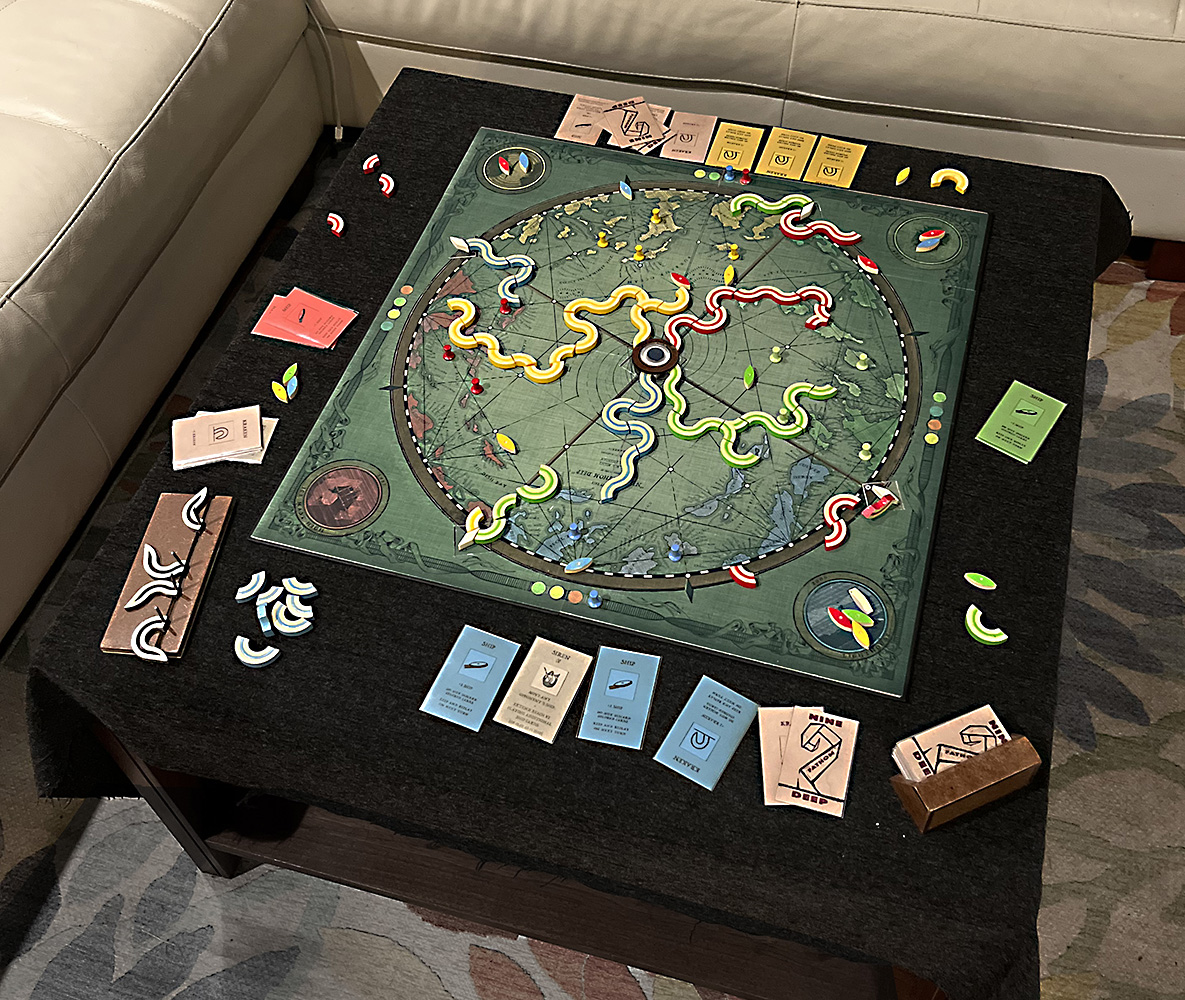
#4 9 Fathom Deep 2025 ( post game state)
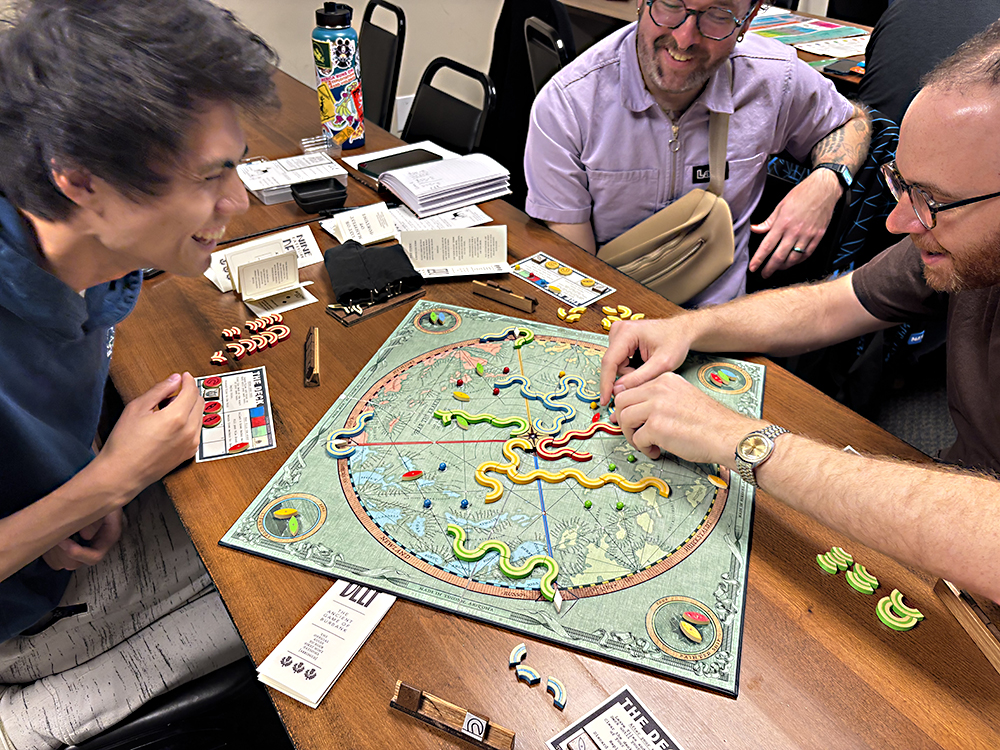
#5 9 Fathom Deep at 2025 ( being played at First play LA at Geeky Tees, Burbank )
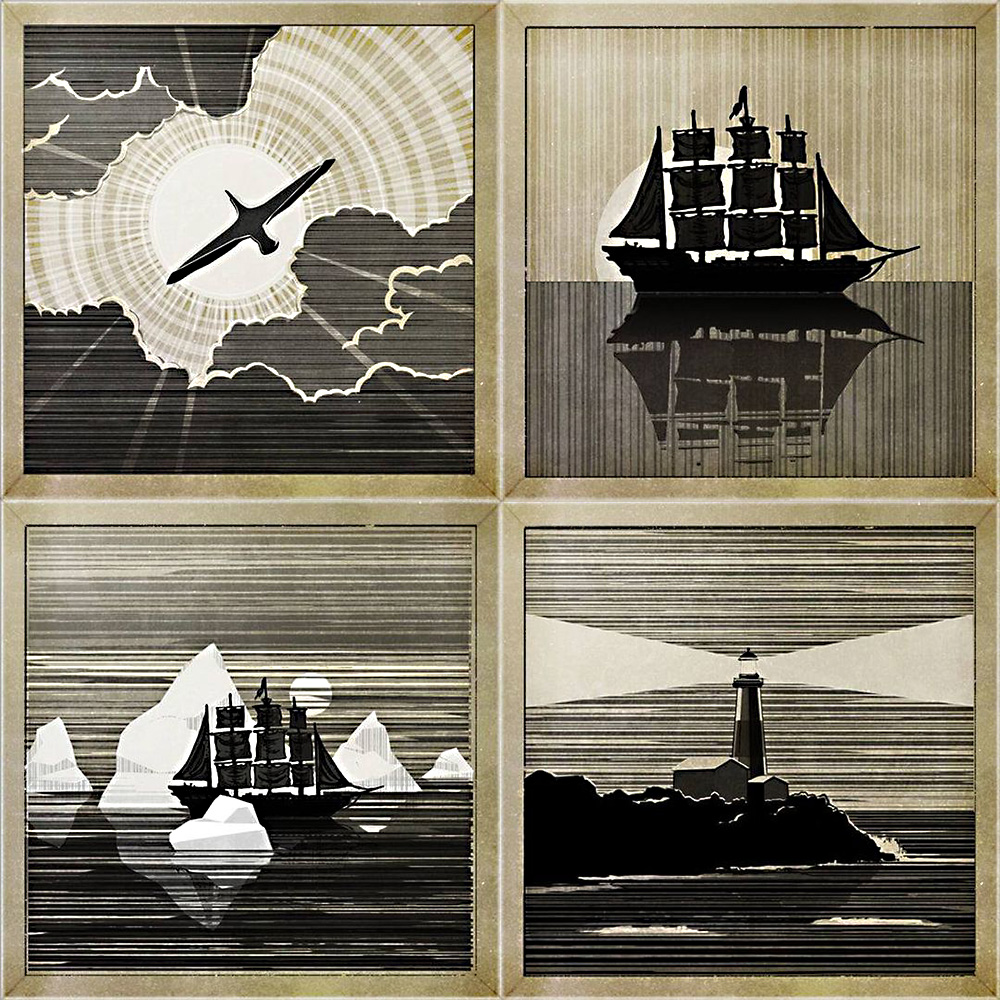
#6 Game art from the board 2025
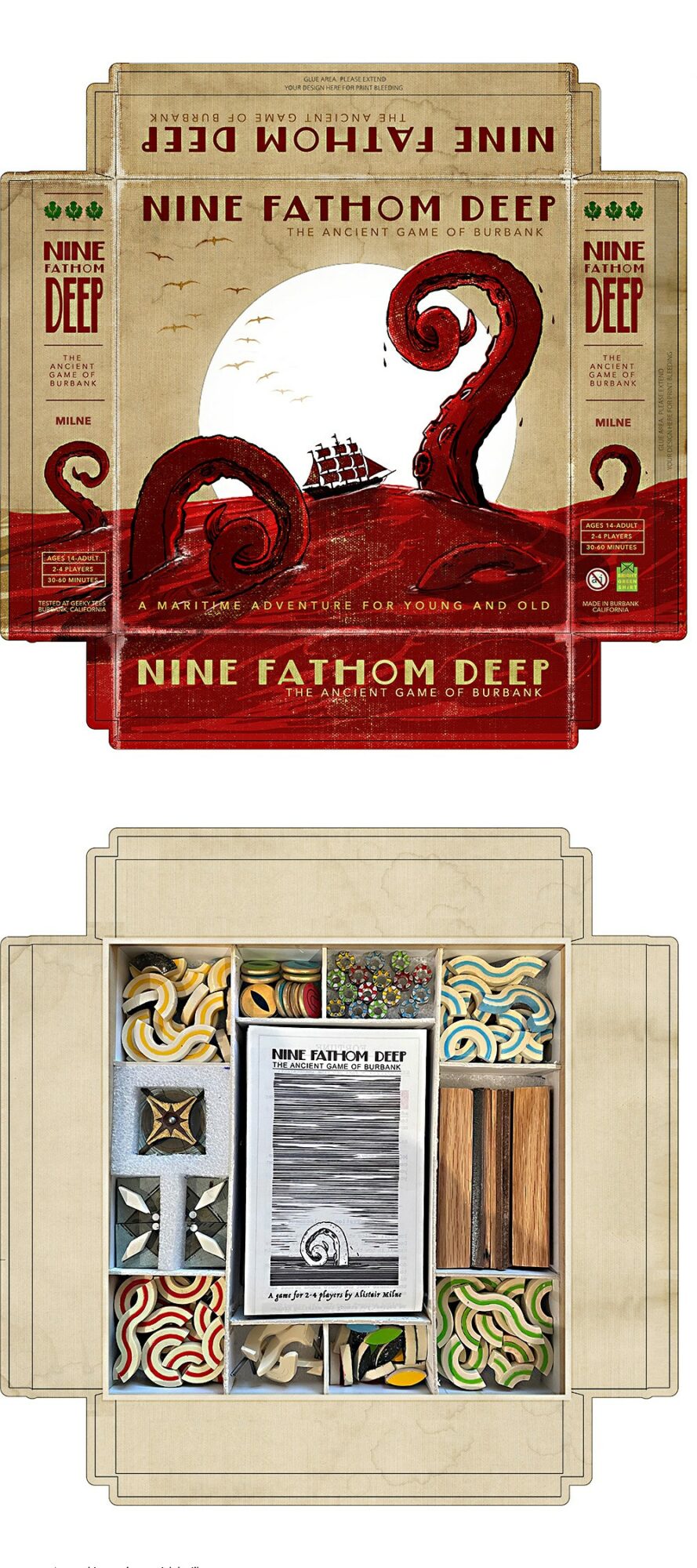
#7 Box art and layout of components
Contact Info:
- Website: https://www.ninefathomdeep.com