




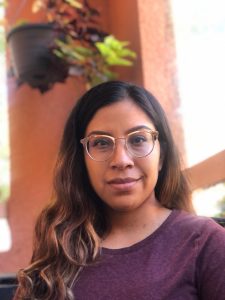
Today we’d like to introduce you to Samantha Funes.
Hi Samantha, it’s an honor to have you on the platform. Thanks for taking the time to share your story with us – to start maybe you can share some of your backstory with our readers?
I was born in Los Angeles, California to a Salvadoran family. My mother had come to LA to visit my aunt when surprise! I was born about 2.5 months before I was supposed. It was never my mom’s plan to live in the United States but I guess I had other plans.
I grew up in Koreatown with many other kids whose families had immigrated from another country. It was great to be surrounded by many different cultures but to also not feel like the odd one out. Even if we did not speak the same language, we all understood what it was like having to switch between languages at school and at home and having to translate for our parents. The pressure and anxiety of having to switch between words and worlds and being responsible for taking care of our parents, even in such a small way, though was unspoken.
I think I was able to ignore and think of my anxiety as “normal” until about junior year of undergrad when all that anxiety manifested into a pretty intense case of OCD. My family had suffered a loss to suicide about two years prior, my grandmother was about to go into major surgery, and my mom had lost her job. I now understand that the compulsions were a way my brain was trying to master some sort of control when so much was uncontrollable, and the obsessive thoughts were a way to keep me from thinking of all that was affecting me and my family. During this time there was a reality show airing called ‘The OCD Project’ and I saw people that were going through what I was. I saw the therapist provide exposure and response prevention with the participants and I started to apply some of the same techniques to myself. While I won’t say it “cured” my OCD, it definitely helped my symptoms become much more manageable. It allowed me to see how therapy can help someone. I decided I wanted to help people by becoming a therapist.
I applied to grad school and decided to go to Antioch University Los Angeles and be part of the LGBT Affirmative Therapy Specialization. The suicides of LGBT young people people in 2010 greatly impacted me, in large part due having lost a family member to suicide a few years prior. I had learned that LGBT+ folks were at a greater risk of suicide, and knowing the pain of having gone through losing someone in that manner, I wanted to help reduce that risk and hopefully prevent another family from going that pain. I did my practicum hours at Being Alive Los Angeles working with those affected by HIV/AIDS and was one of the few Spanish-speaking therapists there. I was able to see how relieving it was for my clients to have someone from the same or similar cultural background to them, and it made me passionate about working with BIPOC clients, especially those of a Latine background. Once I graduated I worked for a DMH-contracted agency where I provided field-based therapy to low-income families and their children. I am now at my own private practice where I provide therapy to individuals and couples, where I focus on working with LGBTQ and Bipoc folks, especially with those of a Latine background. I am also an affiliate with the Los Angeles Gender Center, where we provide gender-affirming therapy to TGNC folks.
Can you talk to us a bit about the challenges and lessons you’ve learned along the way. Looking back would you say it’s been easy or smooth in retrospect?
The road has not always been smooth. I think the biggest struggle is realizing that there are not many Latine therapists out there, which means there is little resources out there for Latine and other clients of color. A big issue is access to becoming a therapist. Many of the folks I went to school with had come from successful careers in business, entertainment, or law. Many were married and had partners that also came from these careers. They were able to afford and not worry about making little to no money while receiving trainee and associate hours. Some where able to begin building their private practice by working under a supervisor where they might have to give part of their income to their supervisor, but they had a clientele ready for when they were licensed and started their own private practice. I did not have that privilege. I had to go start from scratch after I was licensed. I had to build a clientele from scratch and learn how to build a business on my own. However, I do want to be honest and acknowledge that I have some privilege in not having to worry about kids to feed, and having family that would be willing to help me financially if I needed it. Many people, especially those of us from working-class and/or immigrant backgrounds don’t have that. There are many people that may want to become therapists and have their own practice but have to worry about taking care of a family. I think this is a reality that the mental health field needs to face especially as we are seeing an increase in demand from communities of color for therapists of color.
Alright, so let’s switch gears a bit and talk business. What should we know?
I am a licensed marriage and family therapist in private practice who works with individuals and couples. I specialize in working with queer, trans-BIPOC folks, especially with those that come from a Latine background. I am also an affiliate of the Los Angeles Gender Center where we provide therapy to trans and other gender-expansive folks. I provide trauma-informed care and work with clients on deconstructing the negative messages that one might receive throughout their life. I also provide psychological evaluations for those that are in the immigration process for adjustment of status through marriage to a US Citizen or Permanent Resident, U-Visa (victim of crime), or VAWA (Violence Against Women Act).
I like to think that I am known for my gentle and authentic approach to challenging situations for clients. I asked a therapist friend of mine what she would say I’m like as a therapist and she said “You help people feel witnessed and affirmed in their experience while empowering them to disagree with societal norms.” I think empowering people to disagree with societal norms is what sets me apart. I am well aware that therapy is often a bandaid for bigger societal issues. I do not think we need to suggest therapy to get people to function with things that are not acceptable (such as structural racism and transphobic and sexists policies). However, I do believe in helping people deconstruct the negative messages they have received about themselves and internalized from these “societal norms” that were made from and for a very select few. I give my clients the permission to not carry what is not theirs. To put that box/weight/boulder/whatever down and feel what it’s like without it, what they can do now that their hands are free. Helping my clients find their voice among all that noise, seeing them put that box down, clear their own way, and walk away, it’s what I’m most proud of.
Let’s talk about our city – what do you love? What do you not love?
The diversity, especially with food. I love that I know where to go if I want good Salvadoran food, Korean food, Peruvian food, you name it. I love to see all the neighborhoods where people have embraced their cultural identities and put them on full display. I love that this is home.
Is it fair to say that I like traffic the least?
Contact Info:
- Website: https://www.sfuneslmft.com/fees
- Other: https://www.psychologytoday.com/us/therapists/samantha-funes-pacoima-ca/714171
Popular
-

What is something outside of work that is bringing you joy lately?
-

Local Highlighter Series
-
What did suffering teach you that success never could?
-
What are you most proud of building — that nobody sees?
-

Who were you before the world told you who you had to be?
-

If you could say one kind thing to your younger self, what would it be?


