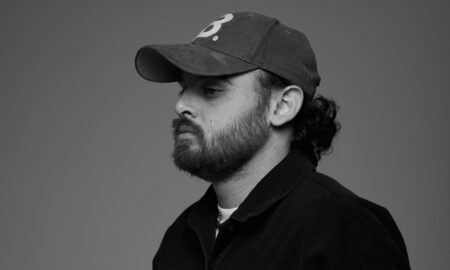



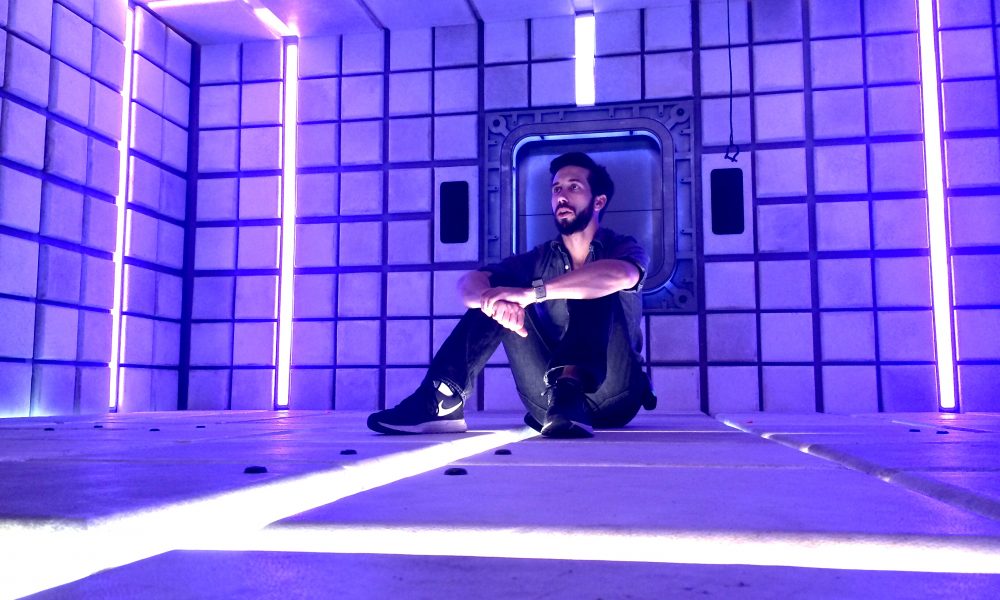
Today we’d like to introduce you to Nathan Haugaard.
Nathan, let’s start with your story. We’d love to hear how you got started and how the journey has been so far.
I hijacked my family’s video camera when I was seven years old. By the time I was 19 years old I had written, directed and shot forty short films, which all featured friends and family, of course. I was rejected from every major film school program in the United States and so I decided to just move to Los Angeles; just get into the industry. I worked for several years as a PA on reality shows and eventually as a Camera Assistant on some major studio features. I found it really difficult to find time to continue learning and practicing filmmaking while also being on set 15 hours a day, so eventually, I stopped assisting, bought a 5DMkII, and got back into telling stories.
I had always been accustomed to shooting and directing my own stories as I grew up, but now as a young adult in Hollywood, I was quickly put in my place by my peers and informed that I simply needed to pick a SINGULAR focus. I chose cinematography.
Newly branded as a cinematographer, I said yes to just about any kind of job: I wanted to be shooting all the time. Four years into this new chapter, I got my biggest break: I met Garrett Warren, arguably the most successful Second Unit Director working today (He’s Spielberg’s guy, Cameron’s guy, Zemeckis’ guy, PT Anderson’s guy, the list goes on and on) We quickly grew to trust one another and he’s brought me onto some amazing projects including The Avatar Sequels. Working on Avatar with James Cameron felt, in a lot of ways, like going to film school. The biggest difference being I now have a “degree” that people actually care about!
Most recently, I am learning how to make movies while adhering to COVID-19 protocols which is a fascinating new challenge. The necessity for smaller sized crews on set along with the general democratization of cinematographic tools has led to an interesting opportunity: I have been asked to direct and shoot a film.
I know there are peers of mine out there who are nervous about the future of our profession, but if we can wrap our heads around this tectonic shift, I think these new restrictions will give way to deeper stories. It’s easy to be excited about the filmmaking process, about being #onset, but maybe now that we see being on set as more of a luxury, we can spend more time honing our stories and getting back to the heart of the medium: a good script.
Overall, has it been relatively smooth? If not, what were some of the struggles along the way?
Honestly, it’s all a matter of perspective, really. I feel blessed in that regardless of the kind of project I’m on, be it reality television, a student film, or Avatar, there’s always been something super cool about it. I’ve traveled all over the world shooting for Bravo’s Below Deck. I’ve traveled to small, beautiful small towns all across the U.S. shooting documentaries and commercials. Last year for The Ellen Show, I got to light Former First Lady Michelle Obama, which is just badass.
There are always struggles, there will always be struggles. It’s important to qualify filmmaking though; we work to entertain and to sometimes educate. Working in this industry is a true blessing. I suppose the greatest struggle could be reminding myself to be grateful when I’m shooting inside a house with no AC in The Valley and it’s 120 degrees outside.
We’d love to hear more about your work and what you are currently focused on. What else should we know?
Well, my company is me; if you work as an independent contractor, I highly recommend looking into starting your own company that you can work as a “Loan Out” through. There’s a business side to cinematography that people do not discuss enough and it can be just as important to one’s survival as knowing the latest lenses and cameras.
Having approached cinematography from a filmmaker’s point of view since I was a student, I would say my specialty is in discerning the right tool for the right moment. To touch on what I mentioned earlier, it is SO EASY to get excited about new gear, new toys, new tools, having our picture taken with the giant lens or crane; we seldom stop to think about whether or not we NEED all this gear. The script should be the focus and what the democratization of gear has given us is a clearer and more affordable line of sight from concept to actualization.
People have told me the films I shoot are “cinematic.” It’s the greatest compliment in the world to me and I am most proud of this. Sometimes all it takes to move people is a single lightbulb in a dark and empty room. The trick is, where do you put the lightbulb?
What is “success” or “successful” for you?
I’m a firm proponent of “The Mom Test.” You’ve never heard of it? It’s fairly straightforward: if my mother likes a movie, chances are it will do fairly well commercially. Also, it just makes me happy when Mom likes a project I’ve worked on.
Levity aside, I do feel there is a truth to this concept. It’s important that we listen to ourselves as we create: audiences can tell when we are pandering. But there’s an old expression, “Don’t give them what they want, give them what they need.” The mark I am always looking out for is a feeling, a longing to be just in front of the zeitgeist. It’s a healthy balance of respecting the past and not being too fearful of the future.
My favorite projects that I have shot were the result of tight restrictions, limited options, but an open mind. If we can navigate the technical difficulties filmmaking presents and remain open and positive to the universe then I generally feel the project will be successful.
It can be hard to watch my own work sometimes; thinking about what I wish I would have done is unavoidable. But with some distance, if I can view a project and see that we did the best with what we had and we were truly honest and self-aware in our approach, I feel I’ve been successful.
Contact Info:
- Website: www.nathanhaugaard.com
- Email: [email protected]
- Instagram: @nathanhaugaard


Image Credit:
Courtesy of Nathan Haugaard
Suggest a story: VoyageLA is built on recommendations from the community; it’s how we uncover hidden gems, so if you or someone you know deserves recognition please let us know here.
Popular
-

What is the story you hope people tell about you when you’re gone?
-
What do the first 90 minutes of your day look like?
-

Local Highlighter Series
-
What did suffering teach you that success never could?
-

Who were you before the world told you who you had to be?
-

What are you most proud of building — that nobody sees?