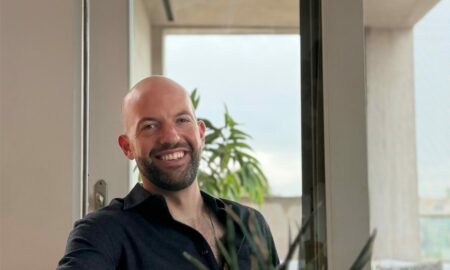



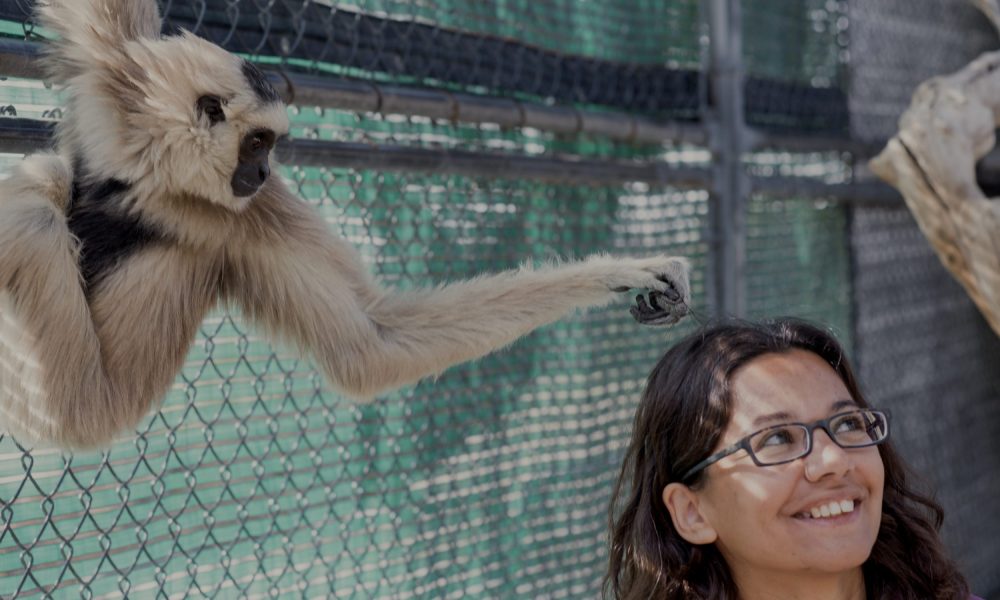
Today we’d like to introduce you to Gabriella Skollar.
Gabriella, can you briefly walk us through your story – how you started and how you got to where you are today.
My interest in wildlife started when I was around five years old. My family had a little garden by the apartment house where I grew up, and I spent most of my time in this little garden, watching animals. My parents let the grass grow up high, and with the different trees, bushes, and flowers, it meant a jungle for me.
It was full of life, and it enchanted me. Later, I had pets, and I learned to be responsible for them, and I developed a deep interest in animal behavior. It was natural to apply to university to study Biology with my focus on animal behavior and ecology.
During my university studies, I worked at the Budapest Zoo every summer. I worked at the bird-house, and I helped to care for the animals there, I also got involved in the zoo captive breeding program for endangered birds, such as the Bali Myna, which is highly endangered in Indonesia; and I was there when the first hatchlings were born. I assisted in the zoo wildlife-rescue and rehabilitation program when I cared for orphan and injured birds and bats, and I helped in releasing them. Working in the Zoo through those years helped me realize the important rules zoos play in conservation and education, and I felt this is the path I want to continue in my life.
I graduated in 2004 with a Master’s degree in Biology from the University of Szeged, in Hungary. I first became involved with gibbons when my University adviser asked me to record Kaszat, a northern white-cheeked gibbon in the Szeged Zoo. After many hours of early morning recording and observation, it became my passion to study gibbon vocalization.
I moved to the U.S. in 2005 to work as a volunteer caregiver and researcher at the Gibbon Conservation Center (GCC), initially supported by the Rosztoczy Scholarship.
In 2007, I became a full-time Primate Caregiver and Research Assistant.
In November 2011, after the passing of Alan Mootnick, the Founder of the GCC, I became responsible for the day-to-day care and health of the gibbons, and the supervision of other caregivers, maintenance staff, and volunteers. In January 2014 I became the Director of the GCC.
I am an active participant in the gibbon zoological, conservation, and scientific communities worldwide. As the SSA Zoo Liaison at the International Union for Conservation of Nature (IUCN), Primate Specialist Group, I am responsible for representing the SSA within the Zoo community and improving links between in-situ and ex-situ conservation. I am also a husbandry advisor for the gibbon SSP in the USA, as well as a member of the gibbon hand-rearing and surrogate team.
I give educational lectures and tours at the GCC, focusing on gibbon conservation and behavior. I have presented at international conferences on gibbon husbandry, cognition, and social behavior. Currently, my studies focus on gibbon vocalization with the goal that my studies will support gibbon conservation efforts. I want to dedicate my life to protect and study gibbons and educate others about these fascinating primates.
Has it been a smooth road?
It wasn’t a smooth road. I am just very stubborn and determined and have a strong sense that I am on the right path, so even when it is hard, I just keep going.
It was difficult to leave my family behind, and come to the USA completely alone, without speaking English. I didn’t know anyone here; I had no one to talk to at the beginning. I spoke to my parents once a month and sent emails to friends. But slowly I started to open up, learned the language and took roots here. I feel at home now.
People often say I have the best job, I do! I am living on site, among 41 singing apes, waking up every morning to the gibbons’ song. It is an amazing life. However, it also comes with great responsibilities and strenuous work. We work long hours, often in extreme weather. Besides feeding the gibbons, we also have to build and repair enclosures, put in new branches and other enrichment, and after working outside, we still have a lot to do, such as managing social media and writing grants. It is not an 8-hour job! Nevertheless, I love what I am doing. I can’t imagine doing anything else or living somewhere else. I am a guardian here for the gibbons. I have found the purpose of my life, and now I am living it.
I came here originally to be a volunteer and a researcher, and I ended up staying. I worked with the GCC Founder, Alan Mootnick for over seven years. When Alan passed away in 2011, it became a very challenging time for me, personally and professionally also. Alan was my mentor but also a dear friend. He was the soul of the GCC; his life was completely intertwined with the GCC. How could anyone replace him and continue his work? I didn’t know how to keep it going. All I knew was that we must keep it going. I felt greatly responsible for the gibbons in our care. With a handful of dedicated people, including staff, board members, and volunteers, we started to take small steps towards our future. We were just doing what needed to be done, learning as we were going, and taking things as they come. The road eventually got clearer, and we started to make plans, and more and more people began to believe in us, and I guess, believe in me. I became the director in 2014.
I was always a timid person, and since my early teens, I was dealing with social anxiety. Answering the phone, talking to the public, giving a lecture were terrifying me. But I kept pushing myself and putting my shelf in these challenging situations I started to gain more confidence.
I enjoy giving lectures now. I still get nervous at times. 🙂
We’d love to hear more about your business.
Founded in 1976 by Alan Richard Mootnick, the Gibbon Conservation Center (GCC) houses the rarest group of small Asian apes in the Western Hemisphere. We currently house 41 gibbons, representing five species. We currently house 40 gibbons, representing five species. All are on the IUCN Red List of Threatened Species list. One of them, the northern white-cheeked gibbon, is critically endangered.
The mission of the GCC is to promote the conservation, study and care of gibbons through public education and habitat preservation. We educate the public about gibbons, threats to their survival, and the actions the public can take to protect them. Each year, GCC provides educational tours for veterinarians, anthropology students, graduate students, K-12 school children, scout troops and animal lovers of all ages. We also encourage noninvasive behavioral studies to increase our knowledge and understanding of gibbons, both captive and wild, as well as support ongoing field conservation projects in their countries of origin.
At the GCC, we use our knowledge and experience to improve the lives of captive gibbons by assisting and advising zoos and rescue centers in better captive management. We offer consultation, caregiver training and enclosure design and construction services free of charge, to zoos, and gibbon rescue centers throughout the world.
The GCC works with its international partners to maintain healthy stable bloodlines for five endangered gibbon species. The northern white-cheeked gibbons are down to less than 1,000 in the wild, thankfully, they are in a successful captive breeding program.
The GCC is operated by a staff of three women, a cadre of volunteers and a small Board of Directors…
Funding comes from private donations, small grants, public tours, school tours, internship, adoption, and membership programs.
The Gibbon Conservation Center is open to the public every Saturday and Sunday morning from 9:30 a.m. to noon. Private tours can be arranged for any day of the week, in advance.
We are active on Social Media; and you can visit our Website, Twitter, Sound Cloud, Instagram and Facebook Page.
Is our city a good place to do what you do?
We are still kind of a secret here. We would love to have more visitors and more volunteers. Would be nice to get more support for our programs.
Pricing:
- Adult $15
- Students $12
- Seniors $10
- Kids under 12 $5
- Kids under 5 are free
- Private Tours $120 for up to 8 people
Contact Info:
- Website: https://www.gibboncenter.org
- Phone: 6612962737
- Email: [email protected]
- Instagram: https://www.instagram.com/gibbonconservationcenter/
- Facebook: https://www.facebook.com/GibbonConservationCenter
- Twitter: https://twitter.com/GibbonCenter
- Yelp: https://www.yelp.com/biz/gibbon-conservation-center-santa-clarita-2
- Other: https://soundcloud.com/gibbonconservationcenter


Image Credit:
Walt Kostrzewski
GCC
Getting in touch: VoyageLA is built on recommendations from the community; it’s how we uncover hidden gems, so if you know someone who deserves recognition please let us know here.
Popular
-

What is something outside of work that is bringing you joy lately?
-

Local Highlighter Series
-

What did suffering teach you that success never could?
-

What are you most proud of building — that nobody sees?
-

Who were you before the world told you who you had to be?
-

If you could say one kind thing to your younger self, what would it be?