


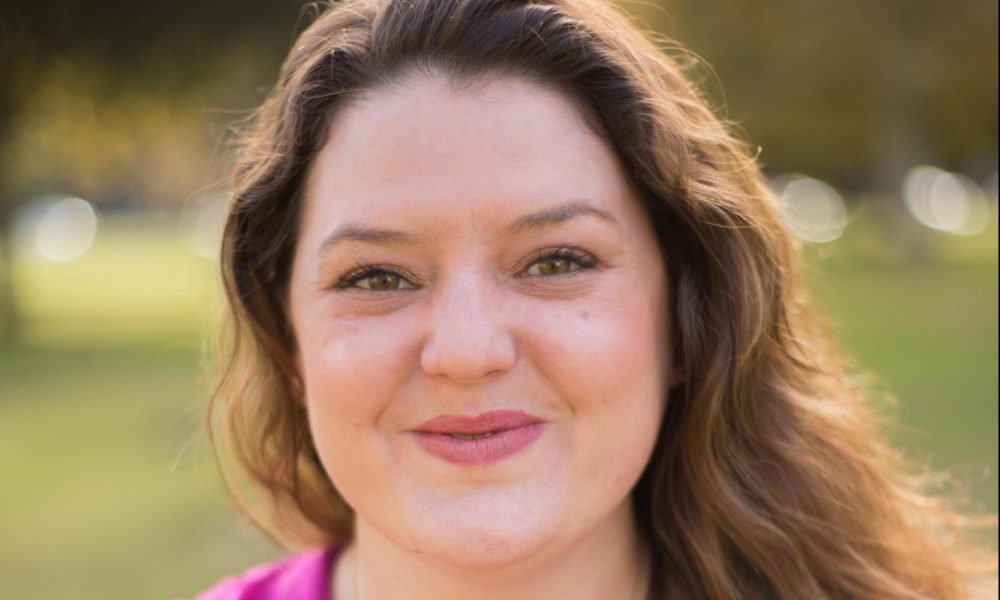
Today we’d like to introduce you to Bethany Jones.
Bethany, can you briefly walk us through your story – how you started and how you got to where you are today.
I’ve always been fascinated with crime, psychology and what leads someone to commit a crime. I began working in television upon graduating from the University of Wales, Newport and landed a job on “Prison Break”. In addition to my office responsibilities, I provided research, which entailed me doing a deep dive into the prison system. After working on “Prison Break” I was offered a job on a true-crime series that focused on minors that commit homicide – and that’s when my career really began to blossom. I quickly went from series to series and was working with law enforcement across the country, including the federal agencies. While working on a piece that focused on an Iranian arms-dealer I found myself having to reach out to Saddam Hussein’s weapons supplier. When he responded a colleague said “well aren’t you just the little inmate whisperer”. And, the name stuck. From there I’ve spoken to murderers, spies (including Aldrich Ames), white-collar criminals, and even a man who is in Charles Manson’s cult. I currently sit in one of the most unique positions as a producer in being able to connect to victims, law enforcement (at local, State and Federal levels), prosecutors, defense attorneys and even the perpetrators.
Great, so let’s dig a little deeper into the story – has it been an easy path overall and if not, what were the challenges you’ve had to overcome?
Just as there’s no such thing as an easy true-crime documentary. There’s no such thing as an easy and smooth road in entertainment. There are obstacles that are nearly always out of your control. For me, it wasn’t smooth sailing when the recession and the writer’s strike happened back to back. I was riddled with anxiety and uncertainty as to what the future would hold – and jobs weren’t easy to come by then. When I got the opportunity to work on the true-crime doc I took it thinking it would be a one-time thing, ha!
For anyone considering getting into this line of work don’t be discouraged by the no’s and rejection, use it as an opportunity to go back revamp your request, your resume, your script and try again.
Working as a freelance producer is like having a career that’s a patchwork quilt – you sew it together with different patches slowly but surely.
Alright – so let’s talk business. Tell us about The Inmate Whisperer – what should we know?
Well, the Inmate Whisperer is really me being able to interview those who are incarcerated. As opposed to telling the story of the crime or the titillating and gory story, I try to talk about the why.
For example, on The Pros&Cons we recently interviewed Kyle Hulbert a man incarcerated for murder in Virginia. Instead of fixating on the crime we were able to speak to Kyle about mental health, his challenging journey and ultimately to tell the story in a way that was meaningful and didn’t sensationalize the crime. You can include someone’s perspective without necessarily condoning their behavior.
My work really opened up when I stopped referring to people in general terms. Not just “law enforcement” or “those inmates”, when I began to think in more personal terms world’s really opened up. Instead of thinking in broadstroke terms – try to think about the person in front of you as someone’s son, mother, friend, cousin, brother, sister. It’ll change how you treat them.
Through my work I have learned a lot about myself, the world around me, society and in particular compassion fatigue & secondary trauma. It’s a topic I speak about frequently. Got a group of people who want to learn about compassion fatigue, hit me up I’ll come speak to you!
For many, they simply want the thrill of me talking to a domestic terrorist or serial killer and they ask me the tabloid-esque questions. For others, there’s a world to explore in the depths if you only get out of the shallow end and your comfort zone.
Los Angeles is a city built on second chances and redemption. I hope that those qualities along with honesty, transparency, accountability and compassion are the take aways from my interviews with those incarcerated.
Is there a characteristic or quality that you feel is essential to success?
Compassion and perseverance are the two qualities that go hand in hand for success in this line of work. You first and foremost must be compassionate to the people you reach out to and hope to interview. No one calls the police because they’re having a good day – and for many true crime producers, they forget this when reaching out. Whether it’s the victim, victim’s friends, and family, law enforcement, lawyers you’ve got to keep in mind that you’re asking them to relive a particularly difficult and challenging time. Give them space and allow them to feel what they need to feel. With perseverance, you’ve got to be the little engine who could. Keep putting coal into the project you’re working on, water the communication you’ve planted and give it the time to grow. In a world where everything is instantaneous, there’s something to be said to letting a relationship or project germinate organically. It took me four years to get a young man to respond to an interview request, I didn’t give up or make assumptions. Just gently nurtured what I hoped would become.
Contact Info:
- Website: https://mouthoffnetwork.com/the-pros-and-cons-podcast
- Instagram: https://www.instagram.com/theprosandconspodcast/?hl=en
- Facebook: https://www.facebook.com/groups/211822509496931/
- Twitter: https://twitter.com/prosandconsshow
- Other: https://www.facebook.com/theprosandconspodcast/?modal=admin_todo_tour

Image Credit:
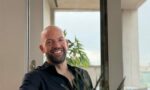
Bethany Jones
Personal photo – Darvin Morales
Suggest a story: VoyageLA is built on recommendations from the community; it’s how we uncover hidden gems, so if you or someone you know deserves recognition please let us know here.
Popular
-

What is something outside of work that is bringing you joy lately?
-

Local Highlighter Series
-
What did suffering teach you that success never could?
-

What are you most proud of building — that nobody sees?
-

Who were you before the world told you who you had to be?
-

If you could say one kind thing to your younger self, what would it be?