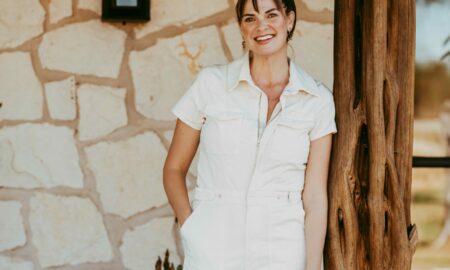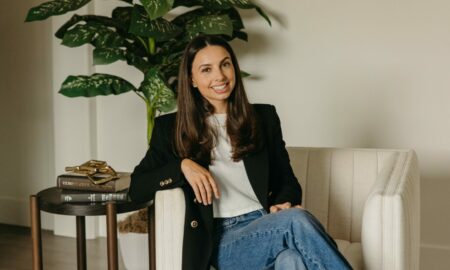



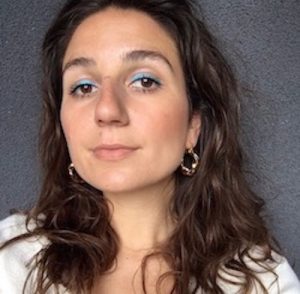
 Today we’d like to introduce you to Alessandra Bergamin.
Alessandra, let’s start with your story. We’d love to hear how you got started and how the journey has been so far.
I moved to California in 2016 to undertake a Master of Journalism program at the University of California, Berkeley. I was already working in the media industry in my hometown of Melbourne, Australia but felt professionally stuck.
Despite many years of largely unpaid internships and a few magazine stints, I didn’t feel that I had the skills, contacts, or confidence to pursue and publish the kinds of stories I wanted to report on — big features, investigative pieces, and ambitious projects with a focus on human rights and environmental justice.
After I graduated in 2018, I spent the summer in Southern Italy reporting on migrant agricultural workers with the support of a language fellowship. The experience gave me a taste of reporting abroad in a foreign language and working as a freelance journalist — something I hadn’t necessarily considered given the industry’s uncertainty. I moved to Los Angeles within a month of returning but had little success landing a full-time journalism job. I decided to commit to a few months of freelancing but didn’t necessarily think I would stick to it. Those first few months, funnily enough, were among the most challenging. Actually getting paid for the work you do as a freelancer is often unfair and unpredictable and at the time, I didn’t have the diverse workstream I do now (I also fact-check stories for magazines and do web producing work for a health news website.) I was also ghosted by a lot of editors — something that continues to this day — but given my lack of experience then, I felt it was perhaps a reflection of my abilities or lack thereof.
I did have a few early breaks that convinced me to stick with it, however. My work was published in Harpers and The New Yorker Magazine and about six months into freelancing, I was the recipient of a Food and Farming Fellowship which allowed me to report on the problems with sustainable palm oil in Guatemala.
Like most people, many things have since changed due to COVID-19. I canceled international reporting trips and lost some work as magazine budgets shrunk and advertising revenue dried up. For the most part, however, I am grateful that I have been able to continue doing what I love most. Although I could no longer pursue any international ideas, other stories revealed themselves with perhaps a greater urgency. Among others, including a current project on survivors of human trafficking, I reported on COVID-19 and its impact on Los Angeles’ garment workers who were facing decades of poor health and safety oversight amid a pandemic. I also started a newsletter called Defender, which focuses on the global environmental justice movement.
While my work often pours into the evenings and weekends and I continue to be rejected and ghosted, pursuing freelance journalism was ultimately the best decision for me. I choose the stories I want to invest my time in and as a result, get to work on pieces that center those who have been marginalized and uplift the work of those on the frontlines of social and environmental change.
Great, so let’s dig a little deeper into the story – has it been an easy path overall and if not, what were the challenges you’ve had to overcome?
Early on, one of the biggest struggles of being a freelance journalist was trying to piece together a living income from disparate sources. Unfortunately, everything from your rate of pay to when you will be paid differs from publication to publication and oftentimes, it would take up to three months for me to get paid for a story. Now that I have more stable and diverse work sources, it seems that a different challenge has emerged — how and when to say no to work that either no longer serves me and my goals, or is in some way, exploitative of my time and skills. I think saying ‘no’ to work is a constant struggle but during the pandemic, it has been especially difficult. Despite this, it’s a skill that I’ve been trying to develop as I gain more experience, have a better understanding of my worth, and try to align more and more of my work with my financial needs and my career goals.
On the creative side, I think this kind of work always involves some struggle, even if that struggle is to simply stop yourself from checking Instagram every ten minutes. While I probably wring my hands the most over the reporting and writing process, it’s also the part of my career I enjoy the most and as a result, can feign some kind of confidence rather than dwell on the challenges. More recently, the self-promotion aspect of being self-employed has become one of the more challenging parts of my career. I think it’s important to share and promote my work on social media, yet I have struggled to find a way to do so without hating the process or feeling like a complete fraud. Although this isn’t central to my actual work (luckily!), I think it’s important to be a strong and public advocate of your work and at this point in time, that most often means using social media to your advantage.
We’d love to hear more about your work and what you are currently focused on. What else should we know?
I’m a freelance journalist originally from Australia and currently based in Los Angeles. I write stories, take photographs, and produce videos about environmental justice, human rights, labor, and gender. I often report on stories that are grounded in local communities but have global themes and often global repercussions. As a freelancer, I also try to work on stories that are not necessarily breaking news but that allows me to do original and nuanced reporting. I also produce a newsletter called Defender that focuses on the global environmental justice movement.
Is there a characteristic or quality that you feel is essential to success?
I think being resilient, at least most days, is essential for a freelance journalist. I’ve developed a pretty thick skin when it comes to rejection and usually, I can regroup quickly and focus on what’s more important – my work. Sometimes, of course, rejection wears me down. But having a goal in the back of my mind, or being deeply invested in the project I’m working on, means that I can usually move past it without taking anything too personally. Perseverance goes hand-in-hand with resilience and I try to think of my career as a marathon and not a race, even if it is impossible to do sometimes.
It’s so easy to get burned out, especially in an industry that constantly feels on the brink of collapse, but being able to persist through difficult moments, or take the time out when you need it (something I’m still working on) is important not just for your career, but for yourself. As a journalist, being empathetic to people’s stories can’t be understated, but also having the ability and tenacity to dig into complexity and question what you are being fed by corporations, institutions, or governments will always make for a better story and will help you do justice to those impacted by whatever you are reporting on.
Contact Info:
- Website: http://www.alessandrabergamin.com/
- Email: abergamin89@gmail.com
- Instagram: https://www.instagram.com/allybergamin/
- Twitter: https://twitter.com/AllyBergamin


Suggest a story: VoyageLA is built on recommendations from the community; it’s how we uncover hidden gems, so if you or someone you know deserves recognition please let us know here.
Popular
-

What is the story you hope people tell about you when you’re gone?
-

Who were you before the world told you who you had to be?
-

Was there ever a time you almost gave up?
-

What is something outside of work that is bringing you joy lately?
-

Who saw you clearly before you could see yourself?
-
What are the biggest lies your industry tells itself?