



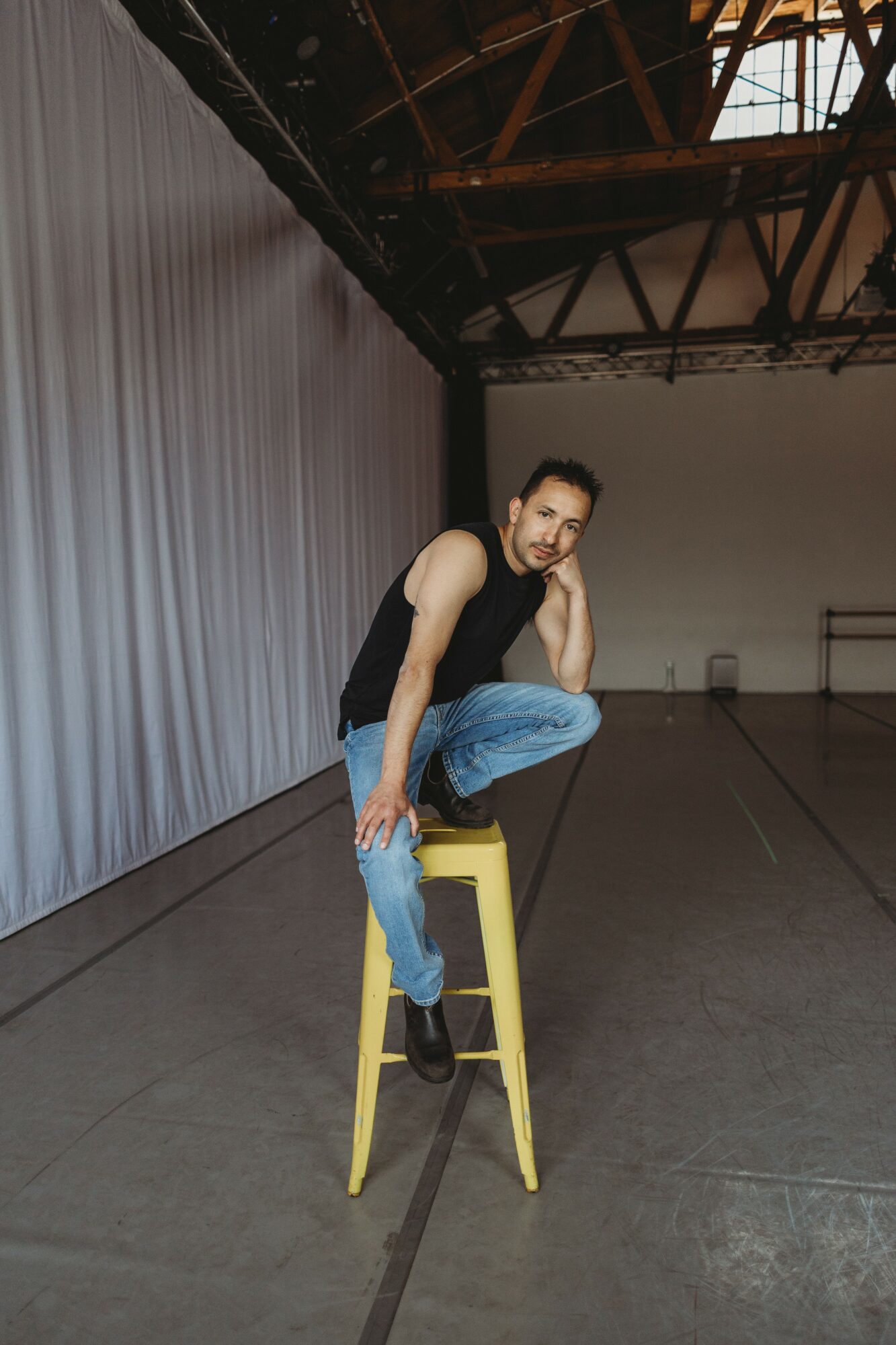
Today we’d like to introduce you to Adam Kerbel.
Hi Adam, it’s an honor to have you on the platform. Thanks for taking the time to share your story with us – to start maybe you can share some of your backstory with our readers?
I’m a dancer and choreographer drawn to momentum. I grew up in the desert areas north of LA and then later in the shadow of CalArts, so the kinds of things that provoked me early on were horses, dirt bikes, photography, and the change of light across the expanse.
Before I ever choreographed a phrase, I was drawn to performance as a place of possibility. As a teenager, the first play I saw was Topdog/Underdog by Suzan-Lori Parks at the Mark Taper Forum in 2007. A few years later, the National Theatre of Scotland came to UCLA with Black Watch. From then on, I began to travel across LA to find performances of all kinds, printing out the directions and often going on my own. My habit was to see the same show several times to observe how ensembles adapt, how the lights behave, and what kinds of things reach the audience from one evening to the next.
One production in particular still sticks with me. It was the Gangbusters Theater production of Tracers at the Little Victory in Burbank. I’d gone so many times that I befriended the company and joined them for future productions. I found that what drew me to the theater was the sense of risk that precedes a performance. I wanted not only to do that type of work, but at an impressionable stage, to literally become it.
Later, during conservatory acting training in New York, I felt a pull toward experimental dance. I followed that feeling to Philadelphia to study at Headlong Performance Institute, where I first understood choreography as a way of listening to space, to energy, and to myself. There, I co-founded the internationally touring ensemble, Almanac.
For me, dance is an engagement with physical and cultural forces. Initially, I’m captivated by the viscerality of throws, catches, falls, and recovery. But dance also holds information about one’s social makeup and individuality, and improvisation is my way of tapping into those deeper facets of being. Dance gives me a way of looking out and engaging with the world in an embodied way, and it helps me find connections in my Mexican-American and Jewish immigrant ancestry in the present moment.
It’s for those reasons that I work solo and with ensembles and develop networks that support new dance. What potential is held in one being? What new insights are possible within the collective? What would make having so much fun in our bodies a benefit to others in our community?
Every artist’s journey is shaped by who’s in their life and the kinds of things that they value. Being based both in LA and Philadelphia, I dedicate my circumstances to maintaining the bonds that shape and motivate me to push forward. That’s something I think makes the arts unique—that it offers a language of connection across distance. As I go on, I’m learning to appreciate mine and the lessons from my peers.
I’m sure it wasn’t obstacle-free, but would you say the journey has been fairly smooth so far?
I see a challenge in how dance is presented.
Media culture often dominates us through the visual sense, but I’m here to explore dance as a movement of ideas and people with movement. That’s where my choreographic work, and Performa, resist easy definition.
We might look at a dance along with how the landscape of the city is changing, seeing dance as a response to the issues of that place. For me, the location of dance goes beyond the stage, extending into the city itself: the riverbank, the neighborhood, hybrid gatherings across distance.
As a tool for understanding change, I think what dance really becomes is a pathway to feeling. When people come together to watch how other people move, we get to remember and dream and chill out together. I think of choreography more like a window of time where relationships are allowed to form.
I love what dancers are doing right now—they’re not only aesthetic but are reactive, forward-thinking, always attempting something. Dances are rebellious, adaptive, and taking chances. That’s the kind of space I want to create for myself and for others.
Thanks for sharing that. So, maybe next you can tell us a bit more about your work?
My latest project, Performa Choreographic, is an evolution of this thinking.
Performa supports the creation of brave new dance and live art in a community model. It provides open space for artists to generate new dance in a structured environment among peers and offers an adaptable approach to choreography that centers artistic independence.
The structure for Performa grew from improvisation workshops I taught outdoors in LA during the pandemic, and then an opportunity I received to teach and choreograph at Breaking Walls Festival in Cairo, Egypt in 2022. There, I encountered an approach to art-making that was truly social. The ways that dancers work outdoors on rooftops and among each other all the time leads to a kind of conversation and headspace that is distinct from the model we have in the US, where artists tend to work in isolation. Performa offers the benefits of an open setting to supplement one’s ongoing studio research.
Making dance is so personal. When the material is yourself, the biggest blocks can be the sense of overwhelm that arises and the sheer cost of paying for everything on your own. Performa serves artists primarily in the early and middle stages of the creative process because that’s where the most potential for invention lives. Dances are discovered while we make them.
And it’s the responses from participants that keep Performa moving forward. Many artists feel called to go deep within themselves as a starting point. It’s deeply inspiring and powerful to witness, and because of its culturally responsive design, they also have a hand in shaping Performa’s direction.
I advocate for trusting your own timing and then turning to the group to ask, what is this dance doing right now? The images here highlight that.
Is there a quality that you most attribute to your success?
I am drawn to work that seeks risk.
Coming from a background in partner acrobatics, balance is dynamic. In a sense, you want to fall through the trick, from one to the next to the next.
That’s a deeply choreographic question: how do you maintain the momentum of a fall? It raises questions about intimacy, too: how could a fall be held from partner to partner, tended to and made visible?
Similarly, I think of editing a performance as the choice to harness the forces inside of an idea. In this way, the work starts to call on every skill within you and implicates your presence among an audience. Do I trust myself to hold the energy that’s moving through this moment? How much trust will I place with the audience to experience this thing together?
Risk doesn’t have to be dangerous. It can be joyful, curious, and politically alive. Every dance has its own culture. My job is to listen to what it’s trying to say.
Contact Info:
- Website: performachoreo.com
- Instagram: @performa.dance
- YouTube: @StudioAdamKerbel
- Other: adamkerbel.com, @adam_kerbel
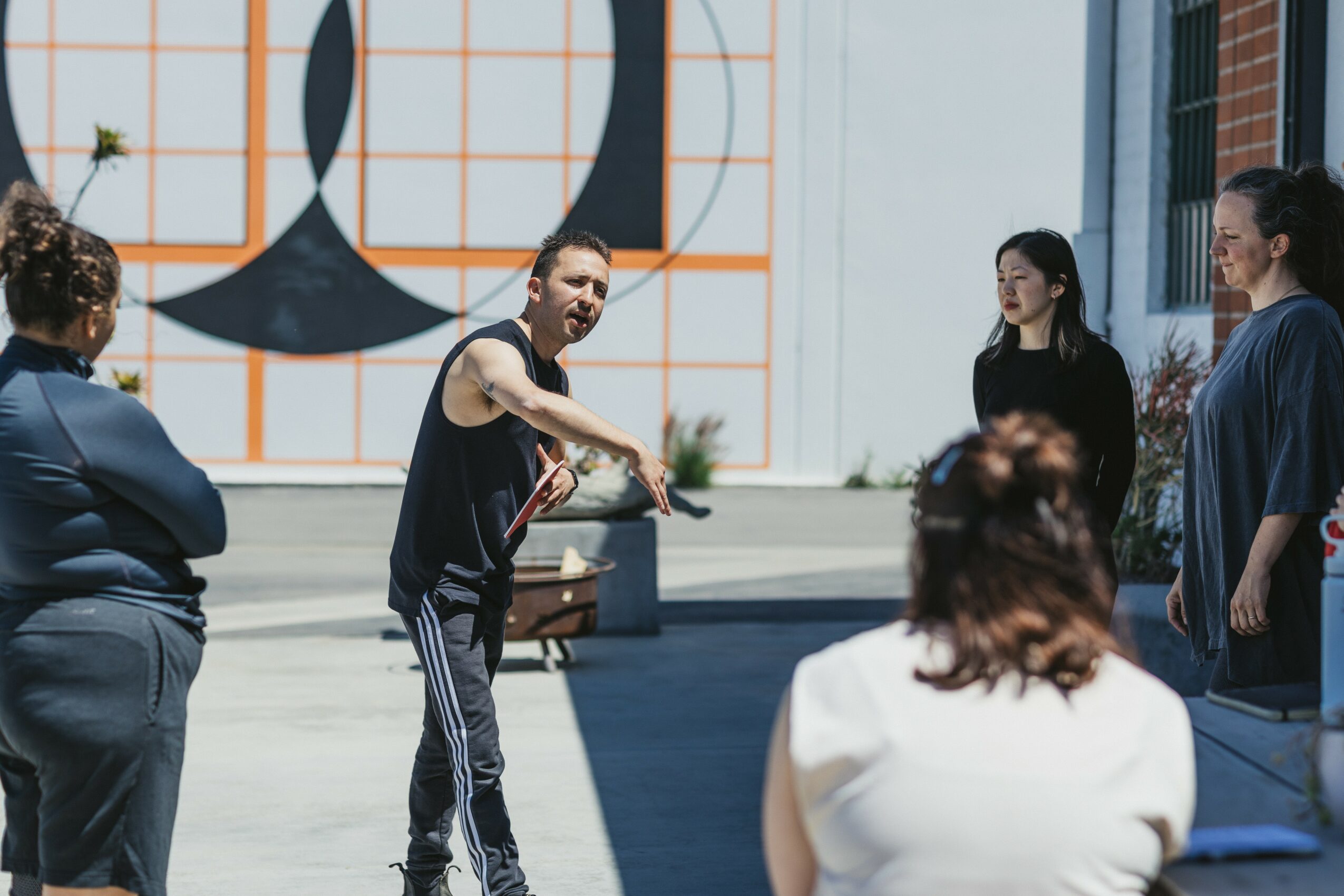
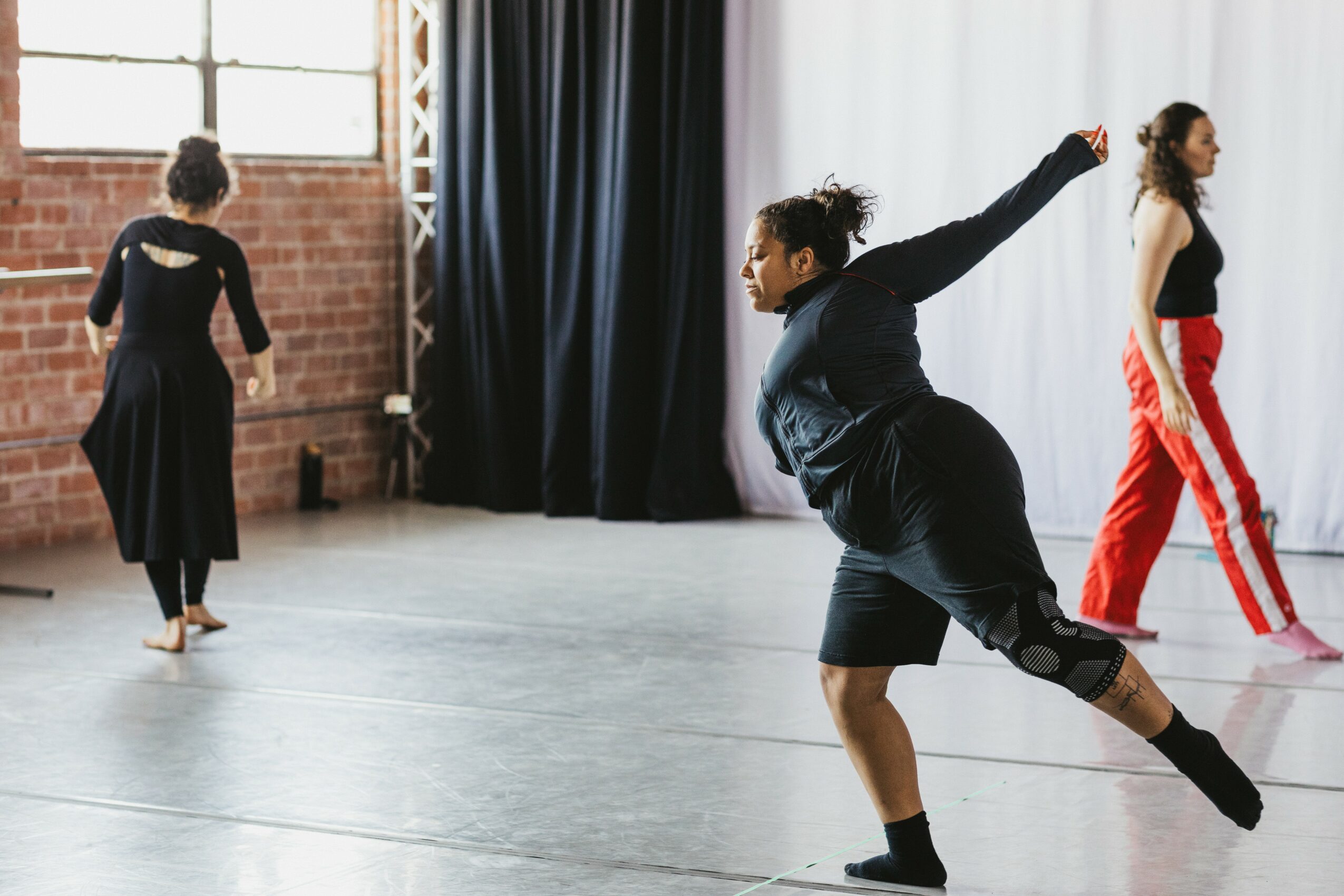
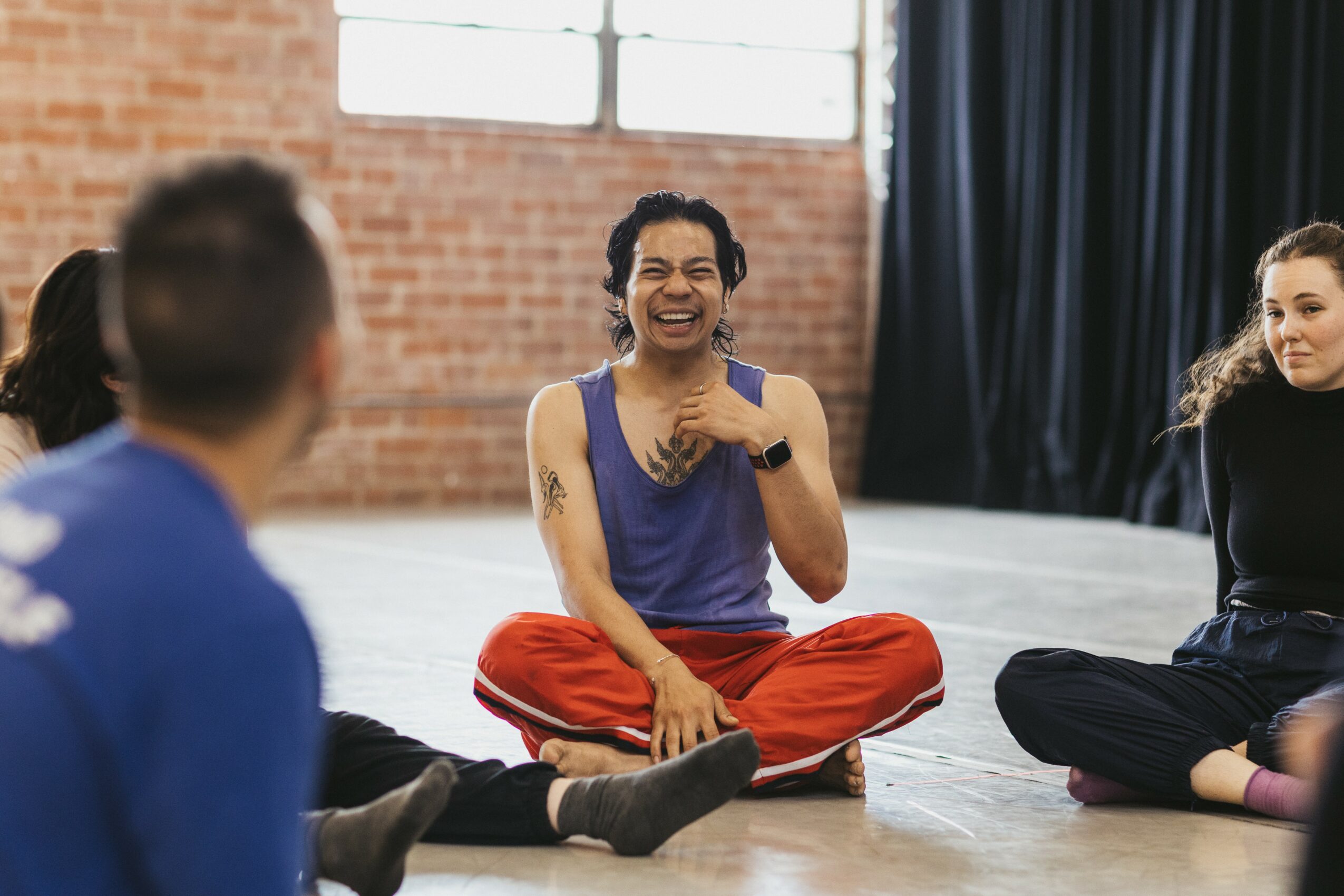
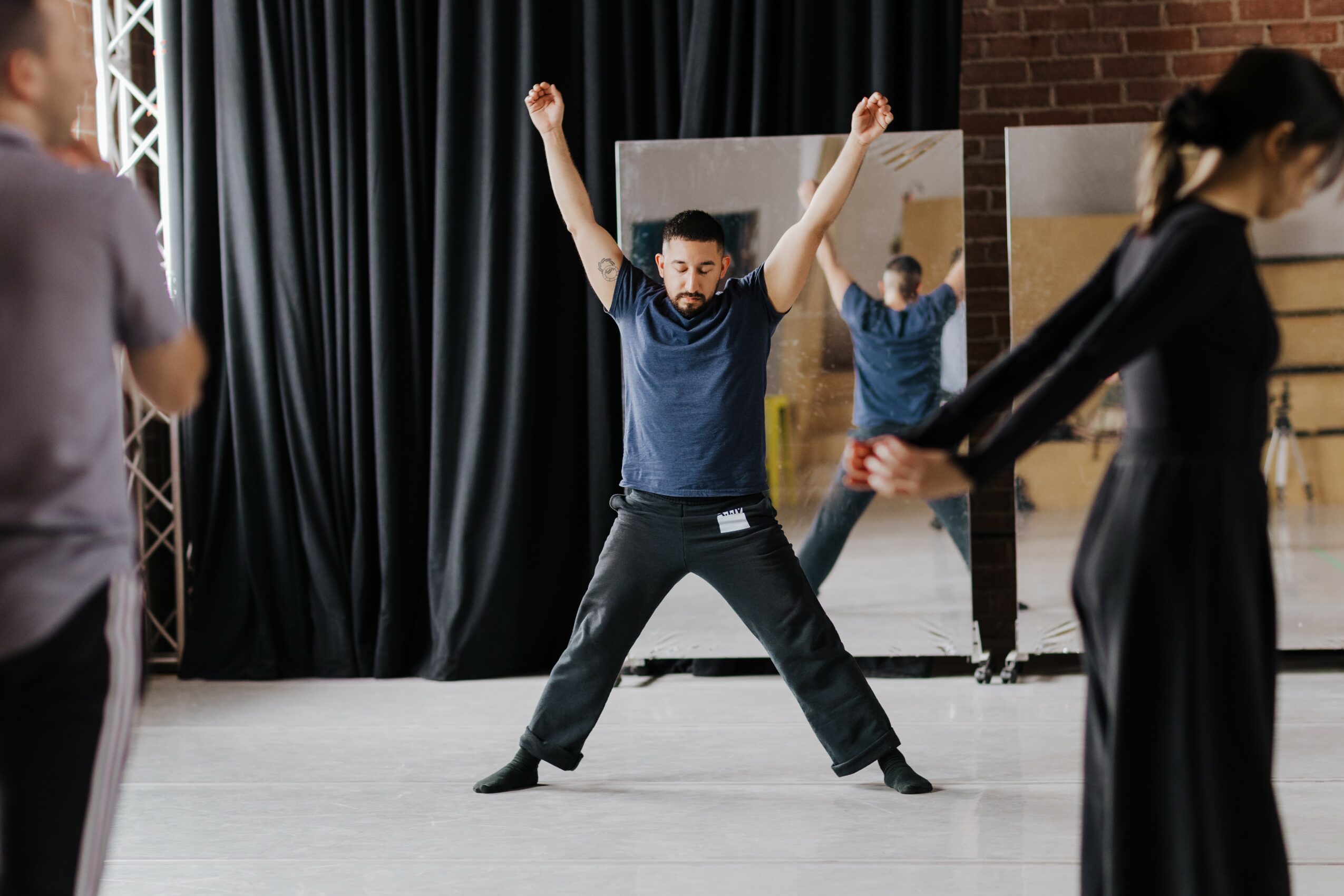
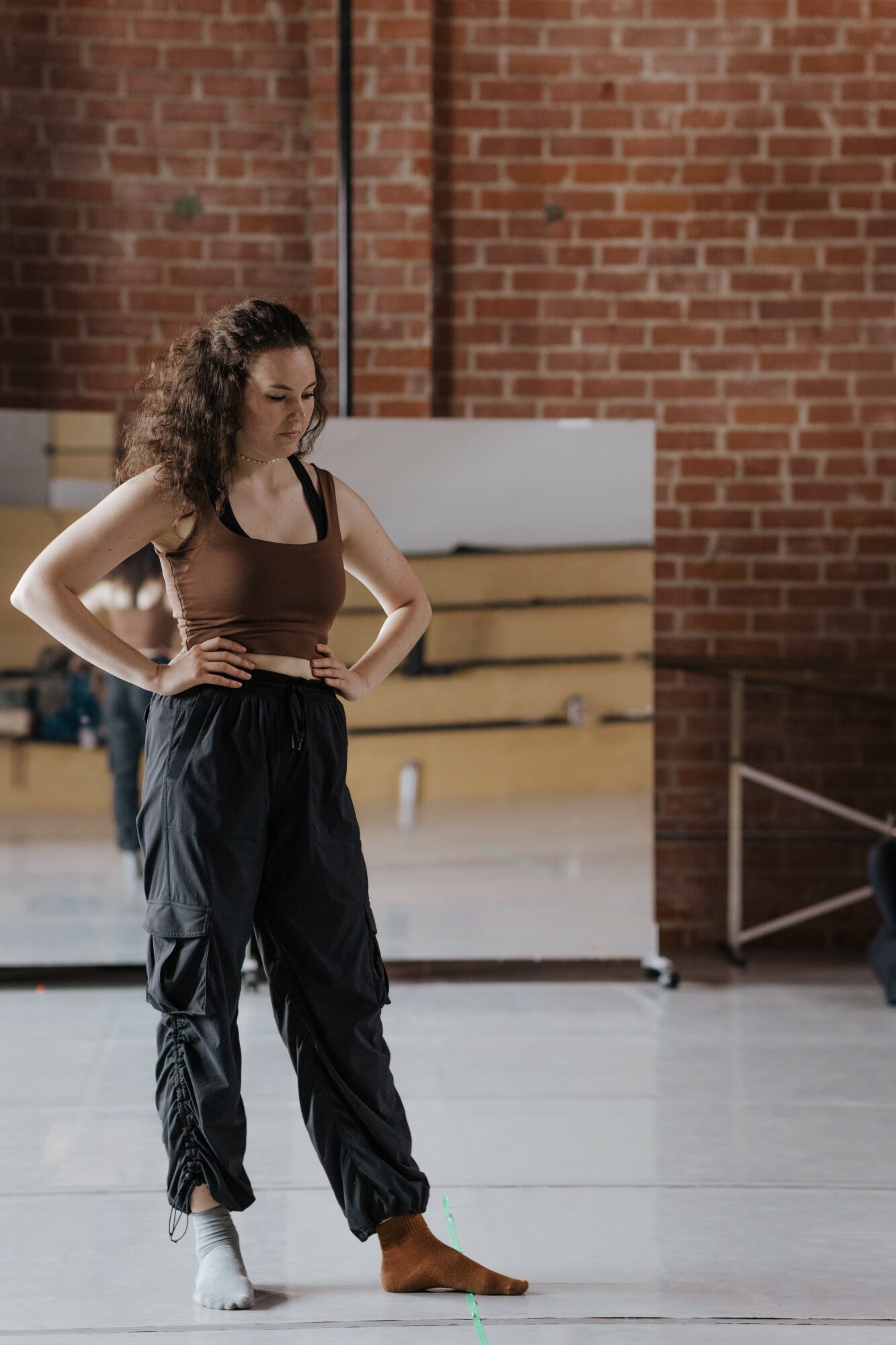
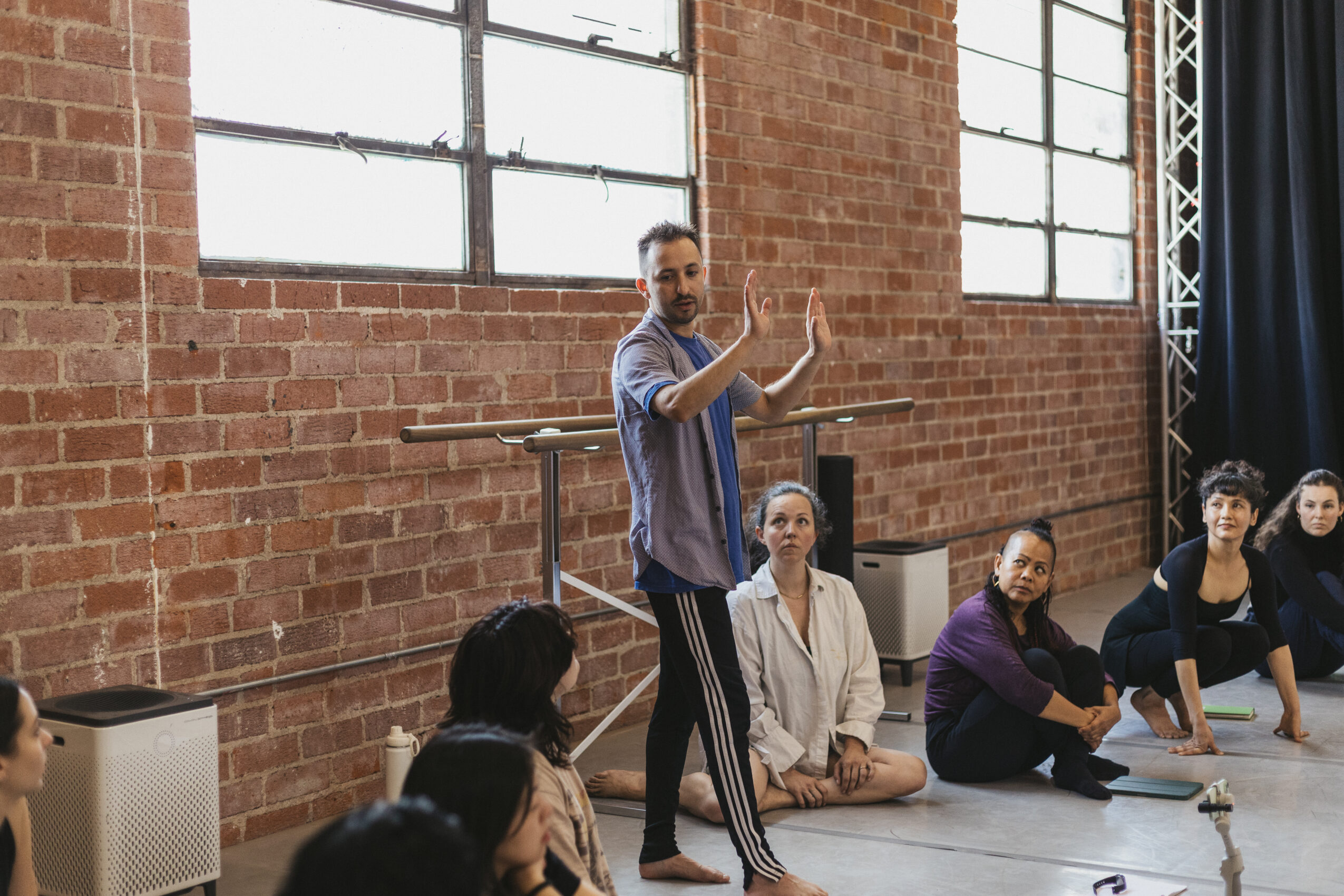
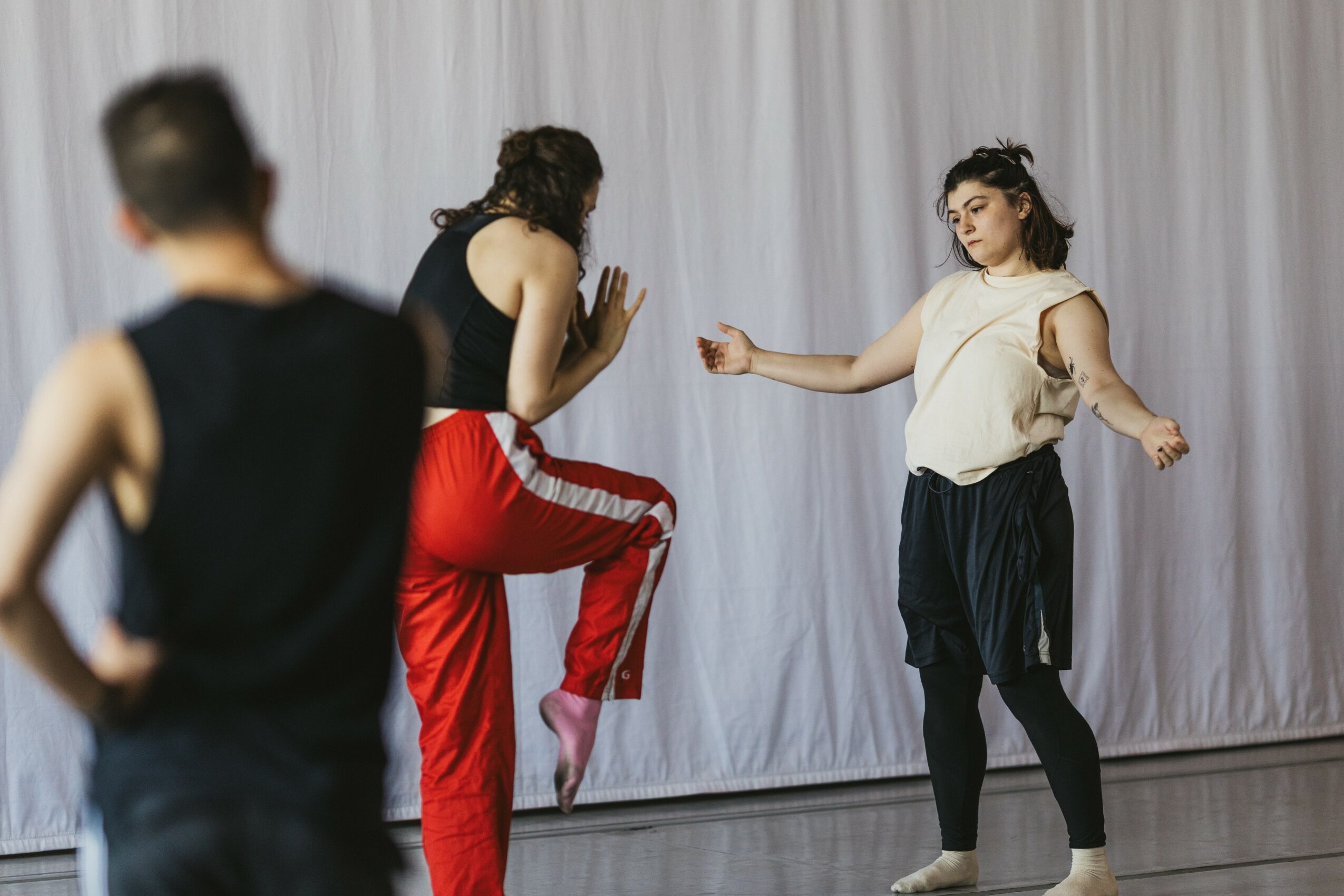
Photo Credit
All images by Little Blue World Photography.