





Today we’d like to introduce you to Dillon Klena.
Hi Dillon, so excited to have you with us today. What can you tell us about your story?
I’ve been in and around theater for as long as I can remember—honestly, even before I was born. When my mom was pregnant with me, my older brother and sister were already performing. They were seven and five at the time, and I like to joke that I was “exposed” to musical theater in the womb. By the time I arrived, theater wasn’t something I was introduced to later—it was already the air in our house.
I started performing when I was three years old, and I still can’t say for sure what my very first production was. It might have been Big River, where I played a straw hat boy, or Grease, where I was a trash can boy. Either way, I was three, and that was the moment I got bit by the theater bug. From there, my childhood became a steady rhythm of rehearsals, performances, and falling more in love with the work. I grew up doing about two shows a year with a children’s theater company called MET2 in Covina, California, which became the foundation of my early training and love for musical theater. Not long after, I joined another youth theater company—Centre Stage in Monrovia—and from around age seven through high school, I was balancing both.
That world wasn’t limited to youth theater either. During that time, I was also doing productions at regional theaters throughout Southern California and the greater LA area. And in a different way, I was studying constantly just by being around it. My brother, Derek, is a Broadway performer, and watching his journey up close gave me a real-world example of what was possible. My parents didn’t come from performing backgrounds, but they immersed us in theater relentlessly. I honestly don’t remember a weekend where we weren’t seeing a show—whether it was at the Pantages or the Ahmanson, or wherever we could sit and be moved by something live. That kind of exposure built my taste, my ambition, and my belief that storytelling mattered.
There were a few moments that cemented theater as more than something I loved—moments when it became clear that it was what I wanted to do with my life. One of the earliest was seeing The Elephant Man on Broadway with Bradley Cooper. Watching him transform—physically, psychologically, emotionally—hit me in a way I didn’t fully have language for at the time. I was completely drawn to the commitment of it: the discipline and integrity it takes to disappear into another human being and still tell the truth. That experience shaped what I love most about acting: transformation. Years later, I drew directly from that inspiration when I played roles like Shrek and Quasimodo—characters that demand not only vocal and emotional work, but a full-body shift, a willingness to change everything about how you move through the world. I love the deep dive—the psychological and physical commitment—and the moment where you stop “playing” a character and start becoming them.
Another defining chapter came through something very personal. In middle school, I was bullied for doing theater. But when I got to high school, I entered a talent show and sang “I Won’t Give Up” by Jason Mraz. As a ninth grader, I won—and the next day, I performed at a school-wide rally in front of the entire student body, including older kids and people who used to judge me. From that point on, the bullying stopped—not because I changed who I was, but because people finally saw something I could do. I remember thinking: if one performance can change how an entire school sees me, what can theater do for a whole audience? That was the moment I understood the power of the arts—not just as entertainment, but as perspective-shifting. Theater can change minds. It can invite empathy. It can help people grow. That experience made me want this life even more, because it proved that performance can actually move people.
By the time I was in high school, my training and my commitment took off. I was taking vocal classes at Center Stage and performing constantly—two to three shows a year, usually one with Center Stage and two with MET2. Theater wasn’t something I did on the side; it was my world. I did a couple shows at my high school, but I honestly believe I learned the most by doing work outside of school—building relationships with other theaters, working with different directors and casts, and staying immersed. The more I did, the more I learned. That was my mindset: do the work, keep showing up, and let repetition turn into skill.
Outside of the stage, I was learning by watching. My parents took us to shows constantly, but they also exposed us to movies, concerts, and anything with performance at the center of it. I started to treat everything like a toolbox. I’d go to a concert—like seeing Sam Smith in high school—and I wouldn’t just watch like a fan; I’d study how he carried himself, how he used stillness, how he connected to the room, how he shaped phrases vocally. I didn’t even fully realize I was training myself—I was just absorbing everything.
Some of my favorite memories of performing are with my siblings. We used to sing together all the time—we were known as the “Klena kids”—and we performed in countless talent shows. That bond and that shared love of performing shaped me. It made performing feel normal, like a language I spoke at home, not something I had to become later.
After high school, I auditioned for a lot of musical theater programs. Academically, I struggled-and I didn’t get into the schools I was aiming for. But I still knew what I wanted, so I went to Cal State Fullerton (Go Titans) for musical theater and earned my BFA. It ended up being an incredible environment for me. We started as a group of about 40, and by junior year we had been cut down to 12. That kind of shift could feel intimidating, but for us it created something rare: a tight, connected cohort where everyone was truly their own entity. We appreciated each other’s individuality and made space for each person’s strengths.
Somewhere during college, my work ethic also changed. I started taking the craft—and the reality of this as a career—much more seriously. I’ll never forget a conversation with a teacher who asked me out of nowhere, “Dillon, do you actually want to do this as a career?” At first I was like, “Yeah… why wouldn’t I?” But he pushed deeper, pointing out that I’d been doing theater for so long that it was worth asking whether it was truly my choice. I remember sitting with that question and realizing how clear the answer was. I couldn’t picture myself doing anything else. It wasn’t just what I loved—it felt like what I was meant to do. I will always be grateful for my teachers and mentors for their expertese and it’s something I consciously
During college, I also experienced a role that became a true turning point for me. When I was a sophomore, I had the opportunity to play Jack Kelly in Newsies at Moonlight Amphitheatre in Vista, California. At the time, I had no idea that Jack would return to my life again and again—three more times—at different moments when I needed him most. Newsies is such an important show, and Jack is such a fulfilling character. Every time I played him, I learned something new about myself and re-entered this mindset of discipline—physical discipline, vocal discipline, mental discipline. I learned how much preparation it takes to do a role like that at the level it deserves, and I exercised everything I had as an artist to fully commit to him. Looking back, that Jack Kelly journey was a pivot for me. It’s where I started believing, not just dreaming, that I could do this professionally.
Then I graduated… straight into the pandemic. Theater shut down, and suddenly the path I’d been working toward didn’t exist in the way I expected. I was sitting there with a BFA in musical theater thinking, “Okay—now what?” In that pause, I got deeply in touch with creativity in a different form. I started making music under the name Dilly_k. I’d write and record, and use it as a personal diary—capturing what I was feeling, what I was learning, and how I was growing. I don’t put pressure on it; sometimes I release things, sometimes I don’t. But it’s always there. I have two songs on Spotify—“Read” and “Unsaid”—and I share some of that world on Instagram at .
That period also brought a few surprising, meaningful jobs. I worked at Bose in retail—right across from Apple—which was genuinely inspiring because I’m a huge tech nerd and I loved watching how Apple operates. And I had a bucket-list experience working at Disneyland on Main Street in the Magic Shop. Steve Martin got his start there, and as someone who loves magic and can do card tricks, it felt like stepping into a dream. I was only there for two months, but it fulfilled me creatively in a way I didn’t expect.
When theater finally came back, my first job back was La Mirada Theatre / McCoy Rigby Entertainment’s production of Mamma Mia, where I was in the ensemble and played Eddie. It was an incredible “welcome back” to the stage—learning those iconic songs, being part of that world, and stepping into a role that required dancing in a way that stretched me. After that, I returned to Newsies again with 3D Theatricals, right as auditioning began to feel real again.
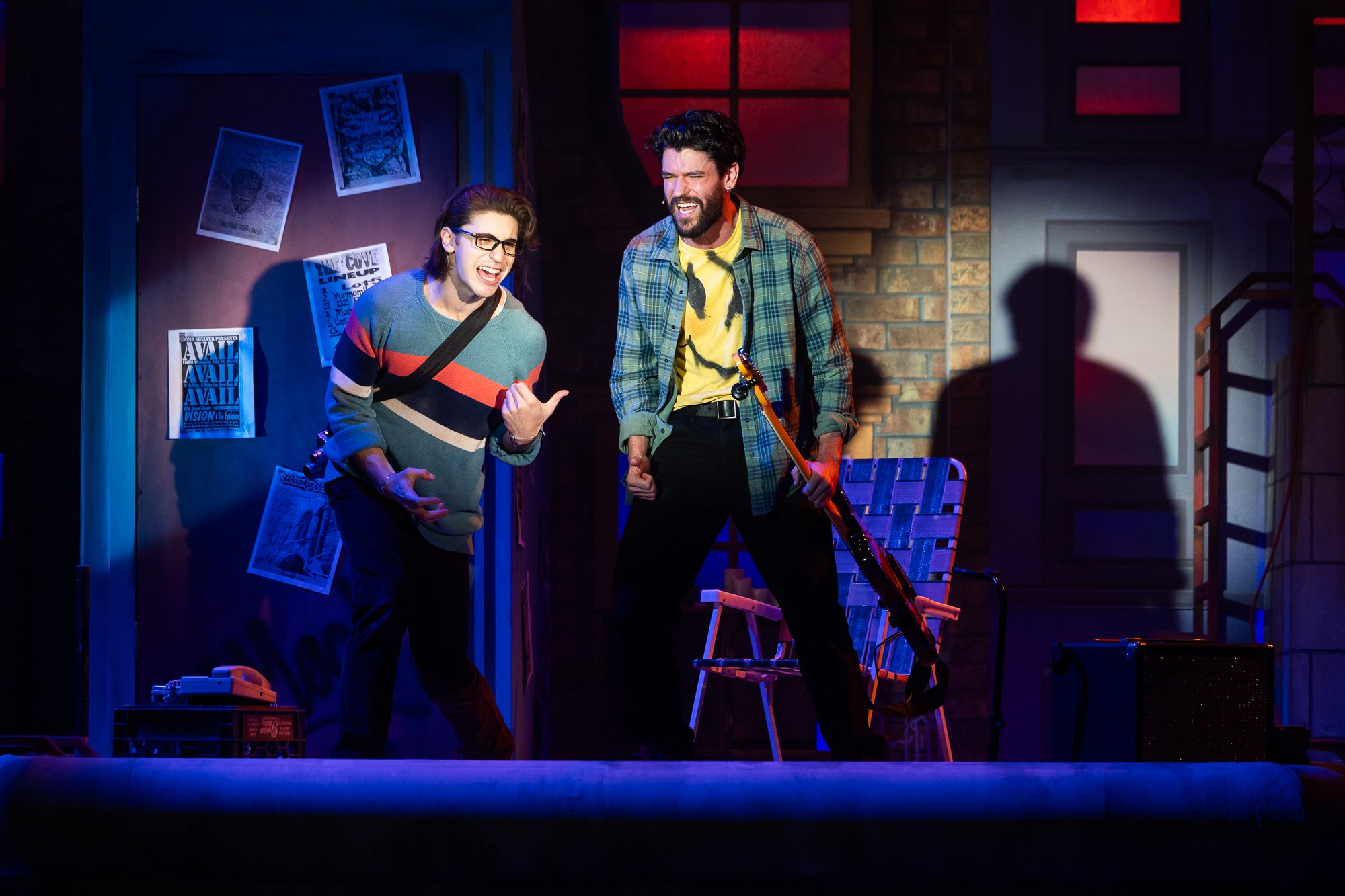
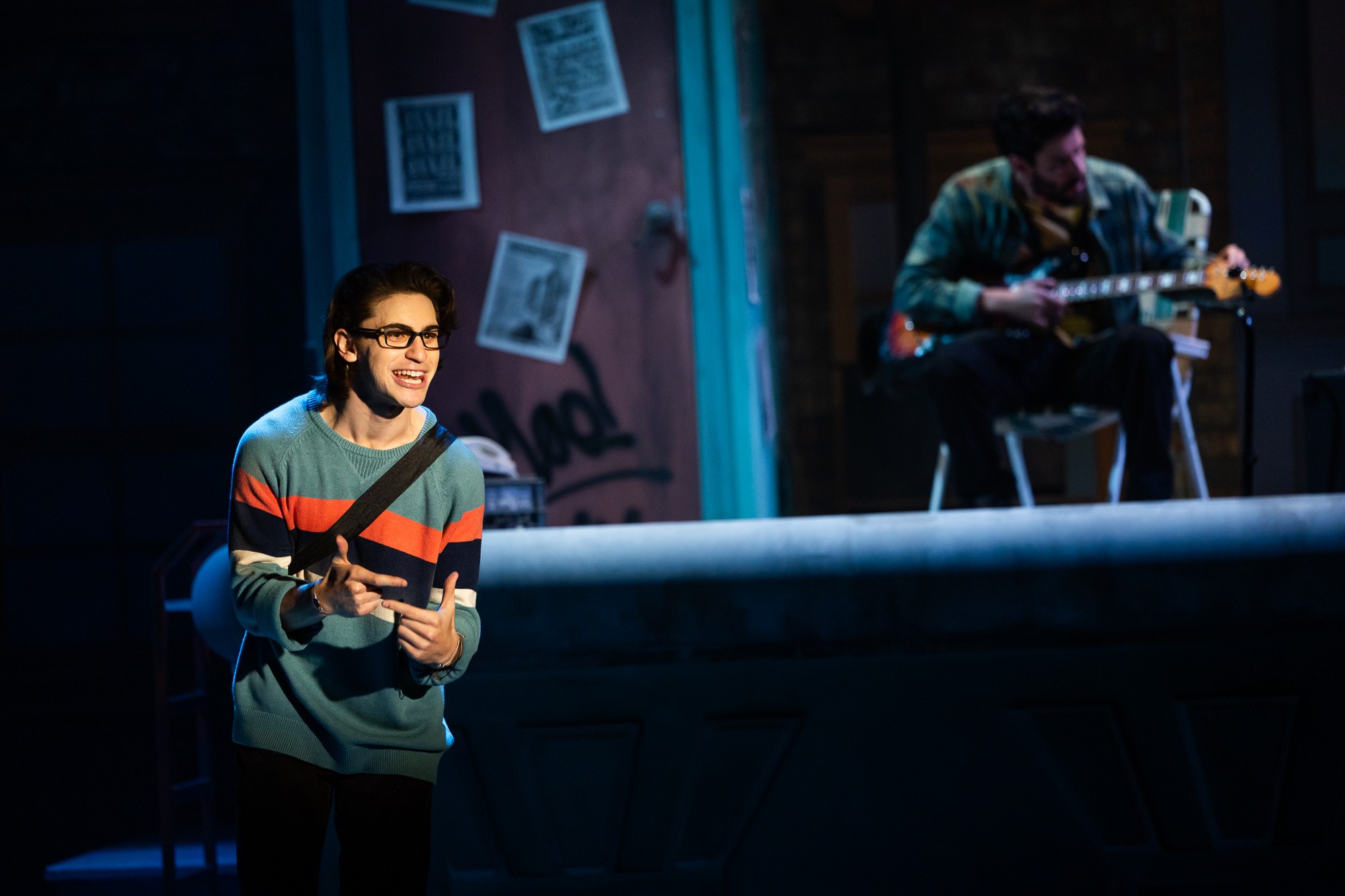
Around the beginning of 2022, I was auditioning for Jagged Little Pill. I was called back for two roles: Phoenix and Nick—Nick being the character my brother played on Broadway. I always assumed Phoenix was the track for me, but as I learned the material, I realized Nick resonated in a way I didn’t expect. At final callbacks, casting told me, “Memorize all the Phoenix material, but keep Nick in your back pocket.” I went in ready to do Phoenix, did one piece, and then ended up doing most of the Nick material out of nowhere—and then I booked it.
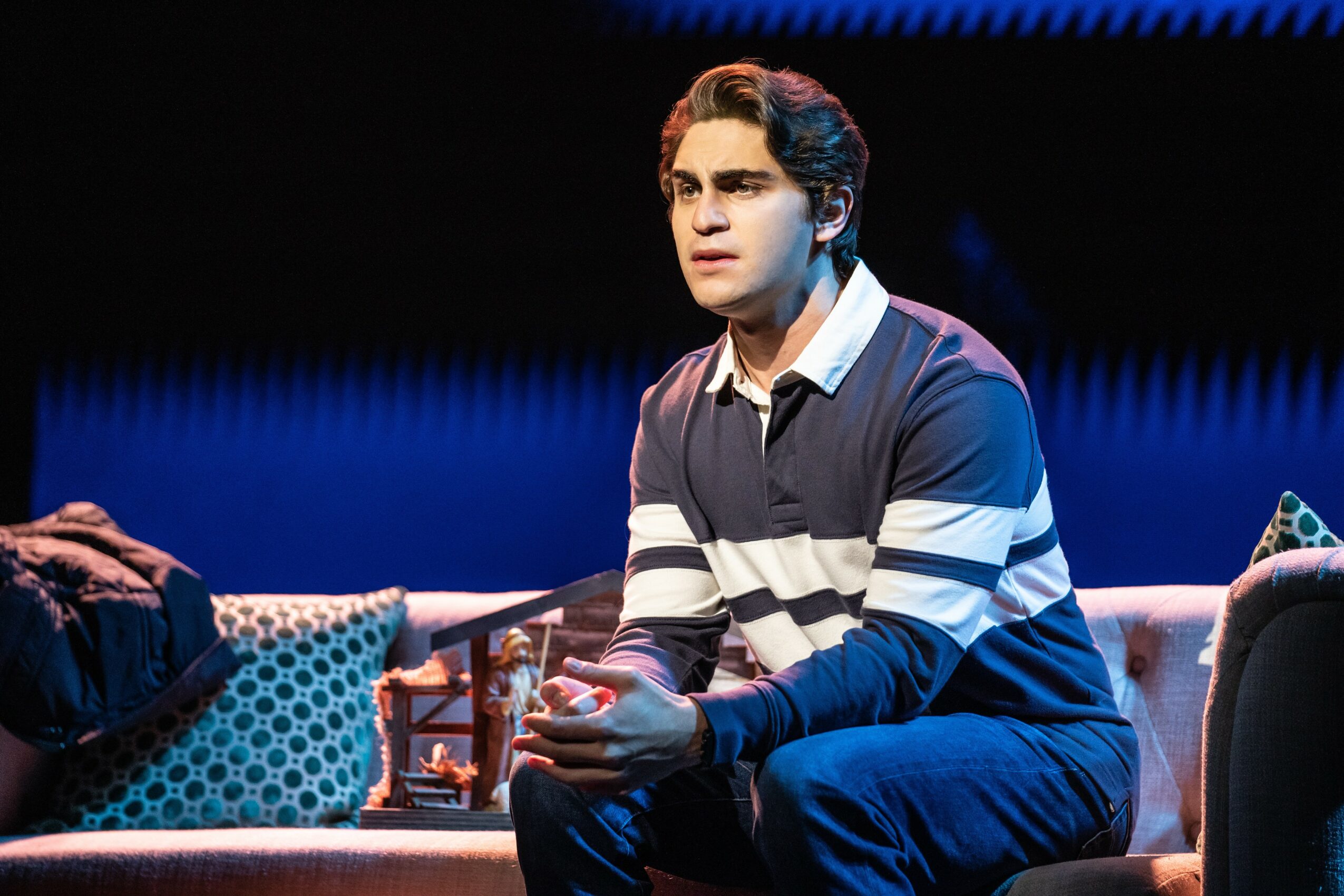
The moment I found out is burned into my brain. I was sitting in the revival of Company in New York, watching Patti LuPone sing “Ladies Who Lunch,” and I felt my phone buzz in my pocket. At intermission, I saw two missed calls from my agent and a text that said, “Call me when you can!!” That’s when I realized—right there in the theater—I had booked the tour. The first thing I did was call my brother, and we got dinner in the city to talk through the show, the role, and what it would mean to step into a character he had lived on Broadway. Having that support going into something that big made me feel grounded and inspired.
Touring was the first time I’d ever lived inside a true commercial theater schedule—eight shows a week, constant travel, and a level of consistency that demands your full discipline: emotionally, physically, mentally. I was on the road for two years from the beginning to the end of the tour, traveling all across the U.S. and into Canada, and it changed me. I grew as a performer, but I also grew as a person offstage. I carried myself differently because I had to. I had to deliver.
Our first stop was the Hollywood Pantages—one of the theaters I grew up going to as a kid. Standing on that stage in a national touring company was full-circle in the most humbling way. It also made me understand something I hadn’t fully grasped before: live theater—especially Broadway—is expensive and often inaccessible, and national tours bring that experience to people who may never get to see a show in New York.
Opening in LA was also unforgettable because my life showed up for me in a huge way. My mom organized what felt like the entire world I came from—there were around 80 people there from my children’s theaters and different chapters of my life. She even made pins that said “Jagged Little Dill” on them, which still makes me laugh—and I still have mine. I’ve never felt more supported or more grateful. It reminded me that none of this happens in a vacuum; it’s built on years of community, encouragement, and showing up.
The tour had special layers because of my brother. The show centers around a family, and the actress who played my mom in our production, Heidi Blickenstaff, had also played the mom on Broadway with my brother. Getting to hear how we were alike and how we were different—how we worked, how we approached the character—was both fun and revealing. There were little symbolic moments too—like costume pieces and shoes. During fittings, I wore some of my brother’s costume pieces, and his Broadway shoes fit me perfectly. I wore them for my first year on tour. Then about a year in, they literally fell apart, and getting a new pair became this unexpected marker of ownership. It was like: okay—now I’m truly stepping into my own shoes. I’m Nick. Let’s go.
The hardest part of touring was staying consistent and staying well. Different climates every week, different beds, different routines, and the pressure to give every audience the best version of the show. I learned quickly that consistency isn’t glamorous—it’s discipline. My routine wasn’t complicated, but it mattered. Before I went onstage, I did 25 push-ups every time. My character did push-ups in the show, and that ritual put me into his body and his mind—physically and emotionally. If I didn’t do it, I didn’t feel as effective. That small act became a reminder: you don’t rise to the occasion—you fall to your habits.
And what I’m proudest of is that we brought an important show to people everywhere. Jagged Little Pill deals with themes and experiences that a lot of people don’t always encounter directly, and taking it across so many communities felt like a real responsibility—and a privilege. Touring reaffirmed a belief I’ve carried since I was a kid: theater can meet people where they are, open a door, and start a conversation.
When tour life ended in April, I didn’t expect the emotional whiplash that came with it. After being on the road for so long—moving from place to place, living inside that rhythm—I suddenly felt like I was standing at a crossroads. The show had been so meaningful, and when it was over, I had this honest question in front of me: who am I when the schedule stops? What happens next?
Whenever I hit a moment like that, Newsies somehow finds its way back into my life like a compass. I ended up playing Jack Kelly for the fourth time, with Musical Theater West. Seeing Jack through an adult lens changed everything. It forced a new level of discipline out of me—more than I’d ever had before. For two months, I trained like it mattered: working out every day, running every day, eating healthy every day. It was hard, but it gave me something priceless. It brought me back to the light. It reminded me what I love, why I love it, and who I am when I’m fully committed to the work. And getting to do it at home in LA felt like a reset—like coming back and saying, “Hey… here I am again.”
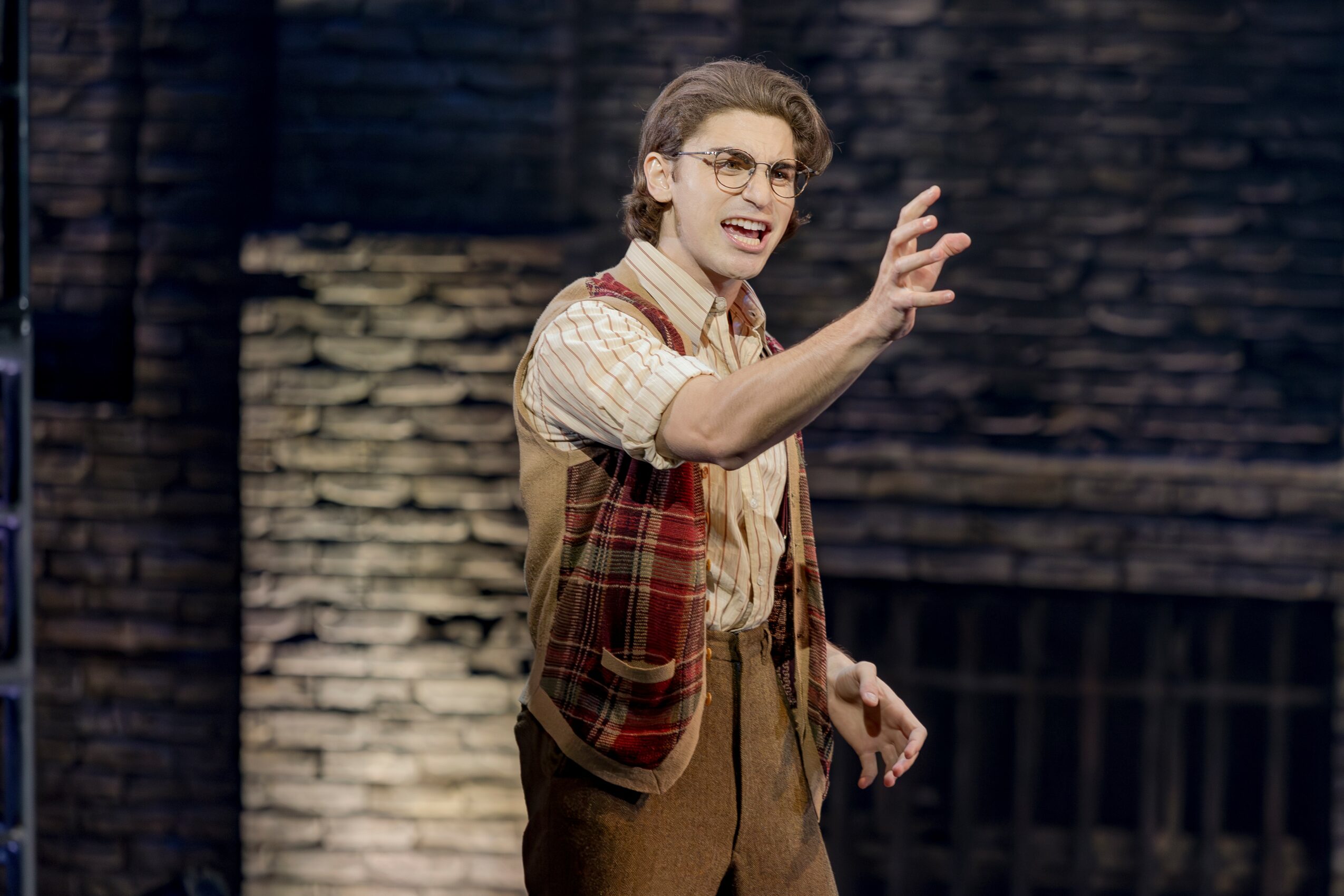
Around that same time, I auditioned for a new musical called Rutka—a pop-rock/indie piece about Rutka Laskier, a Jewish girl during World War II who kept a diary and shared a birthday with Anne Frank. I booked the role of Lolek, and it was the first time I got to work on a new musical where I could help originate a character and build something from the ground up. It was also deeply personal. I’m Jewish, and I was raised celebrating both Hanukkah and Christmas, but I hadn’t truly explored my Jewish heritage in a meaningful way. Rutka opened that door.
My grandpa passed away in 2017, and he was the one who always led the Hebrew prayer at Hanukkah. While I was developing Lolek, I kept thinking about him—what he would do, how he carried himself, how he moved through the world. In a way, Lolek became a love letter to that part of my family and identity. I also served as dance captain on the project—it wasn’t a dance-heavy show, more movement-based, but that leadership experience was new for me and taught me a lot. The production was at Cincinnati Playhouse, which meant I traveled again, and I learned not only about the work, but about people—cast dynamics, boundaries, and the importance of staying present. It was a powerful chapter I’ll carry with me.
After Rutka, I made a decision I’d been circling for a long time: I moved to New York in February of 2025. This year has felt like a transition year—growing, evolving, learning a new city, and getting my bearings in a place that has always pulled me. New York is the only place I’ve ever visited where, every time I left, I wanted to stay longer. Now that I’m here, I can feel it shaping me—helping me feel clearer about who I am and where I’m going. And on a personal level, being closer to my brother and his family has been a gift. Getting to watch my nephews grow up and actually be around for it has been really special.
Not long after moving, I booked my first show since living in New York: Rent at the Cape Playhouse, where I played Mark Cohen. That experience was fast—two weeks of rehearsals, three days of tech, and then a couple weeks of performances in Cape Cod. We learned the show at lightning speed, and then it became about staying open, staying specific, and trusting the process. The group of people I was surrounded by were grounded and driven, and being around that kind of greatness pushes you to be better. That’s one of the things I love about this industry: the people you work with can raise your standards without ever saying a word.
As I head into 2026, I feel excited—still auditioning, still growing, still learning new things about myself. I really believe that if you keep going, keep working, and stay persistent, things do pay off. This is the plan. And one of the values I live by is simple: “Be somebody that makes everybody feel like a somebody.” I try to lead with positivity—not because life is always easy, but because what you carry into a room affects everyone in it. I think of myself like a sun: if I’m bringing light, it reflects outward.
At the core of everything I do is a mission: to create art that transforms people. I want theater to shift someone’s mind—to remind them there’s more to life than what they’ve known so far, to help them revisit their past, and to walk through experiences they may not have had access to otherwise. When I’m onstage, I’m not interested in performing at people—I want to connect with them. I want someone to resonate. And if they don’t, then I’m not doing my job. Because when something is true, you can feel it in the room. You can sense when an audience is being touched, when a moment lands, when a perspective changes. That’s what I chase. I strive for greatness—not in a flashy way, but in a committed way. I want to do my best in everything I do, and I take that responsibility seriously. I don’t move through this work with doubt—I move through it with belief: belief in the craft, belief in the effort, and belief in what I bring to the table. And I know that if I keep showing up with honesty, discipline, and heart, the work will keep growing—because that’s what art does when you give it everything.
Can you talk to us a bit about the challenges and lessons you’ve learned along the way. Looking back would you say it’s been easy or smooth in retrospect?
It’s been fairly smooth in the sense that I’ve been supported and I’ve stayed working and training consistently—but I don’t think any artist’s road is ever completely smooth. There have absolutely been moments where I didn’t get the role I wanted, where I questioned whether I was doing enough, or whether I was going to “make it” in a business that’s built on rejection and uncertainty. That’s part of the territory. Nothing is handed to you in this industry—you earn it.
One of the bigger challenges has been navigating the assumptions people make. Because my brother is on Broadway, there’s sometimes a stigma that things must be easier for me, or that I’m going to get somewhere because of nepotism. The truth is, it makes me work harder. I’ve always felt like I have to prove that I belong in the room based on my own craft, my own discipline, and my own consistency. Even booking something major—like playing Nick Healy on the Jagged Little Pill tour—was only the first step. Booking the job isn’t the finish line; it’s the beginning of the responsibility. After you book, you still have to execute. You still have to deliver greatness eight times a week, stay healthy, stay present, and keep earning your place.
And the ongoing struggle of this career is the mental game: the constant cycle of auditions, waiting, and “no’s.” People don’t always realize that auditioning is the actual job. Booking is the reward. I once heard someone say that when you walk into an audition room, you get five minutes to be that character—you may not get the role, but you get five minutes to show them what you can do. I love that because it reframes the experience: it becomes about ownership and artistry, not just approval.
At the end of the day, the life of an artist is learning how to fall down and get back up. If you don’t book what you wanted, you take a day to feel it—then you wake up ready to fight again. You can’t let your fire die because you’re going to hear “no” a million times. You just keep going, keep showing up, keep improving, and trust that if you stay consistent, the work will pay off.
Alright, so let’s switch gears a bit and talk business. What should we know about your work?
What I do is act—musical theater, storytelling, and character work—and what I specialize in is building performances that feel real and land with an audience. I’m most proud of my ability to connect with people in the room. I observe a lot in daily life—people’s quirks, patterns, what makes them them—and I bring that into my work. I love digging into a character’s psychology: what they’re protecting, what they want, what they’re afraid of, what they’re not saying. That’s always been what excites me about theater. Even back to watching Bradley Cooper in The Elephant Man, I was drawn to how much you could feel what the character was going through internally. That internal truth is what makes a performance raw and specific—and that’s what audiences respond to.
I think what sets me apart is my commitment to full transformation. I don’t like to “play” a character from the outside—I want to become them from the inside out. That means physical life, emotional life, and psychological life all matching. And once I understand the character, I’m focused on making it truthful night after night. Consistency matters, but I don’t believe in robotic repetition. I like having the same intention every time while keeping the work alive—because no two nights are the same. You might feel incredible one day and under the weather the next, and the job is to adapt without losing the character’s needs, stakes, or story. The line still means the same thing, but the way it comes through you can be fresh. That’s the difference between “going through it” and actually living it.
I’m also proud of my discipline and professionalism. Booking the job is only the first step—you still have to deliver. I take that responsibility seriously, whether it’s a new musical, an eight-show week, or a fast process where you have to be ready immediately. I want to be the kind of collaborator people trust: prepared, consistent, generous in a room, and committed to the story.
At the end of the day, what I’m known for—what I want to be known for—is making people feel something. When an audience resonates, you can feel it. That’s the work. That’s what I chase every time I step onstage.
Any advice for finding a mentor or networking in general?
I’ve been really fortunate with mentorship and guidance through my team. I got my agent right out of college because we had a showcase, and that summer in 2020 I signed with Natalie Kollar at LA Talent. I’ve been with her for about five years now, and she’s been a huge part of my post-college career—she booked Jagged Little Pill and a lot of the work that followed. Having someone in your corner who understands your type, your strengths, and how to advocate for you is a game changer.
But I also think mentorship and networking can be a lot simpler than people make it. My biggest belief is: doing more opens more opportunities. The more you’re a part of, the more people you meet, and the more chances you create for someone to see your work. If you’re doing a community or regional production and you know there are agencies in your area, reach out. Send a genuine email, invite them to the show, and offer to pay for their ticket. Most people assume they have to wait to be “discovered,” but you can create visibility by being proactive and professional.
I also think competitions and programs can be a great way to get yourself in rooms and build momentum—things like the Jimmy Awards for high school performers, or Spotlight Awards near the Music Center. Anything that gets you performing at a high level, surrounded by driven people, and seen by industry professionals is worth exploring. And beyond that, I try to immerse myself in theater as much as possible—seeing shows, staying inspired, staying connected—because how much you’re around it is how much you learn and grow, and it naturally expands your network.
In January of 2025, I also signed with a manager, Robert Stein, and having a manager has been really helpful. Your agent helps get you in the room, and your manager can help guide bigger-picture choices—contracts, timing, long-term strategy, and making sure you’re making decisions that are right for you. Yes, they take a percentage, but the value is having experienced people on your team who are real with you, protect you, and help you navigate the business side of an artistic career.
My best advice is to treat networking like community-building, not “using people.” Show up, do great work, be consistent, be kind, and be brave enough to reach out. You never know which experience—or which email—will lead to the relationship that changes everything.
Contact Info:
- Instagram: https://www.instagram.com/dillon_scott_klena/ and https://www.instagram.com/dilly__k/
- Other: https://open.spotify.com/artist/6xJJ7UbVIALgc6u9GsNgea



Popular
-

What is the story you hope people tell about you when you’re gone?
-
What do the first 90 minutes of your day look like?
-

Local Highlighter Series
-
What did suffering teach you that success never could?
-

Who were you before the world told you who you had to be?
-

What are you most proud of building — that nobody sees?


