


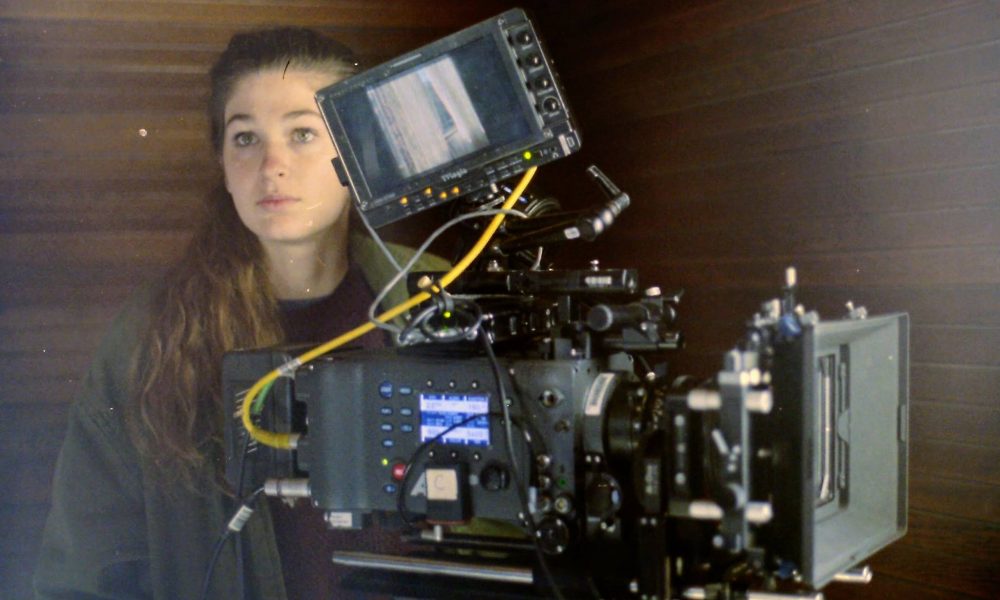
Today we’d like to introduce you to Seannie Bryan.
Seannie, let’s start with your story. We’d love to hear how you got started and how the journey has been so far.
Halfway through middle school I made the tentative decision to take my school’s Broadcast Journalism class, rather than stay with all of my best friends in choir. There was an element of mystery to the group of students that put together the monthly news show that was broadcast across campus, and the opportunity to be a part of that team really drew me in. We were tasked to go out into our community and find stories, people to profile and issues we cared about, and given the tools and support to do so. To someone who had always been a bit shy, this was the way to interact with what was outside of my previous range of knowledge. By the time of my senior year of high school, when I was one of the student producers on our daily live broadcast, I had considered studying sociology in school, but ultimately realized that being behind a camera gave me the opportunity to observe and listen, but there was also this real and immediate responsibility to be empathetic to a subject, to telling the stories of the people who trust you to do so.
I started school at Chapman University knowing I wanted to emphasize in Cinematography, because to me that was the basic medium that I knew I loved from working in journalism, but also had so much influence to the way in which an audience relates to the story being told. What I didn’t expect was that by the time I was in classes specifically for Cinematography, I would be surrounded by only male students. I added a minor in Women’s Studies, so I would go from classes where I was the only girl out of twenty-five in my major classes, to classes filled with mostly women. In learning the ways in which power structures work and questioning our ways of structuring leadership in the gender classes, I wanted to apply that knowledge to being a department head, and working with directors and the rest of my crew to make sure that there was a level of effective communication between all the departments. Having a level of respect for every person that walks onto set, whether they are talent, a part of the crew, or a subject if it’s a documentary environment, carries a real strength and ultimately creates a much better environment for collaboration.
Since finishing school I feel incredibly lucky to be entering an environment where there has been this breakthrough moment of women being innovators in Cinematography, and being a center of the conversation. There is a long way to go, but to be honest, if there hadn’t been the visibility of seeing high profile women working in my craft on their personal social media and various features I came across, I was seriously on the edge of finding another area of production to focus on. Now, I’ve worked on quite a few sets where we have a majority of women on the crew, and it’s a different work environment, and I can credit that tiny foot in the door for allowing me to be a DP that is hired confidently. I’ve been able to work on some really incredible projects, like the International Day of the Girl campaign for Girls Who Code, and that was an incredible experience bringing together activists and production crews to make something I think turned out really beautifully.
Has it been a smooth road?
I touched on it previously, but this is a really pivotal time to be coming into the working production world as a woman in cinematography. Even a few years ago when I came into school, there was an ideology passed down that this was a really physical job that men were tough enough to do, and within my school there was an on-set culture that rated female crew members according to scales of different camera dollies and it was really common for us to be called “D (dolly) grips,” which of course had another connotation. Along with that, even though I was lucky that my first few sets had a female DP and I was able to work under my first mentor, there were occasions like when another crew member told me they had heard that the work of the girl DP’s “wasn’t on the same level.” After she graduated, my mentor for my first two years of school sold all her gear and left film entirely, so there was a really long stretch where I wasn’t sure where to go with my questions and stubbornly didn’t want to appear less experienced or worthy than my male classmates who were being trained by upperclassmen, so I was pretty unsure of where to go next.
My main concern was always that I wouldn’t be asked to shoot, and that I wouldn’t be taken seriously, or I wouldn’t find crew. The crew part makes a huge difference because it was part of the social element, of finding people that trust you and your judgement, and I think there is still sometimes this element with female DP’s where it’s said their gaffer is the reason their work looks good. Of course, it’s a huge part of it! The ability to foster those relationships and confidently lead is hugely tied into the people surrounding you, which is why approaching sets that are largely female has been such a game changer, because you’re entering into a space where everyone agrees that everyone hired is capable of doing the job, it allows this confidence, especially for women who may be newer to the work to gain the skills and sureness that they can carry with them to every set going forwards. Overall, the most important advice I can impart is to ask questions, which doesn’t always seem feasible, especially when everything is moving quickly on set, or it seems like it’s an obvious bit of information you should already know. I only wish I had been braver in asking questions when I started out, and it actually took one of the DPs I ended up working for quite a bit to ask me why if I had any questions before I realized just how much I really wanted to know!
Ultimately, we’re taught about how this is an incredibly competitive industry, but what I’ve found to be most true is that there are plenty of jobs out there, and so many more avenues of media that are exploring diverse storylines that are in demand of crew that can provide a new perspective, that the way to consistently work is not to look at the other women in my arena as competition, but as a network for support. I’ve met some really incredible women that hire me, and I’ve hired them as well and we crew for each other and refer jobs to each other. There is plenty of work to go around and each job will be better for a different cinematographer, whether they are male or female, so it’s crucial we don’t get stuck on the idea that there are so many jobs for women DP’s to go around and there will only be a few that make it, because we’re all here and doing the work, and supporting and training each other is the way to make an impact on the industry.
So, as you know, we’re impressed with your business – tell our readers more, for example what you’re most proud of as a company and what sets you apart from others.
Right now I’m working freelance, mostly music videos and some narrative shorts, and other commercial projects as well. I’m also starting work on a new documentary which I’m really looking forward to, because that is the medium I really first learned on and a lot of the sensibilities have stayed with me.
I’m drawn to working with music video and documentary right now because there is this element of bringing together different perspectives and ways of thinking. When you’re working with musicians there is this other sense of the way they see their creative work in the music, and building an experience that adds visuals on top of an already complete piece is really exciting to me. With documentary, you’re actively engaging with subjects that have a different experience than you, and there is this trust that they let you access their point of view and build a full picture with the footage and information you gather.
This year I shot a segment of the campaign for Girls Who Code for International Day of the Girl, and crewed on a few of the other pieces, and that was one of the most rewarding experiences I’ve had so far. It felt like being a part of a team every step of the way, and the final result was what I think of as a beautiful and diverse celebration of a more practical look at ways women and girls can create change, but presented with really high-level visuals. I’ve also been able to experiment with different formats, shooting on Super eight film for two music videos, and using VHS on another, which adds an entirely new texture and changes what my typical set ups might be and focuses more directly on what we’re creating for that specific vide and artist.
What I look to do when I’m approaching a job is to be as truthful as possible, and to see the subject through an empathetic eye. When I was studying journalism, I saw how even in depicting real life there was an ability of the camera to influence the tone and perspective of a story, and my goal is to focus on what is being said with the content being created, and take responsibility of the lens through which the story is told.
Who have you been inspired by?
The women who inspire me to work the hardest are my peers in my career, because when we’re at this point a few years out of school, I’m constantly excited for my friends and coworkers when they work their next biggest job, or work with an artist I’m a huge fan of!
But besides that, I wouldn’t have stuck with this career if I hadn’t been exposed to the work of DPs like Rachel Morrison, Reed Morano, Ellen Kuras, Autumn Durald… the list goes on. There’s actually a really incredible resources like CinematographersXX and Illuminatrix DOPs that list some of the most incredible women working in cinematography and act as platforms for the visibility of women in this profession. These women are all doing incredible work, but each has their own different style and sensibilities for lighting and framing, which is crucial to point out that they aren’t simply the best of the women, they are the best in the industry.
I’m inspired by the writing of Roxane Gay, of Zadie Smith, and of Joan Didion, women who tell incredible stories with nuanced descriptions of being a woman, and being a person in our world. I’ve been an avid reader ever since I started with Harry Potter in the first grade, so I have to give JK Rowling a ton of credit as well.
Pricing:
Contact Info:
- Website: seanniebryan.com
- Email: [email protected]
- Instagram: @seanniebryan


 Image Credit:
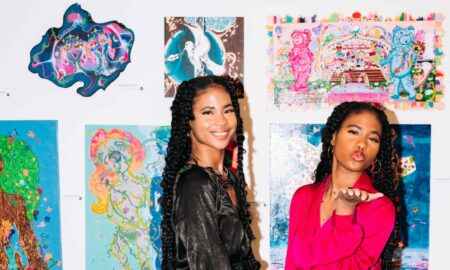
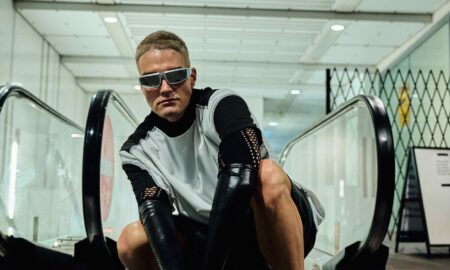
All stills from projects I’ve shot:
Girls Who Code – Intro & ASMR Activism
Ginger Root – Mahjong Room
Vista Kicks – If I Didn’t Have You
Oberhofer – Dreamt I Was Gonna Be Your Man
The Chocolate Soldier
Where You Burn It
Getting in touch: VoyageLA is built on recommendations from the community; it’s how we uncover hidden gems, so if you know someone who deserves recognition please let us know here.
Popular
-
What is something outside of work that is bringing you joy lately?
-
Local Highlighter Series
-
What did suffering teach you that success never could?
-
What are you most proud of building — that nobody sees?
-
Who were you before the world told you who you had to be?
-

If you could say one kind thing to your younger self, what would it be?