




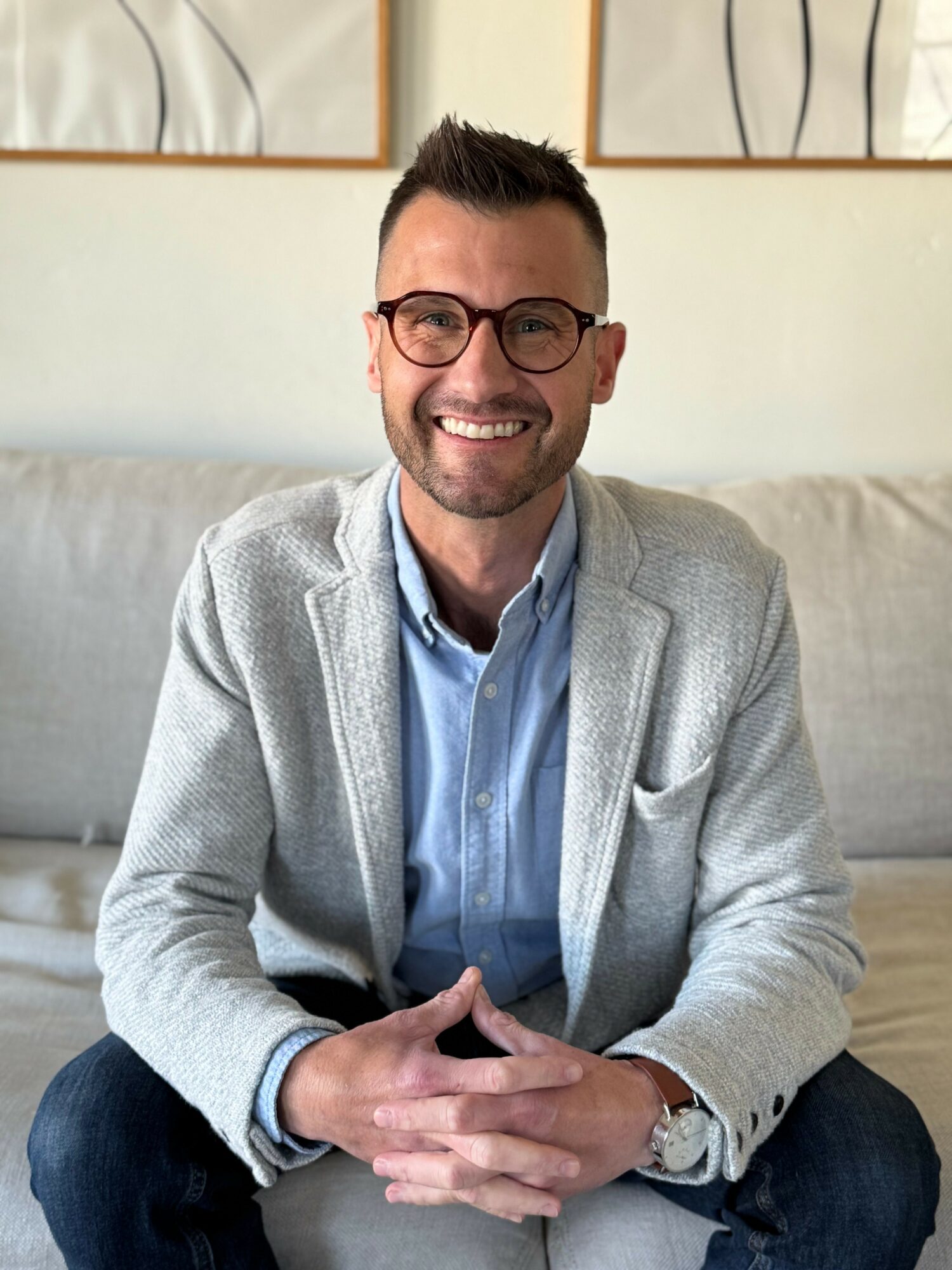
Today we’d like to introduce you to David Kyle Bond.
Hi David Kyle, so excited to have you on the platform. So before we get into questions about your work-life, maybe you can bring our readers up to speed on your story and how you got to where you are today?
Oh boy, that’s sort of a long story. I encountered attachment theory in a Psychology of Intimacy course my senior year at Gonzaga University, and walked away with language to make sense of what I’d experienced before and after leaving my family home. The professor, Dr. Kent Hoffman, changed my entire life throughout that semester, and later via the books he wrote on the Circle of Security. Learning about attachment felt very much like coming home to a house I hadn’t yet had the experience of stepping into.
I knew I wanted to be a psychologist since I was a teenager, but I also wanted a bit more life experience before diving down that path. After graduation, I went to Hawai’i with Teach For America, taught English at an intermediate school and realized for the first time how awesome (and tricky, at times) adolescents are to work with.
I earned a Master’s in Education while there, and then moved LA to study Positive Developmental Psychology with Dr. Mihaly Csikszentmihalyi. I finagled a way to navigate the intersection between positive psychology, attachment theory, and clinical work while finishing my PhD, and in 2020 I launched my private practice (SHIFT Psychology).
I’ve since opened The Dad School in order to provide more support for new and single fathers, and use the rest of my time to teach and develop courses on developmental psychology and attachment theory at Arizona State University. It’s been a long road, but this is right where I wanted to be–the intersection of clinical work, teaching, and supporting dads.
We all face challenges, but looking back would you describe it as a relatively smooth road?
Absolutely not. I graduated college right before an economic recession, I re-specialized midway through graduate school, I finalized my clinical training and launched my practice at the very beginning of the pandemic, and then I immediately became a first-time dad at the end of 2020. It’s been a bit bumpy, to say the least.
I subsequently became a single dad when my son was one-and-a-half. I didn’t—and don’t—have a relationship with either of my parents (by choice), and my only close family lives in another state. Launching The Dad School took countless all-nighters and the stress that comes with a great deal of self-doubt.
My friends and mentors have been the foundation for resiliency since I was a teenager—I found in them what I needed and could not find in my family of origin. I am still in close touch with my friends from high school, from college, from graduate school, and beyond. I live two blocks from two of my best friends—we’ve known each other since we were fourteen, and now our kids play together.
That’s rare, and I’m very lucky in this regard—my friends are my family, and while that hasn’t made the road less bumpy, it has definitely made it easier.
As you know, we’re big fans of The Dad School & SHIFT Psychology. For our readers who might not be as familiar what can you tell them about the brand?
I run two related, but different, businesses–SHIFT Psychology, where I do clinical work with adults and teenagers as a licensed psychologist, and The Dad School, which focuses on providing practical education for fathers.
SHIFT’s approach to therapy is unique in that the practice is kept small by design, the work itself draws from a wide array of therapeutic modalities, and there is a balance between the sorts of conversations that drive deeper, long-term change and those that aim at finding solutions in the here-and-now.
Therapeutic change is largely driven by the quality of the relationship between therapist and client–and each of these three qualities help achieve that. A smaller practice allows for a more tailored, more attentive approach to each client’s individual circumstances because–quite simply–there is more time to prepare for sessions and keep track of progress.
My background in psychodynamic therapy and training in cognitive-behavioral-therapy (CBT), acceptance and commitment therapy (ACT), and emotion-focused therapy (EFT) means that in any given session I’m working to find the right fit between what the client needs most based on their goals and which intervention gives us the best shot at moving the needle toward achieving those goals on a moment-to-moment basis. I think of it like painting with a palette full of colors, rather than painting with only one. You can create beautiful art either way, but with many different colors (read: therapeutic modalities) at your disposal, you can create a picture with far more depth and substance.
Balancing the need for solutions and also the need for reflective, relational conversations in therapy is tricky–in some practices, there’s a heavier focus on the past, and in others, there’s a heavier focus on finding solutions to specific problems in the present. I think that leaning too much in either direction is less helpful than approaching issues from both sides; as a psychologist, I firmly believe that much of the distress we feel now is related to what we automatically learned to do during experiences that happened long ago, when our brains were first forming connections and making sense of how to survive in the world. That said, I think it’s also true that the current push toward a medical model where we try to resolve symptoms in the immediate with targeted interventions can provide relief that is more trackable, and fits into what some folks want out of therapy. In my practice, we try to do both–let’s get some relief for the hardest pain points in the here and now, and let’s also figure out what’s going on behind the scenes so that we create lasting change, not just potentially temporary symptom reduction. Said another way–let’s get to the root of the issue and also let’s make sure we’re not ignoring what’s happening right now.
Shortly after opening my practice, I learned I was going to be a first-time dad. I’ve always wanted to be a different father than the one I had growing up, so I did what any guy who really loves school and learning would do in order to make that happen: I looked for classes to take and books to read.
I didn’t find much out there—and what I did find seemed to treat dads as an afterthought, or (worse) as dolts needing constant monitoring. I thought (and think) that this is a travesty—research clearly shows that dads matter, most guys I know genuinely want to show up for their kids, and the trope of the father who sits uninterested in the background seems more to reflect our experiences with our own fathers as opposed to the current reality. Dads form attachment bonds with their kids in the same ways that moms do.
In response, I wrote the curriculum for a New Dads course in 2021, revised it over several years, and officially launched The Dad School in 2024. We offer the course in-person around LA at new mom support centers and also through Zoom, in case folks from other places want to join. We keep the groups small so that guys can get to know one another—so even though it’s called “school,” it really doesn’t end up feeling that way when we’re together.
I started noticing a second issue popping up for the men I was working with in my practice and in several alumni of the new dads courses: lots of us were becoming single dads, and doing it without any formal support whatsoever. I wanted there to be something for men experiencing the shift into single parenthood, so I wrote a course curriculum for Newly Single Dads and published “How to Rebuild: The Ultimate Survival Guide for Single Dads” in the hopes of providing the right tools to navigate the transition and reduce the degree to which men were having to go through this alone. Those courses are offered online only, at the moment, and capped at six guys per course. It’s a ton of fun, even though it’s serious business, and even though becoming a single dad isn’t what anybody really plans for.
We’re on track to launch a course for fathers of teenagers in 2026, and I’m in the process of finalizing a comprehensive guidebook for new dads. I’m really proud of the work we’ve done so far, the dads who take the courses or read the guides are saying they’re very helpful, and the vision is that The Dad School helps create more confident fathers and stronger families in whatever form they come.
Is there a quality that you most attribute to your success?
Couple of things before I respond: I don’t think any of us has just one quality that helps us succeed, I think every strength comes with an associated weakness, and I think it takes multiple strengths and the wisdom to know when to apply each of them uniquely in order to handle what life throws our way.
One quality that has helped is that I don’t give up—ever—and I have both a clear value system and a ton of natural energy. I will literally work on a problem or barrier until I figure it out or realize I need to accept that it can’t be finished, at least for the time being. I’m still learning how to discern which situations call for which of these two options.
My “get stuff done” energy can be draining, and can sometimes keep me perseverating in difficult situations where the far more logical choice is to exit.
I also learned in childhood to be sensitive and attuned to the mood states and perspectives of other people; this was necessary then and is vastly helpful to me now in my clinical work, support of fathers, and teaching. The flip side is that it’s sometimes not particularly great for relaxing in social situations.
Pricing:
- New Dads Course: $600
- Newly Single Dads Course: $600
- Single Dad Guidebook: $27
- Psychotherapy: $300/session
Contact Info:
- Website: www.shift-psychology.com AND www.thedadschool.org
- Instagram: thedadschoolofficial
- Facebook: https://www.facebook.com/profile.php?id=61579156526087
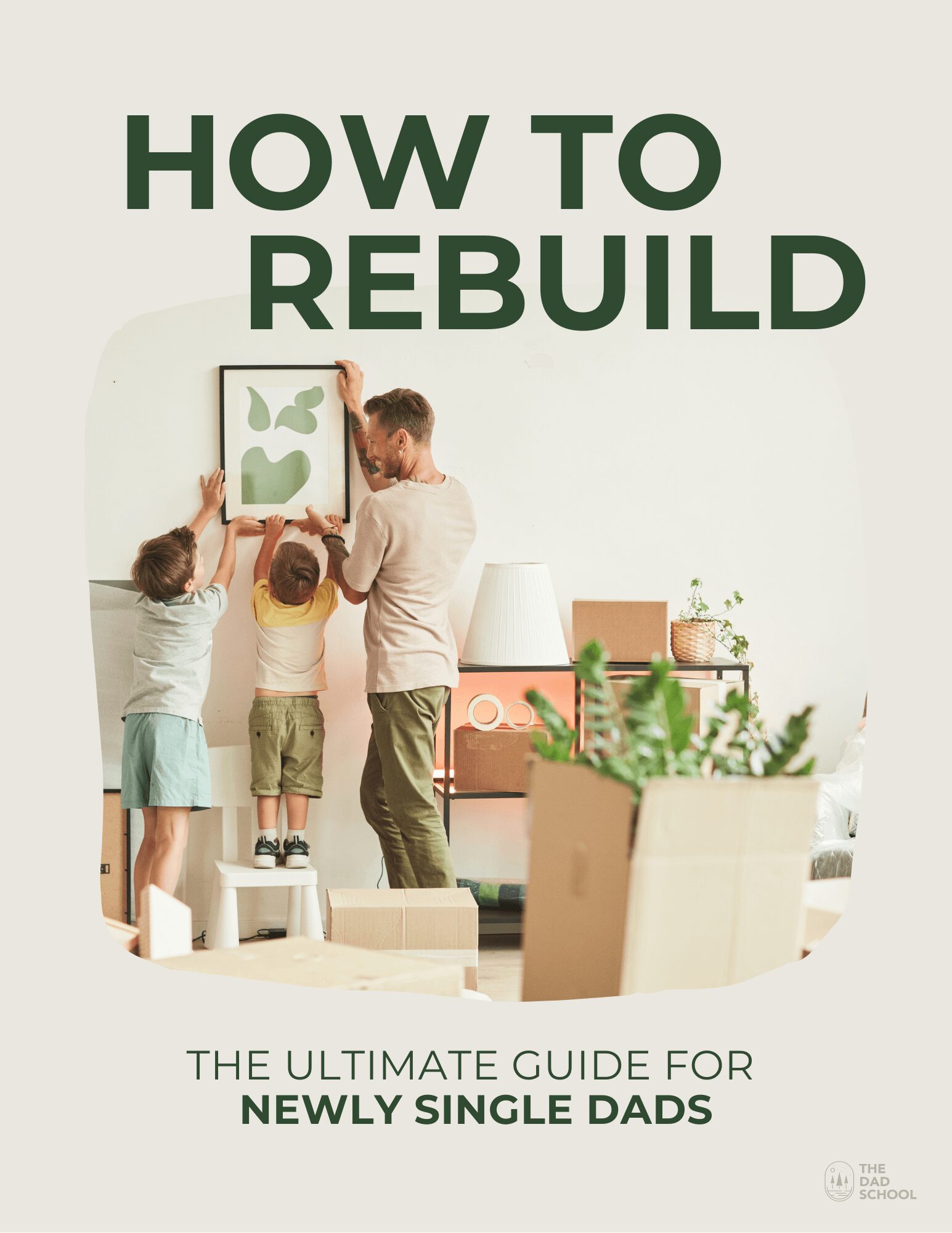
Image Credits
None.
Popular
-

Matthew Hill on Turning Holiday Rituals into Haunting, Habit-Forming Storytelling with Long Winter Nights
-

Linda Villines on Releasing Stored Struggle and Reclaiming Ease Through the Body
-

Candice Swanson on Honoring the Sacred Early Days of Motherhood Through Intentional Photography
-

Michael Johnson on Telling Untold Stories of Identity and Leadership Through SQUAD
-

Owning the Narrative: Drew Dusterhoff Steps Into Power with Lincoln Must Die
-

Portraits of the Valley


