


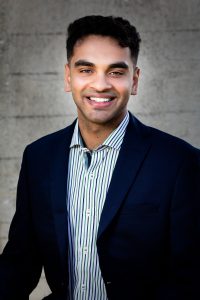
Today we’d like to introduce you to Varun Bather.
Hi Varun, please kick things off for us with an introduction to yourself and your story.
I am a mobility and systems level designer with a passion towards design research. I have recently graduated from ArtCenter College of Design, based in Pasadena, where I completed the study in Graduate Program on Transportation and Systems Design. At this juncture, when I look back at the journey so far, I can see that contours resemble like a wave, maybe not the gentle one but surely having a flowing pattern with ebb and crest. The journey started with my schooling in native city Vadodara in India, which is also known as the cultural city, a cosmopolitan city with the right blend of art, culture, nature and adventure. As a kid, I was quite fond of sketching landscapes and objects that time. Later on, when I moved to a fast-paced city of Navi Mumbai during my middle school years, I got fascinated by the different cars gushing by our school bus on freeway. After a while, identifying different cars by their names became a game for me and sketching them during my free time a hobby. As the interest built on with time, I wanted to gather details of various makes and models of cars from Auto magazines to Encyclopedia. By the time I completed my schooling, I felt the inner urge to follow the study in Automobile Engineering. The desire of becoming a car designer had evolved! This was the only thing I wanted to follow. But, unknown about the crux of the design field and probably not many car design jobs available in India, I felt more secure opting for an undergraduate course in Mechanical Engineering. The basic intention remained to pursue the interest in car design in form of Graduate Program. It was quite a fun studying various subjects like engineering mechanics and solving various numerical, but the heart always remained skewed to my passion for car design. So, on completion of my graduation, I looked around for Graduate Program that would lead me to become car designer. I knew that Italy was the best place to study this course and soon decided that Scuola Politenica di Design (SPD) was the place. It was quite a challenge, as SPD had split this course in two parts, first year for learning car design tools followed by 15 months Master’s program for the students who were amongst the top few in first year. It was quite expensive and also there was a gamble involved.
However, through the help from the people around me, especially my parents, I accepted the challenge, secured admission based on my portfolio and landed in Milan to study the One Year Course in Car Design Tools at SPD. This course was quite an intense foundation program that covered whole gamut of subjects like sketching, history of cars, digital visualization, and color & trim. It was a such a mesmerizing experience in my life that I loved studying like never before. I worked tirelessly for days and nights, and rather than feeling stressed, I enjoyed every bit of my time that I spent working hard to complete the course. While working closely with other students and faculty members of different nationalities was quite a rewarding experience by itself, helping me learn different cultures and processes, widening my horizons of thinking and understanding. I became quite a confident person with enhanced level of self-belief. But who knows that now the wave had to take the downward turn! As the year was coming to an end and all of us were working hard towards that one final presentation to secure admission in second year, a dark reality fell upon me in form of an envelope. It had a letter mentioning “Varun Bather, you are not selected for the Master’s program at SPD”. From the crest, I reached the ebb in no time. The feeling of getting rejected left me dumb and a wave of uncertainties engulfed me. I had to pack my bags and take a flight back to India, with only one question bugging me throughout the flight journey, what now? Senses prevailed and I started looking around for other alternatives, of course in the same field. I worked hard on my portfolio and sought admissions for the master’s course at Royal College of Arts (RCA), Istituto Europeo di Design (IED) and ArtCenter College of Design. The perseverance paid off and I secured admission in IED in their master’s program first, followed by call from ArtCenter and lastly from RCA.
Graduate program of Transportation Systems & Design, offered by the ArtCenter College of Design, appealed me the most. It called for “an urgent need for a new kind of transportation designer, one who understands the real value of design stretches way beyond styling”, as rightly said by the Executive Director of the program, Geoff Wardle. The forty minutes telephonic conversation with Geoff made my task to firm up decision on the course to pursue further easier. It made me understand his philosophy and expectations out of candidates, instilling confidence and excitement in me. Bundled up with newfound confidence, excitement and curiosity to learn, I once again started my academic journey to understand the nuanced and complex systems of transportation and how it allows or dis-allows access to different resources. This journey has not only allowed me to develop different important skillsets for design research but has actually culmination of my passion in design research. While working on my Master’s Thesis, I could evaluate the top-down systems that are in practice critically and find the new collaborative and innovative ways to develop inclusive bottom-up practices, which might one day allow for a more sustainable and equitable transportation future.
Alright, so let’s dig a little deeper into the story – has it been an easy path overall and if not, what were the challenges you’ve had to overcome?
The road has not been smooth, as I encountered several upheavals along the path. The major hurdle that I faced was the rejection to qualify for the Master’s Program of SPD after working tirelessly for days and nights in One Year Course there. I had put all at stake for that course, as I wanted to pursue the work that I had passion for the most. And on top of that, I could not find work opportunities in the field of my choice based on the Car Design Tools Course. It seemed that all the resources that I had spent including the hard-earned money of my parents has gone in vain. But I would like to add here that like Benjamin Franklin said, “Out of adversity comes opportunity”, my perseverance to continue further on the path I had chosen helped me to hone my choice further and reach where I am today. Today, once again, I am looking at the future with more self-belief and faith, patience, better communication skills and courage.
Thanks – so what else should our readers know about your work and what you’re currently focused on?
As a mobility and systems-level designer, I specialize in human centric and participatory design approach to bridge the gap between top-down authorities and bottom-up practices of the community while accessing mobility. It has been inspired by the works of mobility sociologists, researchers, human geographers like Professor John Urry, Professor Mimi Sheller, and Professor Tim Creswell (to name a few) as well as urban planners and urbanists like Jane Jacobs James Rojas, and William H. Whyte. One of the philosophies that I have adopted is to take a bottom-up approach and understand the meanings and mechanisms in which different cultures, race use or perceive varied resources. Hence, I work towards meaningful community engagement through ethical primary research methodologies and facilitating co-design workshops within their community space. Further, my design and research skillsets like primary research planning, journey mapping, storyboarding, user testing, and multi-fidelity prototyping help in developing fun and engaging activities to spark meaningful conversations. For instance, while working on my Master’s thesis of ShAREd Transportation: Accessible, Responsible & Empowering, I got the opportunity to design multiple activities like collage making on giant maps and card games. This allowed for the diverse members of the community, like grandmothers and teenagers, to express their in-depth stories with ease while having fun.
Also, the above process leads to meaningful asset development in the forms of participatory maps with tangible and intangible feelings towards the built environment and in-access to resources around them. Further, the card games provided an opportunity for them to ideate towards their best possible solutions to a strenuous daily life scenario while learning about the resources that they were unaware of provided by the different organizations. Furthermore, being part of the informal shared programs like community potlucks and making Indian food for them allowed for a better understanding of their culture and social norms. While facilitating or being part of the above activities, it was significant to ethically document these experiences to analyze and synthesize the information. Finally, this allowed for insight generation and development of four design frameworks to help describe the un-acknowledged conditions of grassroots communities and aspirations to their shared informal practices. Hopefully, this process would inspire thought and novel work for civic bodies, specifically City and Transit Planning Agencies, as they engage historically marginalized communities and strive to yield sustainable and equitable outcomes.
Contact Info:
- Email: [email protected]
- Website: https://www.varunbather.com/
- Youtube: https://youtu.be/aBENKTJFfOE


Popular
-

Local Highlighter Series
-

If you could say one kind thing to your younger self, what would it be?
-

Who taught you the most about work?
-

What is something outside of work that is bringing you joy lately?
-

Have any recent moments made you laugh or feel proud?
-

What fear has held you back the most in your life?