



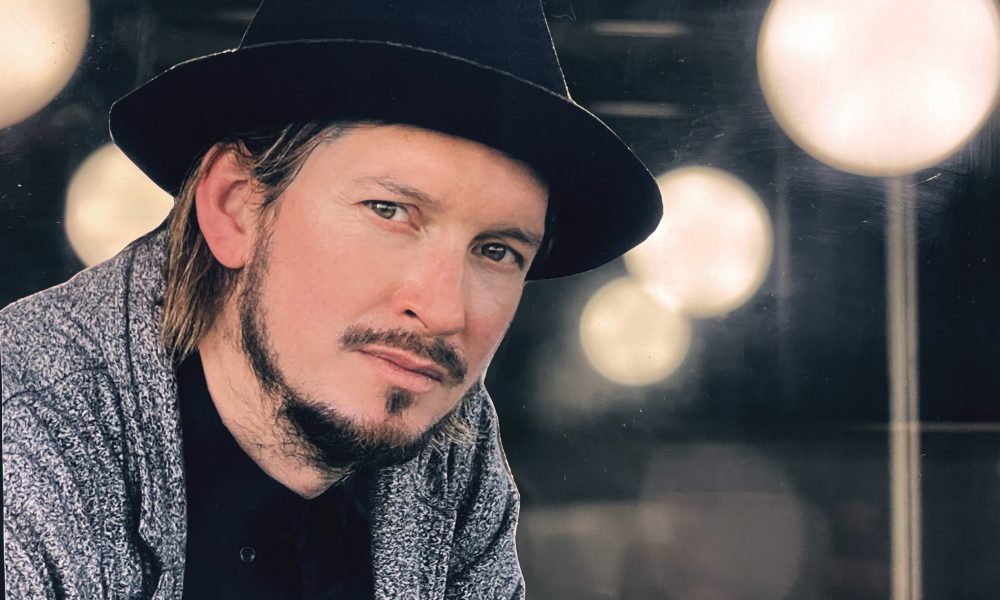
Today we’d like to introduce you to Brett Long.
Hi Brett, can you start by introducing yourself? We’d love to learn more about how you got to where you are today?
My parents used to borrow their friend’s VHS camcorder, and as a young kid, I really wanted to look through the viewfinder but was denied so many times. This generated the scarcity effect and whenever the camera would show up, it would make me go nuts. Then, one Christmas morning, my mom unwrapped a Video8 HandyCam. After I picked it up, I had a difficult time putting it down. I would “fake sick” to stay home from school learning how to use it. Through experimenting and pressing all the buttons, I learned in-camera edits and would make my little sister disappear like in a George Milies trick film. Slowly, these in-camera effects would evolve into stop-motion animations with my action figures and clay sculptures.
In high school, I would incorporate stop motion into all my projects and would continue to make videos through summers with my cousin Nicholas Wallace www.nickwallace.com/. Nicholas and I attended the same film program where we met and collaborated with Winston Hacking www.winstonhacking.com.
Post-college I had difficulty finding my dream job and ended up counting and sorting balloons at a factory. Each day I felt my goals getting further away, so I moved to Toronto, Canada, and into an old munitions factory with Winston. In Toronto, I found a job working as a stop-motion animator. On the side, Winston and I began creating music videos collaging animation, puppetry, and in-camera effects for local artists.
Eventually, the stop motion job I had ended, and the animation company stopped producing content. The opportunities in the industry for stop motion became sparse, and Winston and I moved on from our collaborations and left the old munitions factory.
Newly married, I was periodically teaching stop motion workshops at Bell TIFF Lightbox but was looking for a more stable job; I emailed what felt like every stop motion studio in the world and had a good conversation with Alex Kamar in LA, who was at Stoopid Buddy Stoodios. This led to relocating into the US as a stop motion animator a year later. During that year, I received an artist residency where I researched VR/360 video and had completed a couple of short stop-motion animations in the medium that were displayed at the Ottawa International Animation Festival.
Since moving to LA, I have been the Lead Stop Motion Animator on various projects such as Robot Chicken, Micro Mayhem, Steve Aoki – Dominion X NFT’s and an Animator on Shape Island, Buddy Thunderstruck, M.O.D.O.K., and SuperMansion season 1, 2, and 3.
We all face challenges, but looking back would you describe it as a relatively smooth road?
I have to regularly obtain working visas. It’s always a long and complicated process. If I didn’t love being in this industry so much, I am not sure where I would be, but being here has been such a rewarding experience. The stop motion industry is small and full of amazing and talented people, and the friends I have made along the way have definitely helped smooth out this bumpy road.
Thanks – so what else should our readers know about your work and what you’re currently focused on?
As a stop motion animator/filmmaker, I work contract to contract. In television/film, each production has different demands and expectations, so working from show to show will require slightly different skill sets, and you need to adapt. It’s also a fast-paced environment so you need to be thinking ahead and ready to collaborate.
Stop-motion animation is comparably structured the same way as a live-action film. There are many specialized artists and departments that work together on a project. Every day I work in an enclosed space with miniature sets, puppets, film lights, and a digital camera connected to stop motion software on a computer. I communicate closely with the different departments starting with the Director who guides me through a single shot of the show. Details will be discussed with the Director and Animation Director, and then all the kinks are worked out with the corresponding departments. The curtains are closed, and I am then responsible for taking frames/photographs and moving the characters little by little. When a shot is completed, I seek approval from the director and begin the process for my next shot.
Many peers have attended animation school, so my studies in film might differ from the others. I have hands-on experience producing independent films and music videos so I am competent with a schedule, the art process, lighting scenarios, cameras, and editing. I understand the setup and what materials to use, and how to make it work in animation. Having thorough knowledge of the other departments, I utilize these resources and have pioneered and innovated in-camera and practical effects.
In 2014 I was awarded an animation residency in Toronto and discovered how to apply VR/360 Film into stop motion. There wasn’t much known about VR at the time so there were many problems to encounter. It was a good challenge and a long process that pre-dated VR software, so I’m proud about the accomplishment and what I learned from that experience.
Risk taking is a topic that people have widely differing views on – we’d love to hear your thoughts.
I’m not much of a risk-taker. I gambled once when the lottery was into the billions. But with everything else, I would rather consider myself as a survivalist. Some people may think moving to L.A. was a risk, but with logic and reason, I saw it as a no-brainer.
Contact Info:
- Website: www.VRstopmotion.com
- Instagram: alphabrette
- Other: https://vimeo.com/brettlong


 Image Credits
Brett Personal Portrait Photo by Yuki HL Brett with puppet head Brett animating on glass animation rack Brett animating on glass animation rack 2 Photos by Geoff Fitzgerald Brett with orange beanie I thought I told you Photo by Charlie Tyrell Brett on animation set Photo by Brett
Popular
-

Local Highlighter Series
-
If you could say one kind thing to your younger self, what would it be?
-

Who taught you the most about work?
-
What is something outside of work that is bringing you joy lately?
-

Have any recent moments made you laugh or feel proud?
-
What fear has held you back the most in your life?


