




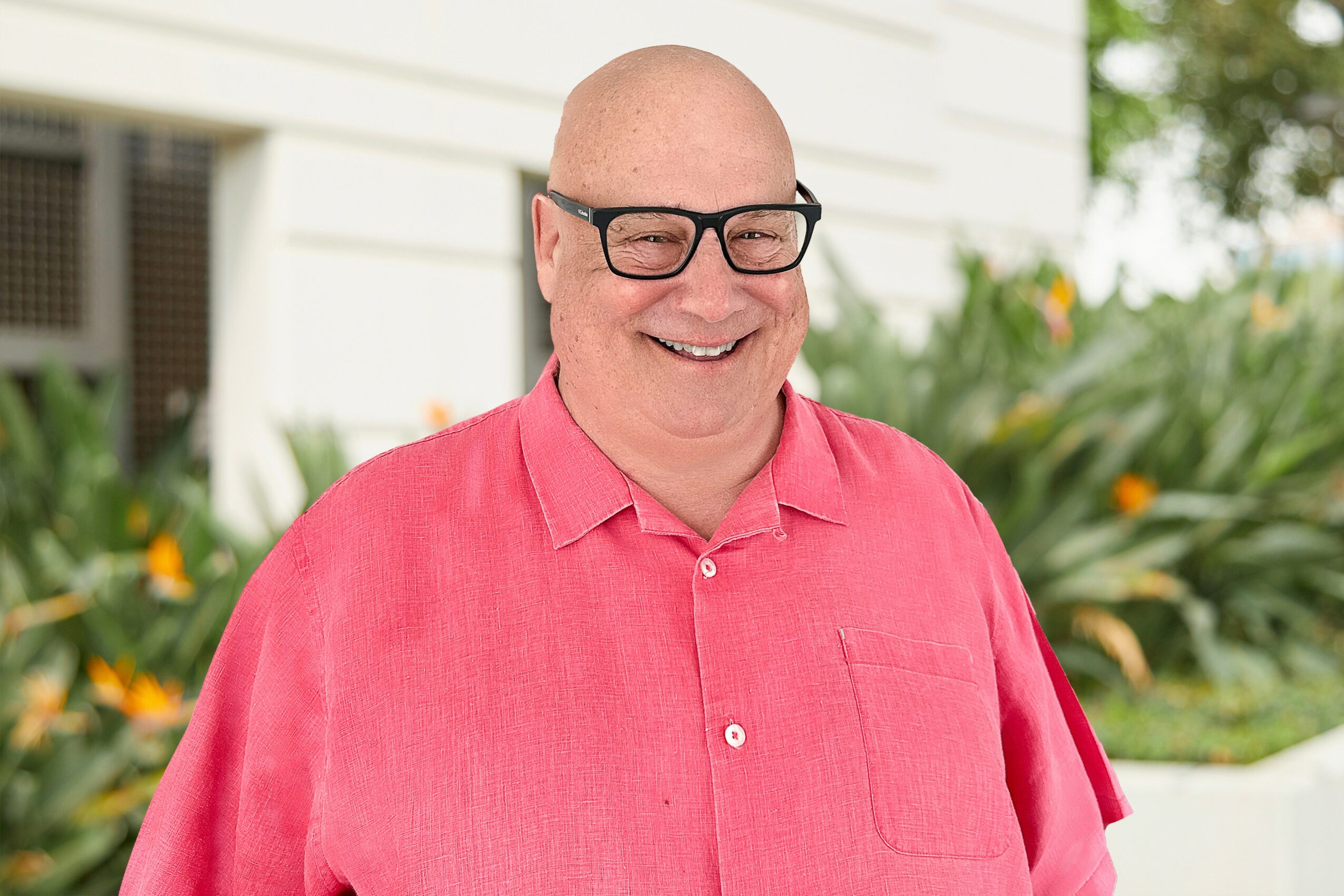
Today we’d like to introduce you to Luis Maimoni.
Hi Luis, thanks for joining us today. We’d love for you to start by introducing yourself.
I’m one of those guys who looks like he has it all. Maybe not huge wealth, but plenty of lifestyle comfort — picture-perfect family, advanced degrees, professional success. If life is a series of boxes to check, I checked them. And the more boxes I checked, the more tired and alienated I felt.
Having it all isn’t what it’s advertised to be.
My story is about unlearning success — not by choice, but by running out of choices. Somewhere between failure, desperation, and too many bad metaphors, I stumbled my way into finding myself.
Like most men, I was taught to be strong. To win. To provide. To keep my chin up and my feelings down. We say men are taught not to cry, but that’s not quite right — we’re taught not to feel at all. Doing is more important than feeling.
Camaraderie and cocktails. Brotherhood and beer. For those who don’t drink — cannabis and connection. We hide from ourselves and our loved ones, and call it strength.
The cultural messages come loud and clear: competence beats connection, money means safety, power over is better than power with, and vulnerability is weakness. Playing cards, playing sports — it didn’t matter. Never let ’em see you bleed. A friend on the football team once quoted Red Sanders, the old UCLA coach: “Winning isn’t everything; it’s the only thing.” If you can’t outmuscle a problem, outwork it. And if you can’t outwork it, fake it.
I’d internalized the idea that if I worked hard enough, earned enough, achieved enough, I’d be happy. I wasn’t — but I didn’t know it, not only because I was too busy checking boxes, but because feelings weren’t part of the equation. Success was a moving target: check one box, add two more. Bigger, harder, shinier. A race with no finish line.
This is the part of the story people didn’t see — the one that made me who I am. I had everything I believed I needed: a good income, a home in Manhattan Beach, two wonderful kids, a wife with her own thriving career. And still, something was off. It felt like gears grinding inside my chest, tearing at my insides.
From the outside, people saw success. From the inside, I felt like a failure. So I did the only thing that made sense: I put my head down and tried harder. Sure, a nice home in Manhattan Beach — but that’s just a steppingstone to the one high up in Palos Verdes, right? If I couldn’t deliver that, it meant I wasn’t good enough. I wasn’t drinking to feel good — I was drinking because real men drink.
Alright, so let’s dig a little deeper into the story – has it been an easy path overall and if not, what were the challenges you’ve had to overcome?
The biggest irony is that the greatest obstacle to feeling successful, fulfilled, and happy wasn’t external — it was me.
Here’s the thing: when we’re born, we’re not born into a vacuum. We’re born into a family — crazy, calm, loving, fighting, peaceful, addicted, sober, rich, poor — it doesn’t matter. Families respond to their conditions by creating rituals of communication, dominance, avoidance, affection. Those patterns get stitched into us before we can name them. They become what I call the invisible threads of family.
Those threads kept me performing success, managing pain, pretending everything was fine. They whispered that I was just tired, just overworked. But I was angry all the time. Drinking more. Arguing more. The cognitive dissonance was brutal: on paper, everything looked perfect, but inside, I was grinding myself apart.
Without telling a soul, I walked into a therapist’s office. I didn’t go to change my life. I went because I was out of other bad ideas. It was my last resort.
It was also the first time I heard myself say out loud that things might not be okay. My first questions to my therapist were versions of, “Am I even normal?” It took several sessions before I believed the possibility that I might be.
Therapy wasn’t comfortable. It was awkward, messy, slow. But it was the first place I stopped performing long enough to notice what was actually happening inside. It’s where the invisible threads started to become visible. I learned I wasn’t drinking to feel good — I was drinking to manage feelings I didn’t know I was having.
Therapy helped me see that those threads weren’t destiny — they were conditioning. You can’t fight an invisible enemy, but once you see the threads, you can start to untangle them. And once you start untangling them, you find freedom.
I left the job. I left the marriage. I kept the kids, but built a different kind of home. My kids were going to inherit different threads than I did — not the ones about silence and striving, but ones about rest, laughter, and choosing their own pace.
The downside of freedom is you realize you have no idea where to go. Like a kid in a candy store, I didn’t always make good choices. Decorating differently for Christmas worked out great. Second wife? Not so much. Apparently freedom comes with a learning curve — and a divorce decree.
By my fifties, I’d been running my own business for over twenty years. It had been good, then okay, then not. The market shifted, the money thinned, and I realized I was out of gas. The invisible threads were still whispering, “Push through, don’t quit,” but there was nothing left to push.
One night, on a whim, I wandered into a university offering a master’s program in therapy. Me — the ex–software exec, the salesman, the guy who had lived on Ayn Rand, booze, and caffeine — walking into a building full of people who wanted to talk about feelings. Culture shock doesn’t begin to cover it.
Then I watched a grainy video of Carl Rogers doing therapy — and something clicked. The thing I’d been searching for all along wasn’t success. It was connection. Presence. Humanity. Inside myself, I felt resonance. After all the striving, all the noise, there it was — me, my calling.
We can’t move to a new version of ourselves unless we’re willing to let go of the old one. The threads binding strength to powering through have evolved into something that fits me better. Now I know it’s about honesty. Real strength isn’t armor; it’s letting the armor fall off and noticing you can take the hits without carrying all the weight.
In my office now, I see men who remind me of younger versions of myself. Good jobs, good families, quiet misery. They’ve been taught to solve emotions by ignoring them, and when that stops working, they “make mistakes” that make them feel like failures. But they’re not broken — just carrying too much armor, held in place by too many invisible threads.
So yes — the biggest obstacle I faced was me.
I didn’t find the life or wife I wanted by chasing my dream. I found them by learning to listen — to myself, and to others. Like relationships themselves, it turned out to be a lot harder than I ever thought it would be.
Now, I come home — not to Manhattan Beach, not to Palos Verdes — but home. My real home. My real wife. The one that fits me. The one built for who I’ve become.
There’s quiet here now — books, laughter, light, fun, adventure. And sometimes, I still think about how far I had to travel just to arrive where I always belonged.
As you know, we’re big fans of Luis The Therapist . For our readers who might not be as familiar what can you tell them about the brand?
I’m a marriage and family therapist who helps people rebuild connection, trust, and communication — especially after betrayal, conflict, or emotional shutdown. Sometimes I work with individuals, sometimes with couples, but the focus is always the same: helping people reconnect with their most authentic, alive selves.
Relationships aren’t meant to be perfect, and disagreements don’t have to be dealbreakers — not if both people are willing to show up, own their part, and stay in the room when it gets hard. My work grew out of what I had to learn the hard way: that strength without honesty builds walls, not relationships.
Clients often tell me they want more than empathy — they want perspective, clarity, and tools that actually work outside the therapy room. That’s where I’m different. I’m not a blank slate in a cardigan murmuring “Mm-hmm” and asking, “…and how do you feel about that?” I’m an active collaborator. I bring the heart of Carl Rogers and the roadmap. We’ll unpack feelings, yes — but we’ll also practice new ways of talking, listening, and responding so change doesn’t stay theoretical.
Every story is different. For some, therapy means working through infidelity or compulsive behaviors. For others, it’s navigating the quiet loneliness that creeps in when partners become roommates instead of lovers. Once enough repair has been done, intimacy — that space where love and fear collide — often becomes the deeper focus.
I also work with clients in diverse relationship structures, including kink, poly, and open relationships. The details may look different, but honestly, nothing human is alien to me.
I love it — truly — when clients start showing up differently in their relationships with themselves and others. When they realize empathy isn’t weakness, boundaries aren’t rejection, and repair is still possible, even after serious damage.
Therapy is about rediscovering what’s still alive beneath the pain and learning how to heal, reconnect, and live from that place. It’s an investment of time and heart. Done right, it leads to a life that feels more genuine, more connected, and — if we’re lucky — more beautiful.
Who else deserves credit in your story?
Every person we come into contact with shapes us in some way. So at some level, everyone I’ve ever met—and everyone who’s ever met me—has played a role.
That said, the biggest influence by far has been my decades in therapy, where I learned to separate who I am from who I thought I was supposed to be. These days, I spend less time on the client side of the couch, but I’m constantly shaped by the people I work with, my colleagues, and my community roles. The more I home in on the truest version of myself, the more easily others seem to meet me there.
And if I don’t acknowledge the love and support of my wife, I’ll have some ’splainin’ to do. So: thank you, dear.
As for inspiration, Carl Rogers tops the list. His belief in unconditional positive regard and deep, authentic presence reshaped how I see people—and how I try to show up for them. He reminded me that real change doesn’t come from fixing people, but from truly hearing them.
I also draw strength from my grandparents, who came from very different corners of history. My maternal grandparents were at Pearl Harbor on December 7 and both played roles in responding to the attack and limiting its damage. My paternal grandparents fled Poland ahead of Hitler and rebuilt their lives in Colombia, eventually sending their son to break trail here in the United States.
So I come from both first-generation immigrants and a family that had already been here for generations—people who defended the country and people who sought refuge in it. They taught me what it means to be part of something larger than myself, to value safety, community, and opportunity, and to act on the privilege I was lucky enough to inherit.
And honestly, I’m inspired every day by my clients. Watching people face what’s hardest and still choose connection—that’s what keeps me doing this work.
Pricing:
- Individual Therapy Session: $165-$185
- Couples/Family Therapy Session: $195-$215
Contact Info:
- Website: https://www.luisthetherapist.com/
- Facebook: https://www.facebook.com/profile.php?id=61564054647732
- LinkedIn: https://www.linkedin.com/in/luismaimoni
- Youtube: https://www.youtube.com/@luismaimoni3432


Popular
-

Los Angeles Barea on Turning Green Superheroes into a Global Movement for Youth-Led Change
-

Trisha DuVivier on Bridging the Franchisor–Franchisee Divide with Workhero and “Franulate”
-

Portraits of the Valley
-

LA’s Most Inspiring Stories
-

Cedar Boschan on Elevating Black Music Rights and Driving Urgent Conversations Around Credit, Equity, and Artist Protection
-

Robin Olive on Building an Inclusive Performing Arts Movement and Expanding Opportunities for Every Student


