




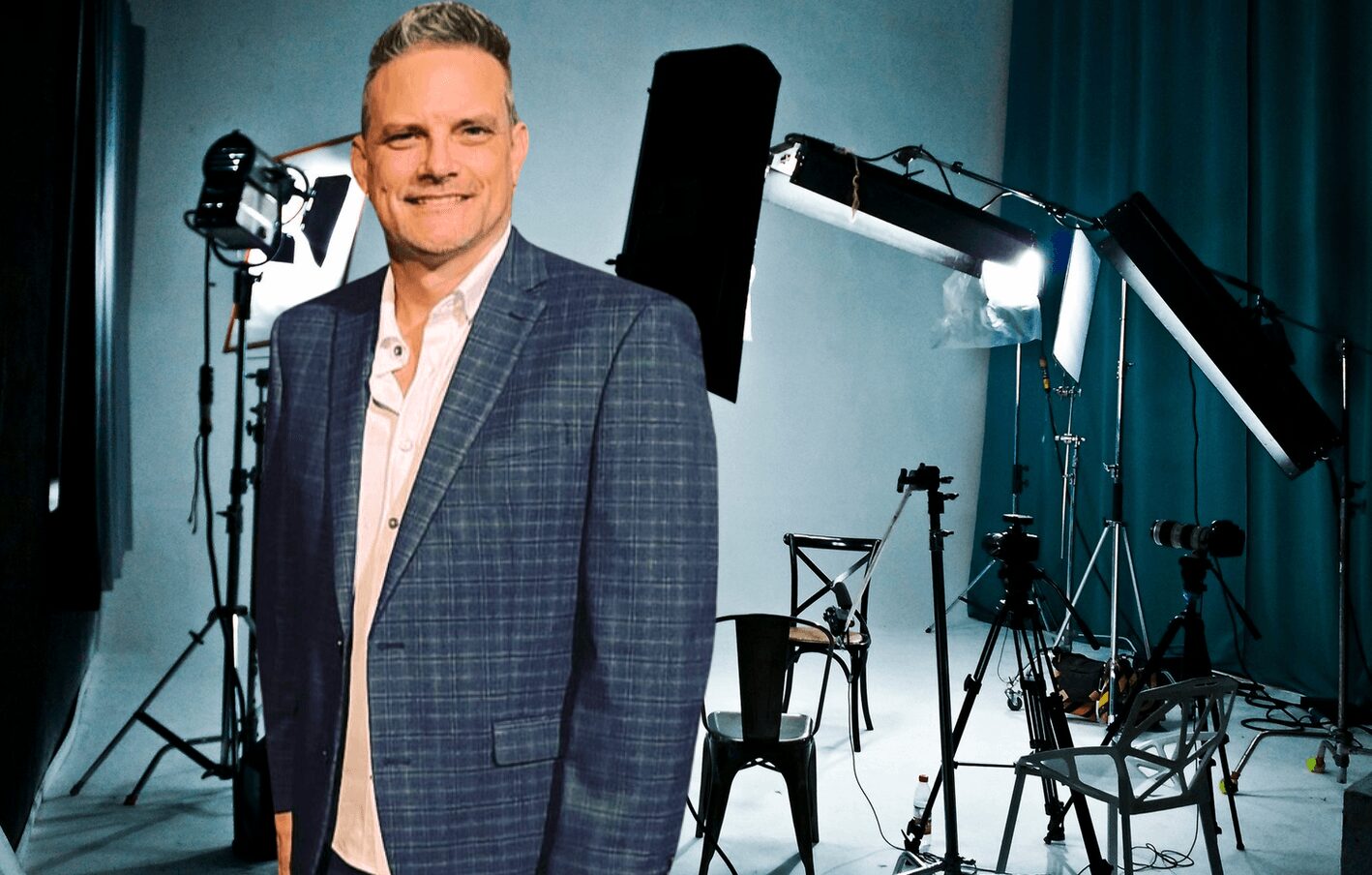
Clayton Guiltner shared their story and experiences with us recently and you can find our conversation below.
Clayton , we’re thrilled to have you with us today. Before we jump into your intro and the heart of the interview, let’s start with a bit of an ice breaker: Would YOU hire you? Why or why not?
When I think about the kind of people I hire, I often use a simple analogy: it’s like a child wanting dessert before eating their broccoli. Everyone wants the dessert—the fun, flashy parts of filmmaking—but I’m looking for the people who can appreciate the broccoli, too. The ones who understand that the less glamorous work is what actually makes a film possible.
A lot of applicants are enthusiastic about the idea of the work I do, but few understand what the job truly entails. Everyone imagines themselves as a writer, a director, or part of casting. But the reality is that film producing is built on research, phone calls, logistics, problem-solving, and spreadsheets. It’s detailed, often tedious work, and it requires people who are genuinely curious about any aspect of filmmaking, not just the shiny parts.
I look for people who are responsible, self-aware, and capable of getting things done without hand-holding. The basics really do matter: Do you show up on time? Are you professional and respectful in your communication? Do you stay engaged, or do you disappear for hours without checking in? Producing is time-intensive and sometimes all-consuming. Life gets stressful, but you can’t simply vanish. Handle your stress—don’t drop out of the workflow and leave the team scrambling.
I also value people who bring their own thinking to the table. Don’t rely solely on AI to do your work. If you’re assigned a task, I expect you to contribute something I can’t get by prompting a tool. Spoiler alert: I can ask AI for the same draft you can and copy-paste it just as easily—but that doesn’t get us anywhere. What we need is your insight, judgment, and problem-solving. I’m not opposed to AI; it’s a tool. But at the end of the day, I’m hiring you, not AI.
Can you briefly introduce yourself and share what makes you or your brand unique?
I began my career as a theatre actor and director, and eventually found my way into the business and producing side of theatre—mostly out of necessity, because I wanted the freedom and ability to tell the stories that mattered to me. I hold three degrees: two in theatre and one in business. My Master of Fine Arts in Directing is both a technical and artistic degree, grounded in the fundamentals of directing, design, leadership, acting, and communication. But what makes the degree particularly unique is that it’s also a literary degree. It specializes in the analysis of scripts—their characters, themes, plot, and story structure.
Because of that, I’ve read, studied, and analyzed hundreds of scripts and screenplays over the course of my career. This has shaped not only who I am as a director but also my identity as a producer. One aspect of my brand is my ability to produce films in an efficient, streamlined, and cost-effective way. Theatre trained me for that: we’re conditioned to create high-quality work on shoestring budgets, tight deadlines, and with limited resources. We learn to assemble teams who work hard, think creatively, and collaborate as one unified artistic voice.
I bring more than two decades of theatre discipline into my filmmaking. That foundation has become one of my greatest differentiators. I’ve been recognized and celebrated by distributors for my ability to deliver exceptional results with lower budgets—without compromising the story, the artistry, or the emotional impact of the final product.
Amazing, so let’s take a moment to go back in time. Who taught you the most about work?
I come from a long line of very hard laborers, and they’re the people who taught me the most about work. My grandfather was a sharecropper with a large family to support in uncertain economic times, and every day of his life was defined by grit, endurance, and purpose. His children—my mother, aunts, and uncles—inherited that same unshakeable work ethic. It’s something that feels like it’s in my blood.
But my family’s story isn’t only about hard labor—it’s also about leadership. Over the generations, my relatives have built businesses, led companies, and taken on major leadership roles across their industries. I’d say that among my cousins, aunts, uncles, and extended family, nearly 90% are in some form of leadership position. It’s almost a family tradition to step up, work hard, and take ownership.
On top of that, I got a double dose from my father, who embodied nonstop drive in everything he did. His determination was woven into every fiber of his being, and growing up with that example set a standard for how I approach my own work.
So when people ask where my work ethic comes from, the answer is simple: it’s generations deep. It’s who I am because of who I come from.
Was there ever a time you almost gave up?
Absolutely. It’s not something most of us like to talk about or spotlight, but the reality is that burnout is a common experience for highly motivated people. I’d say about once a year, I reach a point where I seriously consider stepping back from the intensity and uncertainty of filmmaking and choosing something more stable, predictable, and less demanding.
But here’s the pattern I’ve recognized in myself: any time I’ve tried to step away or even entertain the idea of quitting, it never lasts more than a few days. My mind immediately starts working through the problems that pushed me to the edge in the first place. I begin solving, envisioning, restructuring—and before long, I’m right back in it with a renewed sense of purpose.
For better or worse, this work is in my bones. Even when I hit my limits, the drive to create and to tell stories pulls me back every single time.
Sure, so let’s go deeper into your values and how you think. Is the public version of you the real you?
The short answer is no. I’m naturally an introvert, and my public persona requires me to step into a more extroverted role—comfortable with crowds, small talk, and networking. I meet many people in this industry who are introspective and thoughtful, much like me.
By nature, I tend to be shy and reserved, but as a producer and director, I have to push through that shyness to gain people’s confidence and earn their trust. In professional settings, most people wouldn’t guess that I’m an introvert who prefers to keep to myself. The public-facing version is a cultivated, necessary extension of who I am—but underneath it all, the introspective, quiet part of me is still very much present.
But introverted or extroverted, one thing about me remains constant: I care deeply about people. I’m genuinely interested in what they do, who they are, and where their passions lie. I see myself as a servant-leader, so don’t be surprised if, while on set, I check in with you to ask how things are going or if there’s anything you need. That connection and care for the team is central to how I lead and work.
Okay, so let’s keep going with one more question that means a lot to us: What is the story you hope people tell about you when you’re gone?
I actually think about this question a lot lately. I hope that people remember me as a strong and dynamic storyteller—someone who not only creates compelling work but also has the ability to bring out the best in everyone I collaborate with. I hope they see me as someone who served others, supported their growth, and made a meaningful impact on their lives, both personally and professionally. Ultimately, I want the story people tell about me to reflect the care, dedication, and passion I bring to the work and the people around me.
Contact Info:
- Website: https://www.guiltnercreative.com
- Instagram: https://www.instagram.com/claytonguiltner
- Linkedin: https://www.linkedin.com/in/clayton-guiltner
- Facebook: https://www.facebook.com/61573186950406

Image Credits
Photo Credit: Haley Earls Photography
Popular
-

Portraits of the Valley
-

LA’s Most Inspiring Stories
-

Rick Norris Learned That Building a Successful Business Means Building a Life You Actually Want to Live
-

How Olivia Rush Turned Survival Into a Mission to Help Others Keep Going
-

How Bibi Goldstein Is Helping Entrepreneurs Reclaim Their Time by Embracing the Power of Delegation
-

Victoria Hasson is Redefining Voice Coaching Through Community and Collaboration


