




Today we’d like to introduce you to James Emley.
Hi James, please kick things off for us with an introduction to yourself and your story.
I have been working within the virtual reality design domain for the past six years. It all started with an article in Wired magazine which covered gentlemen named Palmer Luckey. His innovation of a consumer-level head-mounted display device that he called the Oculus Rift instantly galvanized the attention of the technology world.
As a Physics educator transitioning over to Computer Science, I was looking for something innovative to bring into the classroom. In addition, my wife, Fiona, was a very spiritually-based musician and artist. At the time, we were listening to a lot of Kundalini music, where very simple chants were repeated over pleasing guitar or a harmonium. We loved the idea of creating an immersive therapeutic app with our originally produced music to take the user on a very reflective and meaningful journey within.
We created the app KameaVR with the popular game engine Unity, and throughout the couple of years between 2016-2018, we were very active in presenting our app at technology exhibits around Los Angeles. We resonated with other cutting-edge technologists including Torkom Ji, David Starfire, Michael Strauss, Dmitri Leonov, and Jamaal Fort. Many of these presentations were happening at the Wisdome Park located within the LA Arts District up the street from Spotify. It was great being a part of this vibrant scene that had elements of the Burner Tribe, rave culture, and intrepid techno hobbyists. All the same, we were really interested in this app being adopted in schools and therapy centers as an alternative to anxiety management and well-being.
After being grounded with the rest of the world during 2020, I have been pushing the edge of my understanding to accompany new trends within the media domain. After receiving my certification in Artificial Intelligence and Machine Learning, I have been pivoting my business, Rocker Science, to specialize in virtual production, AR, VR, XR, and Sound Design productions. Currently, I working as a freelancer and have worked primarily in the game engine Unreal Engine to create photorealistic environment backgrounds, rigging Metahuman characters, and integrating smart AI particle effects engines for increased realism.
The amount of innovation in the visual and audio design industries is as strong as ever, and there is a very strong indication that because of the success of Jon Favreau’s work with virtual production, many studios are looking for professionals who are specializing in virtual production environments (mainly LED screens replacing green screen), as this cuts down the amount of post-production time and processing. It’s an exciting progression, and I’m glad to be immersed within this world.
We all face challenges, but looking back would you describe it as a relatively smooth road?
Of course, the challenges of getting through the 2020-2021 pandemic goes without saying how hard it was for ALL businesses. I have also been supporting the Los Angeles Unified School District as an IT Trainer and Learning Designer for the past four years, and the skills I have picked up in 3D Game Design has helped a lot of teachers to gamify their classroom.
It has been important to understand the changing ways business is being conducted since we have all been ushered into new type of “normal.” Public venues are just starting to open back up for expositions and large-scale exhibits. All the same, there has been a looming threat of a Recession on the horizon for quite some time now, and a lot of the FAANG companies like Meta, Figma, and Twitter have been experienced massive layoffs. This results in a halt in the cutting-edge development of the Metaverse and widespread scaling of interactive technologies. People get spooked and tend to resort back to the customary way of doing business. However, I understand that with all things in business, a cyclical nature is imminent, and we continue to innovate, produce, and restructure our partnerships to survive.
As you know, we’re big fans of you and your work. For our readers who might not be as familiar what can you tell them about what you do?
My life as a creative artist started when I was 4 and started taking piano lessons from a phenomenal teacher in Canton, OH. Her name was Dorothy Ling, and her laugh and exuberant personality were unforgettable. Those characteristics are what kept me going through the drudgery of learning classical piano. However, the brilliant difference of my piano lessons were based on the fact that they emanated from a Far East tradition known as the “Suzuki Method.” Basically, I learned by listening to the classical songs every night before I would go to sleep. I didn’t learn to read the music for a long time, but the visual music sheet in front of me acted more as a visual cue. I tended to learn every song by ear, and this technique eventually blossomed into a type of musical phenomenon called synesthesia: the effect in which musical notes can create a highly visual or colorful representation in the mind. For me, musical passages of John Williams would create extremely vivid visual soundscapes in the mind, and music to me became almost a 3-dimensional spatial construct that would literally take me off the planet when certain types of musical fanfare would be played.
Through college, I joined various musical groups based in genres akin to hippie jam-band, classical rock, techno-tronic, and good ole’ piano bar sing-alongs. I got a lot of experience when I worked on a couple of cruise ships after college. I really didn’t look at these gigs as a true “career” job but rather an excuse to not grow up and travel the world for a while. After working as a Jazz Piano player on “The World,” I met a great friend, Peter Preuss, who encouraged me to move out to Los Angeles, and it also helped he let me crash on his couch until I could get on my own two feet. For the first five years, I played any type of gig I could get, played in almost every type of band imaginable, and toured the cliche’ string of Sunset Strip clubs like every other struggling band in the city. It was a blast, it was exhausting, and it was also a bit of a blur. However, after joining the locally popular LA group Aura (led by the ferocious vocals of Maura Murphy), I was introduced to her brother Brendan Murphy. He was an up-and-coming director who was always looking for new collaborators with his projects film projects. He was a huge fan of his sister’s band, and he also enjoyed my keyboard / synthesizer approach.
At this point, I will digress for a moment. I will always give the advice to anyone new to this city and asking for ways to “break” into the entertainment industry. My answer? Just do projects with your creative friends. Any project, whether the payment is a beer ticket, an IMDB credit, a back-end deferred payment, or completely pro bono. Just create. If you don’t know how to create something, then learn it. There is an infinite supply for teachers on Youtube, and some of the most prolific sources of knowledge may be a 12-year kid with a $10,000 production system. You have to produce a bunch of crap in the early days to get to the next level, but eventually you’ll meet a great group of creators and start creating worthy products for paying clients. Having quality and diverse content to show off on your reel is key, and your work will never be completely “finished.”
I will forever feel like a student within the world of production and creativity. At this point of my life, I am focusing on the branding concept for my business, Rocker Science. This past year, I had a great friend from my childhood reach out to me about a reality show she was producing. The show is called “Opportunity Knock$,” and it’s a positive and educational show on PBS that follows six groups (including me and my wife) through our journey of financial literacy and learning. I have realized that understanding the business of freelancing is just as important as creating content as a freelancer. Furthermore, I will always shout from the top of the Santa Monica mountaintops that it’s never to late to ask for help when it comes to learning business techniques. I have attended plenty of debting, business, and under-earning programs that are free to anyone who needs help. Tame the ego, and kill it if you must because the help is out there to anyone looking for it. Then, once you receive the help, the key is to act upon it. Set up a system to execute the advice given, and your business success will begin to follow. The key is to also accept the little wins because the perfectionist perspective surrounds the idea that if I am not making “mad money” like I see other people in this business doing, then I must not be very successful. This is such a relative and subjective concept, and comparing myself to others quickly and inevitably pulls me down the dark hole of shame and regret.
My willingness to continually learn new ways to produce digital content, conduct business, and believe in myself by saying “yes” to the help that comes my way is something that I’m extremely proud of. I don’t feel this really sets me apart from a lot of people, but it most certainly puts me in the club of people who are thirst for success.
What makes you happy?
Creativity and Performance make me happy. I realized that I am an extrovert through and through, and performance has always satisfied my “itch” to be a part of the scene. Perhaps all of this stems from my insecurity as a child and consistent FOMO even before this idea was invented. To be honest, performing on stage and playing in a band first helped me to meet girls, and this is a pretty cliche reason why I even started playing popular music.
However, as I dive deeper into my creative well, happiness comes from my inner voice. As I pivoted from playing in bands to scoring music for film, I really appreciated the synergy between emotional content in actors, surreal soundscapes, and an unforgettable melody line that becomes my own earworm. When this synergy all comes together beautifully, I become extremely happy in my work. Even going through older tracks or projects, I appreciate the work and hours that I put into it because the music is almost as fresh to my ears as it is to someone who has never listened to the music. It serves as a referendum to see how I have evolved over the years.
The other part of the happiness equation is having support from my wife. I absolutely love when we play music together at night when we naturally harmonize together, and we can look into each other’s eyes and just completely understand each other’s thoughts without a word spoken. I feel lucky that I found another creative to share my life with, and I wish everyone is able to find a creative partner in his or her life. Collaboration also makes me happy because it gives me accountability, new ideas, novel production techniques, and general excitement for new projects. Specifically in the film industry, a movie is rarely made by a single creator, but movies always start with a single idea to be proliferated by a team of passionate and driven people. It’s a bonus when I really, really enjoy working with this group of people, and my goal is to be happy doing work that I love on a daily basis.
Pricing:
- KameaVR: $8.00
- Music Production: $45 / hr
- VR Production: $50 / hr
Contact Info:
- Website: www.jamesemley.com
- Facebook: https://www.facebook.com/kameavr
- Twitter: https://twitter.com/JamesEmleyITF
- Youtube: https://www.youtube.com/channel/UC_jWXEGUurSw5rDEgVNvvTg
- Other: https://store.steampowered.com/app/1023710/KameaVR/
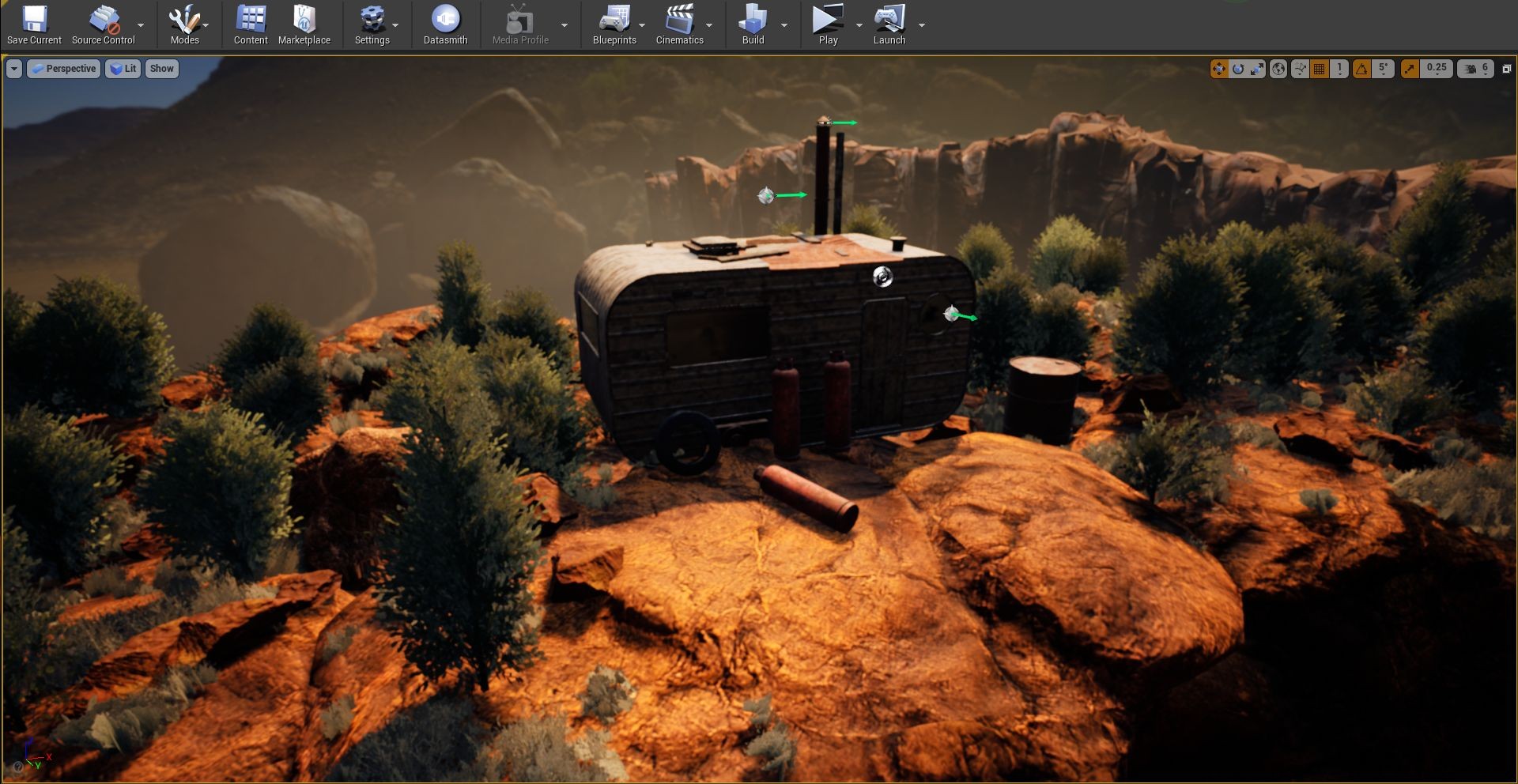
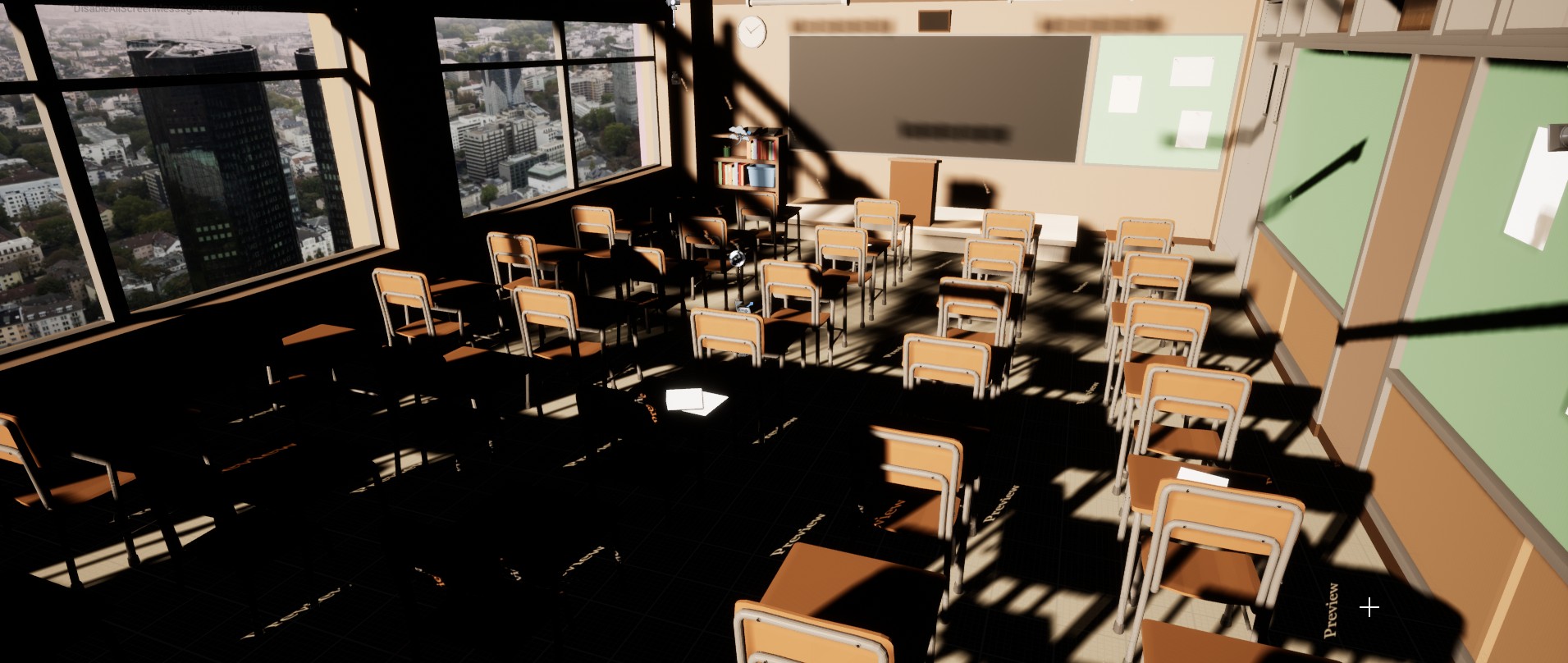
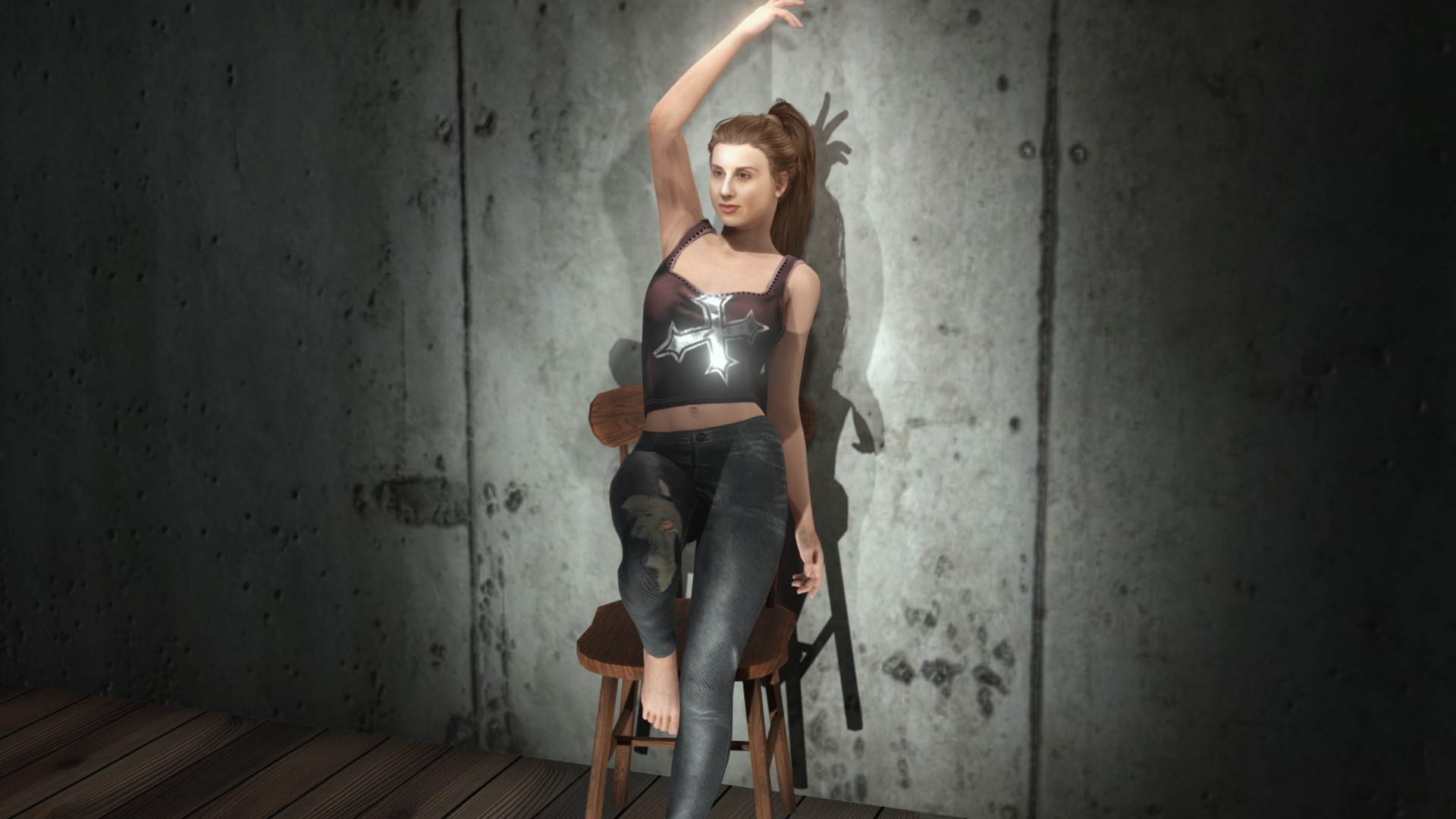
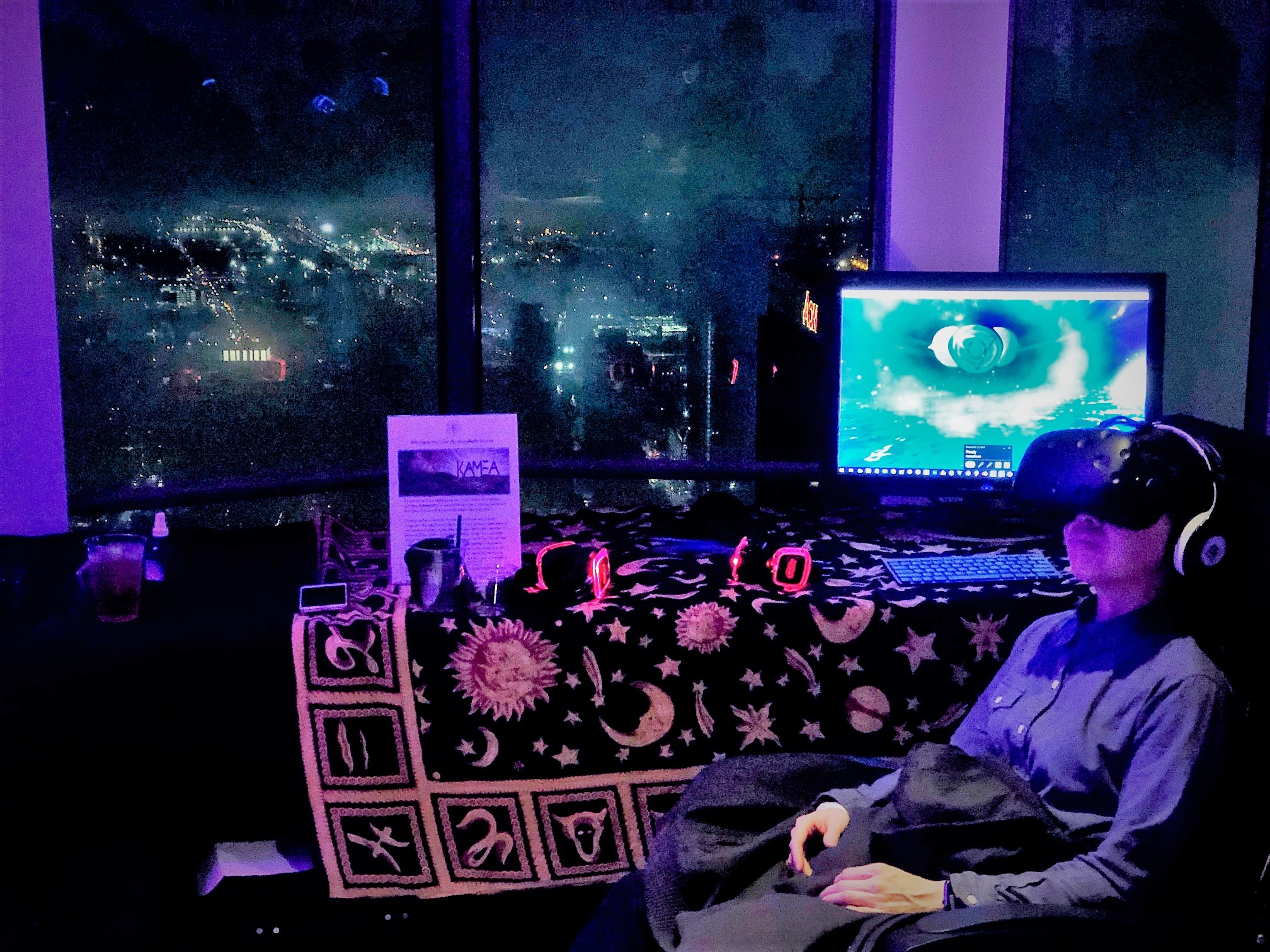 Image Credits
Pic 1: Unreal Engine 4.27 w/ Kitbash 3D “Trailer” Design, Pic 2: Cloud City (Bank of America Tower, Los Angeles), Pic 3: Reallusion Character Creator 3 Design of Fiona Emley, Pic 4: Unreal Engine 4.24 “VR Classroom” Design.


