



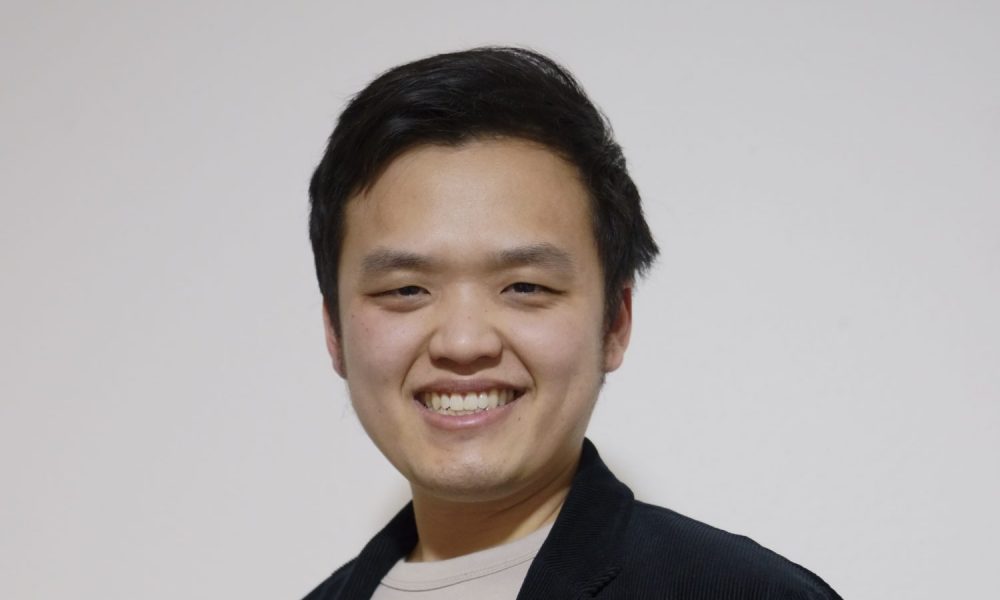
Today we’d like to introduce you to Brian Lesiangi.
Alright, so thank you so much for sharing your story and insight with our readers. To kick things off, can you tell us a bit about how you got started?
I was born on a small island called Bali in Indonesia, a place where nature and art are deeply valued. As a result, I developed a passion for both at a young age, which eventually led me to pursue a Master’s Degree in Animation at SCAD in the United States.
It was around six years ago when I arrived in the US, just as “real-time” was becoming the new buzzword in the world of CG production. I saw an opportunity to use this technology in my work, which at the time was mainly focused as a game development tool. Despite it being a niche approach, it proved to be a valuable skill, and it led me to become one of the first official Art Interns at Turn 10, a Microsoft Game Studio.
The experience I gained there, combined with my love for environmental art, became the driving force behind my Thesis project. I created a real-time cinematic experience of a Balinese Temple that was so impressive it ended up being featured by the creators of the software Epic Games.
Following the completion of my Thesis, I landed my first job offer from Psyop and moved to Los Angeles. Despite my lack of professional experience, my niche knowledge and skill set in real-time technology put me in a position as a major contributor to building a real-time pipeline for CG productions. It was a fast-paced industry, and I had to quickly adapt to the demands of VFX commercials, learning to solve creative problems and becoming a strong team player. Through it all, I also had the opportunity to lead complex projects, one of which an animated short film called “Bottle Cap,” went on to be nominated at multiple international film festivals.
Now, I’m a Senior CG Generalist and Real-time TD at Crafty Apes, using my expertise to create VFX for film and television. It’s been an incredible journey so far, with some truly exciting projects under my belt, including contributions to Orville Season 3, Westworld Season 4, and Star Trek Picard Season 3. I can’t wait to see what the future holds!
Alright, so let’s dig a little deeper into the story – has it been an easy path overall and if not, what were the challenges you’ve had to overcome?
Looking back on my career, I can say it’s been pretty smooth sailing, despite a few things that could have derailed it. One of those things was an opportunity to start my career at Disney and Pixar right after finishing school. Unfortunately, the timing wasn’t right, but looking back, it turned out to be a blessing in disguise. None of the interns were extended during the first year of COVID, and I would have been affected if I had started there.
But starting my career wasn’t without its challenges. One of my biggest struggles was the lack of mentorship, which left me feeling like the odd one out that everyone forgot needed guidance. However, I didn’t let that hold me back. Instead, I reached out to my direct supervisors each time, which helped me connect with them on a more personal level.
Through this approach, I was lucky enough to find two incredible mentor figures who have played a pivotal role in my career. Arthur Shek from Turn 10 Studios | Microsoft and Shaun Comly from Epic Games have been instrumental in helping me get to where I am today. They have offered me invaluable guidance and support along the way. And for that, I am truly grateful.
Thanks for sharing that. So, maybe next you can tell us a bit more about your work?
As a CG Generalist and real-time TD, I’m responsible for a wide range of tasks that require diverse skill sets. Whether I’m creating 3D assets, developing their look, assembling them into a scene, or troubleshooting technical issues, my ultimate goal is to ensure that the final product looks good and believable.
Looking back at some of the most memorable projects in my career, I’m particularly proud of Balinese Temple, my thesis project. Despite being a one-person team, I created a technical project that rivaled Quixel’s Rebirth project. (https://www.unrealengine.com/en-US/tech-blog/balinese-temple-telling-a-powerful-story-through-ue4-environments)
I also had the opportunity to work on The Next Mass Effect Trailer, where I single-handedly created, LookDev-ed, and lit vast snow environments that were featured prominently in the trailer.
At Psyop, I led Project Bottle Cap, a real-time project that received nominations at several international film festivals. (https://www.psyop.com/work/bottle-cap-trailer/)
Recently, I worked on Orville Season 3 and the latest season of Star Trek: Picard at Crafty Apes, where I was able to create an environment and provide a hero animation that got featured in later episodes. (https://www.imdb.com/title/tt5691552/episodes?season=3)
(https://www.imdb.com/title/tt8806524/episodes?season=3)
My experience in both full CG animation and VFX production, coupled with my knowledge of real-time technology, is quite a niche. Most artists who work predominantly in Unreal engine tend to work in game development, which requires a different approach from film development. However, my background in commercial and game cinematics has given me a unique perspective and skill set that has proven to be a valuable asset in my career. I know how to approach a creative project, especially when it comes to creative direction and tight deadlines, and I am always looking for new and innovative ways to create compelling visuals.
Where do you see things going in the next 5-10 years?
In my opinion, technology will continue to advance, whether in the form of real-time or AI. Although there is a growing trend toward using Unreal Engine in various industries, I don’t think it will completely replace any major pipelines, particularly in larger companies. It’s important to have discussions and carefully consider whether real-time technology is suitable for any given VFX project.
Similarly, AI is a hot topic these days, with MidJourney, ChatGPT, and Dall-E garnering a lot of attention. While it’s easy to be pessimistic and assume that these new technologies will make our current workflows obsolete, I don’t believe that’s true. I use these tools on a daily basis, and I see them as tools that help artists work more efficiently and focus on the creative aspects of their work. Ultimately, new tools will always be created, and it’s up to us to embrace these changes and adapt them to our workflows.
Contact Info:
- Website: https://briannl.net/
- Instagram: brian_lesiangi
- Linkedin: https://www.linkedin.com/in/briannl/
- Youtube: https://www.youtube.com/watch?v=Lg-Ctg6k_Ao
- Other: https://www.artstation.com/briannl


 Image Credits
Aldi UK: Psyop / Aldi Brawlstars: Psyop / Supercell The Next Mass Effect – Official Teaser Trailer: Psyop / EA https://www.youtube.com/watch?v=Lg-Ctg6k_Ao Apex Legends: Escape Launch Trailer: Psyop / EA