




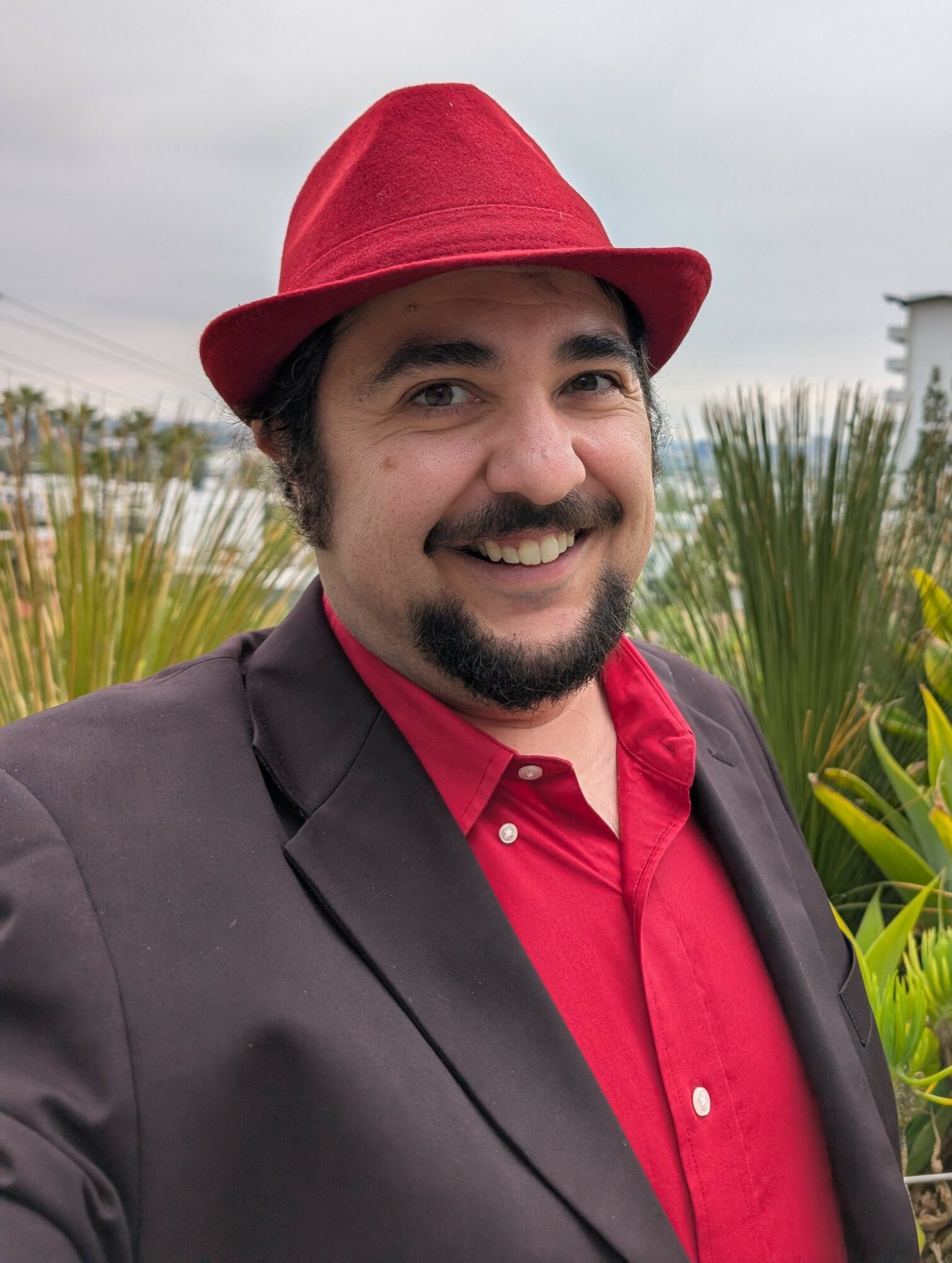
Raj Jawa shared their story and experiences with us recently and you can find our conversation below.
Hi Raj, thank you for taking the time to reflect back on your journey with us. I think our readers are in for a real treat. There is so much we can all learn from each other and so thank you again for opening up with us. Let’s get into it: When was the last time you felt true joy?
Honestly, it’s been a long time. I went through some financial trauma that rewired the way I think about almost everything. In 2017, after years of bankruptcy litigation, my family’s home was foreclosed on a few days after Christmas. That moment broke something in me. I’ve heard people talk about how the Great Depression permanently changed how they viewed money and security, and that’s exactly how it felt. When you’re carrying your entire life out onto the lawn to decide what you can save in the three days you’re given, something in your sense of stability shifts for good.
Since then, every quiet moment tends to fill with worry, with planning, with that constant scramble to find the next idea that might fix things. We managed to keep the family business standing after the foreclosure, but in August 2025 my dad had a cardiac arrest that left him severely brain-damaged. He was the backbone of everything we ran, and suddenly I was staring at the full reality of our debts and obligations. It’s hard to feel joy when you’re living in “survival math” every day, trying to figure out how to get out clean once the leases end.
I’m working toward the day when that weight lifts and I can actually breathe again. I haven’t reached it yet, but the fact that I’m still moving toward it is its own kind of hope.
Can you briefly introduce yourself and share what makes you or your brand unique?
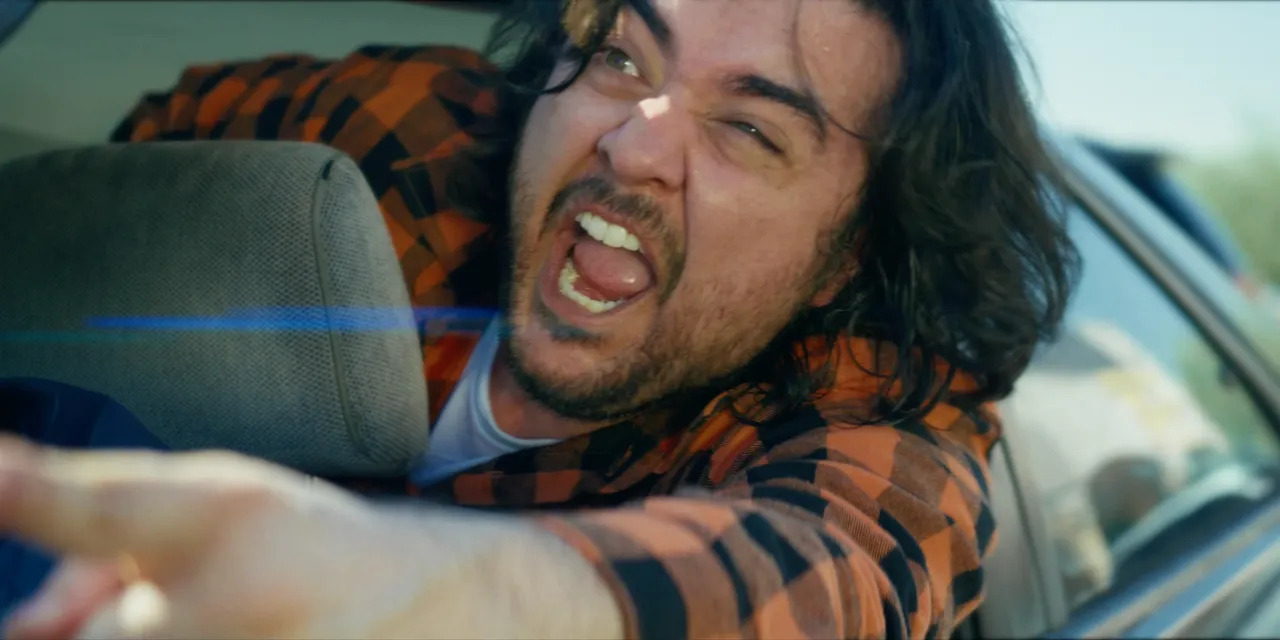
I’m a lot of different things, depending on where you drop in on my life. I’ve spent nearly two decades chasing a creative life – acting, filmmaking, sketch comedy, producing, anything that let me be part of telling stories. I grew up in my family’s grocery and restaurant businesses, but from community college onward I was always trying to carve out space in the film and entertainment world. Over the years I’ve acted in everything from scrappy student films to indie features to established projects like Disney’s Free Guy, My Crazy Ex on Lifetime, and Deep Undercover on Netflix. More recently I’ve branched into podcasting and video game streaming, mostly as a way to stay connected to creativity while also trying to build something sustainable.
Right now, my focus is on closing out my family’s businesses, which is a huge emotional and financial chapter to navigate. After that, my hope is to slow down long enough to figure out what actually feels meaningful again. Somewhere along the way, I started believing that if something didn’t make money – or worse, if it cost money – it wasn’t worth doing. That mindset kept me alive through some hard years, but it also drained a lot of the magic out of my life.
Once the financial pressure eases up, I’m hoping to rediscover what I genuinely enjoy, without the constant calculation of whether it “pays off.” I don’t know exactly what that looks like yet, but I know I want to build a creative life that feels like mine instead of one built purely around survival.
Appreciate your sharing that. Let’s talk about your life, growing up and some of topics and learnings around that. What’s a moment that really shaped how you see the world?
The foreclosure of my family’s home is the moment that permanently reshaped how I understand this country. It was the point where I realized that the idea of a safety net is mostly an illusion. When things were stable, it felt like the system was working. Once everything collapsed, it became painfully clear that you are essentially on your own. The lawyers did not help, the institutions did not help, and even their failures were treated as our burden to bear. It felt like being told that if you went to the wrong hospital while dying, that is simply your fault for not researching better while you were in pain.
That experience stripped away any remaining belief I had in the fairness of our system. I started to see how deeply capitalism shapes the way people treat one another. It made me question whether someone was being genuine or if they were operating out of desperation, opportunism, or the kind of survival instinct that this economy forces onto people. It also made me see how easy it is for those in power to keep the public distracted. Instead of acknowledging systemic failures, people are encouraged to blame government, or immigrants, or anyone with a different skin color, culture, or religion. It is a way to redirect anger away from the economic reality that most of us are living in.
The experience opened my eyes to the full spectrum of structural problems that define daily life. Housing treated like a speculative asset instead of a right. Healthcare priced like a luxury service. Middlemen inserted into every process. A transportation system designed around car ownership rather than human needs. These are not abstract issues to debate in a classroom. They are the things that crush people when life goes wrong.
The truth I learned is simple but bleak. The only real safety net in this country is the money you have in your bank account. That is your freedom, your protection, and your only lifeline. It is a terrible reality for the millions of people who are barely scraping by, trapped in a system that calls itself the greatest in the world while leaving so many to fend for themselves. I would like to see something more humane than this winner take all version of life we have inherited, something that feels like an actual community rather than a daily battle for survival.
What did suffering teach you that success never could?
Suffering is the only reason I woke up to the realities of the world around me. When life was stable, I never questioned the system I lived in. It was easy to assume that hard work would protect you and that the people who struggled somehow made bad choices. Once everything went wrong in my own life, I saw how false those ideas were. I saw how quickly empathy disappears when people do not personally feel the consequences. If you are not forced to see how broken the system is, you simply do not think about it, and many people defend that system with everything they have because it keeps them comfortable.
Suffering taught me that most of the narratives we hear about why people fail are pure mythology. People are not homeless because they want to be. They are homeless because the cost of housing is completely out of reach for millions, whether it is rent or ownership. Yet so many look at someone sleeping on the sidewalk and blame the individual instead of acknowledging the structural failures that could easily swallow any of us next. It is easier for people to push the suffering out of sight than to confront how fragile their own security truly is.
It also taught me how deeply we are conditioned to believe that this country is the greatest place on earth simply because we are told that every day. It does not matter if someone has never set foot outside the United States, they still repeat the idea as if it is an inherited truth. Meanwhile, the people who benefit from the system continue to reinforce that message while millions struggle in silence. It took experiencing my own crises to see past that narrative and recognize that America is not the shining beacon it is marketed to be. Suffering made me see the cracks that success would have kept hidden.
Alright, so if you are open to it, let’s explore some philosophical questions that touch on your values and worldview. Is the public version of you the real you?
The public version of me is the real me, mostly because I never had any interest in building a separate persona. I try to put on a brave face in public and I do not spend every conversation speaking like a revolutionary socialist, however, when I talk about ideas, I speak from my own experience. I am not a theorist or a political scholar, I am someone who lived through things that gave me a view into the parts of society most people never have to think about. That is the version of me people get, whether they meet me in person or see me online.
I also never cared about hiding the parts of myself that are not considered socially acceptable. When I created adult content, I did not hide my face. When I launched a podcast about sexual fetishism, I used my real name. There was a part of me that wanted those pieces of my identity to exist publicly because I thought they might create a kind of authenticity, even though authenticity has become a buzzword. What I learned is that even authenticity is filtered through the lens of marketability. It is still judged by the same algorithms and attention cycles that control everything else.
Being your real self does not necessarily mean people will value it. In a world where everything is treated as content and every person is expected to think of themselves as a brand, your true self becomes just another product. If it is not what people are buying, it disappears into the endless scroll. I am still the real me in public, but that does not mean the world rewards that kind of honesty. It simply means I choose not to be anything else.
Before we go, we’d love to hear your thoughts on some longer-run, legacy type questions. If you knew you had 10 years left, what would you stop doing immediately?
I already feel like I have ten or twenty years left. Turning forty soon and watching my dad suffer cardiac arrest at sixty-five forced me to think about time in a way I never had before. If I had the means to walk away from everything right now, I would do it without hesitation. I sometimes ask people a question that reveals how they really feel about their lives. If an alien portal opened next to you and you knew nothing about what was on the other side, would you step through it? For me, the answer is yes every time, because my connection to this society is thin at best. I am not built for homesteading, yet I am at a point where living off the grid sounds more peaceful than anything my current life offers.
If I truly believed I had ten years left, the first thing I would stop doing is centering money in every waking thought. I would stop letting financial fear shape every decision. I would stop thinking about art as a product and myself as a brand. I would try to create again in the way I did when life felt stable, when my parents supported me and the business had enough cushion that I never worried about how I would get by. That version of me, the one who made things because I loved them, has been buried under years of stress and survival thinking.
I would also let go of the constant, painful hope that my next creative project might be the one that reaches a Wes Anderson or a Tarantino, the one that puts me into a lifelong rhythm of collaboration the way some actors are lucky enough to experience. I never wanted to be a star. I only ever wanted steady work, fair pay, and a place on sets where I could contribute. I loved being on film sets more than almost anything. The reality of low pay, unstable work, and never-ending expenses slowly turned that dream into something that felt like a nightmare. If I had ten years left, I would stop forcing myself to chase a version of the industry that no longer exists for people like me, and I would finally give myself the freedom to enjoy creativity without needing it to save me.
Contact Info:
- Website: https://jawa.la
- Instagram: https://instagram.com/rajjawa
- Linkedin: https://linkedin.com/in/rajjawa
- Twitter: https://x.com/rajjawa
- Facebook: https://facebook.com/rajjawa
- Youtube: https://youtube.com/rajjawa
- Soundcloud: https://soundcloud.com/rajjawa


Popular
-

Portraits of the Valley
-

LA’s Most Inspiring Stories
-

Rick Norris Learned That Building a Successful Business Means Building a Life You Actually Want to Live
-

How Olivia Rush Turned Survival Into a Mission to Help Others Keep Going
-

How Bibi Goldstein Is Helping Entrepreneurs Reclaim Their Time by Embracing the Power of Delegation
-

Victoria Hasson is Redefining Voice Coaching Through Community and Collaboration


