




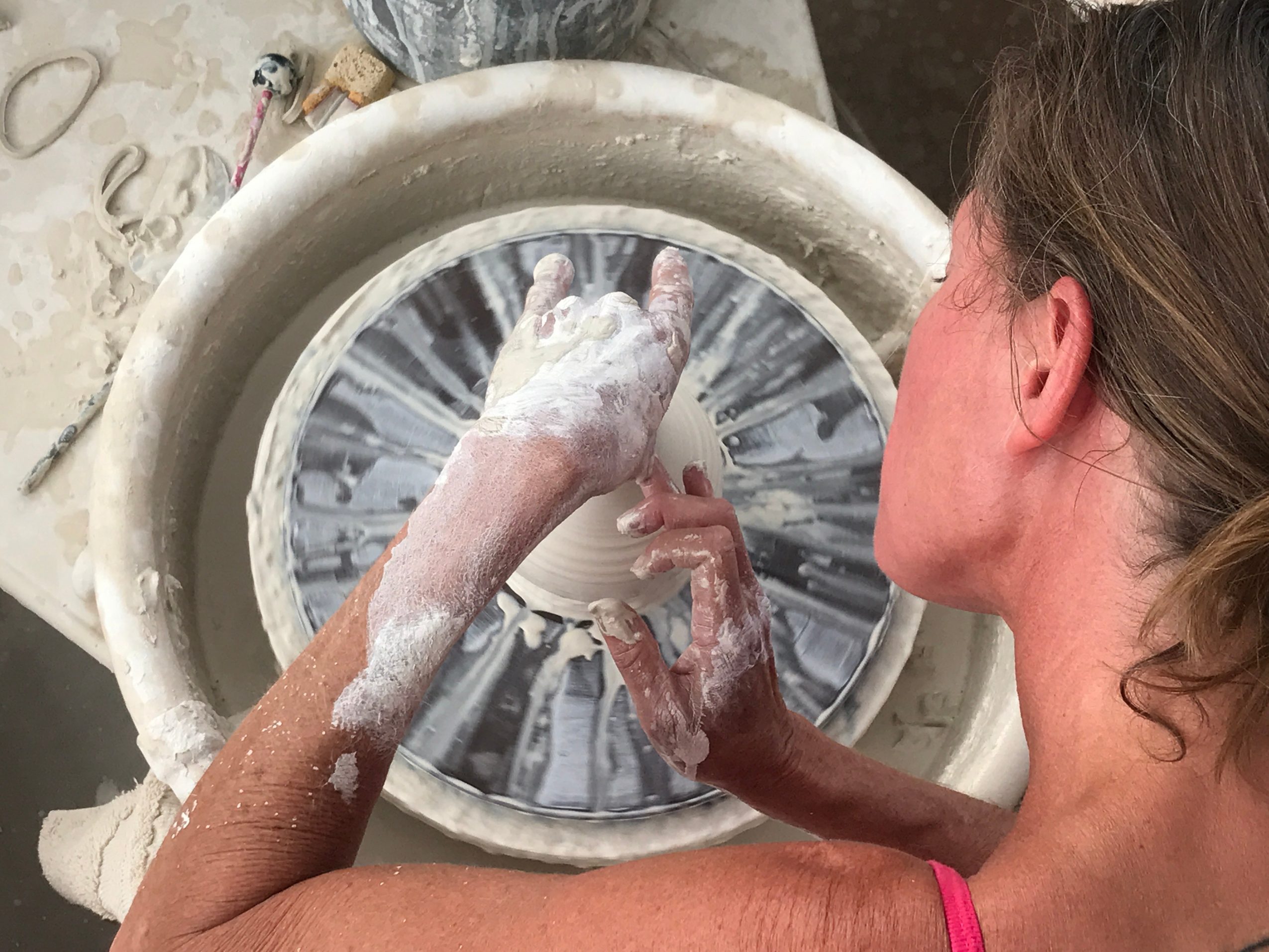
Today we’d like to introduce you to Emily Brown.
Hi Emily, so excited to have you with us today. What can you tell us about your story?
I was a psychology major at Pitzer College in Claremont, California when I was introduced to pottery. Late one night after a party, my friend invited me to the ceramics studio. It was in a basement in a poorly traveled area of the campus, I didn’t know it existed. She gave me a lump of clay and instructed me to sit at a wheel. I was wearing a beautiful dress that she had lent me and I protested. She said, nonsense, it will wash out, and off we went. I fell in love and began taking pottery classes when I had open credits. I continued to dabble in pottery for the next 25 years, taking a class here and there and acquiring various equipment as I went along, but never having enough time to devote to it to become proficient. When I moved to Ojai in 2010, I enrolled in a pottery class at the local school. A few years later, when the owner put his business up for sale, a group of us bought the equipment and kept the school going. Through this venture, I had the opportunity to learn the essential tasks of managing a large studio, like loading and firing our huge kiln, mixing glazes, and maintaining equipment. I gained expertise in a variety of high-fire clay bodies and techniques.
In 2016 I was fortunate to acquire my own gas kiln and gained more control over my creative process. I began selling my work from my home studio and one of my first customers was the owner of a home decor store in Ojai. Soon other stores started carrying my work. Though filling orders for stores keeps me busy, I prefer to sell my pieces to customers directly when they visit my studio. I love meeting them and hearing their stories, watching them carefully select their pieces. It means so much to me that something I make can bring happiness to someone.
We all face challenges, but looking back would you describe it as a relatively smooth road?
The biggest struggle I have had is learning from the many mistakes I make. There are so many steps involved in making a piece of pottery, and the process can go awry at each one. A pot can collapse at the wheel, crack in a kiln, a glaze can do unexpected things. I do what is called a “high fire reduction” firing, which is somewhat unpredictable. I have opened a kiln to find a complete mess, like the time a kiln shelf collapsed and most of the load was ruined. My glazes are unique to me, and I am always trying to figure them out. When I apply the glaze to a piece before it is fired, it looks completely different than it will after. I will pull a piece from the kiln that is beautiful, only to spend many months trying to repeat the glaze effect.
Appreciate you sharing that. What else should we know about what you do?
I specialize in functional high-fire pottery. A teacher once told me “You must first throw a perfect form, only then can you alter it”. I spend a lot of time looking at a piece on my potter’s wheel and evaluating the form. My pieces are thinner and lighter than many you will find. I also put much thought into my glazes. My glazes are all mixed from dry ingredients and are unique to me.
What quality or characteristic do you feel is most important to your success?
The willingness to learn from my mistakes.
Contact Info:
- Website: emilybrownceramics.com
- Instagram: @emilybrownceramics
- Facebook: @emilybrownceramics


Popular
-

Portraits of the Valley
-

LA’s Most Inspiring Stories
-

Maagic Collins on Building a Fearless Publishing Platform for Truth, Advocacy, and Underrepresented Voices
-
Los Angeles Barea on Turning Green Superheroes into a Global Movement for Youth-Led Change
-

Trisha DuVivier on Bridging the Franchisor–Franchisee Divide with Workhero and “Franulate”
-

Cedar Boschan on Elevating Black Music Rights and Driving Urgent Conversations Around Credit, Equity, and Artist Protection


