




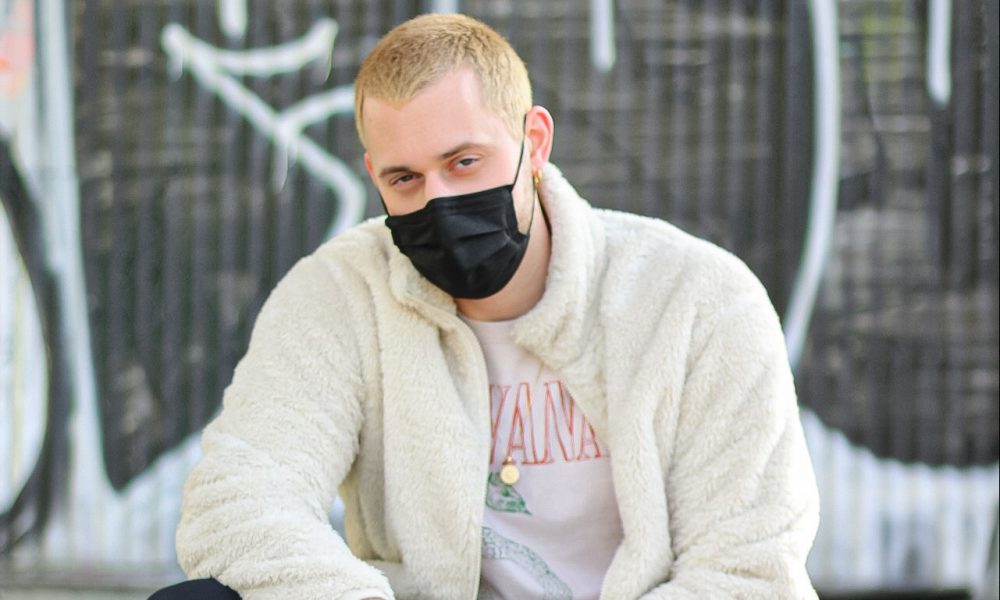
Today we’d like to introduce you to Blue Rondo.
Hi Blue, thanks for sharing your story with us. To start, maybe you can tell our readers some of your backstory.
After spending my first 18 years growing up in Seattle, I moved to Los Angeles in pursuit of a career in music. I had solid skills as a jazz piano player, which won me a scholarship position at the University of Southern California’s music school. Still, otherwise, I didn’t have much direction or idea of what I wanted to do for a career. All I knew was I liked playing the piano and loved writing music. During my time at USC, I became drawn to the world of music production, technology, and the process of creating music. By the time I graduated in 2016, I was fully committed to being a music producer.
A few months after graduating, I managed to land a spot playing keys on a US tour with rap artist Felly, another USC alumni who was steadily gaining popularity since 2013. It was a great experience for a 22-year-old and helped introduce me to the world of being a professional musician. Throughout 2016, I developed relationships with different artists such as Sabrina Claudio, IDK, Felly, Trip Carter, Peter $un, and others, with the intention of trying to improve my production skills. None of these artists had a substantial following at the time, and to be honest, I was struggling financially and questioned my ability to support myself with a music career. But we were driven to keep creating and growing.
Throughout 2017-2018, the artists I built relationships with began gaining steam, getting signed, and creating a fanbase worldwide. By the end of 2017, I had landed a major label placement with Sabrina on her project “About Time” and joined her opening for Atlanta artist 6lack. It was a dream come true. Sabrina and I still tour and collaborate to this day.
2020 brought on a new set of challenges. I was set to join Sabrina on The Weeknd’s “After Hours” tour in the summer, but the pandemic put a stop to all live events. Considering most of my income came from live performances and tours, it was a setback. But I saw this as an opportunity to get deeper into the world of producing records. I spent most of 2020 working with DMV artist IDK on his 2nd album, “USEE4YOURSELF”, released in 2021. The time was well spent, seeing as I had production credits on 14 of the 17 songs, and the album charted #1 on Billboards “Heatseekers” chart.
As I turn the corner into 2022, I’ve found new joy in making my music, and I’m planning to start releasing records later this year. All of the artists I mentioned earlier are now signed and have found great success in their careers. There were moments I doubted myself and wondered if this LA journey was just a pipe dream. But I wouldn’t trade those experiences, relationships, struggles, and victories for anything.
Would you say it’s been a smooth road, and if not what are some of the biggest challenges you’ve faced along the way?
A career in music is a serious investment and requires you to essentially build everything from the ground up. After four years in college, I was essentially starting fresh with a few friends from college. So no, it wasn’t always a smooth road. My biggest struggle was financial, and because of that I had to pick up a second job. I rarely had any cash left over at the end of the month, and if I did, it usually went towards studio equipment.
One of the biggest struggles of working with developing artists is that getting paid industry rates as a producer or musician isn’t really feasible until the labels get involved, so you’re often forced to make sacrifices for the artist if you believe in their music. The music industry has very few unions and regulations on pay, so it’s often your responsibility to make sure you get paid properly. In addition, touring is a huge time commitment, and you most likely won’t have your day job by the time you get back in town. So I made my living in the gig economy, working catering/bar events, driving for Uber/Postmates, and picking up whatever steady performance gigs I could find. It’s important to keep in mind that a career in music means you are building a business, and it could be a long time before you start seeing good money.
As you know, we’re big fans of you and your work. For our readers who might not be as familiar what can you tell them about what you do?
For most of my life, I was practicing to be a better pianist. But as I practiced, I noticed my love was for writing and composing, specifically how chords and melodies fit together to evoke emotion. Learning piano gave me a great foundation in music theory, which is an essential tool for making music. Later in life, I became obsessed with the actually process of writing, recording and mixing music. I dreamt of being able to create a song from start to finish without having to pay any 3rd party to help complete my work. Trying to learn all of these new skills spread me pretty thin for a while, but I noticed how artists I worked with valued that ability to give them a near-finished song by the end of the day.
Most of the music I make falls under the Hiphop/RnB umbrella, but I’ve drawn a ton of influence from jazz and artists like The Strokes and Nirvana. I think this weird blend of influences helps set me apart from other producers. I also recognize that sometimes I’m not the ideal person for an artist’s style or genre, and in those cases I like to involve other collaborators who I think are good fits. I believe when you fully dedicate yourself to your work and the people you work with, life has a way of rewarding you, karmically speaking.
Before we let you go, we’ve got to ask if you have any advice for those who are just starting out?
Don’t be afraid to ask for a competitive pay/rate. Every business person/manager will try to talk you down but stay firm. Only make sacrifices for artists whose work you truly believe will be successful, and even then, let them know you’re cutting them a discount because of the quality of their work. Keep in mind that taking work for next to nothing hurts the entire industry, not just you.
As for those who are still hobbyists or are in pursuit of a professional career; take your time and learn as much as you can about your field. Music is a creative industry, which means you should always strive to be unique with everything you create. If you want to pursue music as a career, you need to obsess over it to the point where it’s all you consume, think and dream about. Read books, watch YouTube tutorials, and type any question you have into Google. Curiosity is your friend. Find a unique skillset and notice problems you can solve that others can’t.
Contact Info:


Image Credits
https://www.instagram.com/its28mm/
Popular
-

Maagic Collins on Building a Fearless Publishing Platform for Truth, Advocacy, and Underrepresented Voices
-

Los Angeles Barea on Turning Green Superheroes into a Global Movement for Youth-Led Change
-

Trisha DuVivier on Bridging the Franchisor–Franchisee Divide with Workhero and “Franulate”
-

Portraits of the Valley
-

LA’s Most Inspiring Stories
-
Cedar Boschan on Elevating Black Music Rights and Driving Urgent Conversations Around Credit, Equity, and Artist Protection


