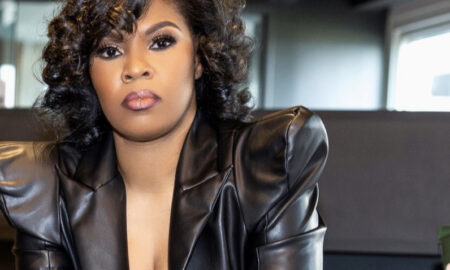



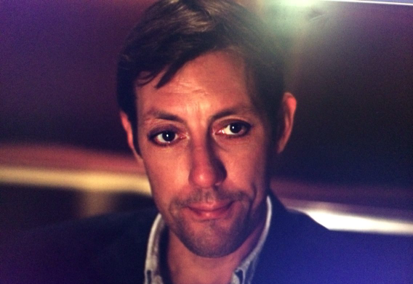
Today we’d like to introduce you to Kindrid Parker.
Kindrid, please share your story with us. How did you get to where you are today?
I’m from a working-class family in Columbia, South Carolina. Grandpa was a classic New Deal Era patriarch; a soldier/cop/postman (in that order) & Grandma was a beauty, a southern belle. Their daughter, my mother, was a hippy, and me; another Gen Xer smirking at the End of History. We are the normative sampling of the changing nuclear family over the second half of the 2oth century.
You’ve got the Greatest Generation grandparents and their kind of Allman Brothers Southern Rock 1970s kids. I don’t know. You ever see Mask? With Cher and Sam Elliot and a young Eric Stolz as Rocky Dennis? That film comforts me because it’s one of the closest onscreen representations of the kind of people and culture I grew up around. Goodhearted biker and hippy types. The downwardly mobile youth of the cultural revolution. The kids that didn’t go to college and had to fight the war. They didn’t get to sell out into the professional class in the 1980s and become yuppies, so they remained countercultural. The bungled and botched, inasmuch.
These generational differences were merely aesthetic, though. Papa and Nana basically worshipped each other and their kids and grandkids. There was, indeed, an almost shocking abundance of love in my family but we were not spared the troubles of working-class people in the Reaganite 1980s and Clintonite 1990s. Hell yeah! Gimmie that Trickledown Economics! Gimmie that War on Drugs! Gimmie that Fuck the Poor, Deregulate Capital Bill Clinton Saxophone Swagger. I’ll put it this way, according to my class status, if I’d stayed in South Carolina, I probably would’ve ended up a soldier, construction worker, in jail, or dead from a fentanyl overdose.
I had a few things going for me, though. I was bused from my white working-class neighborhood to primarily black populated public schools so I was able to grow up desegregated with an ever-present class consciousness. Also because my uncle was good at stealing cable, I was able to have unrestricted access to movies. I was watching the Shining and the Elephant Man at seven-years-old; be it horror or arthouse or On Golden Pond, nothing was off-limits, and I watched everything. I was always a cinephile and was always keenly aware there was more to the world than what was immediately around me. Additionally, though Columbia, S.C. is the deep south, it’s also a university town. So along with its revanchist Bible Belt politics, you also get, if you’re looking for it, a fair dose of the benefits and trappings of any campus town: college radio, an underground music scene, real record stores (shout out Pappa Jazz), etc..
My mother was also a big reader, so I was encouraged to read, and like the movies I watched what I read was totally unrestricted. So among all this dynamic southern culture, I was reading stacks of vintage Mad Magazines given to me by a stoner stepfather or Stephen King (It was the 80s.). I consequently developed pretty strong aesthetic and political sensibility early on. It didn’t take me long to seek out the literary canon, music that wasn’t on the radio, and more and more obscure films. So I went from not doing my homework to read Mad Magazine at nine to not doing my homework to read Beckett at 15.
I loved writing stories, mainly trying to rip off what I’d read, and experimenting with cassette tapes and the family video camera. I made fake news broadcast and radio dramas. At 10 I’d go and do man-on-the-street interviews with yokels on the street, record audio samples directly from television and dub them into some fitful, satirical narrative. Cassette tapes were a big deal. I was able to dub other kids’ Eric B. and Rakim or Dead Milkmen albums. What I’m getting at is I was able to envision a world beyond my class-n-culture.
At 16, I found myself only interested in writing and acting. I was a theatre nerd to be sure. I played Dill in To Kill A Mocking Bird and loved Edward Albee. I wanted to be a writer, an actor, maybe even a director. So, though a good student at the time, I looked around and rightly decided South Carolina would provide little opportunity for me to meet these goals. I dropped out of high school with straight A’s, read, went to all-ages show, and waited to an opportunity to take off.
I had a friend, a brilliant hater of everything, that decided he was going to steal the family station wagon, pea green with the wood paneling on the side, and take it on a suicide mission to San Francisco, the place of his birth. The deal was, he’d drive me to California and then he’d jump off the Golden Gate Bridge. If we were captured on the way there, he’d claim all responsibility. We were captured, pulled over at the Texas/New Mexico border. A comic scene ensued in which my friend told me he loved me and asked me to exit the car so he could start a highspeed pursuit to take his own life and the lives of as many cops as he could in the meantime. Once I stepped out of the car, he hit the gas, skidded for about 50 feet, and immediately crashed into a pilon. That’s a whole ‘nother story but my friend did not kill himself and later became deeply involved in the anti-Iraq war movement.
I, however, continued on the San Francisco at 16 and found myself on Market Street with 37 cents in my pocket. I did street kid shit, lived in squats, pay-by-the-week hotels, various flophouses and creative spaces for a couple-few maniac years, all the while reading and writing constantly.
I sold weed. I worked in countless coffee shops as a barista. I was a strip club DJ. I was a clerk at a porn store. I was a bookseller at Borders Books. I was a cab driver. Driving a cab is really what allowed me to support myself through college and then film school. That, and help from those who had become and still are an ad hoc family to me.
So here I was, the first person in my family to go to college with this disparate, autodidactic education learning to be a filmmaker in San Francisco right at the beginning of the digital cinema revolution. I’ve pretty much directed anything and everything you can point a camera at: indie films, documentaries, commercials, online tech content, anything to pay the bills so that I could work on my own writing and filmmaking. I published in literary journals and screened in indie festivals and underground cinema spots like the Artists Television Access. I started teaching Film Production and Film Acting at Shelton Studios because the head of the acting school really liked a contemporary version of Hamlet I’d directed and acted in called Act III, Scene 1. Anyway, after over a decade of doing film work, I mainly focus on narrative projects and leftists propaganda videos now.
I’m currently in post-production on my coming feature film To No Good End, a fantasmagorical fairy tale about making art in gentrifying San Francisco. I’m also in post-production on a comedy pilot I’ve directed called Cheaper Than Therapy, written by and starring local indie comedian Jon Allen who runs a popular comedy show called Cheaper Than Therapy here in S.F.. Over the Summer I directed a crop of campaign videos including Julia Salazar’s, a democratic socialist who won her election and became NY State Senator, and I’m currently directing some other leftist political projects as well. I’m married to playwright, choreographer, and theatre director Margery Fairchild, and we just had a daughter named Beatrix “Busby” Parker 10 weeks ago. I love my life and my work. I tell my students that filmmaking is fine art and construction work. It’s both lofty and visionary and a working-class craft. It is my aim to create a class conscious cinema as refined, beautiful, challenging, and nuanced as the experience and voice of actual working-class people.
We’re always bombarded by how great it is to pursue your passion, etc – but we’ve spoken with enough people to know that it’s not always easy. Overall, would you say things have been easy for you?
I’m an indie filmmaker trying to maintain moral and artistic integrity in the most expensive class-divided city in America where people wanna exploit your skills and talents to sell their wares so…no! This is my society and my medium and I embrace that struggle. I treat film production like a streetfight.
So let’s switch gears a bit and go into the Last Wave Film story. Tell us more about the business.
My production Company is Last Wave Film. We make cinema and leftist propaganda primarily. We’re a collective of indie/community filmmakers. We’ve cut our professional teeth doing commercial and creative work for others while creating our own.
Has luck played a meaningful role in your life and business?
I don’t really believe in “luck” in that way. I think the muses only come when you’re constantly focused and working and then they reveal their epiphanies to you. Conversely, opportunity works the same way.
Contact Info:
- Website: https://lastwavefilm.com/
- Phone: 4156789107
- Email: lastwavefilm@gmail.com
- Facebook: https://www.facebook.com/lastwavefilm/
- Twitter: https://twitter.com/LastWaveFilm
- Other: https://kindrid-parker.squarespace.com/welcome-to-our-work


Getting in touch: VoyageLA is built on recommendations from the community; it’s how we uncover hidden gems, so if you know someone who deserves recognition please let us know here.
Popular
-

Portraits of the Valley
-

LA’s Most Inspiring Stories
-
Maagic Collins on Building a Fearless Publishing Platform for Truth, Advocacy, and Underrepresented Voices
-
Los Angeles Barea on Turning Green Superheroes into a Global Movement for Youth-Led Change
-

Trisha DuVivier on Bridging the Franchisor–Franchisee Divide with Workhero and “Franulate”
-
Cedar Boschan on Elevating Black Music Rights and Driving Urgent Conversations Around Credit, Equity, and Artist Protection