


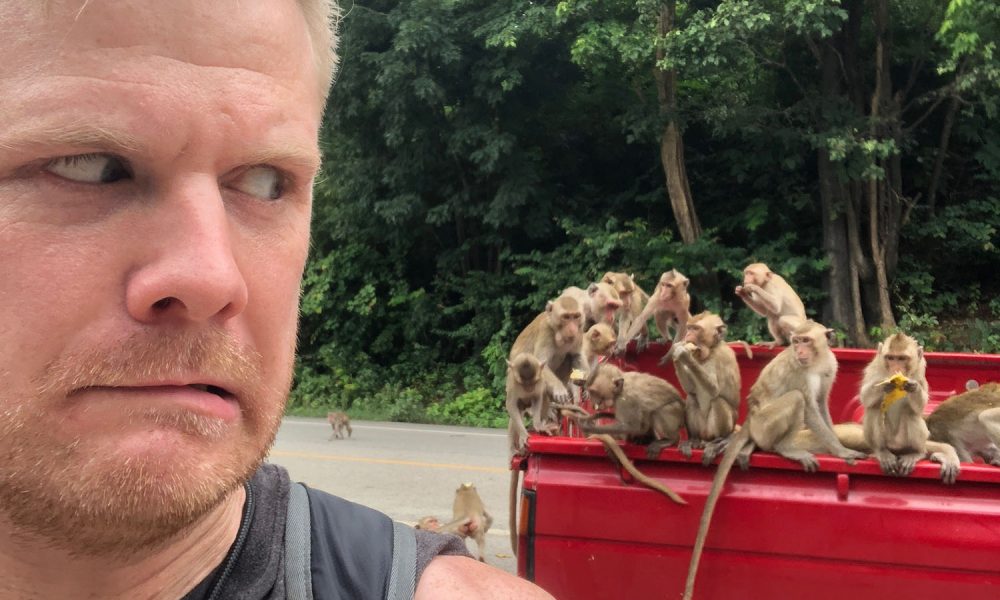
Today we’d like to introduce you to Peter Gulsvig.
Peter, please kick things off for us by telling us about yourself and your journey so far.
I grew up in Moorhead Minnesota and my childhood was very conducive for fostering creativity. As a kid, I devoured cartoons. I was cruelly only allowed a half hour of television a day, but when I turned ten, this was generously expanded to an hour. A few close friends and I would spend afternoons setting up massive scenarios with a hockey bag’s worth of Ninja Turtle action figures. We would also draw alien adventures and pirate battles on any paper we could get our hands on. I had several artistic aunts who introduced me to Calvin and Hobbes, along with new ways draw. My mother was committed to my literacy, and always took the time to read to me and present me with my own books to conquer. My dad loved going to movies, and as soon as I turned 12, I was deemed “old enough” to accompany him to awesome movies like Starship Troopers, Event Horizon, and Kingpin. Seeing such a vast world of stories and content on a regular basis built a foundation for my own stories. My sister got me involved in theater and public speaking in high school, which has also translated well into the world of animation and illustrated storytelling. She graduated early and shortly after was performing on Broadway. She provided a clear example early on for what was possible. A also had brilliant teachers for guidance and my parents were also profoundly supportive of me pursuing a career in the arts.
College was a challenging time for me because I was ping ponging between theatre and visual art. Whether I was performing in a musical or Shakespeare, I always found myself filling up sketchbooks in the greenroom. The drawing seemed to be an escape or a balance to the acting. As an art major, I struggled to find guidance in the programs. I lacked the discipline to refine my art, and the community lacked the camaraderie I got from Theater. I didn’t have a clear roadmap for a career in animation or art, so I often felt lost in terms of where my life could go. During this time I did write and illustrate a book about a gnome who was obsessed with cleanliness and kept his mother’s skeleton in a crawl space. It wasn’t polished enough for publishing, but I was proud to have finished such a long term project.
Eventually, I settled on a BA in History, allowed me to draw all day as I sat through hours of lectures. When I graduated, I was greeted by the Great Recession. During this time, I worked at restaurants, on the phones for visa card services, I even traveled out to California to work at Disneyland as a custodian. I spent a year teaching English in South Korea, and it was during that time that I realized I needed job training and a career, and animation was the only field where I could combine all my interests. I attended Vancouver Film School’s year-long classical animation program. After graduation, I worked as a freelance animator in New York City. The feast or famine nature of the work in NYC was a bit too much for me, and I seized at the opportunity to move to Atlanta and work on animated shows for Bento Box Entertainment and later on for Floyd County Productions on FX’s the Emmy award-winning Archer. The community down there is pretty outstanding. The experience of working on so many shows and pilots made it possible for me to produce my own animated series, Tammy’s Tiny Tea Time with Cartuna, a Brooklyn based production company. Tammy was the first endeavor where I was collaborating with a larger group of writer’s, producers and artists. I learned more about myself, collaboration, compromise and budgeting than I ever could have in a school. During this time, I was also taking a crack at children’s books, and attending Society of Children’s Books Writers and Illustrators (SCBWI) conferences. I steered away from gnomes with mental illness and wrote and illustrated a story about a self-conscious ogre.
2018 was a great turning point in my life. I finally moved out Los Angeles and was greeted by a host of friends who were already here. I joined the animation department team at Titmouse, Inc and worked on season 2 of Netflix’s Big Mouth. I was invigorated when Tammy’s Tiny Tea Time premiered at the 2018 Sundance film festival. Attending the festivities in Park City, Utah was a once in a lifetime experience. It was humbling to find myself in the same room with Robert Redford, from Captain America: Winter Soldier!
It has been over a year in LA and I love it. The bulk of my time is spent balancing of short term goals and long term ambitions. It can often be a challenge parceling your energy between studio and freelance work, while still reserving time for long term pitches and projects. As I hit my mid 30’s I also prioritize my health and personal relationships. Working in animation provides me with income and a community of friendships and colleagues. Recently, I have found the simpler medium and faster turnarounds of comics and picture books are a refreshing counterweight to the often long and complicated process of animation.
Can you give our readers some background on your art?
In terms of illustration, my philosophy is embracing imperfection and finding beauty in things that would be considered “ugly.” As an artist, it is easy to fall into a trap of trying to make everything look “perfect.” I just try to finish things. If a work is filled with numerous “imperfections”, they will just crowd each other out and become unnoticeable. Likewise, little spots that may bother me or stand out seem to vanish once I step away from it for a few days. Too often finishing projects is a daunting obstacle, so a policy of making sure things just get done and out the door is critical. Advertising constantly bombards us with presentations beauty, and animation work often demands a certain level of particular detail, so I relish the rapid grotesque illustrations can provide. Proportions need to be perfect for something to be traditionally beautiful, that takes too much time! Watercolors have been great at getting me to relax and relish the flow of randomness. Often a “mistake” turns into a new idea, making the work more successful than the initial plan. This is the way I make art and the way I see life.
Do you think conditions are generally improving for artists? What more can cities and communities do to improve conditions for artists?
For visual artists, venues like Instagram have provided a fantastic platform to showcase art and connect with other artists. LinkedIn and IMDb have made it infinitely easier to locate other professionals and network. The noise level surrounding people has increased dramatically, but the ability to get your work out there has risen to match it.
In animation, wage solidarity is always a huge challenge facing industry professionals. Animation is one of the most labor intensive and expensive creative endeavors, but client expectations for budgets can be disastrously low. The animation guild out here on the West Coast has been a fantastic stabilizing force in terms of wages and health insurance.
Cities can legislate more protection for freelancers. Often, companies will take months to pay freelancers, New York City has put deadlines for payment in place to help ensure workers get timely paychecks.
Despite these issues, I feel things are much more advantageous for artists now. Computers allow to make entire worlds on our own, and now the whole world can see it!
What’s the best way for someone to check out your work and provide support?
Tammy’s Tiny Tea Time isn’t available to the public yet, it will be soon! I primarily post my work on Instagram.
Contact Info:
- Website: http://www.petergulsvig.com/
- Phone: 8622051171
- Email: [email protected]
- Instagram: https://www.instagram.com/petehasfriends/


Getting in touch: VoyageLA is built on recommendations from the community; it’s how we uncover hidden gems, so if you know someone who deserves recognition please let us know here.
Popular
-

LA’s Most Inspiring Stories
-
Maagic Collins on Building a Fearless Publishing Platform for Truth, Advocacy, and Underrepresented Voices
-
Los Angeles Barea on Turning Green Superheroes into a Global Movement for Youth-Led Change
-

Trisha DuVivier on Bridging the Franchisor–Franchisee Divide with Workhero and “Franulate”
-

Portraits of the Valley
-
Cedar Boschan on Elevating Black Music Rights and Driving Urgent Conversations Around Credit, Equity, and Artist Protection