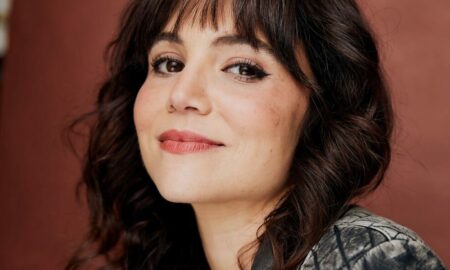




Today we’d like to introduce you to Mariel Sosa.
Mariel, please share your story with us. How did you get to where you are today?
My name is Mariel Sosa, I am Peruvian-born director. I didn’t really have an artistic background growing up, both of parents were lawyers and Lima wasn’t exactly an artsy capital. My earliest experiences with film came in the form of history and literature books. During school, I became increasingly fascinated with the way stories were told through those mediums, and I would often find myself imagining visual scenarios in my head.
Sometimes, I would stumble on pieces from our past and/or our reality that appeared to be greater than fiction. Living as a teenager in Peru, I might not have had that much exposure to the world of the arts as I would have like to, but I did have the opportunity to witness incredible stories from marginalized groups and unrepresented communities.
So, when I moved to California at the age of fifteen, I knew I wanted to portray these stories in a bigger screen in an effort to give voice to those often unheard of. That’s when my formative path to become a filmmaker really started. Studying at Loyola Marymount University in Los Angeles opened my eyes to the world of cinema as an industry, and made realize that this long-time dream could become a career, and ultimately my life.
I learned the art of storytelling, and craft behind making a film. It gave me the tools I needed it to go ahead and make my own films (and own mistakes). Staying truth to the stories that I wanted to tell when I was a girl, I travel to Germany to make my first documentary (Phantasiaman, 2016) about a man that discovered the second home in an amusement park after the death of his wife. The film’s overall good reception drove me to continue producing more documentaries.
This time I went back to my homeland, to follow the fight of an indigenous farmer against the most powerful mining company in Latin America called “Maxima: this land of Mine.” (2017) My most recent documentary digs deep into the life a young Angelino victim of gang injunctions and his struggle to break from his past.
Has it been a smooth road?
At the start of my formative years during college, I had struggled to find my voice as a Latina filmmaker. On a predominantly white campus, I feared that by showing Latino characters or Latino influences in my films, other students or even professors would not appreciate it.
The first two films I ever did featured white protagonists—ones I ended up choosing by default, the normative you’ll often see in Hollywood films. As I became more involved in social organizations and developed a bigger community around me, I started asking myself why. Why was I so afraid? Why did I have to align with the normative? Why couldn’t my stories or my characters reflect who I am?
I realized it was my job to make my own normative. If we really want to see a change in the way movies portray Latinx people and communities, I realized I had to take an active role in making sure I provided representation and voices to those who share my own culture and heritage.
We’d love to hear more about what you do.
As a filmmaker who’s not only a woman but also one of color, I’ve been fighting people my whole life to prove that I can be a filmmaker. And it’s this fight that has marked the stories I tell and will continue to do so as I grow.
Whether is a single indigenous woman fighting to protect her earth against the richest mining company in the world (Maxima: this land of Mine, 2018) or an 85-year-old German man struggling against time to keep the memory of his deceased wife alive (Phantasiaman, 2017), my vision always narrows in on fighters.
Through my films, I seek to translate an honest and real depiction of humanity and take audiences through an emotional ride where they learn about the characters as much as they learn about themselves. Hopefully, when an audience member walks out the theater or closes their laptop, they are somehow affected by what they see and prompt a reaction in them.
Finally, I enjoy working with characters from different backgrounds and stories, because once the film is all done and finished, I look back at them and realize how they all share the same human essence.
Where do you see your industry going over the next 5-10 years? Any big shifts, changes, trends, etc?
I think the documentary is having a boom at the moment, and slowly starting to get a bigger reception at commercial cinemas. People are starting to look at them as mere entertaining rather than your typical PBS educational film. Documentaries such as the Queen of Versailles and Three Strangers prove that non-fiction films can carry the same dramatic thread as a fiction film. They can also range from a variety of genres: scary, funny, and thriller.
In addition, nowadays, documentaries are being made as any other narrative film, – in order to sustain the same plot intensity. There are documentaries that dig so deep into the character’s life that only strictly show their day-to-day life without making use of sit-down interviews or characters looking into the cameras.
Documentary filmmaking is evolving in a way that people forget that they are looking at real lives and are just being entertained by what they see on the screen. In 5-10 years, I’d like to see commercialization of documentary films within the moviegoers industry – hopefully, we get to the point that people go watch these films to look for the same things that they often want to see in a fiction film, and maybe even more.
Contact Info:
- Website: https://www.maximathislandofmine.com/
- Phone: 4245266341
- Email: marielsosafilms@gmail.com
- Instagram: https://www.instagram.com/mariel_sosa/?hl=es


Getting in touch: VoyageLA is built on recommendations from the community; it’s how we uncover hidden gems, so if you know someone who deserves recognition please let us know here.
Popular
-

Portraits of the Valley
-

LA’s Most Inspiring Stories
-

Maagic Collins on Building a Fearless Publishing Platform for Truth, Advocacy, and Underrepresented Voices
-
Los Angeles Barea on Turning Green Superheroes into a Global Movement for Youth-Led Change
-

Trisha DuVivier on Bridging the Franchisor–Franchisee Divide with Workhero and “Franulate”
-
Cedar Boschan on Elevating Black Music Rights and Driving Urgent Conversations Around Credit, Equity, and Artist Protection