




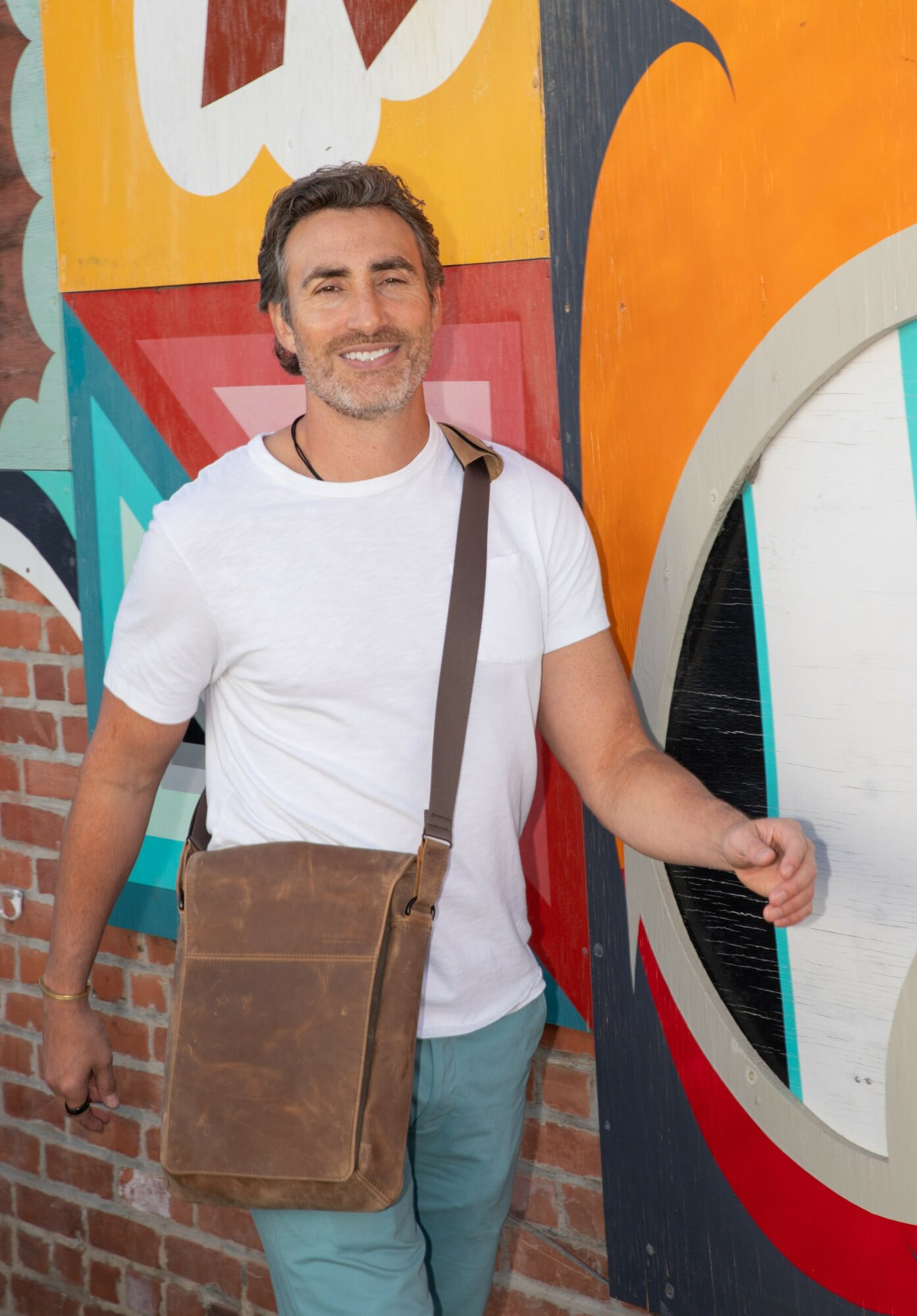
Today we’d like to introduce you to Chris Gillis.
Hi Chris, we’d love for you to start by introducing yourself.
Well, it’s kind of a weird but pretty simple story. I grew up around a lot of emotionally intense women during a time where there was a ton of tension around gender roles, independence, vulnerability, traditional relationships, all of it. Mothers, grandmothers, great-grandmothers, aunts, sisters, cousins, family friends. Big emotions and big personalities all across the board. A lot of conversations were of people who weren’t saying exactly what they felt directly, but everybody in the room (especially me) still felt it anyway.
You learned pretty quickly that communication had very little to do with the actual words coming out of someone’s mouth. A long pause meant something, as well as a darting look across the room. Tiny shifts in tone could completely change the atmosphere in the house. You either learned how to read people emotionally or you got steamrolled and left behind by the energy in the room.
So emotional intelligence never felt like some abstract self-help concept to me. It was just survival. It was how I figured out how to connect with people and stay emotionally relevant in environments full of strong opinions and stronger feelings. I learned really early that what people say and what they actually feel are often two completely different conversations happening at the same time. Timing matters. Tone matters. Presence matters. It all matters. I became really good at reading subtext and noticing what was un-said and happening ‘underneath’ the conversation.
Growing up I accidentally became the unofficial translator in my friend group. Guys would come to me after dates or arguments completely confused and say, “Bro, I have no idea why she is so pissed,” and usually I could immediately see what happened. Most of the time it had nothing to do with the literal words, of course. She felt emotionally disconnected and unseen. She felt like she had to work too damn hard to get him to actually open up and be emotionally present with her.
And as I got a little older, I kept seeing guys trying to impress women while accidentally hiding their real selves at the exact same time. A lot of us men grew up following outdated hand-me-down advice from well-meaning male figures, so we learned how to perform. Say the right thing. Avoid rejection. Look confident. Stay in control. Keep everything polished. Meanwhile the woman sitting across from them still has no real idea who they are or what being in a relationships with them would actually feel like emotionally.
For years I helped friends with dating, communication, relationships, breakups, confidence, all of it. Honestly, it never felt like wore because to me it just felt natural and fun because I happened to be good at it and it was something I’d always naturally done.
Eventually I realized how many genuinely GOOD MEN are struggling right now. These are the quality of men that women are looking for as long term partners. Yet a lot of them are isolated, stuck in their heads, emotionally disconnected from themselves, terrified of rejection, over-consuming bad advice online, and slowly turning dating into something mechanical and anxiety-driven. Then these good men wonder why their conversations feel flat or why women lose interest even when they’re technically “doing everything right.”
Most of the clients I work with are intelligent, thoughtful guys and they care deeply. They want connection, partnership, intimacy, honesty, affection, all the normal human stuff. Unlike me, they were never really forced to develop emotional fluency or learn how to communicate themselves in a way that allows another person to actually feel what it would be like to be in a relationship with them.
Ultimately, I’m pretty lucky. The thing I learned growing up just trying to survive and fit into a loud emotionally charged environment became the exact thing I now use to help men build healthier relationships and connect more honestly with themselves and the people around them.
We all face challenges, but looking back would you describe it as a relatively smooth road?
Oof! I wish it had been a smooth road, but nope. Not even close.
One of the hardest parts has been getting people to sit with their very real, uncomfortable truths long enough to actually let those truths change something inside of them. A lot of men will circle around the truth intellectually. They’ll debate it, repost clips about it, consume endless content about masculinity: why dating is “broken,” confidence, “female nature,” all of it. But actually slowing down enough to take a hard, honest look at themselves and how they show up in relationships? That’s the challenging part.
Not to mention, a lot of guys initially come in wanting tactics and lines. They want the perfect text message. They want me to tell them exactly what to say so they can stop feeling uncertain/anxious/stressed/fearful and finally avoid rejection altogether. And honestly, I get it because I’ve been there too. Rejection stings. Feeling unwanted hurts. Feeling invisible and alone hurts. Most men are carrying way more pain and insecurity around dating than they let on.
But eventually most men realize the real issue usually isn’t vocabulary. It’s emotional presence. It’s fear. It’s self-protection. It’s spending years ‘trying’ to appear confident while quietly feeling disconnected emotionally from themselves.
I also stepped into a space where a lot of men were conditioned from childhood to suppress emotion, avoid vulnerability, and treat asking for help like weakness they need to be ashamed about. Many of us were taught how to ‘perform ‘masculinity long before we were taught how to actually understand ourselves emotionally. The majority of men who didn’t get healthy guidance usually ended up piecing together their masculine identity through TV re-runs, movies, music, internet culture, locker room talk, podcasts, or whatever male figures happened to be around them at the time.
So a huge part of my work has become helping men untangle a lot of those inherited ideas about what it means to “be a man.” I’ve worked with men who believed they always had to stay stoic, dominant, detached, and emotionally bulletproof. Eventually a lot of those same guys end up feeling isolated, anxious, emotionally guarded, exhausted, and unable to create real intimacy that they seek even though they deeply crave it.
A lot of men struggle because nobody ever taught them the emotional skills required to build connection in a healthy way. Then they feel ashamed for not naturally knowing how to do something they were never shown in the first place.
That’s probably been the hardest part of the journey. Helping men lower the armor long enough to realize they can still be strong while becoming more emotionally honest, more self-aware, and more connected to themselves and the people around them.
Can you tell our readers more about what you do and what you think sets you apart from others?
I usually call myself a ‘Dating Coach’ because it’s the quickest way for people to understand what I do, but honestly, Emotional Intelligence Relationship Coach is probably more accurate. Dating is just the carrot that motivates them to move. Most of the work ends up being much deeper and the positive results much more widespread than just landing a great lady.
When men first come to me, they usually think the issue is something external or a feature they have. Their height, their face, their age, their clothes, their job, their texting, their lack of experience, whatever. So we go through it all – and help it make sense. If there’s something genuinely hurting their confidence or presentation, we address it directly. Better grooming, better style, better photos, better communication, better health habits, better emotional awareness. We clean up the obvious painful friction points first because excuses are powerful, and most people can’t fully grow while secretly holding onto a mental list of reasons/excuses why they think they’re disqualified.
But once all that external noise quiets down, the real work starts showing itself. Now we’re looking at emotional presence: fear; self-protection; social awareness; body language ; conversation patterns. The ways someone disconnects from themselves in real time when they feel nervous, rejected, intimidated, ashamed, or emotionally exposed.
A huge part of my work is helping smart men get out of their heads and back into real human interaction. A lot of intelligent men live almost entirely in analysis mode – and their intellect has brought them a lot of success. So they’re constantly studying attraction instead of actually experiencing connection. They want certainty before taking action. They want guarantees before vulnerability. Meanwhile dating keeps humbling them because human connection doesn’t work like a math equation.
That’s why I push everyday, real-world, non-romantic interactions pretty quickly. Theory matters, but eventually reality has to enter the conversation. Dating is a social skill. Emotional connection is a social skill. You can understand every podcast and every psychology concept in the world and still freeze up sitting across from someone you genuinely like.
What I’m probably most proud of is helping men reconnect with emotional parts of themselves they slowly buried over time. Their confidence. Their humor. Their emotional honesty. Their ability to relax around people. Their ability to actually feel connected instead of constantly performing.
I think what sets me apart is that I don’t teach manipulation, scripts, or pickup artist tactics. I help men understand how their energy affects people emotionally and how to communicate themselves more honestly and effectively. Most people can feel when somebody is trying to “do attraction correctly.” What creates real connection is emotional congruence. Someone whose words, body language, tone, confidence, and emotional presence actually match.
If you had to, what characteristic of yours would you give the most credit to?
It’s probably because I still genuinely see myself as someone walking the path too. I’m not sitting on top of a mountain pretending I’ve transcended insecurity, rejection, fear, ego, heartbreak, temptation, loneliness, or any other part of being a normal human man. I’ve experienced all of those things. Sometimes I still do. That keeps me grounded and honestly probably makes clients trust me faster because they can feel I’m speaking from lived experience instead of from some polished “guru” identity.
A lot of coaching starts feeling cold, mechanical, performative, or weirdly superior to me. Somebody throws formulas at people, assigns impossible homework, tells them to “man up,” then leaves them alone feeling ashamed, overwhelmed, or secretly convinced they’re failing at life or failing at masculinity itself.
That never sat right with me. And quite frankly, it doesn’t product lasting results.
I think real coaching requires presence. It requires understanding where someone’s fear, insecurity, emotional shutdown, avoidance, or self-protective habits came from in the first place. Otherwise you’re just putting Band-Aids on symptoms while the deeper patterns quietly keep running the person’s life underneath everything.
A huge part of my approach comes from personal experience. I know what it feels like to overthink. To seek validation. To perform confidence instead of actually feeling confident. To fear rejection so much that you start editing yourself constantly. To disconnect emotionally while pretending everything is fine. To sit there completely confused trying to understand women, dating, relationships, and honestly yourself.
So when clients talk to me, they usually feel understood pretty quickly because I’m not analyzing them from a distance like some detached expert. I’m in it with them. I can usually see exactly where they’re stuck because I’ve either lived through some version of it myself or watched hundreds of other men go through the exact same thing.
Sometimes my approach is understanding and patient. Sometimes it’s direct and uncomfortable because the guy genuinely needs honesty. Some men have spent their entire lives beating themselves up internally and carrying shame around like a weighted vest. Other men have spent years hiding behind excuses, avoidance, ego, intellectualizing, or emotional armor. Usually growth requires both compassion and accountability.
I think people grow best when they feel challenged and understood at the same time. They need honesty. They need awareness. They need real-world practice. They need somebody who can clearly see their potential without shaming them for where they currently are.
Most people already judge themselves enough. They don’t need another critic screaming at them from the sidelines. They also don’t need somebody endlessly comforting them while nothing changes. They need somebody willing to stand shoulder to shoulder with them while they slowly build the courage to become more honest versions of themselves.
Pricing:
- 2000$ full program (https://consultantchris.com)
- 1000$ specific capabilities training (https://consultantchris.com)
- 199$/month Skool Academy (https://www.skool.com/consultantchris)
Contact Info:
- Website: https://consultantchris.com
- Instagram: https://www.instagram.com/consultantchris
- Facebook: https://www.facebook.com/profile.php?id=61556009036057
- Youtube: https://www.youtube.com/@ConsultantChris


Popular
-

Maagic Collins on Building a Fearless Publishing Platform for Truth, Advocacy, and Underrepresented Voices
-

Los Angeles Barea on Turning Green Superheroes into a Global Movement for Youth-Led Change
-

Trisha DuVivier on Bridging the Franchisor–Franchisee Divide with Workhero and “Franulate”
-

Portraits of the Valley
-

LA’s Most Inspiring Stories
-

Cedar Boschan on Elevating Black Music Rights and Driving Urgent Conversations Around Credit, Equity, and Artist Protection


