



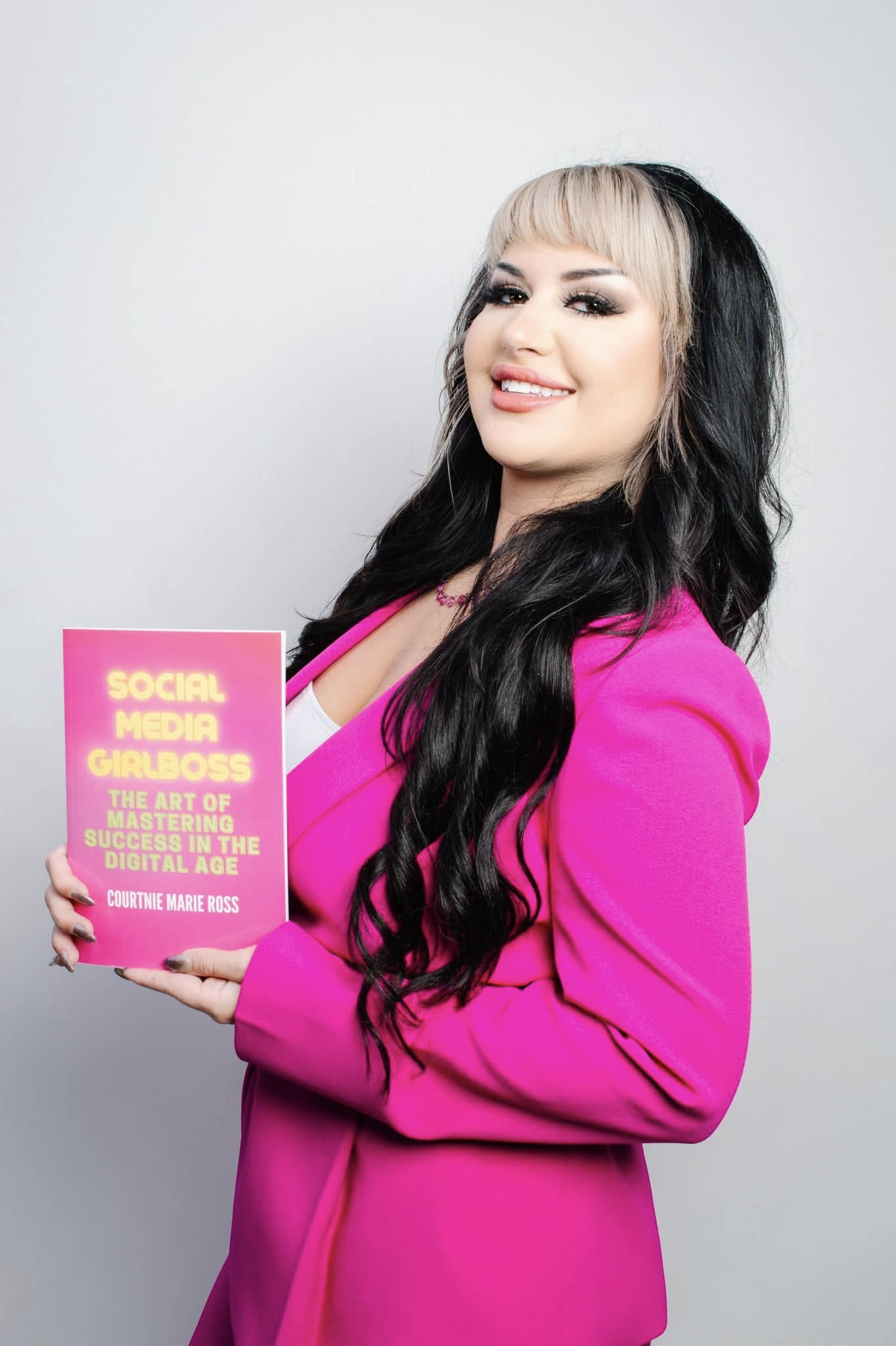
Today we’d like to introduce you to Courtnie Ross.
Hi Courtnie, it’s an honor to have you on the platform. Thanks for taking the time to share your story with us – to start maybe you can share some of your backstory with our readers?
I’ve always been more interested in creating a world than fitting into one.
I started in beauty and got my cosmetology license young, then left Kansas City for Los Angeles to study at Make-Up Designory. I was suddenly surrounded by artists working in film and fashion, people who understood that what we were really doing wasn’t just beauty; it was transformation. It was mood. It was storytelling without needing to say a word.
But Kansas City is where I built something real.
I went back and started creating. First a jewelry line, magazine, then a cosmetics brand, and eventually LoveStoned, my brick-and-mortar boutique. It wasn’t meant to just be a store. It became this living, breathing space for expression. I hosted events, brought together creatives, and built a community around a shared feeling, like you had discovered something a little underground, a little electric. It gave people a place to show up as themselves, or maybe even a version of themselves they hadn’t fully stepped into yet.
What people didn’t always see was that behind all of it, I was building a brand in real time. I was learning how to make people feel something strong enough to come back for. How to create desire, not just sell a product. How to turn a point of view into something people could recognize instantly.
When that chapter ended, it didn’t feel like an ending… it felt like clarity. That’s when I graduated with my BA in Communications and decided to move back to Los Angeles.
I fully stepped fully into marketing and creative strategy, working with brands across beauty, wellness, lifestyle, events, and more. Any space where identity and culture intersect. Now, I focus on building brands that don’t just look good but mean something. The kind that linger and the kind people talk about when you’re not in the room.
My work is rooted in emotion, instinct, and cultural awareness. I’m not interested in playing it safe or following a traditional formula. I’m interested in creating something that hits. Something that makes someone pause mid-scroll, or feel seen in a way they didn’t expect.
Everything I’ve done, every pivot, every risk, has really been about that same idea.
Creating something people don’t just see, but feel.
Alright, so let’s dig a little deeper into the story – has it been an easy path overall and if not, what were the challenges you’ve had to overcome?
A lot of my journey has been learning in real time, without a blueprint. When I opened my boutique in Kansas City, I was figuring everything out as I went all by myself. Branding, buying, marketing, events, finances. From the outside, it looked exciting and creative, but behind the scenes it was constant pressure to keep things moving, keep people coming in, and keep the business alive.
One of the hardest parts was navigating how quickly things can shift, especially in retail. I experienced a major drop in sales toward the end, and it forced me to confront the reality that passion alone isn’t always enough to sustain something. Closing that chapter was one of the most difficult decisions I’ve had to make. It wasn’t just a business, it was something I had built from nothing, something people connected to.
At the same time, I was also dealing with the uncertainty of pivoting my career. Moving fully into marketing from being a beauty and fashion entrepreneur meant proving myself in a new way, building credibility, and finding opportunities in a space that can be competitive and, at times, hard to break into without a traditional path.
There were definitely moments of burnout, financial stress, and questioning whether I was making the right moves.
But I think those experiences shaped how I approach everything now. They forced me to become adaptable, resourceful, and very aware of what actually works, not just what looks good on the surface.
Looking back, I don’t see those moments as failures. I see them as the reason I’m able to do what I do now with more clarity, intention, and depth.
Nothing about my path has been linear but that’s also what makes it mine.
Alright, so let’s switch gears a bit and talk business. What should we know about your work?
My work sits at the intersection of creativity, culture, and strategy.
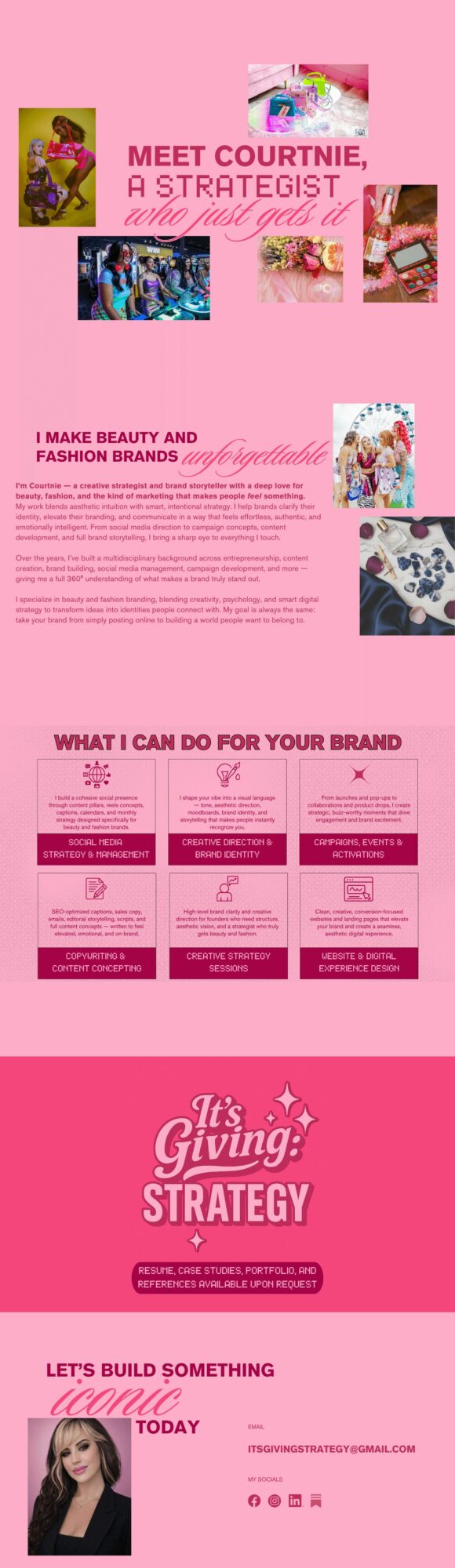
I specialize in brand development, social media strategy, and content creation particularly for beauty, fashion, wellness, and lifestyle-driven brands. But more than anything, I’m known for helping brands feel like something. Not just look good, not just perform well, but actually connect.
A lot of what I do is rooted in storytelling. I help brands figure out who they are, how they want to be perceived, and how to translate that into content that people don’t just scroll past. That can look like building out a full brand identity, producing and editing content, developing campaigns, or managing social platforms in a way that feels intentional and culturally aware.
I think what sets me apart is that I’ve been on both sides of it.
I’ve built my own brands from the ground up. I’ve had to get people in the door, get them to care, get them to come back. So when I work with clients, I’m not just thinking creatively, I’m thinking about what actually works in the real world. What creates demand. What builds loyalty. What makes someone choose you over everything else they’re seeing.
I’m also very instinct-driven. I pay close attention to culture, shifts in behavior, and what people are craving emotionally. A lot of marketing focuses on trends, but I focus on why something resonates in the first place, and how to recreate that feeling in a way that’s original to the brand.
What I’m most proud of is building something that people genuinely connected to. My boutique, LoveStoned, started as an idea and turned into a full experience, something people showed up for, talked about, and felt a part of. That kind of connection is hard to create, and it’s something I carry into every project now.
At the end of the day, I don’t just create content, I help build identities.
And the goal is always the same: to make something people remember.
In terms of your work and the industry, what are some of the changes you are expecting to see over the next five to ten years?
I think we’re entering a phase where marketing is becoming less about content and more about connection.
Over the next 5–10 years, I don’t think the brands that win will be the ones posting the most. It’ll be the ones that make people feel something real. We’re already seeing the shift; AI is making it easier than ever to create content at scale, so volume is no longer impressive. The differentiator is going to be taste, perspective, and emotional intelligence.
At the same time, audiences are getting more aware. People can tell when something is overly polished or inauthentic, and they’re starting to reject it. There’s this growing tension between automation and authenticity and the brands that figure out how to use technology without losing their humanity are the ones that are going to stand out.
I also think we’re moving away from mass appeal and more into micro-communities and niche culture. Instead of trying to reach everyone, brands are going to focus on building smaller, more loyal audiences that actually care. That’s where real influence comes from now.
And creators are only going to become more central. They’re not just promoting brands anymore; they are the media. We’re already seeing ad dollars shift heavily toward creator-driven content, and that’s going to keep growing as people trust individuals more than traditional advertising.
Another major shift is that social platforms are becoming full ecosystems. Content, community, and commerce all in one place. People aren’t just discovering brands on social anymore, they’re buying directly there. So marketing isn’t just about awareness, it’s about creating an entire experience from first impression to conversion, all within the same space.
But honestly, the biggest shift is cultural.
People don’t want to be marketed to. They want to feel understood. They want brands that reflect their identity, their values, and their lifestyle. The future of this industry isn’t louder, it’s deeper.
And I think that’s what makes it so exciting.
Because it means the brands and the creatives who really understand people will always have the edge.
Contact Info:
- Website: https://itsgivingstrategy.com
- Instagram: https://instagram.com/itsgivingstrategy
- Facebook: https://facebook.com/itsgivingstrategy
- LinkedIn: https://linkedin.com/in/courtniemarie
Popular
-

Maagic Collins on Building a Fearless Publishing Platform for Truth, Advocacy, and Underrepresented Voices
-

Los Angeles Barea on Turning Green Superheroes into a Global Movement for Youth-Led Change
-

Trisha DuVivier on Bridging the Franchisor–Franchisee Divide with Workhero and “Franulate”
-

Portraits of the Valley
-

LA’s Most Inspiring Stories
-
Cedar Boschan on Elevating Black Music Rights and Driving Urgent Conversations Around Credit, Equity, and Artist Protection


