




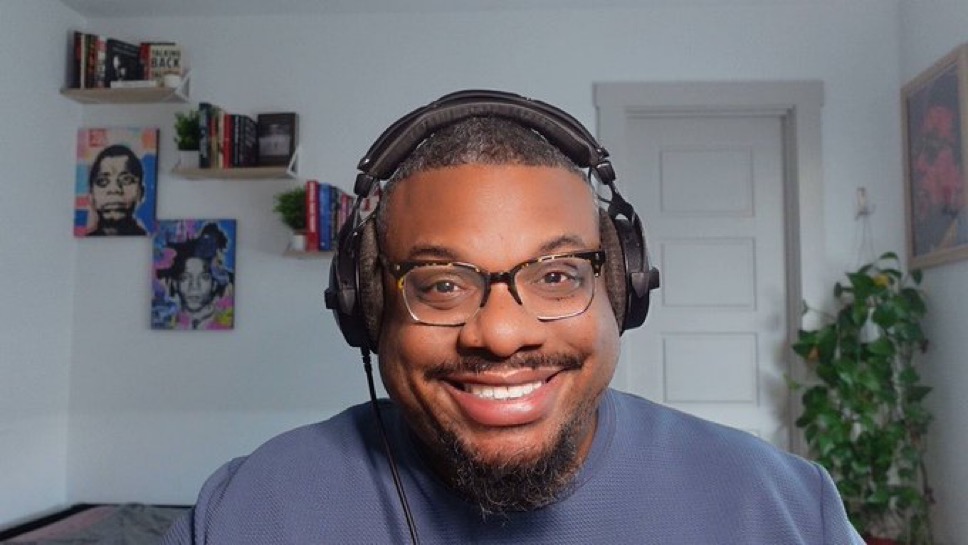
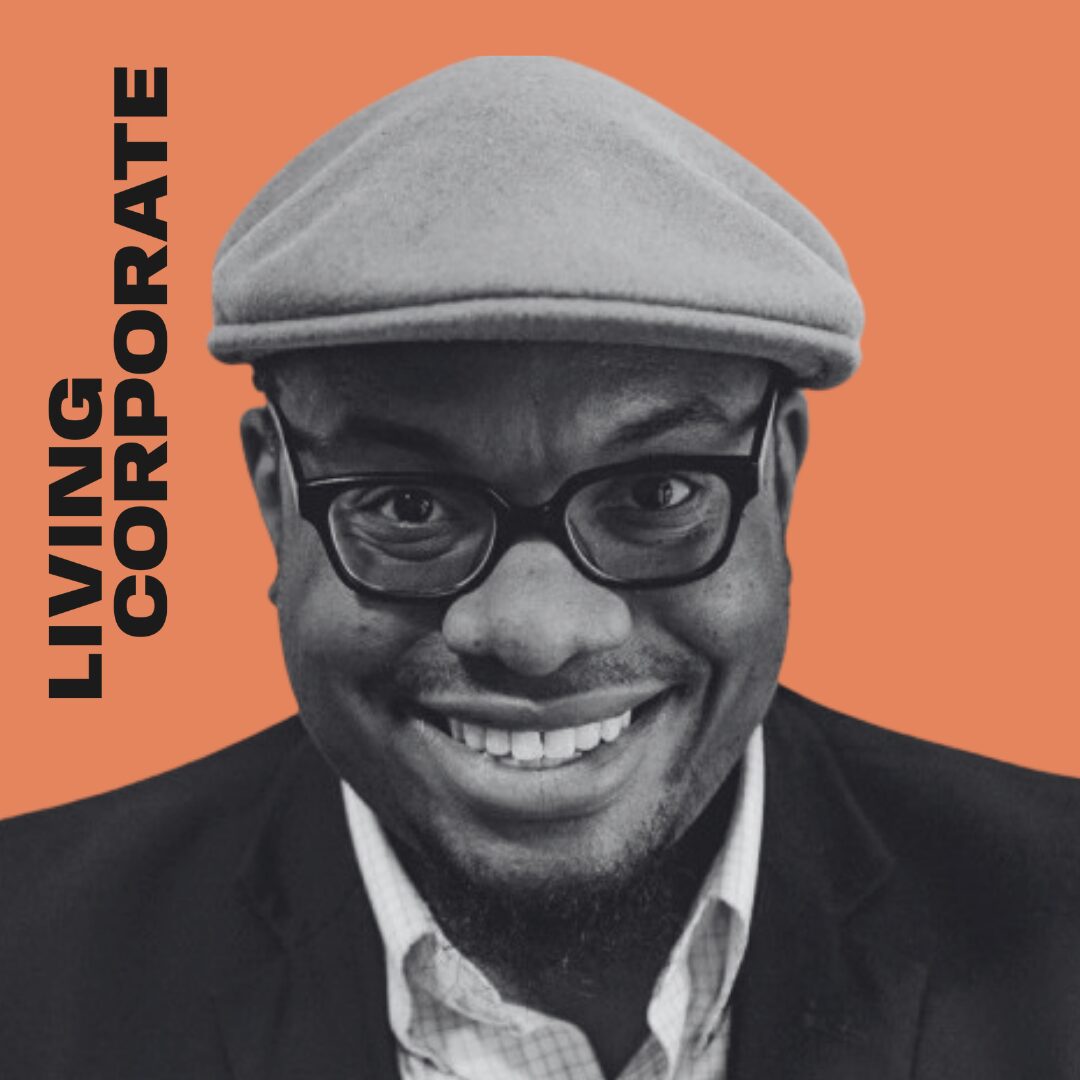
Today we’d like to introduce you to Zachary Nunn.
Hi Zachary, we’re thrilled to have a chance to learn your story today. So, before we get into specifics, maybe you can briefly walk us through how you got to where you are today?
came up in management consulting — spent years in big rooms, working on big projects, advising leaders at companies most folks would recognize by name. And I was usually one of very few Black people in those rooms. That part isn’t a unique story; a lot of Black professionals know that feeling. What started getting under my skin was the gap between what we’d talk about in corporate hallways — the polished, careful, “everything’s great” version — and what we’d say to each other in the parking lot, or on a Friday Slack DM, or at the bar after work. The real conversation was a totally different conversation, and it was nowhere in mainstream corporate media. The leadership podcasts I was listening to didn’t sound like the people I knew. They didn’t talk about the actual lived experience of being Black, Brown, or otherwise underrepresented in spaces that weren’t built with us in mind.
So in 2018 I started Living Corporate as a podcast — really as a side project at first. The premise was simple: amplify and center the voices of Black, Indigenous, and other underrepresented professionals in corporate America. Not in a sanitized, “here’s our DEI statement” way. The actual conversations. Senior executives, mid-career folks, entry-level professionals, organizers, academics — anyone willing to sit down and tell the truth about what it’s like to do this work, build a career, and try to bring your whole self into spaces that often weren’t designed for you. The response was immediate, and it told me what I already kind of knew: people were starving for this. There was a whole audience that had been gaslit into thinking their experience was just their experience.
From there it grew into something bigger than I planned. We expanded into a network — multiple shows, written content, partnerships with brands and organizations that actually wanted to do the work, not just the optics. Today Living Corporate is a media platform. We produce, we publish, we partner, we consult. And the mission hasn’t changed: we’re here to make sure the realest version of the corporate conversation — the one happening in the parking lot — has a microphone, a stage, and a strategy behind it.
That’s the short version. The longer version has a lot more late nights, missed flights, and learning-on-the-job in it, but that’s the arc.
Can you talk to us a bit about the challenges and lessons you’ve learned along the way. Looking back would you say it’s been easy or smooth in retrospect?
Honestly? No. And anyone telling a clean founder story is editing.
The first stretch was the standard founder thing — bootstrapping, doing every job, learning audio production at midnight, figuring out distribution, booking guests one cold email at a time, all while still working a full-time job. That part was hard but it was the expected hard. You sign up for it.
The harder part has been doing this specific work in this specific industry. Centering Black and underrepresented voices in corporate America was a niche conversation in 2018, became a “must-have” conversation in 2020, and then watched a lot of those same brands quietly walk it back starting in 2022. Living Corporate has lived through the full cycle. We had companies in 2020 sliding into our DMs talking about partnerships, ERG events, “amplifying Black voices” — full speed, big budgets, urgent timelines. Two years later, those same companies were dissolving their DEI teams, scrubbing their websites, and ducking calls. So a real struggle has been building a sustainable media business in a space where the funding climate can shift 180 degrees based on a Supreme Court ruling, an executive order, or whichever way the political wind is blowing that quarter. You learn to never plan a year on a single sponsor’s appetite for the work.
There’s also the part nobody really tells you about being a Black founder in a media company about being Black in corporate spaces. You’re the messenger and the message. The work doesn’t end when you log off, because the experiences we cover on the platform are also the experiences I’m having in my own life, in real time. I’ve had hard meetings about racism in the workplace and then immediately had to record an episode about racism in the workplace. That’s a particular kind of tax. You don’t get to step out of the subject matter.
And then the personal stuff. The late nights. The missed dinners. The years where the business is the third or fourth thing competing for your attention as a husband, a father, a son, a friend. The stretches where you’re carrying overhead on faith because you believe the work matters more than the quarter looks. The grief, too — we lost people, including people in this community, and you still have to publish on Tuesday.
So no, not smooth. But I’ll say this: every one of those struggles sharpened the mission. The pullback from corporate America after 2020 didn’t kill the need for this work — it confirmed it. The audience didn’t go anywhere. The conversation in the parking lot didn’t change. We just had to get smarter, leaner, and more committed to building something that doesn’t depend on anyone else’s permission to exist.
Thanks for sharing that. So, maybe next you can tell us a bit more about your business?
Sure, let me give you the real scope.
Living Corporate is a tech-enabled experience management consultancy. The simplest framing is this: we help organizations build employee engagement and customer trust through three connected capabilities — data analytics, e-learning, and brand storytelling. Most firms do one of those well. We do all three under one roof, and we’ve built the technology to deliver them at scale.
Here’s how it actually shows up:
Data Analytics. We measure employee and customer data and turn it into custom, visualized dashboards with real recommendations attached. Not a vanity report — actionable insight that connects to the business. This is where our Workplace Index lives, our multi-segment workforce benchmarking product.
E-Learning. We’ve built a library of 1,700+ learning modules covering leadership, people and culture, career development, and professional growth, with AI-powered personalized learning paths. Enterprise clients can also stand up our Multi-Tenant Learning Portal — a branded training environment that goes live in about 30 minutes. That’s a real differentiator. Most learning platforms take a quarter to deploy.
Brand Storytelling. This is the original muscle. We’ve published over 1,000 podcast episodes across our digital media network in eight years, and we now offer Newsletter-as-a-Service for organizations that want a high-quality weekly newsletter without hiring an editor. We also do livestream events and bespoke content production.
Two ways to engage with us, deliberately. You can buy a productized offering — Workplace Index, Newsletter-as-a-Service, or the Learning Portal — and be up and running fast. Or you can book a strategy call for a custom enterprise engagement, where we scope multi-year partnerships, custom research, brand storytelling production, or bespoke learning builds. We built it that way because we don’t think every organization needs a six-figure consulting wrapper around a problem that a productized tool can solve in 30 days.
What sets us apart is the combination. Plenty of firms produce content. Plenty produce dashboards. Plenty produce learning. Very few do all three with a single thesis behind them — which is that employee engagement and customer trust are the same problem, and you can’t fix one without the other. We’ve spent eight years building the data, the content library, and the platform to operate at that intersection.
On track record: we’ve worked with 50+ enterprise clients, including Capgemini, Pfizer, AWS, Google, Bloomberg, ESPN, Intuit, Merck, Eli Lilly, PayPal, Dropbox, VMware, Forbes, Fortune, and many more. Janet Pope, VP of Corporate Responsibility & Engagement at Capgemini, put it well in a recent testimonial — partnering with us “deepened their understanding of employee experience by bringing data-driven insights and authentic storytelling into their people and brand strategy.”
What I’m proudest of, brand-wise, is that we built something that scales without losing the voice. We started as a podcast that centered Black and underrepresented professional voices, and eight years later we’re an enterprise platform serving Fortune 500s — and the voice is still ours. We didn’t sand it down to win contracts. The fact that organizations like Capgemini, Pfizer, and Google are partnering with us because of the perspective, not in spite of it, is the proof point that matters most to me.
What I want your readers to know: there’s a path in for everyone. If you’re a leader, request a demo or grab our free executive guide, Building a Fair Workplace. If you’re a professional looking to grow, our learning library is open to individuals, not just enterprises. If you want to be in conversation with 2,500+ professionals navigating workplaces together, join our Discord. And if you just want to listen, eight years of podcast episodes are waiting for you — start with whichever title makes you the most curious. That’s usually the one that hits.
Any advice for finding a mentor or networking in general?
Yeah, and I’ll give you the unpopular version because the polished version is already everywhere.
On mentorship: stop looking for a mentor and start building a board. The single-mentor model is a romantic idea that mostly doesn’t work. No one person has the bandwidth, the range, or the specific lived experience to guide every part of your career. What’s worked for me is assembling four or five people who each cover a lane — someone a few steps ahead in your function, someone outside your industry who can pressure-test your assumptions, someone who looks like you and gets the parts that don’t show up in the org chart, someone who’s a peer and will tell you the truth without protecting your ego, and ideally someone more junior than you who keeps you honest about how the work actually lands. You don’t need formal “will you be my mentor” conversations with any of them. Most of mine never had that title. They just had a standing seat at the table when I had a real decision to make.
On networking: the word itself is the problem. It frames the whole thing as transactional, which is exactly why most people are bad at it. The version that’s worked for me is simpler — be useful before you ask for anything. Send the article. Make the introduction. Share the job posting that’s a fit for someone else, not you. Show up to other people’s launches and milestones. Comment on the post that has 12 likes, not the one with 12,000. By the time you actually need something from your network, you’ve made so many small deposits that the ask doesn’t feel like a withdrawal. People help people who’ve already shown up for them.
Two specific things that compounded for me:
Be specific in your asks. “Can I pick your brain?” is the worst sentence in professional life. No one knows what you want, so they default to declining. Compare that to: “I’m trying to decide between two paths in the next 90 days. Could I have 20 minutes to walk you through them and get your gut reaction?” That gets a yes almost every time, because it respects the other person’s time and signals you’ve done the thinking.
Build in public. Some of the most valuable people in my network found me — through Living Corporate, through writing, through podcast conversations they happened to catch. You don’t have to build a media company to do this. Post the lessons you’re learning. Share the framework that helped you. Talk about the work. The more visible you are about what you do and what you stand for, the more the right people self-identify and walk toward you. That’s a much better filter than cold-reaching out to strangers.
The Black professional caveat: I’d be lying if I didn’t say that for Black, Brown, and other underrepresented professionals, the math is harder. The “warm intro” economy doesn’t pass through us at the same rates. So community matters even more — affinity groups, ERG networks, professional organizations like NSBE, NABA, NBMBAA, and yes, communities like the Living Corporate Discord. Those spaces aren’t a backup plan; for a lot of us, they’re the plan. Lean into them, contribute to them, and don’t underestimate how much of a career gets built across DMs in spaces where you don’t have to translate yourself first.
Final thing: mentorship is a long game and so is reputation. The people who help you most ten years from now are the people you treat well today, including the ones you don’t think can do anything for you. Operate like that consistently and the network builds itself.
Contact Info:
- Website: https://www.living-corporate.com
- Other: https://linktr.ee/livingcorporate
Popular
-

LA’s Most Inspiring Stories
-

Maagic Collins on Building a Fearless Publishing Platform for Truth, Advocacy, and Underrepresented Voices
-
Los Angeles Barea on Turning Green Superheroes into a Global Movement for Youth-Led Change
-

Trisha DuVivier on Bridging the Franchisor–Franchisee Divide with Workhero and “Franulate”
-

Portraits of the Valley
-
Cedar Boschan on Elevating Black Music Rights and Driving Urgent Conversations Around Credit, Equity, and Artist Protection


