




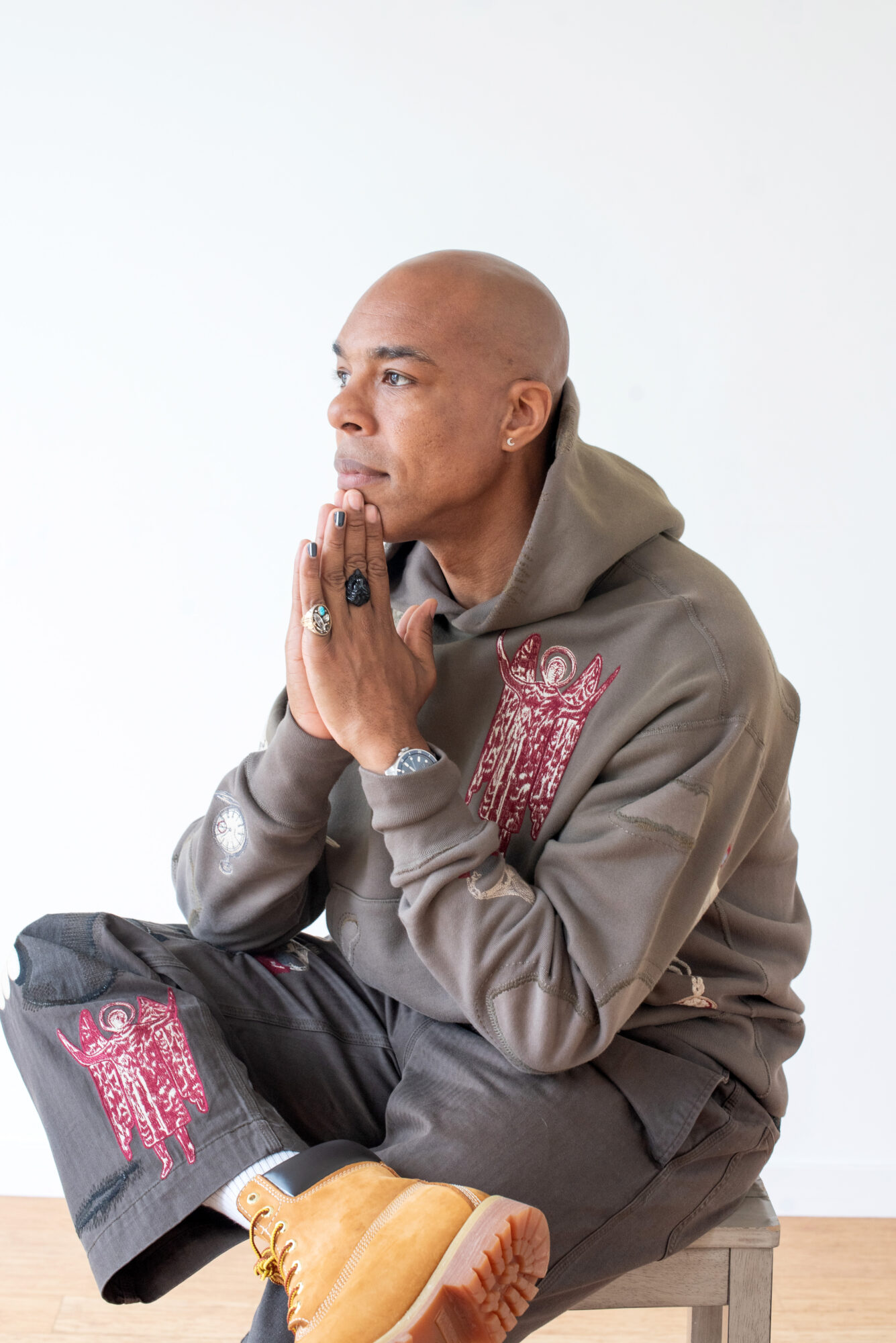
Today we’d like to introduce you to Chris Denson.
Chris, what keeps you motivated to do the work you do? What’s at the core of your
daily motivation?
Literally every day, I encounter incredibly smart and accomplished individuals who are simply trying to figure it out. How to get the career pivoted. How to communicate better with the team. How to balance personal and professional life. How to make more money. And how to feel calm, creative, motivated, peaceful, fulfilled at the same time – while sifting through all the noise and feedback of the world and their own inner voice. I know that feeling all too well, personally. So assisting and witnessing people as they find inventive and emotionally sound paths forward, is such a rewarding experience. Most times I’m working with people who are inventing the future of their craft or industry, and with so many things constantly changing – some a lot more drastically than others – I feel like I get to contribute the bigger societal shifts and collective problem solving.
Prior to Visionology, I was always one of those people who couldn’t help but to offer up unsolicited advice to my friends and collaborators about anything and everything they expressed a challenge with. I had to tone it down! So spending a lot of time learning and getting trained in how best to show up for others in an advisory capacity, exposed me to a lot more tools and personal motivation factors. And on top of that, every time I’m working with a client or team, I’m actively and constantly being reminded of the mindset and the incredible number of possibilities that exist for my own future.
What’s the biggest impact you’ve made professionally, and how has it had a lasting, ripple effect across your whole career?
When I was in the agency world, I had a boss once who said the best compliment we could receive in a room with clients, is “I like how you think.” So when you have an appetite for the exploration, understanding, and application of concepts that are foreign to most, it’s about more than the project or goal at hand. It’s about the development and sharing of knowledge, skillsets and insights.
I also believe in this concept of an invisible domino effect – especially for those of us who have been in the service side of the innovation economy. You may not always see the fruits of your thinking, or your pitch, or your ideas directly. But whatever nugget your client or partner may have learned from you, they may share with their spouse. That spouse might share with a co-worker, who shares with somebody else in a completely different department, and suddenly you’ve impacted an entire industry or group of people that you may be unaware of.
Over the course of my career, I’ve done this time and time again within think tanks, innovation labs, accelerators, agencies, etc – basically figuring out inventive solutions to challenges for a lot different types of teams and businesses from fashion to automotive, deep tech, government, music, mom-n-pop shops and everything in between. So turning that experience into a collection of insights, interviewing 100’s of world-class thinkers and doers, writing a bestselling book, and working directly with the people figuring out their corners of the world, means that hopefully a few people take the nuggets I’ve delivered and built on them.
For anyone trying to achieve the level of success that you have accomplished, what are three important things you’d tell them to help them break through?
Man! Dysmorphia is real. While I know I’ve had some successes in my career, I’ve also had plenty of unexpected twists and dips and turns and everything between. I guess first would be the concept of relentless optimism. No matter what I find myself up against, I stay in proactive problem-solving mode – as inventively as possible. This doesn’t mean some form of unhealthy bypassing of real emotional experiences that come along with unexpected shifts, but more so it means to hold space for healing those, while continually reminding yourself of how well your superpowers can serve you and others. A lot of times, that optimism leads you to new territory and ways of getting the mission accomplished.
Second, I think would be learning to connect dots. If there’s one superpower I think I have, it’s the ability to find related points between disparate ideas, people, and concepts. So whether it’s exploring transferable skills in a career change or the pursuit of making a past-time into a viable business, or taking a potential collaboration meeting you wouldn’t ever usually take, or simply showing up at a networking event that has nothing to do with your day-to-day work — staying in the practice of trying to find common ground is not only a good innovation skill, it’s a great life skill.
Lastly, is work on yourself. I’ve had a lot of pivots and worked in a lot of different cultures and industries. The only thing they all have in common, is me. A frequent downside to most polymaths or multipotentialites, is some severe or acute versions of an identity crisis; like “I belong here, but I don’t really belong here.” This can amplify or activate things like imposter syndrome, analysis paralysis, childhood wounds, and so much more, and really slow the access to your maximum potential. So no matter what external passions you pursue, stay in therapy, eat well, meditate, read the personal development books, talk to good friends/family, find time just for you, and give yourself a lot of grace.
Where do you hope to see yourself in 10 years?
Honestly, I love the work I get to do in psychedelic facilitation. Whether it’s Visionology or sitting in sessions, the goal is pretty simple: What new levels of clarity and ingenuity can we unlock? Again, the ripple effect of how people who are operating from places of peace and understanding in their work, their family dynamics, or simply interacting at the grocery store, is enormous. So in 10 years, I see myself operating some sort of center where all the things I love to do and communities I’ve been a part of come to together to exchange ideas, ideals, and wisdom and maybe even collaborate. But it won’t be hoity-toity or white linen cult vibes, it’ll be cool, and dope, and fun, and most importantly deep. Think Virgil Abloh meets Deepak Chopra meets Steve Jobs meets Oprah. Yeah, that would be cool.
Do you have a daily routine that helps with mental, physical and emotional balance? If so, what it is?
Almost every morning – at least four out of seven days, my routine is like this: 1.) 5-15 minute guided meditation in bed. 2.) writing my gratitude list and my affirmations, and journaling any reminders I need for my life’s operating system. 3.) 20-minute silent meditation. That’s before my kids wake up, and the dog, and most times, the sun! Then after all that, usually there’s some form of music playing to set the mood/tone for the day. Feel free to check out this Visionology playlist. Oh, and I’m getting way better at not checking texts or emails or social until after school drop-off. So far, so good.
What area/industry has your work had the most impact and can you provide an example?
I find myself working most commonly alongside marketers, entrepreneurs, and VC’s. Good marketers have to understand the collective psychology of society for their clients and their audiences. They have to understand how to create incredibly original moments and ideas that cut through the clutter. They have an unparalleled need to understand how end consumers are engaging with things like AI, social media, the 3D world, fashion, personal gatherings, and how their marketing can best serve those shifts. And they have to continually revisit their own creative intellect and tactical understanding in the process. It can be perplexing.
With VC’s it’s similar. Serving your portfolio and your funders and founders and their teams and their customers is one hell of a labyrinth. It’s constant analysis and decision-making and being a listening ear and an advisor all day every day. All while essentially trying to predict the future of industries! And when it works, it works. The creation of thousands of jobs across a portfolio also means a ton of impact on the livelihoods of those people and their families… across the country and around the world.
A recent example is working with Cannes Lions and their Creative MBA program this past April. Sixty-plus career marketers from all over the world were gathered for ten weeks to make sense of the world through their individual and collective creative lens. Some owned agencies, some were on the brand side, some worked for huge holding companies. Keep in mind that when the products and services they represent succeed, there’s an overarching economic impact from the desk job to the factory worker to the supply chain of ingredients and services needed to make those things possible. So it’s not just “how do we sell more candy bars?,” at the end of the day, it’s serving millions of people you’ll never see. Through a series of exercises and prompts we quickly got to some places of depth and clarity and renewed sense of purpose in the work.
Contact Info:
- Website: https://www.chrisdenson.co
- Instagram: Densonology
- Other: https://open.spotify.com/playlist/5RCVQFv5aVF6JJDmShiWjt?si=5f122650dbb8473e
Image Credit:
Emily Johnston, Astro Gong Yoga
Popular
-

LA’s Most Inspiring Stories
-

Maagic Collins on Building a Fearless Publishing Platform for Truth, Advocacy, and Underrepresented Voices
-
Los Angeles Barea on Turning Green Superheroes into a Global Movement for Youth-Led Change
-

Trisha DuVivier on Bridging the Franchisor–Franchisee Divide with Workhero and “Franulate”
-

Portraits of the Valley
-
Cedar Boschan on Elevating Black Music Rights and Driving Urgent Conversations Around Credit, Equity, and Artist Protection


