


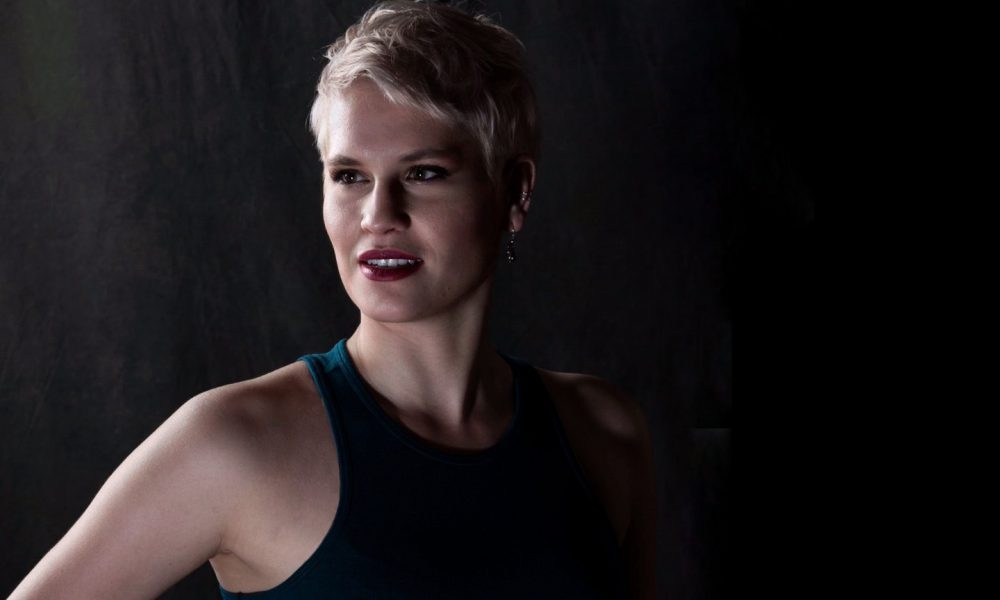
Today we’d like to introduce you to Boroka Nagy.
Boroka, please share your story with us. How did you get to where you are today?
Movement art was my primary language from the very beginning. My parents reminisce about the times I would create handmade tickets (with assigned seating of course) and put on performances for my family since I was a toddler; I had a fire to move and speak through movement since I could remember. The path to where I am today has been both direct yet winding. As a choreographer, it is not really the dance-related events that make your story, but rather the life experiences that shape your view of the world and truly exemplify where your work comes from.
Born in Budapest, Hungary to parents who are fluent in art and multi-media concepts, I was surrounded by photography, music, film, and a rich cultural heritage from the day I was born. A childhood filled with travel to Greece, Italy, Ukraine; swimming; folk dance; rhythmic gymnastics; and the love and support of my parents towards me and my brother to grow into our own identities created a safe and exciting world for my primary years. With government turnover and social uncertainty in Budapest, my parents decided to move across the pond to New York City with hopes for a more stable future for their kids. I was seven, my brother was nine, and we would grow up in the Land of Opportunity.
The changes that followed were of course shocking to us young kids, and I’m sure to my parents as well. We went from a large house with a front and back yard, a dog and a cat in an affluent neighborhood, to renting one room in Coney Island, Brooklyn. Faced with culture shock, not speaking the language, and being total outsiders with no community around us, our family became really close. To spare the long essay that can serve as my immigration story, I’ll share with you the images this journey has left me with: sacrifice, family, unity, unmatchable love, and perseverance. The years to follow were repeated reminders of that list, and this has instilled in me a deep desire for empathy, sensitivity towards emotional affairs, and a fundamental hope for acceptance. I feel so blessed to have found movement as a venue for my personal narrative at an early age. And today, years later, when I still feel like an outsider, surrounded by a world that is preoccupied with trends, my mission is to keep dance an honest, visceral, human, and empathetic form of expression. With this, I strive to create pieces that can serve as a mediator between cultures: a conduit for acceptance, harmony, and peace amongst our differences.
To speak on my movement career briefly: I continued rhythmic gymnastics when I moved to America and achieved Level 10 Elite status. I attended Fiorello H. LaGuardia High School, during which I had to make a decision to continue the sport or stay a dance major. I (thankfully) chose to continue with dance. LaGuardia High School was my introduction to the professional world of concert dance; our days were spent with ballet, pointe, Graham, and Horton classes, rehearsals, and the usual academics. As a teenager, these visceral modern dance forms spoke to me greatly, and I felt like I had found a new outlet through which to speak. During my junior year of high school, I started at The Ailey School’s Junior Division program, where I received even more rigorous training, got the chance to work with incredible choreographers, and challenged my body’s capacity with approximately eight hours of dance a day. The transition to college was smooth as I continued at The Ailey School’s BFA program in conjunction with Fordham University. During this time, I performed in significant pieces and venues such as at the 92nd Street Y’s 75th anniversary celebration in a work by Bertram Ross, danced with the Alvin Ailey American Dance Theatre in “Memoria” at NY City Center, performed in honor of the late Denise Jefferson at The Apollo Theatre, and created an artist image for myself that stood apart from most of my surroundings. Summers filled with travel and self-growth, and school years filled with dance and academic inspiration, I looked back to where I had come from and how far I have come and felt undefeatable. I graduated with a double major in Dance and Film Studies, and a certificate in choreography.
When the time came to decide what to do post-graduation, the years of overfilled schedules, very little sleep, the experience of the hustle of New York City, and having faced constant pressure to fit into a certain image I never felt I could manage finally took a toll on me: I claimed burnout and applied to grad schools exclusively on the other coast. University of California, Irvine had a well-known focus in dance and technology with Professor John Crawford, and it seemed like a perfect fit for my double major. After my visit to the school, I found Irvine could not have been any further in both location and culture from New York City. For the second time in my life, this time by my own choice, I picked up my bags and moved.
I started grad school thinking I’ll focus on screendance and virtual presentation of modern dance. However, my experiences in Southern California created a sense of utter loneliness. I recognized that we are more connected than ever on a virtual level, yet more isolated than ever on an emotional and physical level. With the driving culture of SoCal, I couldn’t even have everyday conversations and proximity to others as on the subways of NYC. My thoughts on screendance took a left turn. I began to consider that even a proscenium stage event, with the audience sitting three feet from each other, felt way too isolated. Thus began my journey with audience interactive work as an alternate way of presenting modern dance. I graduated in June 2015 with my MFA in dance, and on January 1, 2016, with the cast of my thesis show, I formed Re:borN Dance Interactive.
We’re always bombarded by how great it is to pursue your passion, etc – but we’ve spoken with enough people to know that it’s not always easy. Overall, would you say things have been easy for you?
Every journey has its struggles, from both internal and external forces. I think the most challenging thing for me has been creating a space where I don’t feel like I have to fit a specific mold (which in a success-oriented world seems counterintuitive), and creating a space for dancers to tap into their own powers as performers.
I’ve recently come to realize that dance is one of the few fields that begins identity-building at a very young age. Dance is so embedded into my identity because I’ve been rigorously working towards a movement career since the age of five when my parents first put me in rhythmic gymnastics. In contrast with a job in the sciences or law, even if you know you want to be a scientist or lawyer, your official journey usually begins in college or high school. With dance being such a fundamental part of my essence, I become extremely vulnerable with the thought that it may not be the most significant part of my life one day. I’m starting to re-work the vision I had worked so hard and so long for, but it is frightening. As the dance world is shifting to freelance and gig-based works, so too I am re-imagining how dance will function in my life. I find it challenging not to judge myself and compare myself to both my own standards and the trends that surround me. I am trying to stay true to my own calling and mission as an artist, and continue to create works that invite the audience to tap into their emotional and social selves.
Simultaneously, I am passionate about creating a space for dancers to embody their own distinct strengths. As a dancer, I felt a lack of freedom to embed my own uniqueness into my performance, and I often focused on erasing my distinguishing factors in an effort to mold into what I believed choreographers and companies wanted. I aim to foster a company where the dancers not only have room to take the initiative to use their art as a means of exploring their multiple identities but are challenged to do so, where they feel safe to take risks while pushing the boundaries of their performance. I hope to create a level of trust within the company that allows all of us to be vulnerable, even though the grind of our lives speaks against that notion.
The challenge has been to stay true to this calling, to not get distracted by inner dialogues and comparison to others, and to continue to manage to pay rent and tackle the emotional and daily burdens of life. Frankly, I reflect back on the lessons I learned from my parents’ relocation: sacrifice, family, unity, love, and perseverance. It is with these concepts that I form my connection to others, and that has always kept around me people who believe in me.
So, as you know, we’re impressed with Re:borN Dance Interactive – tell our readers more, for example what you’re most proud of as a company and what sets you apart from others.
Re:borN Dance Interactive is a contemporary dance company based in Orange County. My goal is to keep the company composed of a group of 21st-century artists who strive to go beyond the aesthetics of contemporary modern dance and delve deeper into the emotional and social content of the choreography. I love to work with dancers who question the intention of my pieces, who insert their own life associations into my work, and who use dance as a form of dialogue with the audience. Although Re:borN has presented both concert stage and installation work at various nationwide dance festivals, collaborative performances, and cultural events, what I think makes us stand out is our approach to audience interactive works.
In my grad school thesis research, I coined the term “interactive performance exhibition,” which is an alternative model to presenting choreography and screendance. I believe the combined use of an altered exhibition space, live performance, and video projection can aid in the creation of a hybrid performance installation. There are currently a number of companies in the Southern California region that present “immersive dance” events. However, there are a few differences that I notice in our approaches.
In my interactive works, I try not to change the size and intensity of the movement. I want the audience to feel the dancers’ exertion, and to be enveloped by huge dance movements. I also wish to create active audience members and challenge them to make decisions in the moment that are not directly told to them. I want my audience members to take the initiative to self-curated the evening while maintaining the structure of concert dance with full length choreographed works. I noticed other immersive works rely on “movement sculptures” and improvised scores while the audience meander around the space or are navigated through the space. Rather, in my works, I aim to create situations that elicit a more gut reaction from the audience, leading them to make decisions throughout the work. As a result, they become performers as well and influence the outcome of the performance.
I have thought extensively on how to do this. The use of curtains started early in my research, as a way to block the view of the audience, split the space, and force the viewers to walk around the performance space. If an audience member is relying on me as a choreographer and director to make sure they fully see the show, they may miss out on some of it. My goal is for viewers to take initiative and move from one location to another if they cannot see, even if that means cutting across the venue (whether it is a blackbox theatre or a warehouse). I believe this subconsciously encourages the audience to make confident decisions on what THEY find interesting, follow a dancer they relate to most, and take ownership of their own viewing experience.
If you think about it, most of our lives are lived in a way where we passively exist and are navigated through what we are “supposed to be doing.” Whether it is Waze telling us what the fastest route to work is (which we follow without a second thought), the well-planned advertisements on our social media feeds telling us where to shop, or even the ritual of going to the movie theatre or the ballet. We move through the motions without much thought and wait for the dance director to tell us what the work is about or the movie director to throw in our face audio-visual cues of how we are meant to feel in a certain moment. It is so easy to become detached from our experiences, and as I began to look around in dance shows, I noticed the same thing was happening there too. The blank stares looking at the stage… piece over lights up, phones out, text a friend, Instagram a picture of the program with the stage in the background, lights down, phones take five extra seconds to turn off, and our brains take even more seconds to refocus on the dancer who appears on stage. I felt that I was not able to connect to my fellow audience members, and what used to be an awe-inspiring experience started to become distant. “Have we become so passive that live art needs to be spoon-fed to us?” I thought. This obviously is a generalization of my experience, but the impact was profound in my life and career.
With Re:borN Dance Interactive, I am most proud that we strive to keep challenging our audience in our interactive works with large visceral movement, concert dance structure, and completely choreographed pieces performed in alternative spaces. Thus far, as a company, we have produced three full-length interactive performances. In these types of events, the audience has to stay present, decide for themselves what they will see, and stay out of the way so they don’t get in the way of the performers. The result is quite a communal experience. It is so beautiful to see diverse people who would never have met before exist in the same space for an hour and a half, try to navigate the tight spaces, make the choice to be active participants or distant observers and to have a shared experience and dialogue through the language of dance. Through physical proximity and eye contact, dancers and audience members can have silent conversations on fundamental human experiences. Each audience member and dancer is just as important as the other in influencing the performance product… no two nights are the same! It is a truly liberating experience to have an evening of intentionality, yet maintain the freedom to exist-as-you-are.
That said, our mission is to create art that exists as a social and emotional exchange between participants through works that challenge the conventional audience-dancer relationship. Re:borN Dance Interactive strives to keep contemporary dance a visceral, empathetic, and human form of expression through community and identity building experiences.
So, what’s next? Any big plans?
Our next endeavor is to produce a new dance festival in Orange County with a unique perspective. We will keep the upcoming event details a secret for now, but you can stay in the loop by following us on our website or social media sites. The festival will happen in the Spring of 2020.
Re:borN continues to foster audience interactive experiences that build on community, empathy, and identity.
Contact Info:
- Website: reborndance.org
- Email: [email protected]
- Instagram: @reborndance
- Facebook: https://www.facebook.com/reborndanceinteractive


 Image Credit:
Sinziana Velicescu, Jazley Faith, Skye Schmidt, Steve Rosa
Suggest a story: VoyageLA is built on recommendations from the community; it’s how we uncover hidden gems, so if you or someone you know deserves recognition please let us know here.
Popular
-

Was there ever a time you almost gave up?
-

When do you feel most at peace?
-

What is something outside of work that is bringing you joy lately?
-

Is the public version of you the real you?
-

What’s more important to you—intelligence, energy, or integrity?
-

What do the first 90 minutes of your day look like?