



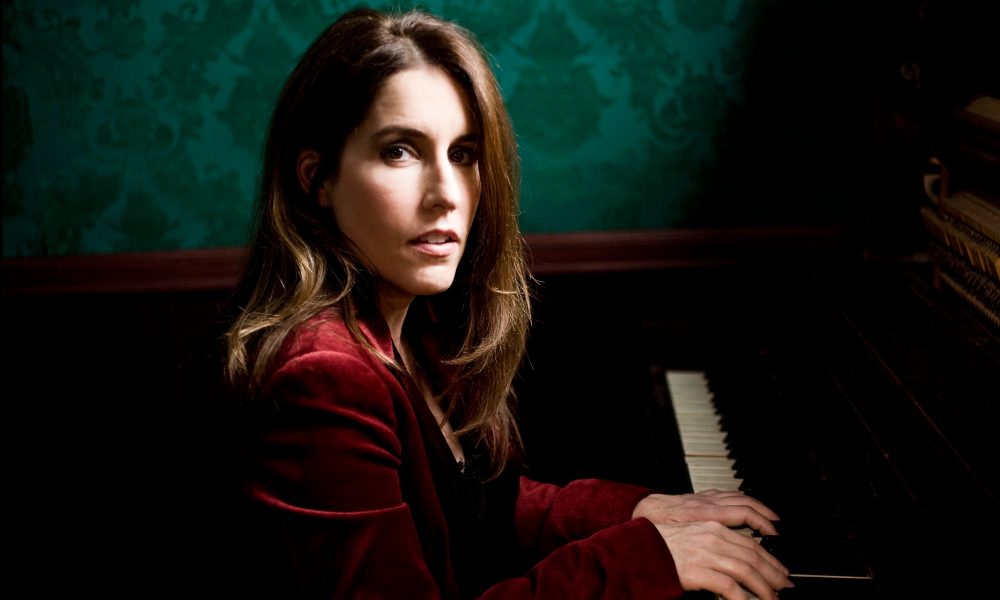
Today we’d like to introduce you to Adrianne Duncan.
Hi Adrianne, we’re thrilled to have a chance to learn your story today. So, before we get into specifics, maybe you can briefly walk us through how you got to where you are today?
I’m a pianist, singer, songwriter and composer – I also produce and arrange music. I now work mostly in the jazz genre, but I started out as a classical pianist. I grew up in a musical household in Atlanta; my father is classical guitarist Charles Duncan, who is well-known in the concert and publishing world. In addition to my dad’s guitar being a constant presence, my mom played the piano, and she introduced me to it when I was about 2. I don’t have a strong memory of what drew me to the instrument since I began so young, but apparently I got into it right away and after my first lesson announced that I didn’t need anymore, since now I knew how to play! Atlanta is a cultural city and my parents took me to concerts all the time; the Metropolitan Opera used to come into town once a year and we would go, and we were regulars at the Atlanta Symphony and jazz concerts. I started competing around age eight and went to great music camps in the summer like Brevard and Tanglewood. I was lucky enough to play in the Atlanta Symphony Youth Orchestra for my four years of high school under the wonderful conductor Jere Flint, which was an amazing experience; they treated us exactly like the actual symphony, from blind auditions to performing at Symphony Hall.
I stopped focusing on music for several years starting in college; I burned out and switched to theatre, even though I still studied with my piano and voice teachers. I went to Northwestern, which has an amazing drama as well as music department, and I worked professionally as an actor in Chicago after graduating. I worked consistently there in theatre, film, television and commercials, and was making my living full-time as an actor. But when most of my actor friends had made the move to Los Angeles, I decided to follow. As the saying goes, I could not get arrested in LA – I went from being a consistently working actor to the bottom of the barrel, and I did not like it one bit! I had a transformational experience at a Sting concert one night (long story) and decided to go back into music full-time – I then met some of the members of the creative jazz community here and I was hooked.
Would you say it’s been a smooth road, and if not what are some of the biggest challenges you’ve faced along the way?
When I moved out to Los Angeles from Chicago and got back into music from acting, I decided I wanted to study jazz, which I had been a voracious listener of since I was a child but had never studied. Since I was steeped in classical music and the competition track from such a young age, classical was a very familiar world to me. I had extensive professional and pre-professional classical performing experience: in addition to playing with the Atlanta Youth Symphony, I performed solo in smaller and chamber groups and concertized with my dad. I had a hard time switching my brain from a classical one to jazz, and it was very frustrating for me. Through that process, though, I started composing, and that’s when things really started to move along. Also, classical music is much more of a linear field, professionally speaking, so it’s also been a bit of a learning curve in terms of learning how various music platforms work and promoting myself in the age of streaming. And obviously, it’s always an uphill battle in terms of being a performing artist, no matter how successful you are, and being in a more niche market like jazz can be tough. But I love the community here and wouldn’t trade it.
Thanks – so what else should our readers know about your work and what you’re currently focused on?
I think of myself as a composer and songwriter and as a classical pianist and singer that plays jazz. I think my non-linear background has contributed to a slightly unusual approach to composition that hopefully will appeal to people. I had no idea I could even write at all until I started studying jazz when I randomly put some chords together and created my first song in what I thought was an accident. Then I started being able to hear bass lines in my head, which made everything so much easier for me. I have a writing background, and my parents are both very literary people (my dad is also an English professor and my mom is an editor), so I think my lyrics are a strong point – I like to tell stories in my songs and use interesting and poetic imagery. I’ve written and performed in many other genres, which influences how I compose. I also love co-writing and producing for other people and creating sonic beds for songs through arranging. I love George Martin and how he produced the Beatles, and am always hearing that kind of orchestration over pop tunes. And as a performer, my acting background definitely affects how I am onstage – I’m kind of a ham anyway, plus it affects how I interpret a lyric and tell a story.
I have two groups in Los Angeles I’m very proud to have worked with – Lado B Brazilian Project, who I was lucky enough to tour Brazil with a few years ago, and Fish to Birds, which is a seven-member improvisational a cappella vocal jazz ensemble. We create music in the moment without any sort of plan; people are always coming up to us after shows and asking who wrote which song, and we have to explain that they saw it written right in front of them. And the Lado B arrangements are some of the most beautiful and challenging I’ve ever played. Those two groups have helped my musicianship tremendously, and they also contain many of my closest friends and colleagues.
And I’m extremely proud of my new album Gemini I released on September 24. The band consists of world-class Los Angeles musicians Nick Mancini on vibraphone, Dan Lutz on bass, Jimmy Branly on drums, Katisse Buckingham on sax and flute and John Tegmeyer on clarinet. It’s my original compositions plus an arrangement of “Roxanne” by The Police that Nick and I did. It was hard work finishing it during the pandemic, but I did and I’m so glad!
In terms of your work and the industry, what are some of the changes you are expecting to see over the next five to ten years?
Obviously, streaming and all the various music platforms have completely changed the face of the music industry. Some of this is good and some bad – artists have never had as much opportunity to record and promote their own music on a competitive level with the labels, but compensation has declined to a shameful amount, especially for songwriters. There’s a huge battle right now between the DSPs (digital service providers like Spotify) and songwriters’ organizations over rates that the Copyright Royalty Board will set for 2023-2027. If the songwriters’ groups don’t prevail, it will become increasingly difficult for songwriters to make a living.
On an artistic level, I’m seeing a lot of younger people interested in jazz and more complex music, both as audience members and performers. I’m seeing a lot of really cool interrelated disciplines, like music and dance, being fused in interesting ways. The pandemic has forced artists to be creative with virtual presentations and collaborations, and I think that will continue. The arts are always threatened by venues closing and resources drying up, and never more so than now. The only way to keep it moving forward is by artists creating opportunities for themselves and others.
Contact Info:
- Email: [email protected]
- Website: https://www.adrianneduncan.com/
- Instagram: https://www.instagram.com/adrianneduncan/
- Facebook: https://www.facebook.com/la.series
- Youtube: https://www.youtube.com/channel/UChvEmy1EDK2LYMMcdtncCGg
- Other: https://open.spotify.com/artist/40KDMVGLC2BbaknzaEkozl?si=gSIVHDNuRcKX2wrBbKBOCA


Image Credits
Joseph Viles Joe Rubinstein Rita Menezes Vanessa Crocini
Popular
-

What is something outside of work that is bringing you joy lately?
-
Local Highlighter Series
-
What did suffering teach you that success never could?
-

What are you most proud of building — that nobody sees?
-
Who were you before the world told you who you had to be?
-

If you could say one kind thing to your younger self, what would it be?


