




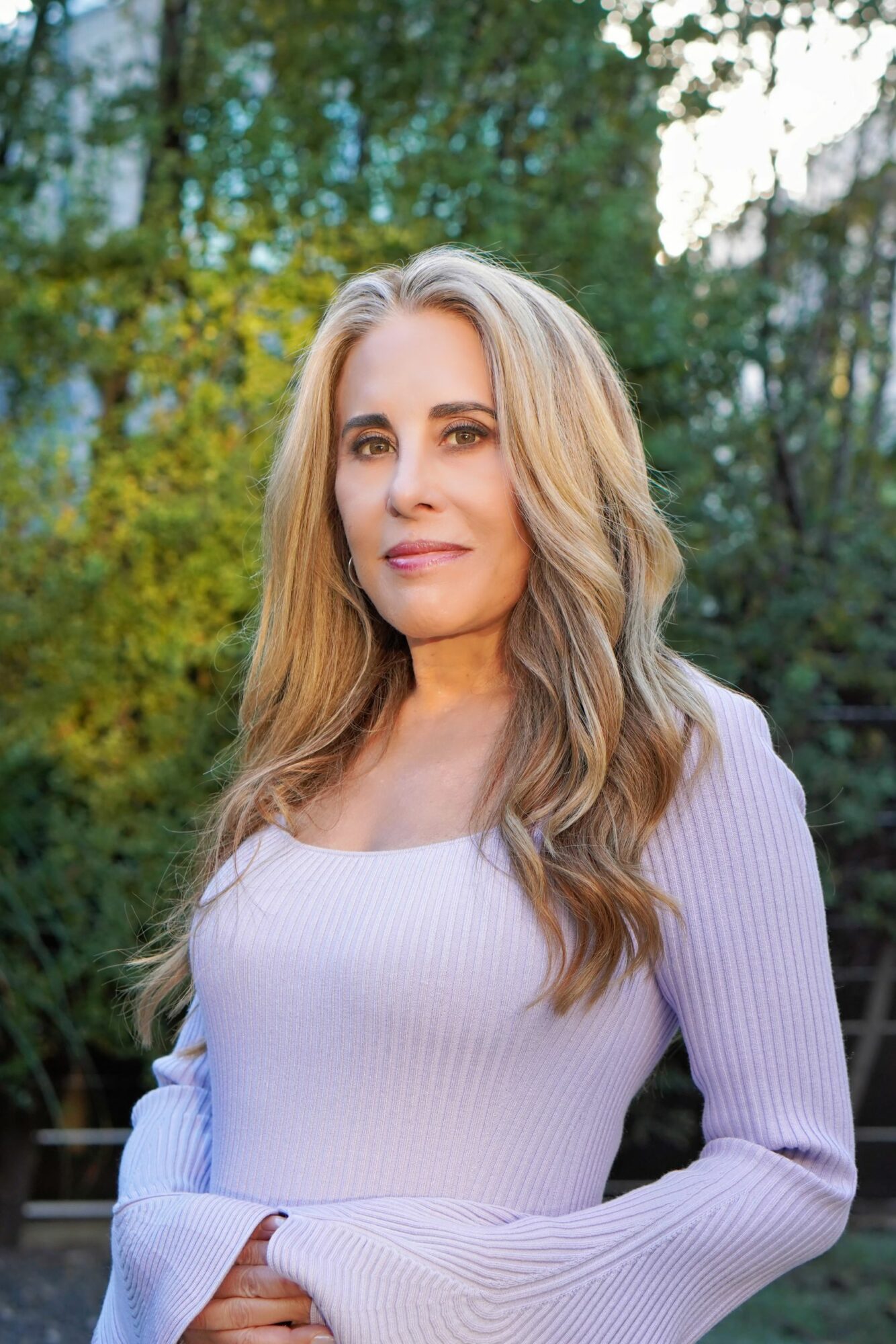
Today we’d like to introduce you to Andrea Leeb.
Hi Andrea, we’re thrilled to have a chance to learn your story today. So, before we get into specifics, maybe you can briefly walk us through how you got to where you are today?
I am a writer, an advocate, and an incest survivor.
My story is long, and complicated, so I will try to summarize. I am a native New Yorker—born in Queens. I came to Los Angeles twenty-nine years ago for work and never left. I am married and live in Venice Beach.
Over the years, I have worked as a registered nurse, an attorney, and briefly, as a scuba-diving instructor. I have also been writing for most of my life. I have an MFA in creative writing, and have published my short fiction and essays in numerous literary magazines. My first full-length book, Such A Pretty Picture, A Memoir will be published on Oct 14, 2025 (She Writes Press, distributed by Simon & Schuster).
Such A Pretty Picture, was born out of the #MeToo movement. When remembering how crucial reclaiming my agency and my voice was in the process of my recovery, I began to think that sharing my story would help other survivors find their way to tell their own stories. Two years later, I left the practice of law and committed to writing full time.
I never intended to turn my narrative into a mission, but after I finished my first draft, I realized I needed to do more than just share my story. Today, I split my time between writing, survivor advocacy and volunteer work. I’ve spoken publicly on the issue of incest trauma, and I am a member of the UCLA Rape Treatment Center and Stuart House Advisory Board. The Rape Treatment Center provides comprehensive treatment for sexual assault victims and their families. I also volunteer at Stuart House, a Rape Treatment Center program. Stuart House is an innovative public-private partnership where professionals work together to coordinate child sexual abuse investigations and to protect, support and provide treatment to sexually abused children and their families. In addition my volunteer work with the UCLA Rape Treatment Center, I mentor college-age women through She-Can, a non-profit dedicated to building female global leadership by equipping and empowering low opportunity women from post-conflict and climate-challenged countries with education, and leadership skills.
Alright, so let’s dig a little deeper into the story – has it been an easy path overall and if not, what were the challenges you’ve had to overcome?
The road has not been smooth. To explain it well, I need to take you back in time. I was only four-and-a-half the first time my father molested me. He was giving me a bath, and although I was young, I knew there was something strange about the way he touched me. When my mother walked in to check on us, she howled and crumpled to the floor. When she came to and opened her eyes, she was blind. My mother’s hysterical blindness lasted for weeks, but her willful blindness lasted for decades. The abuse continued until I was thirteen, and I spent a childhood living with secrets I could not name.
Despite it all, I survived. I told myself I was fine, but my survival skills were flawed. For years, I tried to convince myself that if I were educated enough, pretty enough, and perfect enough, I could pretend the abuse away. I tried my best to bury my secrets, and every time the vestiges of trauma resurfaced, I pushed them down. I wanted to forget the past. But at age thirty-three, an unwanted grope on a New York City subway made that impossible. I could no longer remember how to forget. I was forced to confront my past and to get help. I found a therapist and then spent twelve days in an inpatient program. This was the beginning of my path toward healing, reclamation of my own narrative, and the life that I have today.
Alright, so let’s switch gears a bit and talk business. What should we know about your work?
Choosing to write my memoir, Such a Pretty Picture, has been an act of defiance against the legacy of silence that was forced on me and other survivors of childhood sexual abuse. The thing I am most proud of is how I’ve turned my silence into my voice–and my shame into connection. By telling my story, I not only freed myself from my own past trauma, but also created a bridge to help others find their own healing.
Serving on the UCLA Rape Treatment Center and Stuart House Advisory Board gives me the opportunity to support other survivors. When volunteering at Stuart House, I get to participate in playtime with recent child victims of sexual abuse. Although nothing can completely eradicate the memories of the trauma I experienced, giving an abused child a moment of play or a glimmer of joy goes a long way toward easing any remnants of my own pain. Speaking publicly on the issue of childhood trauma and participating in interviews like this one allows me to use what was once a destructive force in my life as a source of strength and solidarity instead.
I can’t say for certain that my volunteer work and board service sets me apart from other memoir writers, but I know, without a doubt, that it empowers me in my work as an advocate. For me that is enough.
I am also donating twenty-five percent of my author royalties to RAINN (the Rape, Abuse, and Incest National Network) and the remainder to local non-profits dedicated to providing services to victims of sexual assault and abuse.
In terms of your work and the industry, what are some of the changes you are expecting to see over the next five to ten years?
The publishing industry, like the film and music industry, is undergoing change. Though I don’t have the expertise to opine where publishing will be in five or ten years, what I do know is that there are stories that need to be written, regardless of the state of publishing or the constraints that any outside force might try to impose on writers–and that it is now more important than ever for writers to write.
With respect to survivor advocacy, in 2025 there have been significant cuts to government funding to organizations dedicated to providing services to victims of sexual violence. Rape crisis centers across California are experiencing devastating reductions in hours and services. The Bay Area Women Against Rape, the oldest rape crisis center in the country, will be closing its doors after more than fifty years of service. I don’t know what the future will look like in five or ten years, but I know that this is a critical time, and it is likely that more of these organizations won’t survive without community support.
** If you or someone you know has been sexually assaulted or sexually abused, the UCLA Rape Treatment Center can help: Call 424-259-7208.
Pricing:
- Amazon $17.99
- Barnes & Noble $17.99
- Bookshop $17.99
Contact Info:
- Website: andrealeebauthor.com
- Instagram: @andrealisaleeb

Image Credits
Headshot: Casey Pickard
Popular
-

What is the story you hope people tell about you when you’re gone?
-

Who were you before the world told you who you had to be?
-

Was there ever a time you almost gave up?
-

What is something outside of work that is bringing you joy lately?
-

Who saw you clearly before you could see yourself?
-

What are the biggest lies your industry tells itself?


