


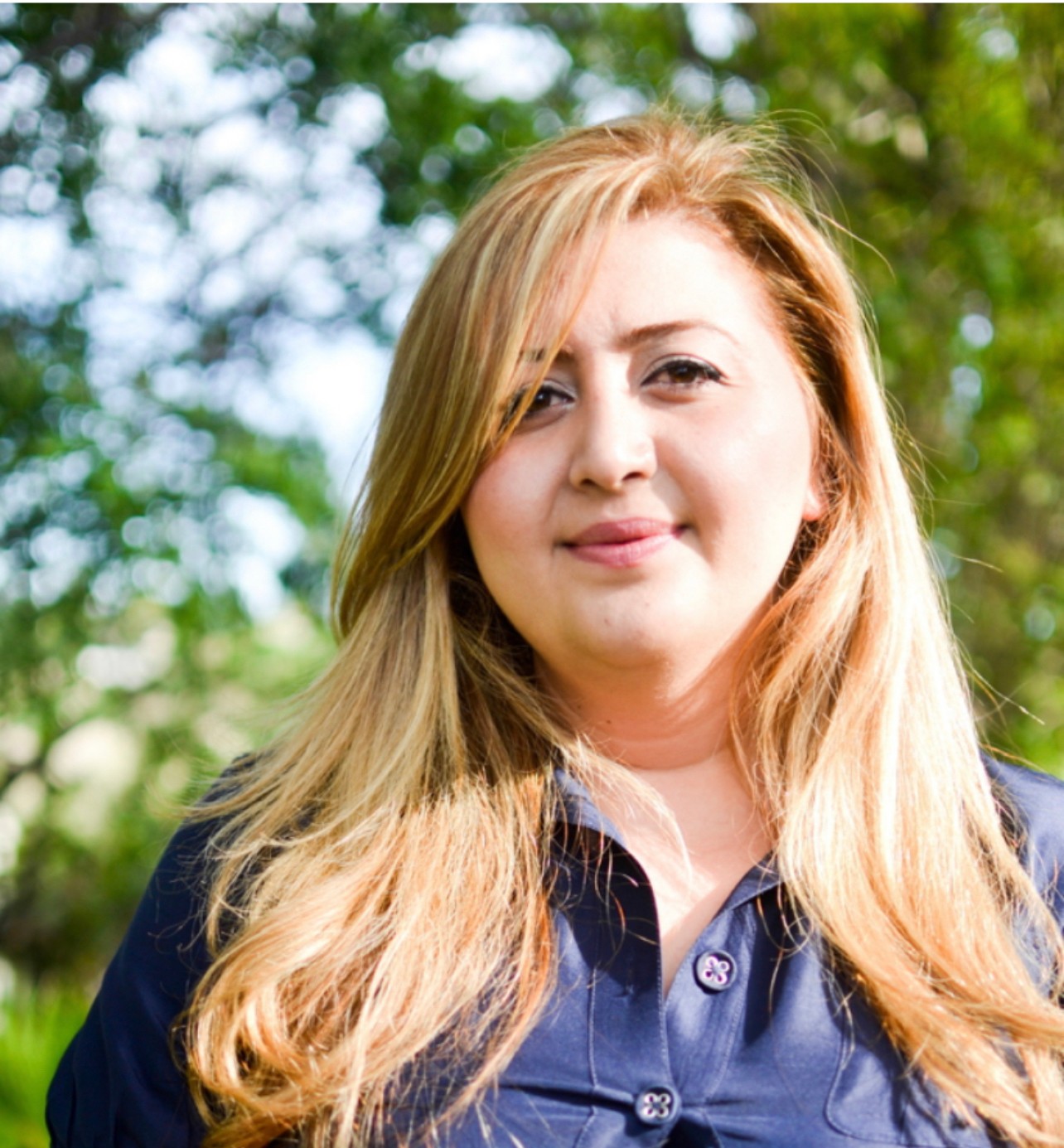
Today we’d like to introduce you to Tina Sarkisyan.
Hi Tina, thanks for joining us today. We’d love for you to start by introducing yourself.
As an undergraduate biology student, I was captivated by the quiet poetry of life at its earliest beginnings. I fell in love with genetics, the reproductive process, and the extraordinary intelligence of the human body—especially women’s health. I knew I wanted a career that combined science, compassion, and education, but I didn’t yet know where that path would lead.
In my search for an internship, I discovered reproductive endocrinology and infertility. It felt like stepping into a world I had been unknowingly searching for—a place where science, compassion, emotion, and technology intersected. Through my very first encounters with patients, I learned that my gift wasn’t only understanding the science, but translating it. I loved spending time with patients, explaining each step, each medication, each possibility. I realized that what I offered wasn’t simply information—it was comfort, clarity, and hope.
Patients invited me into their most vulnerable moments. I held the hands of women who believed their dreams of motherhood were slipping away. I spoke with those facing diagnoses like diminished ovarian reserve, premature ovarian failure, cancer, hormonal disorders, and uterine anomalies. I listened to men quietly battling their own emotional and physical struggles. And with every conversation, every cycle, every challenge, I felt I was making a difference—one family at a time.
Those early experiences became the baby steps that eventually led me toward my life’s work.
A Global Classroom in the Art of Infertility Care
My professional journey truly began in 2005 at a pioneering clinical fertility center—one that would shape not only my career, but my identity. As a clinical coordinator, I stepped into an environment filled with brilliance: embryologists, reproductive endocrinologists, and researchers who approached infertility with both precision and artistry. It was a center known for its many “firsts,” a place where innovation was part of the daily rhythm, and where reproductive medicine was practiced on a global stage.
My classroom extended across continents. I trained alongside teams from South Korea, New York, Texas, Lebanon, Armenia, and Japan, each bringing their own cultural and scientific perspectives to the field. I collaborated closely with research divisions affiliated with Harvard University, CHA Medical School, and leading clinics throughout Asia—exposure that enriched my understanding of infertility far beyond the walls of any single institution.
I learned the rhythm of IVF cycles, the delicate timing of medications, the sensitivity of laboratory processes, and the complexities of third-party reproduction long before the world was openly talking about surrogacy and egg donation.
Working with international patients opened my eyes to the reality that reproductive medicine is not universal. Each country carries its own restrictions, cultural considerations, and legal challenges. Many patients lacked access to medications or procedures available in the U.S. So our team created individual solutions, customized care plans that bridged gaps in global accessibility.
Those years gave me not only expertise, but perspective. They taught me that family-building is a global language spoken through hope.
The Birth of Simple Steps Fertility
After coordinating thousands of cycles across continents and cultures, I recognized a critical gap in the fertility world: families often felt unsupported, misunderstood, or overwhelmed. Too many agencies lacked deep medical understanding, emotional sensitivity, or cultural awareness.
I knew I could create something different.
Something better.
Something that honored the emotional, cultural, and scientific layers of this journey.
And so, Simple Steps Fertility was born—an agency founded on the belief that the fertility journey should be guided by compassion, clarity, and clinical knowledge. A place where patients feel held, understood, and empowered. A place built on education and connection.
My clinical background allows me to anticipate challenges before they arise, communicate effectively with clinics, and support intended parents, egg donors, and surrogates with a confidence grounded in medical experience. But my heart is what allows me to walk with them—to understand their fears, their hopes, and their dreams.
Where Medicine Meets Meaning
Simple Steps Fertility is not just an agency. It is the culmination of decades of learning, listening, and loving this field. It is where medical science meets emotional intelligence. Where cultural sensitivity matters as much as clinical accuracy. Where families—local and international—are guided one step at a time.
Every journey reminds me why I chose this path.
Every birth reaffirms my purpose.
Every story becomes part of my own.
I often say that my career began with curiosity, but it grew into devotion. Today, I am honored to help build families across the world. My journey continues—one simple, meaningful, extraordinary step at a time.
We all face challenges, but looking back would you describe it as a relatively smooth road?
The field itself came with its own set of profound challenges. In the beginning, I devoted countless hours to learning the science—understanding the intricate rhythms of the reproductive cycle, the delicate balance of hormones, and the complex physiology behind each treatment protocol. This foundation was essential. To truly help patients and to educate them with confidence, I needed to be deeply informed. The more I learned—from textbooks, from lectures, and most importantly from hands-on experience—the more my confidence grew. I was incredibly fortunate to be surrounded by professionals who were generous with their knowledge, mentors who were leaders in reproductive medicine and who took the time to teach, guide, and challenge me.
But science was only part of the struggle. The second, and often more heartbreaking challenge, was helping patients navigate the cultural, financial, and logistical obstacles standing between them and the families they longed for. I met women with severely diminished ovarian reserve, women for whom every month mattered—yet they couldn’t move forward because the cost of treatment was out of reach. By the time they were able to gather the necessary resources, their window to use their own eggs had closed, leaving them with the difficult decision of turning to egg donation.
I worked with single women trying to outrun the ticking biological clock, couples facing life-altering diagnoses, and cancer patients who needed to freeze their eggs urgently before beginning chemotherapy. I supported women battling autoimmune diseases and severe hormonal imbalances, women whose bodies were fighting against time, biology, and circumstance all at once. I also worked closely with members of the LGBTQ+ community seeking inclusive, compassionate pathways to family building—each carrying their own hopes, challenges, and dreams.
These experiences shaped me. They taught me that fertility care is never just clinical—it is emotional, cultural, financial, and profoundly human. And each story, each struggle, reaffirmed my purpose: to help people find hope, even when the path is complicated, delicate, or uncertain.
Another layer that is often overlooked in the field of fertility care is the cultural sensitivity required in family building. Throughout my career, I had the privilege of working with patients from diverse cultural backgrounds, each carrying their own beliefs, expectations, and traditions about family, womanhood, and fertility. Many of the challenges they faced were not only medical—they were woven into cultural values, generational expectations, and deeply rooted personal identities. combine Twenty years ago, these conversations were even more delicate. I often found myself navigating emotional discussions about lineage, religion, gender roles, and societal pressures—topics that stretched far beyond the laboratory or exam room. Yet, being trusted with these intimate concerns allowed me to witness subtle but meaningful shifts over time. I saw families open their hearts to new possibilities, couples embrace alternative pathways to parenthood, and individuals find the courage to choose what felt right for them, even when it meant stepping beyond cultural norms. Looking back, I am deeply grateful to have played even a small part in these quiet transformations—moments of understanding, acceptance, and empowerment that continue to shape the evolving landscape of fertility care today.
Thanks for sharing that. So, maybe next you can tell us a bit more about your business?
Simple Steps Fertility is more than an agency—it is a deeply personal mission built from nearly two decades of clinical experience, global insight, and an unwavering commitment to helping individuals and couples build families with clarity, compassion, and confidence. We specialize in third-party IVF, including surrogacy and egg donation, as well as guiding intended parents through the most complex and emotionally charged parts of their fertility journey.
What truly sets us apart is the foundation on which SSF was built: medical expertise, clinical precision, and cultural sensitivity. Unlike many agencies that operate solely on an administrative level, our approach is rooted in real clinical knowledge. With my background working alongside world-renowned reproductive endocrinologists, embryologists, and global research teams, SSF is uniquely positioned to anticipate challenges, collaborate seamlessly with clinics, and guide families through the scientific, emotional, and logistical layers of fertility care.
We are known for our warmth, our transparency, and our obsessive attention to patient advocacy. We do not rush matches. We do not treat families like case numbers. We walk with them—step by step—with education, honesty, and the kind of personalized care that is often missing in the fertility world.
Our surrogates and donors feel that same care. We pour into them with support groups, mentorship programs, 24-hour nursing guidance, connection, and community. We believe that surrogates are the backbone of our work and deserve protection, respect, and comprehensive emotional and medical support.
Brand-wise, I am most proud that Simple Steps Fertility has become synonymous with ethics, education, and heart. In an industry that is rapidly accelerating, sometimes too quickly, we stand firmly rooted in doing what is right—not just what is easy or profitable. Our brand reflects a quiet but powerful promise:
We will take care of you. We will educate you. And we will help you build your family in a way that feels safe, informed, and deeply supported.
For readers who are new to the world of surrogacy or egg donation, I want them to know that SSF offers a full ecosystem of support:
Expert case management
24-hour nursing guidance
Ethical and culturally sensitive matching
Global program development for international families
Comprehensive educational resources
Emotional support and advocacy for all parties
A community of surrogates, donors, and intended parents who feel seen and valued
Our work is delicate, complex, and profoundly meaningful. And at Simple Steps Fertility, every journey—whether for intended parents, surrogates, or donors—is approached with dignity, knowledge, and heart.
Above all, we want families to know: you are not alone. We will walk with you, one simple step at a time.
Networking and finding a mentor can have such a positive impact on one’s life and career. Any advice?
My biggest advice is: be intentional and be curious. Don’t wait for a mentor to magically appear—do your research and actively seek out people who genuinely inspire you. Look for leaders whose values, work ethic, and mission resonate with you, not just those with impressive titles. Once you find them, study them. Read their work, listen to their talks, follow their interviews, and pay attention to how they think and make decisions.
When it comes to networking, I encourage people to lead with authenticity, not agenda. Don’t approach someone just to “get something”—approach them to learn, to contribute, and to connect as a human being. And finally, read and research as much as you can. Books, articles, studies, and even patient stories have all been my silent mentors. The more you learn, the more confident you become—and the more naturally the right mentors and opportunities start to align with you.
Contact Info:
- Website: https://www.simplestepsfertility.com
- Instagram: @simplestepsfertility
- Facebook: Simple Steps Fertility
- Youtube: @simplestepsfertility1663