




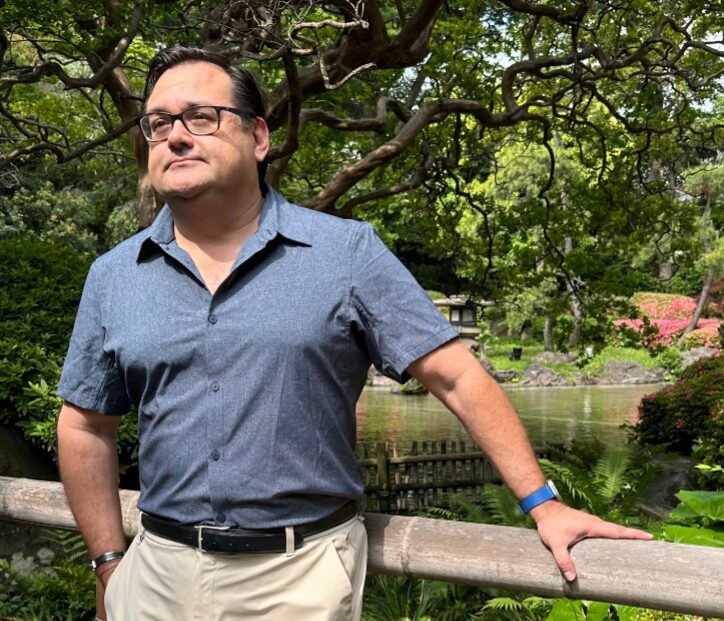
Today we’d like to introduce you to Michael Carrier
Hi Michael, thanks for joining us today. Can you briefly walk us through your story – how you started and how you got to where you are today. You can include as little or as much detail as you’d like.
I’m in a surprisingly good place in my filmmaking career today, even though it took a long time to get here. In fact, it’s been more like an around-the-world marathon than a sprint to success.
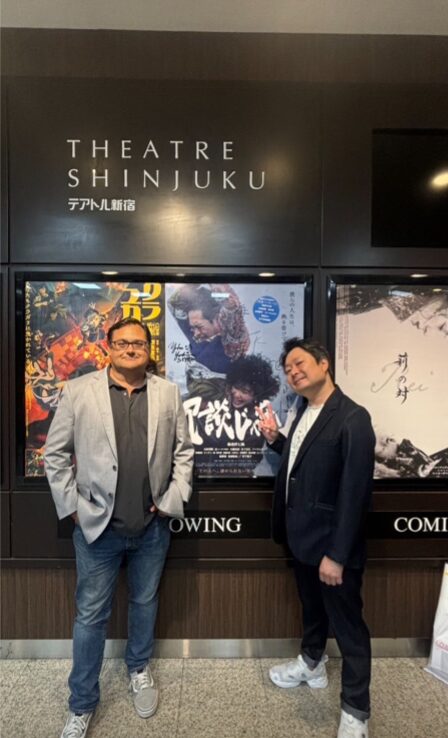
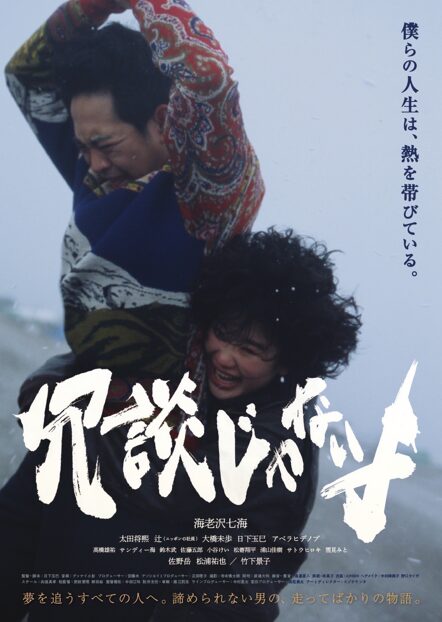
In the last couple of years, after producing the award-winning short film A MIND CANNOT TOUCH directed by Geoff Prather, we managed to setup and capitalize our two production companies, one in LA (CELESTÍA) and one in Tokyo (TOWER5). Amazingly, our first Japanese feature film JODAN JA NAI YO is still doing an extended run in theaters, and we have two more in production (TIGER and YOYOGI JOHNNY), with two more in development. And we’re doing all of that with up-and-coming directors like Anshul Chauhan (repped by CAA) and talented actors like Nonami Maho (2LDK) and Wan Marui (ASADORA on NHK).
It’s like everything has come full circle. My dream was always to make great films. As a kid, they changed my life, giving me hope in hard times and inspiring to try to do something with myself. I grew up going to the drive-in and theaters all the time with my mom and dad, and then my best friend I wrote stories all the way through high school. We went to film school at Loyola Marymount, and that’s where I fell in love with Japanese film. But I couldn’t find film related work in Japan, so I studied hard and earned a Ministry of Education scholarship to study economics at one of the national schools, Nagoya University. I loved it there, and decided I wanted to stay in Japan no matter what, so I found a job in automotive in Nagoya and then technology in Tokyo. From there, I spent another 20+ years in technology, running Hewlett Packard’s media and entertainment business in North America and then launching the digital business at Global Logic in Silicon Valley. But, in a strange twist of fate – call it karma, I guess – we were acquired by Hitachi, the 3rd biggest company in Japan. That gave me the time and resources to get back into film full-time.
Looking back, I have no regrets about the path my journey has taken. It feels like God has a plan for me, and I’m blessed in many ways. The icing on top is that all of the things I learned in international business and technology have helped me in film production. They provide a balance with the creative side, giving me a solid foundation to work from.
Has it been a smooth road? If not, what were some of the struggles along the way?
Starting film production companies across the Pacific has been incredibly challenging. We acted on blind faith initially – faith in our vision, our capabilities, our instincts. No one gave us a playbook; we’ve had to create it ourselves. So, we felt for a long time like we were operating in the dark. But, as we’ve gained experience and learned from mistakes, we’ve been able to string together some small successes. We’re even enjoying some industry recognition lately. So, we can finally see light at the end of the tunnel. And, fortunately, it seems like it’s getting a little brighter every day.
Having said that, we’ve faced all of the financial, operational and people issues every indie studio faces, plus many issues specific to Japan. By far the biggest challenge has been culture. From an audience POV, films are global, but how they are made is very local. If you try to force-fit the Hollywood style business model into Japan, it will fail. You have to work within the system, playing by the many unwritten rules (“norms”) – and at best try to change things little-by-little as you go. Decision-making is a big part of it. Just because you’re the top financier and producer on a project doesn’t mean you can ram decisions through. Japan is a consensus-based society in general, and even more so in film because the industry is highly risk-averse. Films are produced through so-called “production committees” which are meant to diversify risk and reward. They consist of multiple co-producing partners, different corporate entities. One member, even a smaller one, can essentially veto a decision even if the bigger investors agree. It has happened to us, causing us to suddenly change our deal strategy.
So, we’re learning to fit in and, when appropriate, trying to demonstrate some alternative ways of doing things. All of this takes time and effort – and money – which has to be factored into the business plan. So, we continue to roll with the punches every day, and make adjustments as we go.
We’d love to learn more about your work. What do you do, what do you specialize in, what are you known for, etc. What are you most proud of? What sets you apart from others?
In a nutshell, we make high-quality feature films in Japan on smaller budgets and tighter schedules under the TOWER5 and CELESTÍA banners. It’s said there are over 500 films made every year in Japan, but only 150 are actually distributed. The rest, sadly enough, just disappear… With that in mind, our goal is to tell compelling stories about Japanese life and culture that would otherwise not be told or seen. We try to provide a platform for Japanese filmmakers to share their unique visions with global audiences. We’re able to do that because our small team is made up of global thinkers who are able to bridge the Pacific with their multi-cultural and multi-language skillsets.
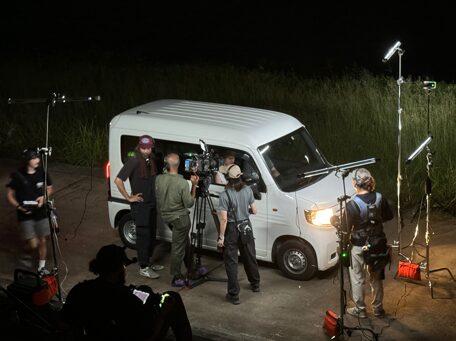
Our latest feature film in production TIGER written and directed by Anshul Chauhan (CAA) is a good example. It presents a uniquely Japanese view into the life of a gay masseuse, exposing his inner desires and goal to start a family. In doing so, it challenges traditional family paradigms and helps push Japan towards the mainstream. We haven’t seen a film like this come out of Japan yet, so it’s a breath of fresh air.
Anshul and his producing partner Mina Moteki struggled to find investor interest in this real-world story about the LGBTQ community in Japan. In spite of their previous success with three feature films (BAD POETRY, KONTORA, DECEMBER), no Japanese investors wanted to be associated with what they view as a controversial topic – showing how far Japan still has to go in this area. But we read the unfinished script and fell in love with the story and the main character. My instinct was, If we don’t bring this film to the screen, no one else will. So, we had to produce it.
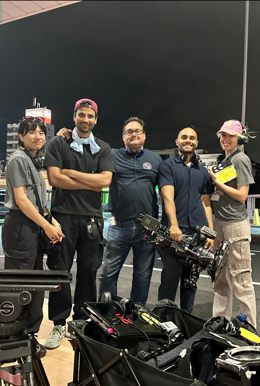
I’m convinced TIGER is going to change how people think in Japan (if even just a little) and change how people around the world see Japan. It can help create a dialog and foster better understanding – and give people the hope to carry on. We’re now making that a reality with a great cast and crew, including young talented actors like our leading man Takashi Kawaguchi (DECEMBER), Yuya Endo (ONODA: 10,000 NIGHTS, Cannes Film Festival), Haruka Kurosawa (NARU YOU NI NARU SA) and newcomer Wataru Narita, supported by top craftspeople like DP Vinod Vijayasankaran, Gaffer Fumitaka Yamashita, 1st AD Lilou Augier, and 1st AC Javi Suave.
I mean, that’s the power of film, right? And that’s why I wanted to make films to begin with. It’s what our brand really stands for.
What matters most to you? Why?
Our team is what matter most – what we call the “TOWER5 family.” It’s really the foundation of our business.
We started with just one or two contacts in Japan through Instagram. When I met the talented actor Bun Kimura (TOKYO VICE, HBO Max), we just clicked, immediately becoming lifelong friends. And through Bun, I met Wan Warui (whose face is everywhere on TV today), and through them many others. And that led to a network of friendships with other actors like Johnny Ebisawa (SANCTUARY, Netflix) and up-and-coming writer/director Tama Kusaka (YOU GOTTA BE KIDDING). That’s how we ended up partnering with some local players like Spotted Productions and Kowatanda for co-production and distribution. We’ve been able to build a team of good human beings and talented artists who just want to do what they love, but do it the right way. We’re aligned in our values, but each person – and entity – also brings their own unique ideas, capabilities and strengths. It’s all about fostering teamwork that transcends geography and language.
Contact Info:
- Instagram: @estudiocelestia, @tower5_film
Popular
-

Portraits of the Valley
-

LA’s Most Inspiring Stories
-

JordanL on ‘Breathe,’ Belief, and Building a Movement Beyond the Music
-

Megan Birney Rudert on How Access to Light Is Powering a More Sustainable and Equitable Future
-

Linda Kneidinger on Building Lasting Change Through Small Steps and Self-Compassion
-

Jolana Nika on Redefining Modern Connection Through Intentional, Real-Life Experiences


