


Today we’d like to introduce you to Xiaoli Zhang.
Hi Xiaoli, thanks for sharing your story with us. To start, maybe you can tell our readers some of your backstory.
My journey into the art world was quite a coincidence. I grew up in China from a science background family. Always passionate in drawing and painting, it wasn’t until I moved to Hong Kong for university that things really kicked off.
At first, I was on the science track, when I stumbled into an elective course on experimental drawing. The experience of art creation, together with the whole vibe of the studio, free, laid-back and even a bit messy, just spoke to me in ways I would never expected. I felt so much to explore here.
So, after wrapping up my biology degree, I did something pretty gutsy – I decided to spent two years in the Fine Art Department, during this fruitful period I soaked up everything, from techniques to art history, and most specially, I experienced an interesting cultural collision of Eastern and Western art in multicultural context in Hong Kong.
That is where things got interesting. As I dove deeper into my Chinese roots, I started seeing how much they’d shaped me without me even realizing it. This awareness inspired me to dig into Chinese traditional art and philosophy and how it relates to my life. That’s when my Lego landscape series took shape.
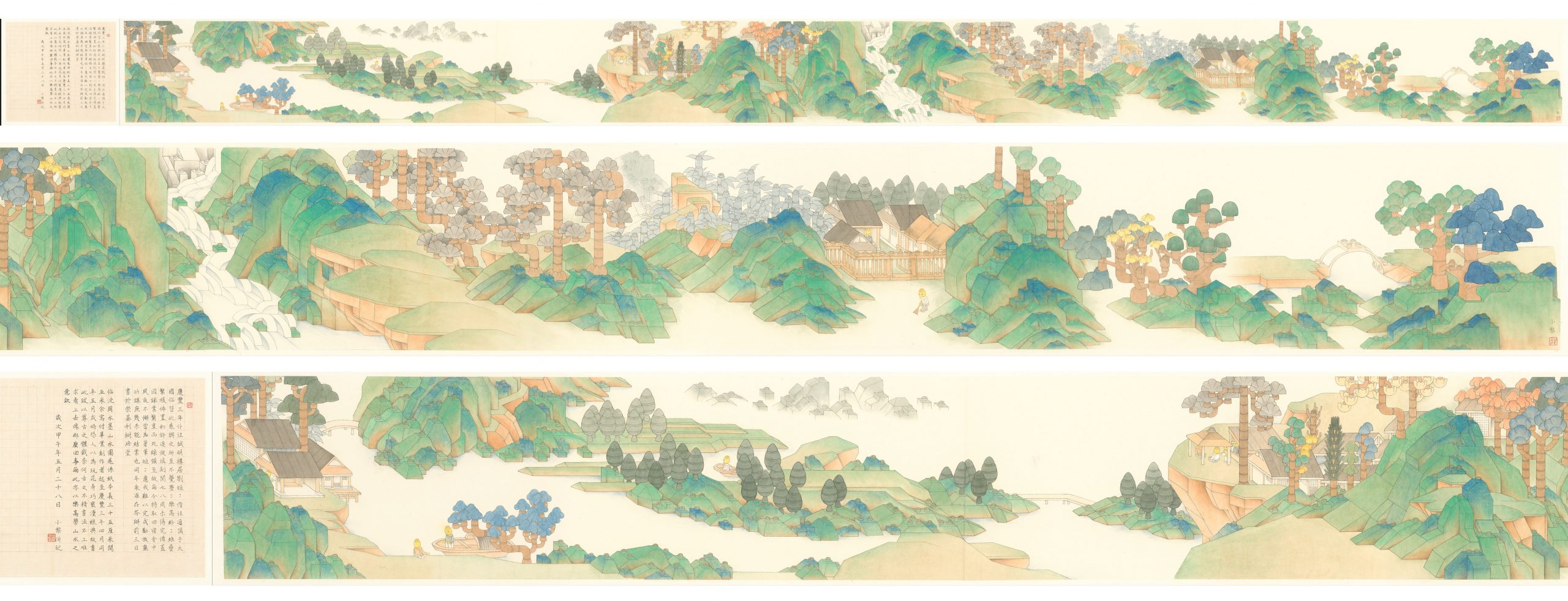
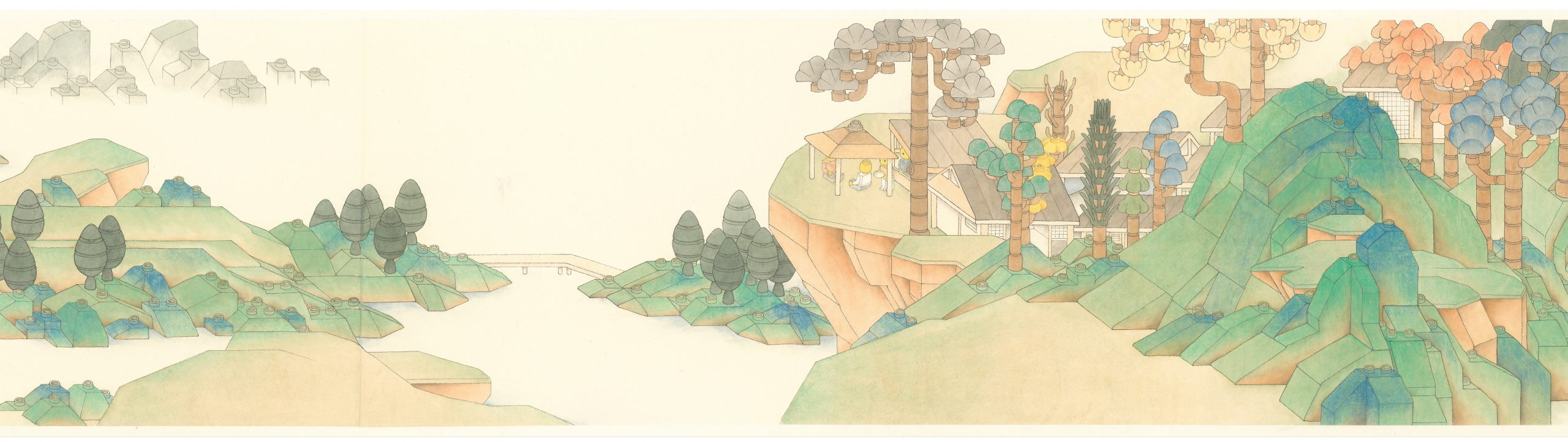
Referring to these colorful bricks we all know and love, I started creating works connecting classic Chinese landscapes paintings and modern pop culture. From a distance, they look like typical ink-on-rice-paper blue-green landscape paintings, but look closer! These are landscape made up of Lego pieces – Lego mountains, Lego trees, and even Lego literati men!
In the process, I found a personalized path into traditional Chinese landscape painting, through which I gradually gained insights into the aesthetic concepts of 山势 (mountainous terrain), 龙脉 (dragon veins), 矾头(distant peaks) and 疏密聚散 (balance of density and dispersion) — which are surprisingly applicable in the process of LEGO landscape creation.
Moreover, when exhibiting these works, they brought a lot of fun and whimsy to my audience. These Lego landscapes tickled the classics works, dissolve the perceived seriousness associated with them. They echoes with audience from various age and background, inviting them to connect with this ancient form of art with familiar and playful languages.
By sharing the fun experience with my works and exhibitions, I really want to extend my invitation to you, to join me on rediscovering Chinese landscape art. They are mysterious, containing a lot of stories, cultural and philosophical components, but don’t be overwhelmed! We can always find our own perspectives to connect, explore and inspire by them.
I’m sure it wasn’t obstacle-free, but would you say the journey has been fairly smooth so far?
My journey from science to art is not an easy path. I met with different kinds of obstacles, from mindset to technical difficulties and psychological inadequacy.
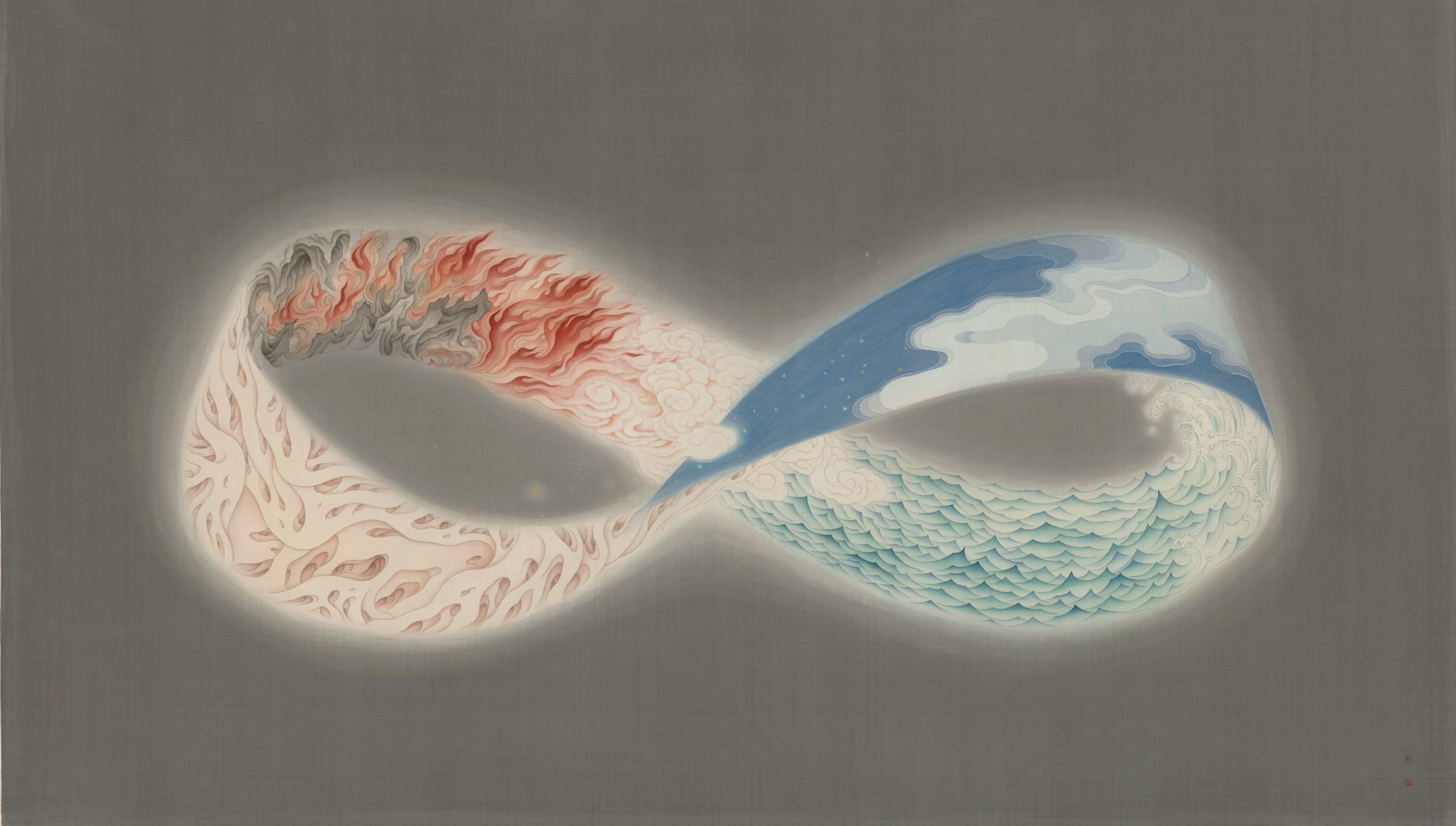
One of my biggest struggles has been finding balance between my scientific mindset and the newfound artistic sensibilities. Ideally, the two parts work together to compensate each other. But what it feels like during my creative process? It’s like juggling with logical reasoning and fuzzy imagination, practical considerations, and artistic vision. Sometimes I doubt myself whether I am creating an artwork or a diagram when it becomes too logic. On the other hand, when I let a lot sensing and improvising part out, it generates sense of insecurity because loss of control.
Over the years, I’ve come to accept this inherent instability as an integral part of my creative process. Each work becomes a snapshot of a fleeting moment, an equilibrium between opposing forces that defines my creative journey.
Thanks – so, what else should our readers know about your work and what you’re currently focused on?
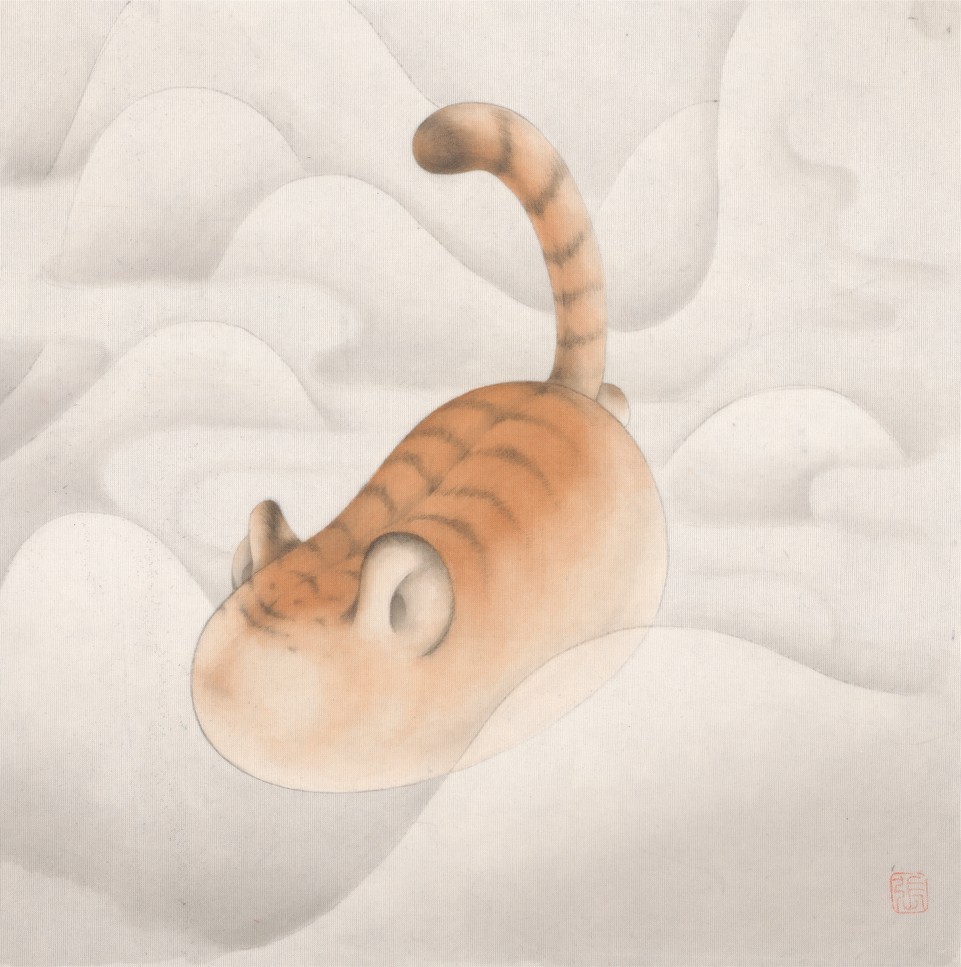
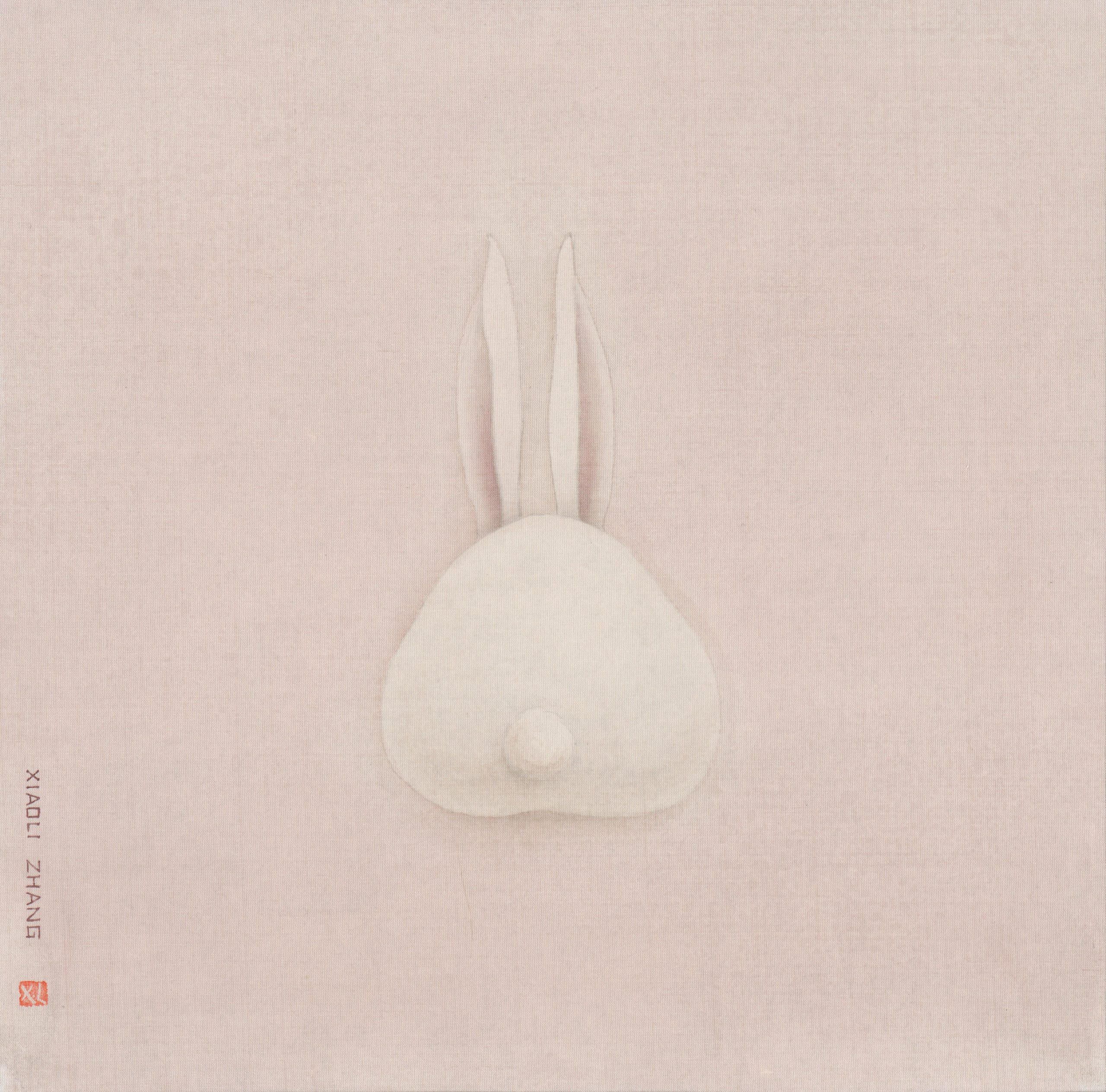
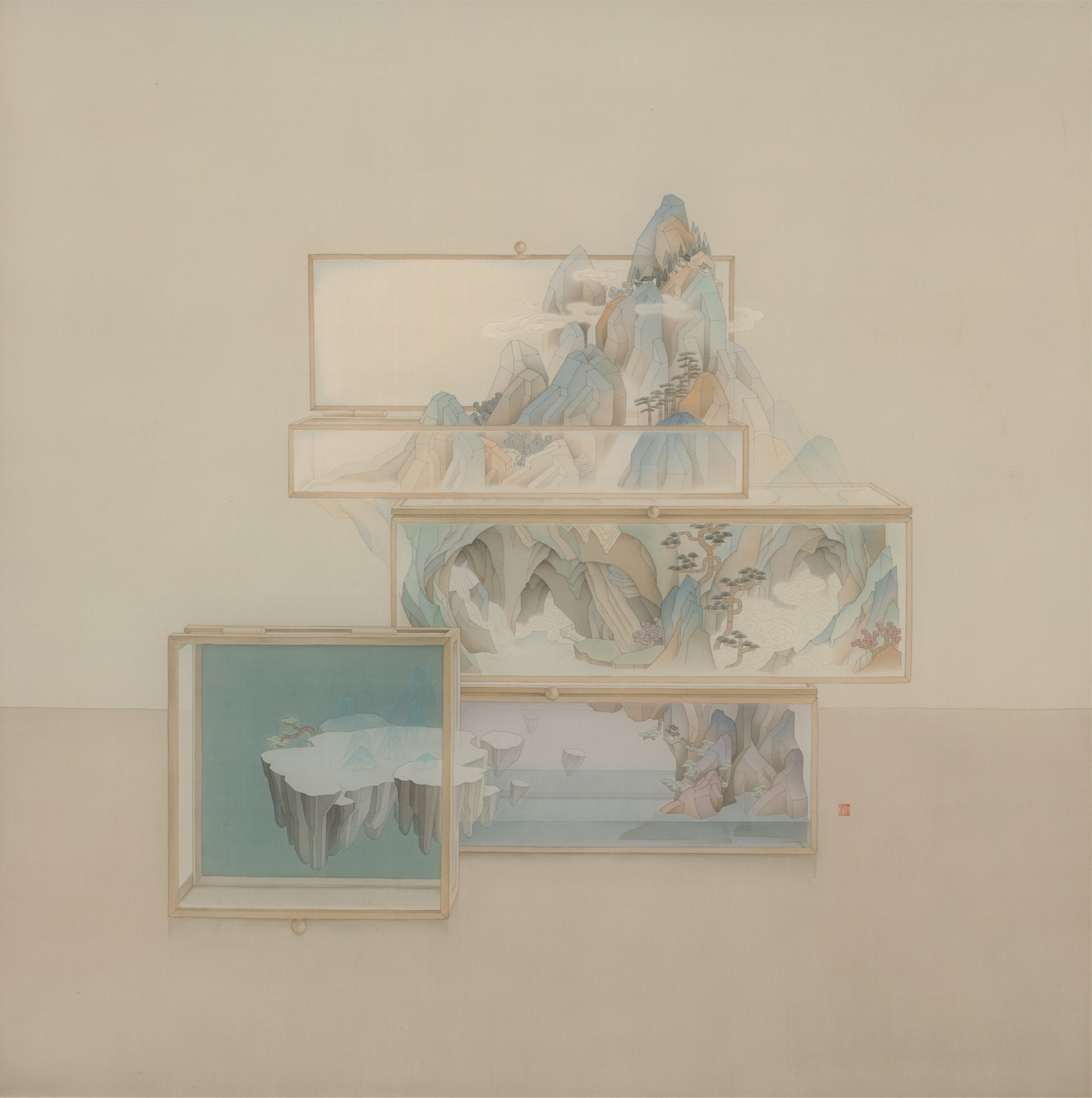
Apart from Lego Landscape Series mentioned in the first question, I also have Boxed Landscape series, which talks about consumerism and limited living space in metropolis like Hong Kong. Also, I have Mystical Landscape series, which talks about mythical and transcendental experiences related to landscapes, etc. But here I especially want to share with you my Zodiac Animal series. This is a quite playful series I painted for fun. Unlike traditional interpretations of the Chinese Zodiac, my approach deviate from the conventional images – Round in shape, with no eyes, noses, or mouths, and lacking even the most basic limbs. I decide to keep only the minimal features to create a sense ambiguity.
But don’t let their simplicity fool you – these paintings are also deeply rooted in tradition. Crafted using traditional Gong-bi techniques and natural mineral pigments on Chinese silk, they pay homage to centuries of artistic heritage.
Before we let you go, we’ve got to ask if you have any advice for those who are just starting out?
When it comes to starting out as an artist, one piece of advice that is common is about establishing your distinct style, as it makes it easier for others to remember you. There’s truth to that. However, what’s equally important is not letting the style become a limitation.
As style is not something set in stone; it’s fluid and ever-changing, much like life itself. As we evolve and grow into different stages, so does the artistic expression. It’s important to remain open-minded and embrace change, rather than clinging to a fixed notion of style.
This is something I wish I had known, allowing myself the freedom to explore and experiment more. So, my advice to artist just starting out is to embrace the journey of self-discovery, and don’t be afraid to let your style evolve naturally over time.
Contact Info:
- Instagram: https://www.instagram.com/zhangxiaoli1017/