




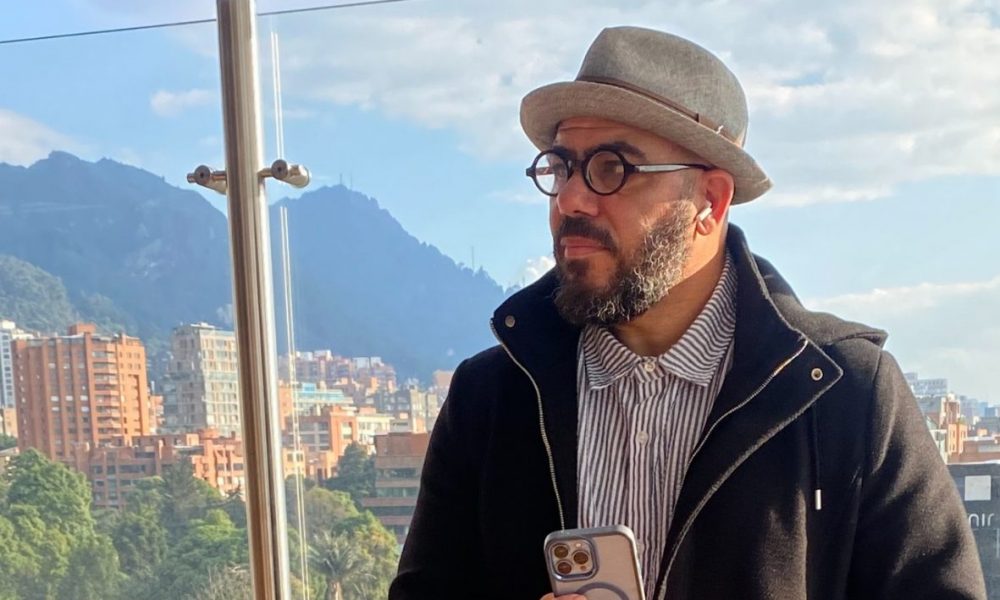
Today we’d like to introduce you to Kristopher Wynne.
Hi Kristopher, it’s an honor to have you on the platform. Thanks for taking the time to share your story with us – to start, maybe you can share some of your backstory with our readers.
Born and raised in Hollywood, I finished my primary schooling in Burbank. However, I had no interest in being in the entertainment industry through my formative and college years, oddly enough.
Growing up in the middle of the biggest media capital of the world, I was oblivious to it, I loved movies, music and the arts but actually doing them for a living felt about as possible as me being the shortstop for the Dodgers.
I was a history major with a baseball scholarship to San Francisco State University. I wanted to become a teacher and baseball coach ultimately. However, a chance call between my junior and senior years was the turning point. A friend of mine from high school, Vishal Chathle, asked me if I wanted a three-week temp job working in the shipping department at New Line Cinema. After three weeks, they offered me a full-time position. So, I dropped out of college, much to the chagrin of my parents. My parents were quick to remind me that I was throwing my education away to tape boxes. All good, sign me up!
After 7 months of working in shipping and receiving, I took a chance at being an office PA for the Jennifer Lopez film The Cell, Directed by Tarsem Singh. That was the moment my life changed, and I knew I wanted to work in entertainment from that point on.
After a few years as a PA, the work started to shift out of LA, so I took an assistant job at New Line Home Entertainment marketing and developing content. I worked my way to a senior manager position. There we developed content on franchises such as Lord of The Rings, Blade, Austin Powers and Blade, I was managing all of the digital assets for distribution. But as I grew in my position, I wanted to get my creative juices flowing, so after 5 years, I left New Line to head up the production services group at Translucent Media, a subdivision of Ambient Digital.
At 29, I was the VP of content at a startup and felt as if the world was in the palm of my hand…boy was I wrong, A combination of my career plateauing thru my early to mid-30’s lead to burn out and fatigue. The content world was hurting due to the market shift and recession, so smaller budgets and downsizing were all the rage.
I transitioned to the ad space working at One-K Studios as a writer, producer, and creative director, creating short-form content, trailers, TV spots, and commercials. I also began script writing, penning 21 half-hour episodes of Disney Publishing’s language learning program, Disney English. Once again, I was still fluttering and not completely fulfilled with the work I was doing. The ad agency life was not all it was cracked up to be, and my only solace felt like a paycheck every 2 weeks.
I moved on to New Wave Entertainment holding a similar position as a Senior Producer in their marketing division. Again, after a year and a half, I was in the same boat: unfulfilled, unmotivated, and ultimately laid off.
That was the best possible outcome I could have possibly asked for.
I had just turned 40 years old, no job, unmotivated to work in the ad space, and had a horrible car accident to boot. What seemed like I was going to take a month or two off to figure things out turned into 9 months. I was slowly draining all of my accounts to boot. I had agency job offers at an arm’s length, but something deep down told me there was more out there. I ultimately turned down two different jobs, one at Complex Media and one at Machinima, still working on what my next steps were going to be.
Again, just like the first call I got to work in the industry, my good friend, Anthony Ferrrante, who I worked on several marketing campaigns at One-K and New Wave, called and asked if I wanted to line produce a movie.
Without hesitation, I said yes. One problem, I had no idea how to line produce a movie. I gave myself one year to figure it out. Working on micro-budget features, it was a race to figure out and either move forward and branch out into bigger jobs that could sustain my cost of living or head back to the dreaded ad agency life. I was making little money but ultimately much happier doing a job that I genuinely enjoyed.
After 14 months, I had produced 7 micro-budget films.
Then, in the spring of 2018, everything changed. I landed a project as the Line Producer for the Jason Cabell’s Running With The Devil, starring Nicolas Cage, Laurence Fishburn, and a fantastic ensemble cast. This was my first bigger-budget indie film, landing at around $8M, a huge jump from the sub $1M space where I was learning how to produce. This was also my first movie abroad, with half of principal photography in New Mexico and half in Bogota, Colombia, which soon became sort of a second home/basecamp for my career.
Since 2018, I have gotten the opportunity to work in many incentivized states, producing movies in Arkansas, North Carolina, Georgia, Mississippi and New Mexico. But Colombia has become my second home, I have produced 4 movies in Colombia alongside Jaguar Bite, a Colombian production service company with a 5th coming in spring of 2024.
The last 2 films I have Executive Produced, teaming up with Mucho Mas Media to produce the Jenni Rivera biopic starring Annie Gonzalez and Manuel Uriza, directed by Gigi Saul-Guerrero, and the horror thriller Rosario, starring Emeraude Toubia, Directed by Felipe Vargas.
Long story short, I took the roundabout way to finally getting back to making movies. It took around 15 years to finally settle into the role I wanted. But everyone’s path to their sweet spot is different. Mine just took time to figure out.
Would you say it’s been a smooth road, and if not, what are some of the biggest challenges you’ve faced along the way?
The biggest hurdles have always been “playing the game.” in the agency space. The numbers game where you have to bring in a certain amount of work to justify your salary or your teams’ budgets at agencies. That, alongside the fact you are doing sales, client-facing, and making sure the business is coming down the pipeline in addition to actually developing, producing, and delivering content on time and on the budget for fickle studio and agency clients. Because no amount of steak dinners or Laker tickets can keep the work coming if the work isn’t good. The ad space is cutthroat, even within the same walls you work at.
TiI the numbers don’t justify your position; you fall victim to getting laid off. Which I found out the hard way on two different occasions.
As for freelance filmmaking, the obstacles are much different.
You have to ride the wave of having multiple projects developing or going at once, and all of a sudden, things fall through, and you have nothing on the books for months. The imposter syndrome of thinking you are no longer wanted or good enough can set in after a rough show or spells of not working. As I have gotten older, I understand how to manage and ride these waves, knowing the work will eventually balance out and knowing that producing independent films is hard. So, making mistakes is a given, it is how you react and respond to those mistakes is what matters.
That kind of accountability of admitting to yourself that you may have not done a great job goes further than blame shifting or not taking responsibility for mistakes.
As you know, we’re big fans of you and your work. For our readers who might not be as familiar what can you tell them about what you do?
I specialize in Indy filmmaking, executive producing, and managing budgets, logistics, timelines, and teams. Mostly in the $3-10M range.
I am most proud of the feedback I get from crew to be honest. As someone who manages all of the money, hiring, and logistics, I try to be as fair to the above and below the line crew as we are a team, from the Production assistants to the Producer, everyone has a vital role. I came up as a PA so I will not tolerate a department head or key treating anyone on their team with any less respect than they would a director or producer.
I think what separates me is the fact that I understand producing is more about managing personalities than the creative, the money or the schedule. Your biggest asset as a producer is knowing how to talk to people. If someone is upset, listen to them and try to understand what is happening and find a solve, quickly.
I also try and keep a cool demeanor at all times. The only times I will blow my top are for safety issues or full-blown incompetence. A creative director I worked with at One-K, Alan Hellard described me as “serial killer calm” which to this day, I don’t know if this was a compliment!
How can people work with you, collaborate with you, or support you?
If people can support the indie space, whether that means reposting articles, watching each other’s films, or promoting positivity among each other, that is never a bad thing. I try to watch as many of my friends and collaborators’ films as possible. If that means paying a few bucks to stream it, so be it; we spend more money on coffee than we would on renting a movie on Amazon. So, if you see a movie of mine or someone you know that is a pay per view, rent it, buy it so everyone can keep making films.
Contact Info:
- Instagram: kristopher_wynne
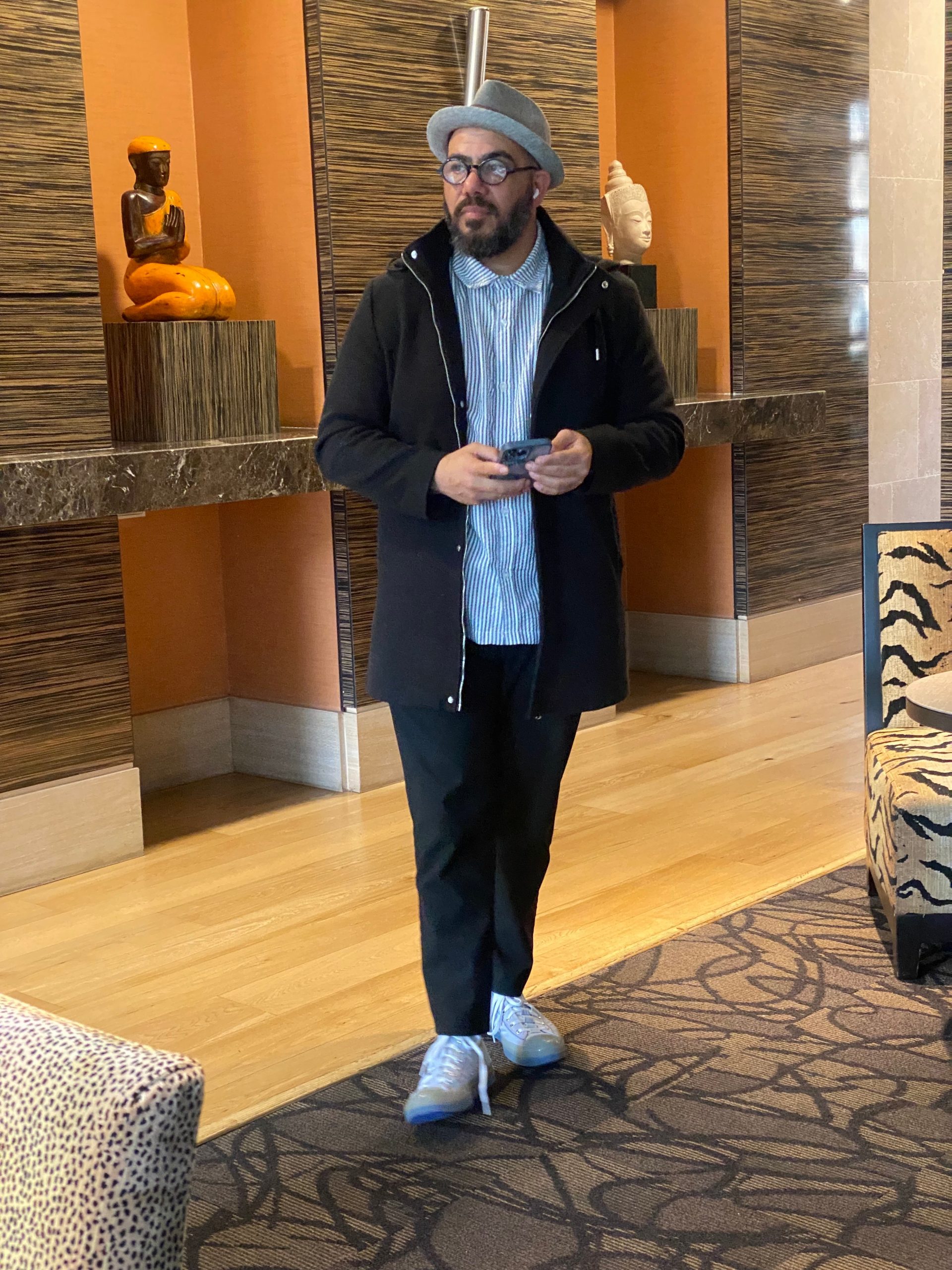
Image Credits
Simon Beltran
Popular
-

Christina Wren Steps Into the Director’s Chair to Tell Stories That Feel Like Home
-

Portraits of the Valley
-

LA’s Most Inspiring Stories
-
JordanL on ‘Breathe,’ Belief, and Building a Movement Beyond the Music
-

Megan Birney Rudert on How Access to Light Is Powering a More Sustainable and Equitable Future
-

Linda Kneidinger on Building Lasting Change Through Small Steps and Self-Compassion


