




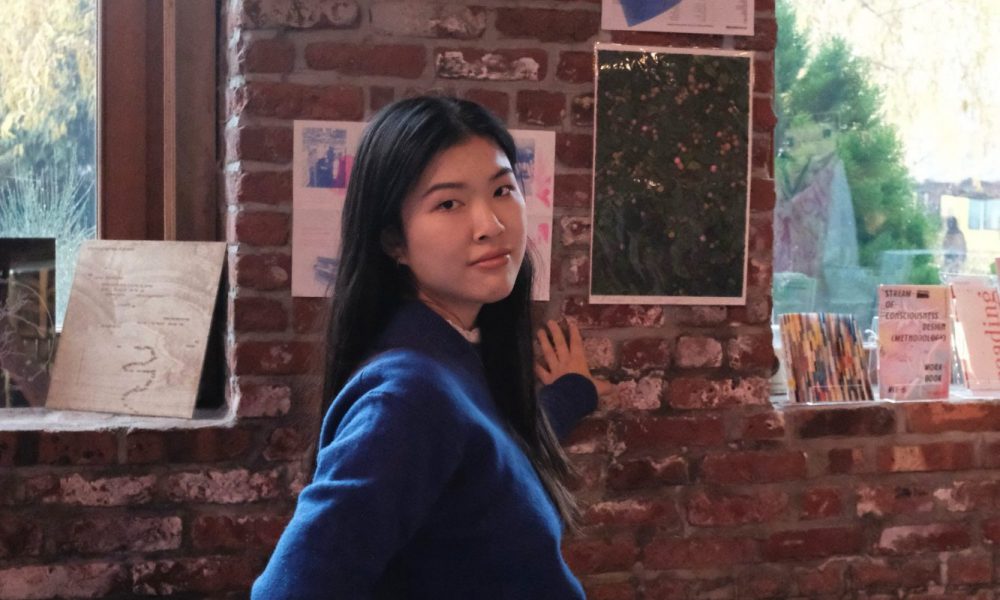
Today we’d like to introduce you to Doris Liu.
Doris, we appreciate you taking the time to share your story with us today. Where does your story begin?
I am a graphic designer who works across multiple media and disciplines, including visual identity, web design, type design, and illustration and photography. But most importantly, I’m a book-maniac.
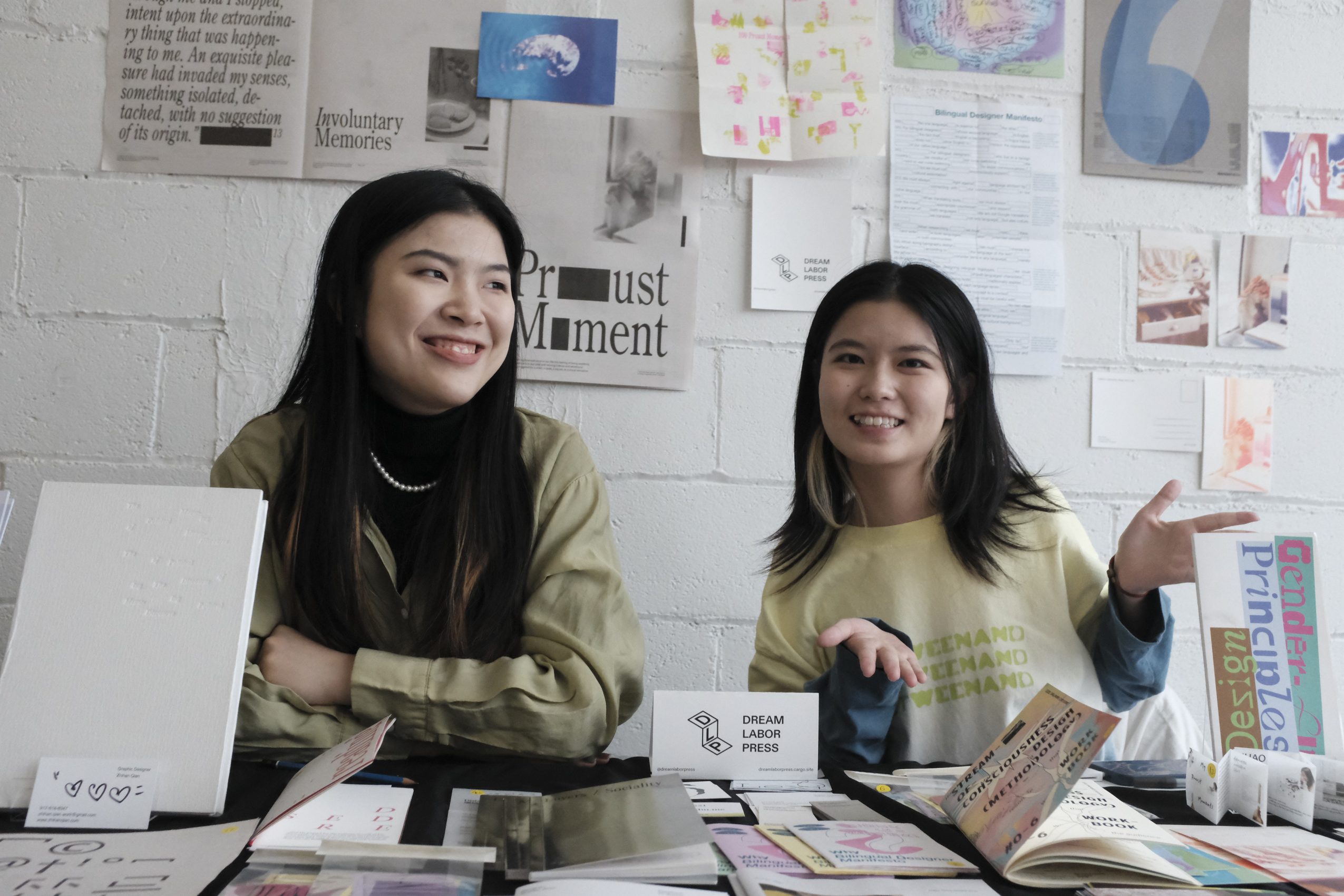
I have an almost intrinsic affinity with printed matters since childhood. When I was young, I collected candy wraps and stickers; grown up, flyers and postcards. During my study at Pratt Institute, Brooklyn for my master’s degree, I ended up making books and zines for most of the class assignments, even my thesis and capstone project. After graduation, I decided that these books, with so much devotion to them, deserved to be distributed to a broader audience. I grouped with several schoolmates who were also enthusiastic about publication design so that our application to book fairs would look more competitive, and that was how Dream Labor Press, our self-publishing practice, began.
We started with small book fairs, traveled around with carry-on suitcases, and learned lessons through trial and error. We were mentally prepared that this wouldn’t be a smooth way, so I’m grateful for every step we made. I remember posting on my social media hopelessly asking if there were anyone interested in self-publishing to communicate information with when I had little idea about this field fresh out of school. And then I came to a point when someone told me at a book fair that she had traveled across town only to buy my book. That was a dream-like moment. But it’s not about making money or being famous. It’s about communicating and resonating, that the format I chose for creating, which is books, can really touch people, and I’m really going in the direction I want to go. Now, we have met new friends who are also dedicated to publications and had many inspiring talks with people coming across us. Some other friends also asked if they could join us. The landscape in front of us has broadened as we keep going, and it’s encouraging to know there are a lot of people caring about independent publications and artist books. At this stage, I am collaborating with another artist to create a new zine. I’m always thrilled to explore new things and push the boundaries when it comes to making books.
Can you talk to us a bit about the challenges and lessons you’ve learned along the way. Looking back would you say it’s been easy or smooth in retrospect?
There were all kinds of struggles. At the time of this interview, I just received the rejection email of a major book fair we had applied to. We have reached out to independent bookstores for consignment and seldom heard back. We are still a micro press without much exposure and a strong distribution network.
As I mentioned, we started with small book fairs and traveled around. Our book fair debut was in Detroit. None of our members had a stable income then, but we were so excited that we decided to make the trip. We traveled on red-eye flights and brought our stock with carry-ons to save money. It was a lot of fun, but our sales couldn’t even make up for our flight fares. Financial constraints come in various aspects. Apart from travel expenses and application fees for book fairs, there are expenses for production. Due to the budget, I can only print my books in small batches, which then will not meet the quantity requirement at some bookstores. I can’t experiment with every printing and binding effect I want, either, so I have to work the most economical way out.
But thanks to this, I now have abundant experience with small-batch printing and hand binding, and our experience in tabling at book fairs also grows. It’s a road of do and learn, trial and error, reaching out with eagerness, and collecting every piece of information. I think this proves that as a micro self-starting press, we have our way of surviving and thriving.
As you know, we’re big fans of you and your work. For our readers who might not be as familiar what can you tell them about what you do?
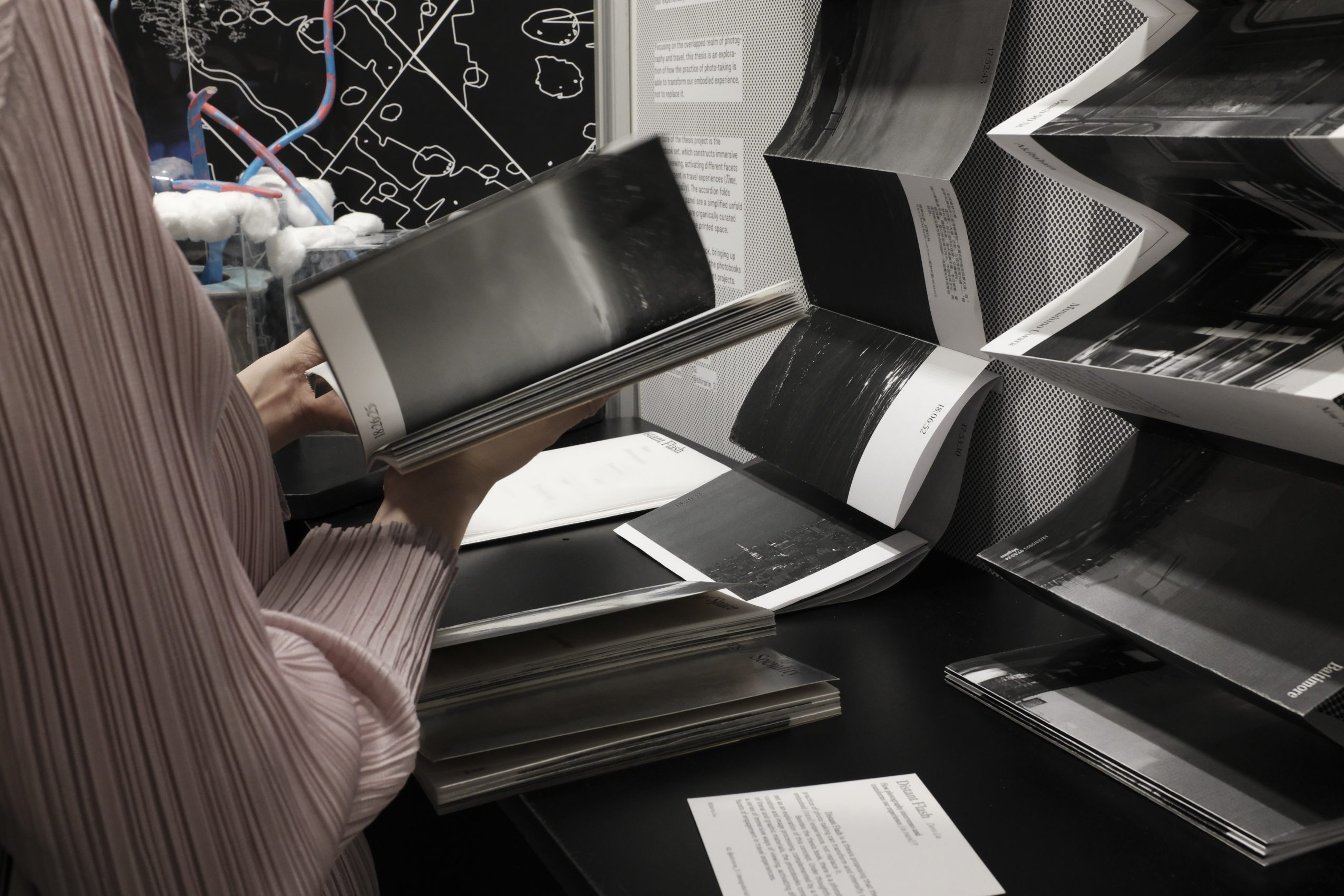
I see a book not merely as a surface. It is in itself an object of volume and weight, a furniture, and furthermore, an exhibition space. It has the potential for people to situate themselves in and interact with it. By creating immersive experiences of reading and viewing, I underline the physicality of books.
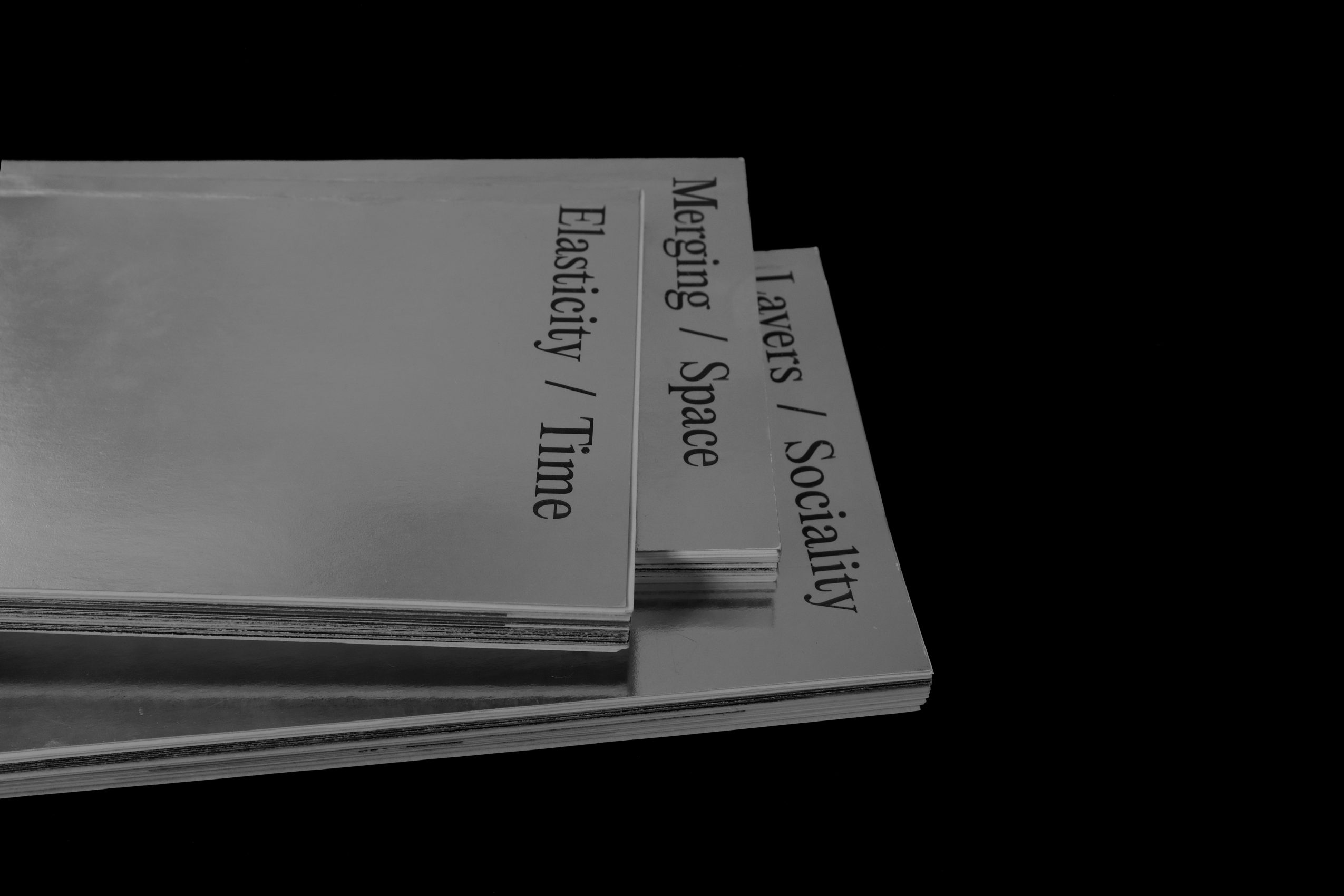
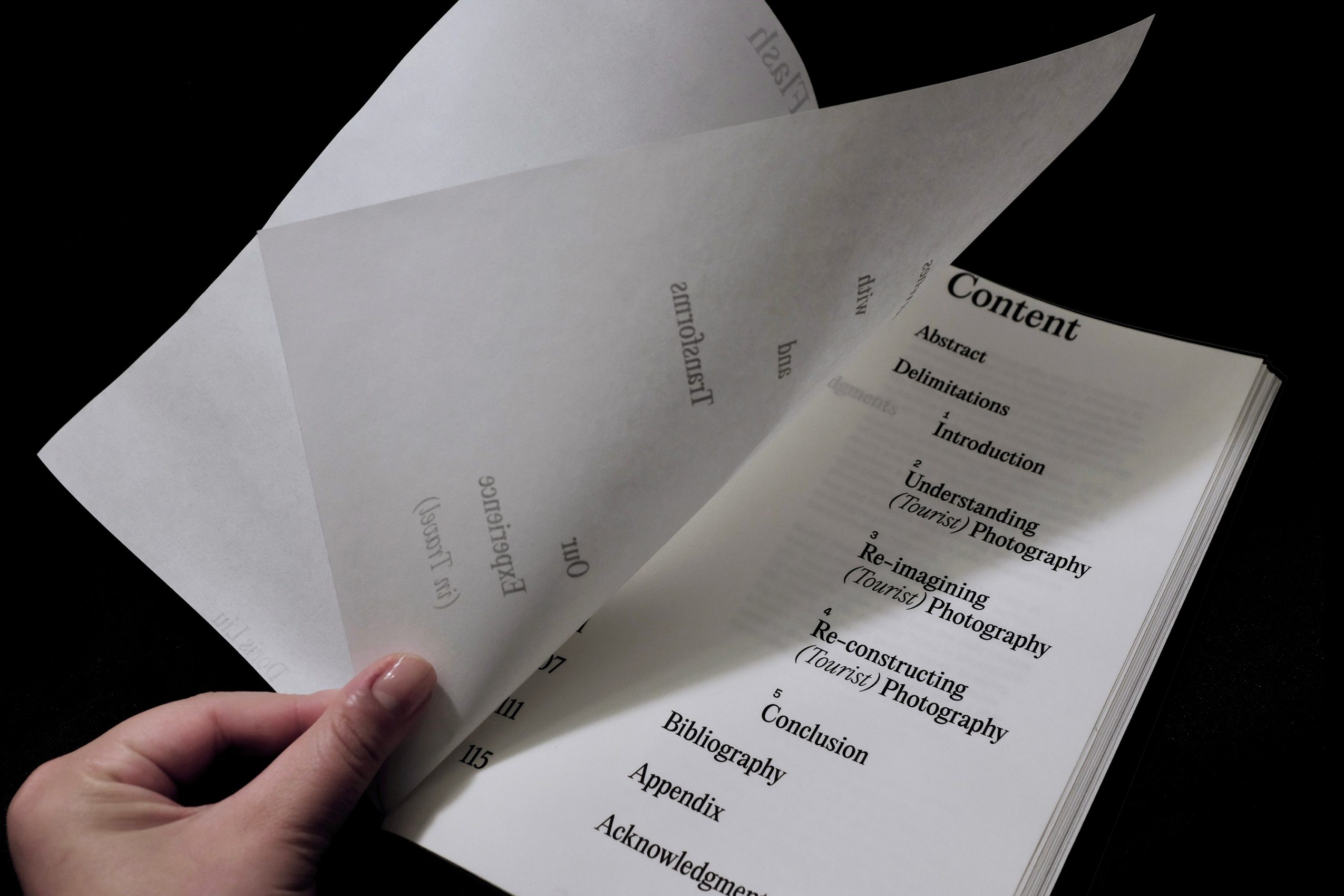
In my most completed work, the photobook set “Distant Flash”, I mixed thoughtfully chosen papers and adopted a special way of binding—every page a reverse fold, and each book consisting of two upside-down halves—to reinforce the image curation and typography. This project is an attempt to interpret the topic of tourist photography with an encouraging vision, exploring how the photographic practice is able to actively intervene and transform our embodied experience, not replace it. While it is difficult to grant the photo viewers the same experience as the photographer, I endeavored to fabricate an alternative to it. The final outcome turned out great, and I enjoy seeing people discover new ways of reading the work. “Distant Flash” was showcased at last year’s New Editions by the Minnesota Center for Book Arts and collected by Bowes Art & Architecture Library, Stanford University, and Fleet Library, Rhode Island School of Design. It was also granted the Merit Award of KTK Design Award, NewOnes Award, and the Finalist of Experimental Publication of the Year of Award 360˚.
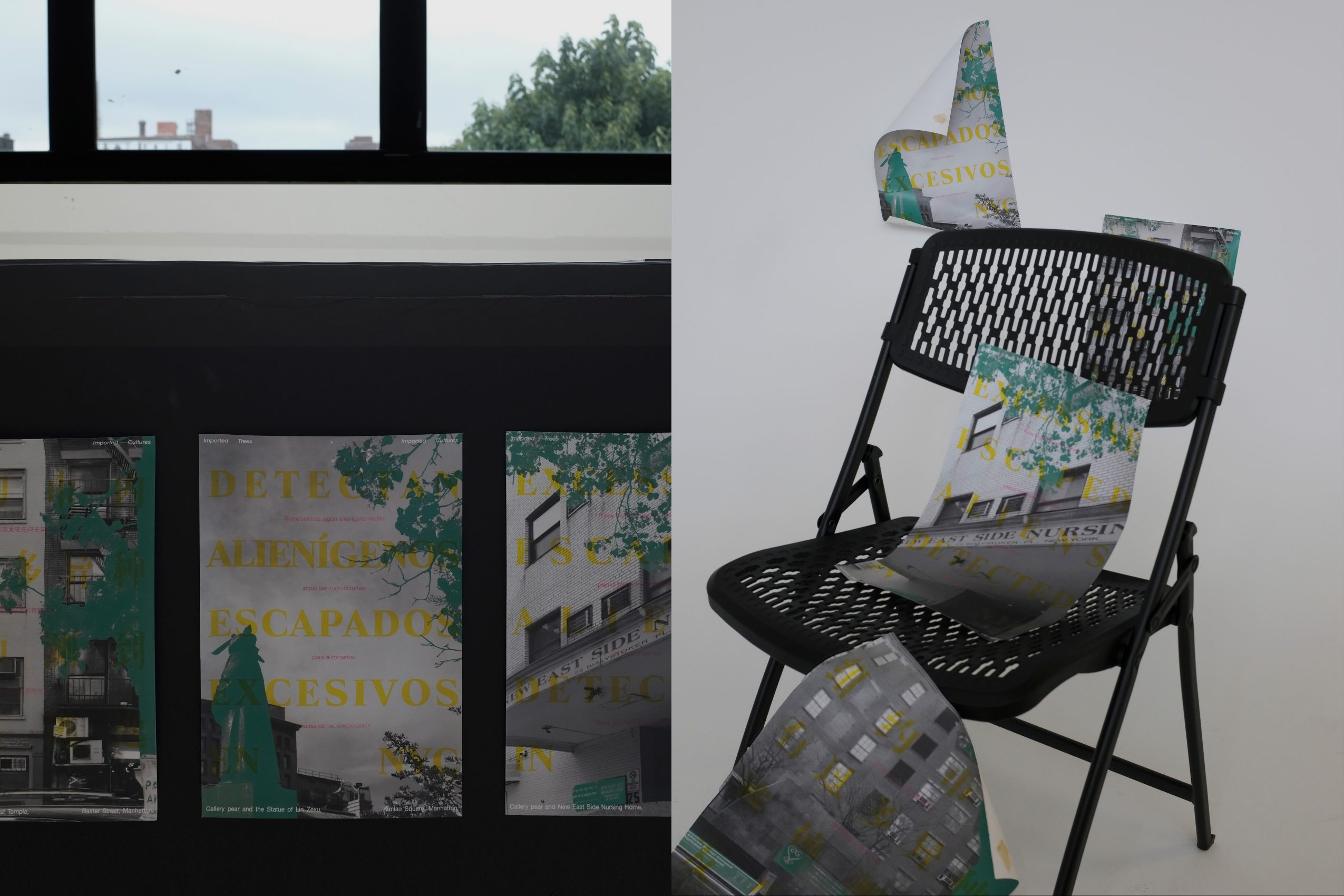
I am also obsessed with storytelling and fiction-making and play with objects, symbols, and memories. Almost every work of mine is highly relevant and specific, even personal, growing from my identities and experiences, the places I live or live in, the languages I speak, and the cultures I perceive. This tendency can be clearly witnessed in “Distant Flash”, where the materials were solely from my experience. Yet I didn’t show it as it is. Rather, by juxtaposing the personal photos with literary quotes, fictional conversations, and Wikipedia information, I practiced building associations and weaving up multiple narratives. I believe that sometimes it is the most personal that is the most relatable. I hope to arouse resonance through all the details I have depicted in my works and connect people with similar experiences and feelings.
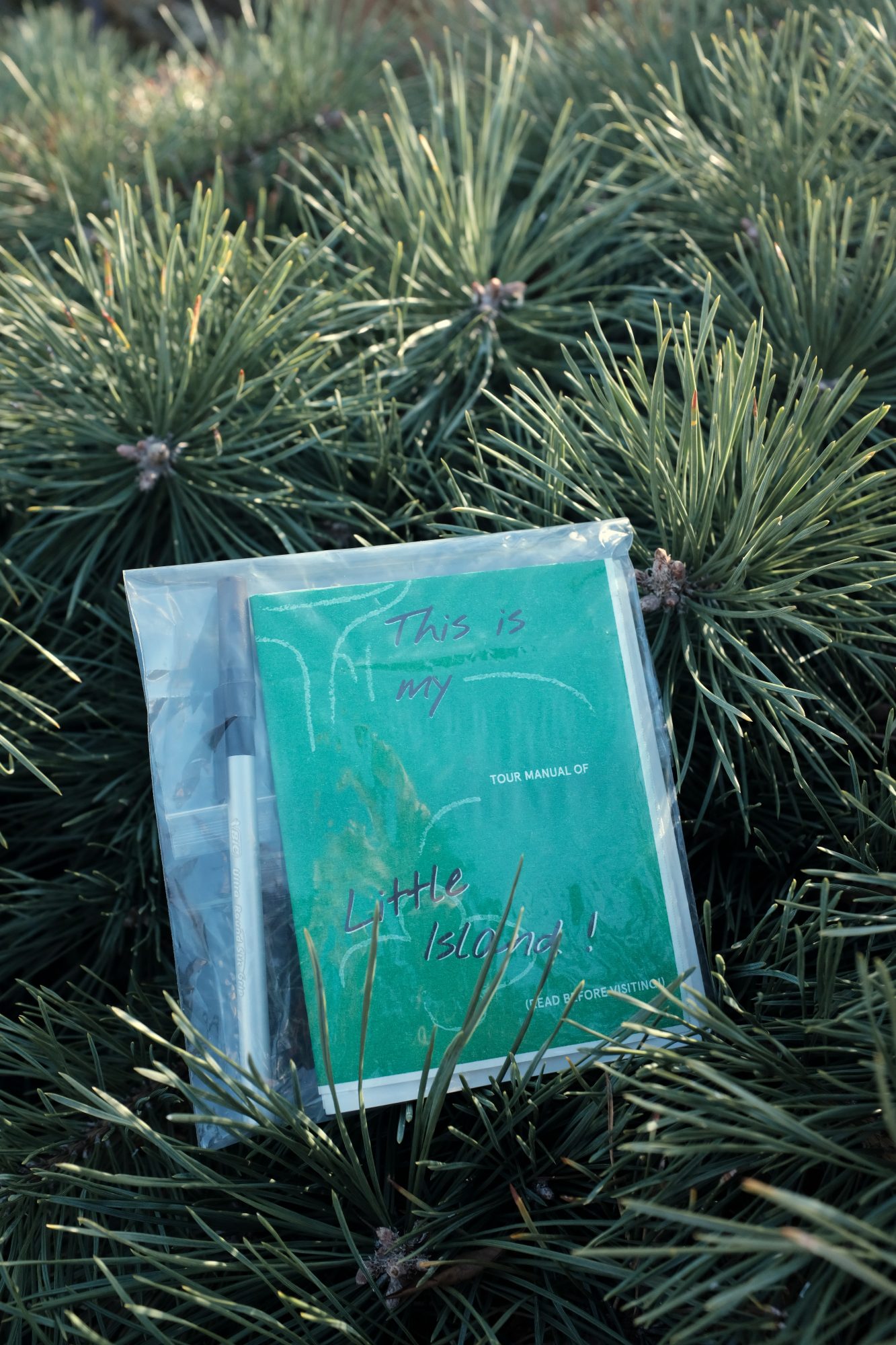
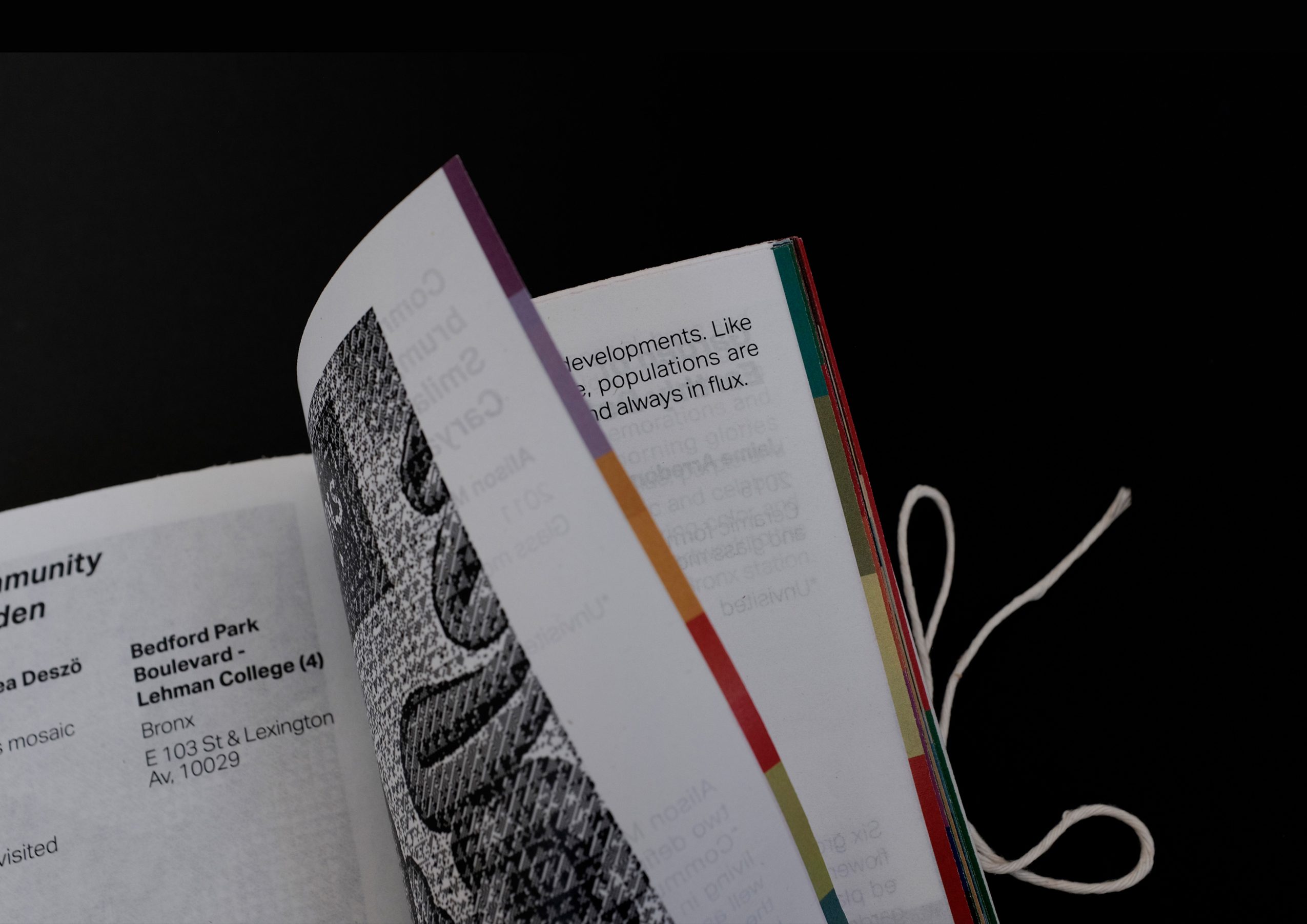
Now a resident of New York, I have edited and designed two books about this city, “An Index of Subway Station Mosaic in NYC” and “This Is My Little Island!!” During the creation of these works, I had traveled throughout the town and done thorough research on the spots. “An Index of NYC” is a homage to the kaleidoscopic shapes and colors on the walls of hundreds of subway stations, exhaustively documenting mosaic artworks along New York City Subway Lines. Photos in the book were mostly taken by myself, highlighting distinctive features of the artworks. Local though I am not, there is a unique perspective generated from my experience. This book entered last year’s TDC Young Ones shortlist.
(Links to work mentioned:
“Distant Flash”: https://designdorisliu.cargo.site/DISTANT-FLASH
“An Index of NYC”: https://designdorisliu.cargo.site/AN-INDEX-OF-NYC
“This Is My Little Island”: https://designdorisliu.cargo.site/THIS-IS-MY-LITTLE-ISLAND-Zine
Do you have any advice for those looking to network or find a mentor?
I am not a networking type of person, and this issue troubled me a lot (it still does). Apart from people I knew before (e.g. my professors), I seldom reach out to strangers, even though those whose experience I am very interested in and feel there is much I can learn from them. However, my few experiences of reaching out and chatting with people all ended up being comfortable and inspiring, to my surprise, and I am very grateful for them.
For those who are similarly unsocial and introverted like me, the key is to look for people you can truly relate to, feel close to, and be interested in, and consider networking opportunities less with practical purposes (although they might be urgent) but more with windows for fresh air. Yes, people are kinder than you would imagine and are willing to help the starters, but it is not always up to them whether they can offer the needed help (say, a job referral). It will be more enjoyable if you treat a coffee chat simply as a chance to communicate with people.
Most importantly, don’t let this overwhelm you. In this society, it is important for art practitioners to network and get to know people, but this is not a guarantee for success, and you are not to blame if you are not good at or don’t want to be good at it. Creation is always the priority.
Pricing:
- <Distant Flash> $45/set of three
- <An Index of Subway Station Mosaic in NYC> $30
Contact Info:
- Website: https://designdorisliu.cargo.site/
- Instagram: https://www.instagram.com/shirorie_3/
Popular
-
Robin Olive on Building an Inclusive Performing Arts Movement and Expanding Opportunities for Every Student
-

Portraits of the Valley
-

LA’s Most Inspiring Stories
-

Que Johnson on Building Brands That Last: From Visibility to True Market Authority
-

Christina Wren Steps Into the Director’s Chair to Tell Stories That Feel Like Home
-

JordanL on ‘Breathe,’ Belief, and Building a Movement Beyond the Music


