




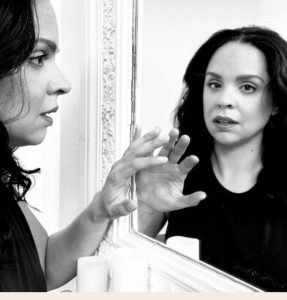
Today we’d like to introduce you to Olivia Durant.
Hi Olivia, so excited to have you on the platform. So before we get into questions about your work-life, maybe you can bring our readers up to speed on your story and how you got to where you are today?
I was born in Pittsburgh, PA and categorized as legally blind. I could only see color smears and vague shapes. My parents abandoned me when I was only a few weeks old. I didn’t have any other family in my corner rooting for me or making sure I had access to the accessibility services that I needed. I was just considered a burden to be passed around from stranger to stranger.
I struggled in school because without any advocacy, Most people incorrectly assumed I was stupid. I also didn’t know what other people were seeing to be able to compare their world to mine. My personal situation was all I knew, never understanding how different the lives of others were versus my existence. I was just born this way. I thought what little I saw was normal.
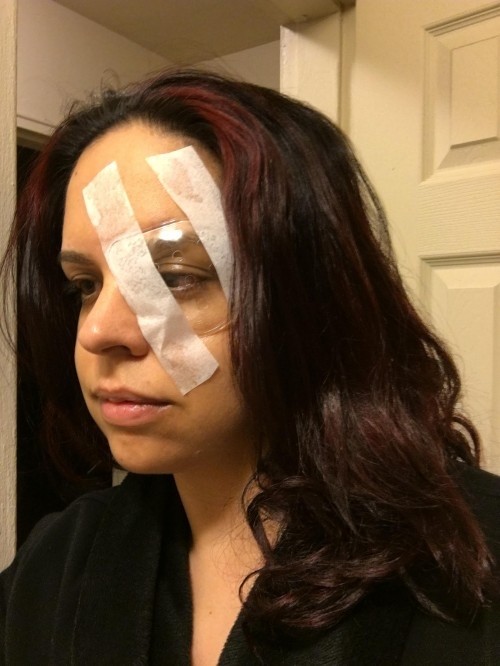
I honestly don’t think I understood the severity of the situation until after I got my eye surgery in 2016.
Blindness is a spectrum. Only about 10% of people who are classified as blind have no ability to see anything. Most blind people have some sort of light perception or cognizance of vague shapes.
My eyes are shaped like ovals instead of circles, so I basically had a microscope lens to perceive all of life through. While I could see immense detail up to about half my eyelashes, there was nothing beyond that other than indistinct shapes and colors clouded over by floaters, flashers, and something that still looked like an oil slick on fire to me.
I was homeless at 18 and worked my way through college at Rutgers University in New Jersey. I excelled at problem-solving, making the best of what little I had, and accepting help whenever it was offered. I accepted my limitations, assuming they would never change.
I think most people would be surprised how much they can achieve if they don’t pay attention to the negative and harmful messages permeating in the world around them.
Technology and libraries have always been a safe haven for me. In 2016, four surgeries gave me eyesight for the first time and changed my life. I did wind up being homeless for a second time because of a divorce. I lost everything and took a 1-way flight to Los Angeles – a city where I felt it might be possible to define myself and make a fresh start.
It was probably the hardest time of my life – most people don’t have to learn to see while also navigating upheavals and traumatic life changes.
Ever since then, I’ve worked my way out of every setback. I am more successful than ever in my life – enough to have my own 1200 sq ft loft in LA. I work in Tech Innovation and pride myself by advocating and empowering other people who may not be represented or heard. I make sure they have an identity and a voice.
I was denied the opportunity to study the arts growing up. I moved to Los Angeles to have the freedom to figure out who I was and what I wanted to be. The great thing about this city is that nobody will shame you because you decide to take up playing guitar in your 30s.
Los Angeles allows people the freedom to reinvent themselves a few times until they get it right.
Can you talk to us a bit about the challenges and lessons you’ve learned along the way. Looking back would you say it’s been easy or smooth in retrospect?
When many people say they moved to Los Angeles with just two suitcases, they sometimes mean they have a family who will back them up if they can’t pay their rent. I didn’t have anyone like that. I had to succeed.
Learning to see in your 30s is also not the easiest thing anyone ever did.
Alright, so let’s switch gears a bit and talk business. What should we know about your work?
I have worked in tech innovation for many years. I am most attracted to projects and products that make people’s lives easier and where I can encourage accessibility.
My perspective quite literally sets me apart. I also am a keynote speaker for events interested in my perspective.
Where do you see things going in the next 5-10 years?
AI is going to eliminate some repetitive parts of jobs. I think it should be used to work with humans instead of against them.
Contact Info:
- Website: OliviaDurant.com
- Instagram: www.Instagram.com/OniDurant
- Linkedin: https://www.linkedin.com/in/olivia-durant-b63b5630?utm_source=share&utm_campaign=share_via&utm_content=profile&utm_medium=ios_app
- Twitter: http://www.x.com/OniDurant
- Youtube: https://youtube.com/@OliviaDurant
- Other: http://www.tiktok.com/@onidurant
Popular
-
Cedar Boschan on Elevating Black Music Rights and Driving Urgent Conversations Around Credit, Equity, and Artist Protection
-

Portraits of the Valley
-

LA’s Most Inspiring Stories
-
Robin Olive on Building an Inclusive Performing Arts Movement and Expanding Opportunities for Every Student
-

Que Johnson on Building Brands That Last: From Visibility to True Market Authority
-

Christina Wren Steps Into the Director’s Chair to Tell Stories That Feel Like Home


