




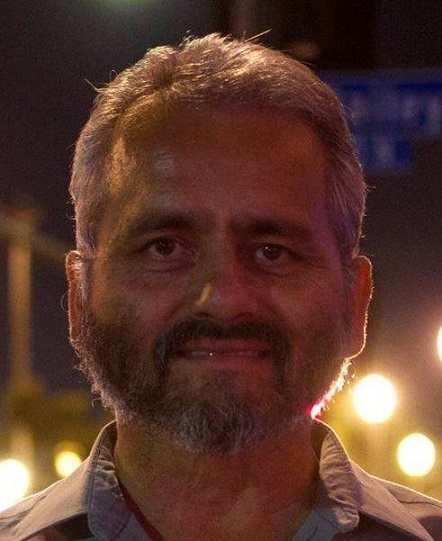
Today we’d like to introduce you to Carlos Ortez.
Hi Carlos, we’d love for you to start by introducing yourself.
I think I have been passionately active in so many things all my life. I was born in 1962 in a small town in eastern El Salvador, Santa Rosa de Lima. A town that since my birth has barely doubled its population, from 6,000 to 13,500 people. The explanation is very simple, the east region of El Salvador has always been neglected by the governing authorities of the country. The migration rate is very high due to the lack of opportunities to better the living of the family. My family was not the exception. Once my father lost in 1968 a fraudulent election for mayor of the town, we moved permanently to the capital city, San Salvador. We missed by few months the 100-Hour War (or the Soccer War) between El Salvador and its neighboring country, Honduras. Santa Rosa was directly impacted by that war because of its proximity to the border and its historical trading relationship with Honduras.
My feelings towards the poor, which later became my preferential option for the poor, began in that small town. I remember that my first act of solidarity was taking off my shoes and walking barefoot to my school. I used to see my school friends barefoot and I felt uncomfortable wearing shoes when most of them didn’t have shoes. That was not an idea shared by my mother, who punished me at home for my “act of solidarity”.
In San Salvador, the family struggled financially for few years until my father became the owner of a gas station located in an industrial/commercial corridor (Boulevar del Ejercito Nacional) implemented during the past military dictatorship to modernize the country. Indeed, my father made the business very successful in few years and my siblings and I were able to enter excellent private schools. That’s how I made it to Externado San Jose, a Jesuit school, during my 5th grade until I graduated from High School. This educational institution formed the core of most of what my life would become: conscious discipline, sports, social activism, academics, and the constant search for the truth. That type of education was a lethal weapon against the existing military dictatorship. Therefore, the school, teachers, some students, and some families were always targeted, in many instances violently, by the militaries obeying orders from the rich, the oligarchy of the country. In 1980, under the scenario of fearing for your life, having graduated from the Jesuit high school, being active in catholic youth groups (social activism), thinking to become also a Jesuit priest, and so on, my family decided that I should leave the country for a while until that hostile environment would decrease. I left to the US for only two years that later became a journey of over 41 years already. The armed conflict that started in 1980 in El Salvador extended until 1992 with a peace accord between the military and the guerrilla forces.
By the time the armed conflict in El Salvador came to an end and more than 75,000 lives were lost, I had met my ex-wife Patricia, we had started a young family of two girls (Angela and Andrea) and the boy (Carlitos) was on the way. During those 12 years, I had become a Mechanical Engineer and an expert in soil and groundwater remediation systems design while working in environmental consulting companies, had become a full-blown peace social activist, and had barely started to become interested in naturopathic medicine which became my real passion.
As an environmental engineer, under the technical career mentorship of Sam Unger, a chemical engineer from UC Berkley whom I met in 1990, I worked in the private sector for small consulting firms as well as large engineering and construction companies such as Jacobs Engineering and Bechtel Corporation. I worked in cleanup projects ranging from small gas stations to entire military bases. Not too many engineers in their early 30s are fortunate enough to be the main design engineer (other engineers, geologies and technical people worked on it, of course) of a 10-million dollar environmental cleanup system that should last 100 years of operation (maintenance included) to intersect a migrating plume of groundwater contaminants from a military base (the Marine Corp Logistic Base, Production Plant in Barstow, California) to drinking water wells downstream. I worked for two consulting firms for that same project, one to initiate the design, the other one to finalize the installation and start the operation. I can still see the system in Google Maps standing on the east end of the Base from almost 25 years ago. I am assuming it is still working, otherwise, they would’ve removed it already. All those projects were fun to work with, the problem was that little by little the industry started downsizing due to the lack of funding and the emerging new legislation were clearly favoring the polluters more than the public with the cleanups of contaminated properties including the groundwater beneath (our potential drinking water). Environmental social activism was not and has not been pushing hard enough since the 60s and 70s in our country and cities.
Under those circumstances, I left the private industry in 2000 and got a job in an environmental agency from the State of California, the Regional Water Quality Control Board, as a Water Resources Control Engineer safeguarding the groundwater quality of Los Angeles. I worked there for 17 years until my early retirement in late 2017 to concentrate my efforts on the restaurant that I had initiated in 2010. Although the feeling of doing something good for the environment from the work you do every day is great, the industry I had left in the private sector was basically the same in the public sector. Similar to the experience in the private consulting firms, the public influence in those agencies was very low compare to those of the corporate sector. Again, the environmental social activism was not and has not been pushing hard enough since the 60s and 70s to hold corporations totally accountable for their pollution. In my opinion as a former remediation engineer and environmental regulator, the corporations have been and still are the main polluters directly and indirectly of the soil and groundwater in our country and city. Currently, a lot of the cleanup of those polluted properties is driven more by redevelopment projects envision by the corporate world than meeting cleanup goals, specially the groundwater (our drinking water).
Since 1982, the social activism that I had started as a 16 years old in El Salvador with a catholic youth group, my adopted preferential option for the poor, and my plans to become a Jesuit priest found solid grounds in the Los Angeles of the 80s, 90s, and all this new millennium. I passionately deployed myself though peace marches along Broadway in DTLA to stop military aid to Central America by the Reagan administration, collaborating with Fathers Mike Kennedy and Luis Olivares in La Placita church (Our Lady Queen of Angels Church) sending letters to the offices of politicians in Washington including former Delaware Senator Joe Biden (very young Senator by then), helping create a home for central American refugees in Hollywood, and attending political lectures and rallies in local universities, colleges, and churches. I had been involved in lots of activities in solidarity and against all the wars in the middle east. Activities that continue to move me deep inside even if I am in a different city or country. I am one of those that firmly believe the streets belong to the people, specially, when you know your just cause has not been heard loud and clear yet, even in the middle of a pandemic.
We used to serve hot lunches, and also breakfast, to private and charter schools from 2005 to 2010 as Un Solo Sol Food Services. Los Angeles and California may remember that public education was devastated with the 2009 budget cuts by former Governor Schwarzenegger. Well, the high school we were serving hot lunches was delaying payments too much due to those budget cuts, which made the program inoperable. With a pain in my heart, in 2010, we had to stop serving the children and started serving the general public.
I opened the front door of Un Solo Sol, a restaurant, in October 1st, 2010 while I was still working for the State of California. I started opening only weekends from 5:30 to 10 pm, sometimes up until midnight. The initial menu was a compilation of plates from our healthy hot lunch menu. It included the pozole recipes of my ex-wife Patricia and some optimized recipes from the tremendous helping hand of my girlfriend Sandra, specially the saltados.
Since July 28, 1992, I became passionate about natural healing and food being one important part of it. I started learning naturopathic medicine on my own. Later, I took more formal courses, seminars, and even obtained a certificate as a natural healer. Like anything else, it has been a gratifying learning process due to the fact I was able to heal myself from ailments related to food intake, stress, and unnatural general practices that detaches you from the animal in nature, the homo sapien that you supposed to be. In short, that’s the background behind the still changing menu of Un Solo Sol. The sincere attempt to provide real food as healthy and nutritious as possible to the diverse community of Los Angeles through eclectic dishes that honor every culture on earth.
Over the months and years, we continued to add days and hours and more employees: from one cook to two, to four, a dishwasher, two or three servers in the front. Although we did deliveries to Downtown the first two years, we had stopped that practice and served most of our customers in the dine in area. We used to have live entertainment on a small stage by the front window which featured on a regular basis a guitar singer, trios, and bands. We even had Rocio Ponce and friends performing flamenco on that small stage! It was a fun start and promotion for the local artists, and of course, us. We regularly displayed on our walls art and photography from local artists, too. After the 5th year in business, we had to remove the stage to add more seating space. Customers were showing up in big crowds.
I couldn’t leave my activism behind while running the restaurant. This time the community of Boyle Heights became my new fertile ground for that. Boyle Heights has been historically the third poorest community of the City of Los Angeles, since the 1930s the anarchists organized the garment workers in this neighborhood and art and social activism has followed since then. Well, with the help of friendly social activists within a nonprofit organization, East Los Angeles Community Corporation, we were able to create a merchants association in December 2015, the First Street Community Businesses-Boyle Heights Association. In 2016, as an association, we were able to launch five monthly festivities of Noches de Serenata (Twilight Serenade) in Mariachi Plaza. These festivities were our sincere and peaceful way to send a clear message, through art and culture, to the obscure forces that are displacing the community that we were ready to resist their selfish plans.
With the retirement from my job with the State of California, my latest passion seems to have started, acting. I have been helping with what I call “doing homework” with young filmmakers. My first participation was in an advertisement short video contest sponsored by BuildBuyUSA, 1 minute 21 seconds long, which won the Best Nonsong award, yeah! I played a retiree worker, tired of working so hard and already laying back, hahaha! Thank you for the invitation, Shireen! The next one was a short comedy 3 to 5 minutes long about the silent language that happens between couples at home. Thank you, Cecilia! Then, three more shorts which include playing the role of a Persian dad, an immigrant Latino dad, and the old adult of a love story. The production of the last two has not finished yet. Nonetheless, I had a lot of fun with all of them. I have been recalling my acting classes in Externado back in El Salvador with my beloved teacher Carlos Gonzales who was assassinated by the military dictatorship for his activism in the teachers union. Certainly, I have also learned new techniques from the young filmmakers I’ve been involved with.
The years 2016 and 2017 were the peak of our sales at Un Solo Sol. We ended up having a total of 14 employees. We started opening 6 to 7 days of the week for lunch and dinner. Nonetheless, I knew another cyclic recession was heading our way despite our peak sales. I started making operational changes and arranging our interior to serve breakfast, lunch and dinner. In 2018, we started experiencing a reduction in sales and I thought this was definitely the beginning of a new cyclic recession like it happened ten years earlier, in 2008. The first ones to experience a recession are always the poor communities, like Boyle Heights, and the last ones to come out of it, too. In 2019, we started to let some employees go and decided to start opening for breakfast to expand our reach and avoid reducing my workforce. That did not work too effectively because the economy continued to decline. Finally, we made it to March 2020 and our sales did collapse like most businesses. The COVID-19 economic disaster was on board.
All the business strategic plans and interior arrangements to survive the new recession were defeated with the first and second shutdown. I didn’t closed Un Solo Sol the rest of 2020 but was reduced for the remaining of the year to my main cook, Maria, and I. Everybody had to go home, our sales had collapsed. Aid from local, state, and federal government were not coming any time soon. The first aid for Un Solo Sol came really from our own community Boyle Heights and personal friends from outside Boyle Heights through a GoFundMe campaign, then a catering service to Korea Town sponsored by a church for the poor in their community.
I came up with the idea to use part of the GoFundMe funds, the money made from the Korea Town catering and couple of additional caterings to local nonprofits to bring back my second cook, Gina. We started sponsoring 24 free meals for the community five days a week. Most of those meals were for the mariachis that were totally out of job and without any government assistance. If I remember well, we served those meals for at least the first 12 weeks of the pandemic. We stopped when we clearly saw that aid was coming to the community.
We had to reconnect Un Solo Sol almost immediately to all the delivery companies that we had left since 2014 or 2015 due to their increasing charges for delivery service (from 10% to by then 20%). It was terrifying to learn that they were going to “help us” during the pandemic and charge us 30% for the service, shame on them!
The first significant aid finally arrived in June 2020 in the form of the first draw of the Paycheck Protection Program (PPP) funds just to bring back a couple of employees for few months due to the fact that sales continue to be extremely low. The “second aid” came in the form of a loan just enough to pay for all debts from revolving credits and accrued interest for several months including many overdue bill payments. Business was able to stabilize with those aids. We continued to operate for the rest of the year getting a couple of very small grants from the State and Federal Governments which made us survive for the next year. No matter what we tried customers were not showing up as they used to. By February 2021, we were forced to close temporarily and let everybody go for a while until we were able to secure some additional funds from the Federal government. Then, we had to face the difficulty of finding workers while many of them felt better collecting unemployment benefits than working. We would train employees for weeks and they will go back to continue receiving their unemployment benefits. We were forced to closed the second time because our limited aid funds were decreasing rapidly under that scenario. Finally, we reopened once again when we saw more economical activity, workers returning to offices, and workers willing to retain their jobs.
The aid funds acquired last year in terms of the second draw of the PPP (used only on payroll) and the Restaurant Revitalization Funds (RRF) are coming to an end shortly. The low sales scenarios described above have continued with very little changes. As a matter of fact, starting 2022, due to the new panic with the COVID variant Omicron and the natural low sales related to prior December expenses, the sales in most restaurants have dropped significantly. Who knows if Un Solo Sol will be able to survive this last blow, most likely not, without government assistance which is coming in very slow!
Can you talk to us a bit about the challenges and lessons you’ve learned along the way. Looking back would you say it’s been easy or smooth in retrospect?
Life is full of obstacles and challenges and I have put up a struggled with most of them all along. Your perseverance, self-confidence, and acceptance of what is real and possible to achieve reduce those obstacles and challenges to a minimum.
In high school, I will always excel in subjects related to mathematics, physics, social science, philosophy, and sociology. I was always weak on subjects that required lots of memorizing, like biology and chemistry, for example literature was a weak one. However, as an adult I became more interested in social science, political literature, universal history, probably, because by that time I was already tired of math, physics, chemistry, and science in general and I needed something else to cool off hahaha, not really. It was mostly related to my commitment with social issues.
Similarly, in sports and specifically in soccer, I started to play soccer when I was already 11 years old. My first position in a team was goalkeeper. I was a disaster, no talent for it. Little by little, I made my way out of it to a defense position, at least. Then, during the end of school vacation, I was probably 12 years old. I master a lot of techniques with my friends in the barrio and came back to school as an expert with the soccer ball. Probably, the next biggest challenge was to be a regular in the school team. There was no left forward. If I wanted a permanent position in the team, I had to master my unnatural left leg abilities and I did so. Up to this day, I could claim that playing soccer, my left leg is 95% as good as my right leg.
Succeeding in a large metropolis like Los Angeles as a young immigrant was a challenge in its essence. I had to hammer on my English first, which I did in the first couple of years. I was not certain I was going to be able to afford a four years college to become an engineer. For that reason, I decided to enter in 1982 Los Angeles City College, take as many courses as possible in Math and Science, and obtain an AA Degree before transferring in 1985 to California State University Long Beach for my Bachelors of Science in Mechanical Engineering granted in 1988.
After graduating, I remained in school taking university extension courses related to my career, obtained various certificates in engineering, and took graduate courses towards my mechanical engineering master’s degree that I didn’t finish. However, all that continuing education gave me enough background to fulfill all the challenges encountered at my regular job throughout my engineering career.
My first engineering job was in a factory with electronics industry manufacturing workers. I become involved in everything which included statistical process control, repairing or modifying manufacturing equipment, bringing in equipment to better the production, and environmental compliance for the factory. All those diverse assignments gave me the opportunity for the next job as a field engineer in the first environmental consulting company. After six months of working in the field and troubleshooting remediation systems that were badly design, I was given the first opportunity to design the first remediation system which included a biological reactor to treat contaminated groundwater from there on I started gaining the respect of a reliable soil and groundwater remediation engineer with strong design capacities.
In regards to my business, I doubt any small business will experience a smooth road during its development. There is always multiple struggles along the way. Let me explain some of them.
Although we had experienced the catering operations to schools and operating a kitchen from 2005 through 2010, that was not much to make a restaurant sustainable overnight. Our strategy has always been to grow organically with the community of Boyle Heights, a clear symbiotic relationship. Therefore, 2010 through 2015 was our struggle to make Un Solo Sol penetrate into the mind, body and soul of our community, our customers, with an alternative healthy option and at the same time introduce dishes that were from other cultures into a very well-rooted Mexican and Mexican American community. As mentioned earlier, we offered community dinners, performances on our stage, events to promote Plaza Mariachi across the street and even creating an organization of community merchants that will stand the threat of being displaced from the community by the still ongoing gentrification. We continued with most of those practices all of 2016 and 2017. On top of that, in the beginning, I counted only with the few extra funds generated from my own job as an engineer working for the State of California to finance the business until 2017 and the sporadic financial help from family members. Banks have not been friendly providing loans to small businesses in the last decade. As a matter of fact, my first loan came through the point of sale company, Square, not directly from a bank.
Another major struggle was to form cooks that will be able to master flavors of different cultures. It is still a challenge to offer some of the new dishes from other cultures. There is always a tendency to identify us as a Mexican Restaurant or Latin American Restaurant only, which we do not regret. However, we just want to be known as a diverse cuisine restaurant, a good representation of “everything under the sun”, meaning Un Solo Sol, unity.
Certainly, we’ve been blessed by the welcoming of the community of Boyle Heights along the way. Someone was there and still is with a helping hand or a clear show of solidarity to keep us alive as part of their own community. Certainly, the biggest challenge now is the ongoing pandemic which has hurt us as well as our beloved community. To show that understanding, when we reopened the second time in November 2021, we dropped our prices knowing that most of our customers are not doing well financially. We lower our prices besides the 6.5% inflation announced last September or October. That’s our clear show of support to our community to overcome together these difficult times!
We’ve been impressed with Un Solo Sol LLC, but for folks who might not be as familiar, what can you share with them about what you do and what sets you apart from others?
Un Solo Sol is a full-service restaurant.
We all have a different way of looking at and defining success. How do you define success?
The utopian success would be achieving a balance between your happiness and the happiness of your surroundings, which includes animals, plants, and the soil.


Popular
-
Cedar Boschan on Elevating Black Music Rights and Driving Urgent Conversations Around Credit, Equity, and Artist Protection
-

Portraits of the Valley
-

LA’s Most Inspiring Stories
-

Robin Olive on Building an Inclusive Performing Arts Movement and Expanding Opportunities for Every Student
-

Que Johnson on Building Brands That Last: From Visibility to True Market Authority
-

Christina Wren Steps Into the Director’s Chair to Tell Stories That Feel Like Home


