


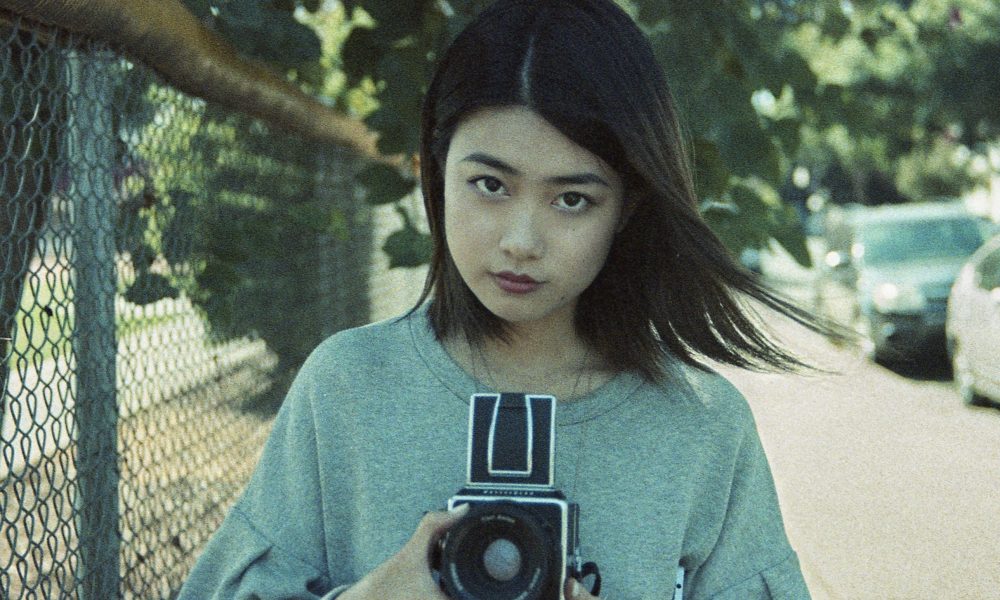
Today we’d like to introduce you to Hongshi Zhong.
Hi Hongshi, please kick things off for us with an introduction to yourself and your story.
I am a writer-director currently based in Los Angeles, but my story began 26 years ago in a small city by the Yangtze River in southwestern China. Yangtze River is the longest river running in Asia, it grants us a deep affection for water. Perhaps that’s one of the reasons why my parents named me “Hong Shi”, in which “Shi” represents a place in the ancient world where all the rivers and oceans meet. It is clear to see that they wanted me to embrace the outside world as much as possible.
Nobody in my family has worked in the art or film industry, but we all share the same passion for cinema. My very first memory in life was me lying on the bed, slowly being woken up by my dad repeating a line from The Lion King, “Wake up, Simba! Wake up!” Before the internet age, my favorite activity was our weekly family trip to the video rental shops, spending the whole afternoon picking which movies to watch in the following week. I watched most of my childhood favorite movies with my grandma. Her eyesight wasn’t that good, but that couldn’t stop her from watching movies. I remember we spent a whole summer watching ‘Spirited Away’ again and again until we could remember every single line in it.
When I told my family that I wanted to become a film director, everyone cheered. “Finally, there’s an artist coming out of us!” They joked. At the age of 18, I came to the United States, beginning my college journey at Colgate University with a major in Video Art.
The isolated nature of our rural college town motivated my early experiments with alternative films and video installations. I worked alone, carrying a camcorder all around upstate New York, shooting random footage and trying to make sense of everything in editing. It expanded my perception of visual storytelling, but soon I realized I wanted to learn more: what it takes to make an actual film, how film industry works, and how to collaborate with others. In the summer of 2015, I transferred to NYU Tisch School of the Arts with a major in Film & TV production.
I explored different genres and tried various ways of storytelling – it felt like there were thousands of possibilities. It took me a while to figure out what kind of film I wanted to make, and I slowly became more certain about being a writer-director.
The two years at NYU flew by. Before I knew it, I was holding a BFA diploma in my hand. I had this strange feeling that everything had just begun, and I had just started to get to know cinema.
I moved to Los Angeles in 2017 and started a production company called Kino Mono Studio with my friend Colin Ren. We created short films, photography series, as well as an art journal. Every project started with a very simple idea, a short scene, a beginning or ending of a longer piece, or just a series of photographs that convey a storyline. We had total freedom to experiment, and they were much fun.
I gradually became certain about the type of stories I wanted to tell, and I was also eager to get to know more local filmmakers here in LA. So, in the fall of 2018, I started my MFA program at USC School of the Cinematic Arts. USC provided me with training in all aspects of filmmaking. I spent a considerable amount of time exploring cinematography, sound design, editing and producing, all of which have helped me become a more well-rounded director.
I’m currently developing my first feature film, one that carries my passion forward. I know there will be many challenges along the way, but I’m grateful for a career that investigates the human experience. I can’t wait to embrace whatever life brings to me.
Can you talk to us a bit about the challenges and lessons you’ve learned along the way. Looking back would you say it’s been easy or smooth in retrospect?
My biggest challenge as a storyteller has always been those moments when I don’t feel connected to the outside world, to the material I’m working with or sometimes to myself. Although I’ve been living in the US for over eight years, it’s still inevitable for me to feel disconnected. “Too foreign for home, too foreign for here. Never enough for both.” As Ijeoma Unebinyouo wrote in her poem.
Such dissonance often brings me feelings of worthlessness and meaninglessness. When I couldn’t find connection to my material, I started to make films only to follow the “trend”, to prove that I’m “different” from everyone else, or to make me feel good about myself.
I hated the films I made under those circumstances, so I always try to stay truthful to myself and the story. I believe authentic stories could relate every single one of us to the world. Although challenging, truthful stories bring me peace, clarity, and confidence. To me, that’s also the meaning of cinema, we celebrate the differences in all human beings, but ultimately we’re all looking for something that connects us together.
Appreciate you sharing that. What else should we know about what you do?
I’m particularly interested in capturing slices of life, which express the universality in emotional experiences through everyday mundane activities. In all my works, I strive to create simple storylines that capture complicated human emotions and psychology beneath the surface.
The stories may be simple, my dedication is anything but. I’m a very proactive filmmaker, even obsessive sometimes. I would do anything to tell a story that I think deserves to be told.
In the midst of the pandemic, I wrote a script about a woman and her estranged father. As soon as the first draft was finished, I felt the strong urge to bring it to life. I assembled a team of my most talented filmmaker friends and convinced them to work with me during the pandemic. Everything was a thousand times more challenging and riskier to shoot under the circumstance, but thanks to my wonderful and supportive team, we managed to finish principal photography at the beginning of this year.
I felt enormously grateful to work with a group of people who trusted my vision and helped me bring it to life. The film is called “Toad” and it just had its world premiere at International Festival Signs of the Night in Paris. I’m excited to share this story that I hold dear to my heart with audiences around the world.
Are there any books, apps, podcasts or blogs that help you do your best?
I haven’t made any comedies yet, but I love watching stand-up comedy. It’s a great way for me to relax and take a break and a great resource to collect stories because it all comes from real life and real people. In fact, I’ve discovered that stand-up comedy shares some similarities with filmmaking. For example, the different layers in a good stand-up comedy always resemble that of a good film – comedy and tragedy are oftentimes two sides of the same coin. The way a good comedian controls the audience’s mind and gets them to sympathize is also very similar to how a good film takes its audience.
Contact Info:
- Email: [email protected]
- Website: https://hongshizhong.com/
- Instagram: https://www.instagram.com/hongshi_/


Image Credits
Colin Ren, Hugo Wong. Film stills cinematographers: Chaochen Li, Briana Man, Boyong Du
Popular
-
Cedar Boschan on Elevating Black Music Rights and Driving Urgent Conversations Around Credit, Equity, and Artist Protection
-

Portraits of the Valley
-

LA’s Most Inspiring Stories
-

Robin Olive on Building an Inclusive Performing Arts Movement and Expanding Opportunities for Every Student
-

Que Johnson on Building Brands That Last: From Visibility to True Market Authority
-

Christina Wren Steps Into the Director’s Chair to Tell Stories That Feel Like Home