


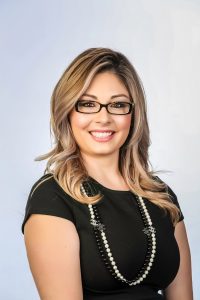
Today we’d like to introduce you to Dr. Nicole Vienna.
Hi Dr. Vienna, we’re thrilled to have a chance to learn your story today. So, before we get into specifics, maybe you can briefly walk us through how you got to where you are today?
I consider myself a survivor of childhood trauma. I knew from an early age that I needed a change in my environment to survive and thrive in life. And so at the age of 18, I moved 3,000 miles across the country to start a new chapter. I worked my way through college doing babysitting jobs, tutoring and waitressing. I studied sociology and criminal justice at Mount Saint Mary’s College in New York.
However, two weeks after I arrived on campus, 911 happened and changed my world. My mental health was taking a toll. I put my studies on hold, left the country, and traveled abroad to Australia for six months. Now, I studied a bit by taking music and art classes. But I mostly explored different facets of nature from the great barrier reef to the botanic gardens in Perth. This is where I became intimately familiar with mindfulness and meditation practices. I fell in LOVE with biohacking before it became a thing. I became obsessed with learning about the brain and its ability to reorganize and grow new connections- the concept of neuroplasticity.
I returned to the United States the following year and completed my bachelor’s degree at the University of Arizona. I wasn’t exactly sure what I wanted to do, but I knew I wanted to help people in some capacity. Sort of like how I found salvation from my situation by changing my environment and connecting to nature through the help of teachers, friends, and books I read. And I forgot to mention that I also grew up with many members of my family, then and now, being in law enforcement and the military. And there are unique stressors in our kinds of families that can pose various challenges in life. So, this added to my fascination with wanting to understand different people’s life stories and what drives their behavior. Fun fact: I have to admit, I had a fascination with true crime growing up as well.
in 2005, I began working as a case manager for a substance abuse treatment facility. This position required me to work two to three days a week in one of LA County’s jails. My job was to assist inmates to prepare for transition between jail and inpatient treatment. I became more and more intrigued by people’s stories, their mental illnesses, and behaviors. Specifically, I was fascinated with how their brain was working in relation to their behavior (and sometimes their non-law-abiding behavior). In my free time, I contemplated obtaining a law degree or clinical degree in graduate school. Ultimately, I decided that law school was too “left brain” for me. Though I still very much wanted to be involved and work in the criminal justice system. I just wanted to have a little more creativity and variety in my work. Therefore, I found that a doctorate degree in forensic psychology would accomplish just that- I could do direct treatment if I wanted or evaluation works for courts, consultation, or even teaching.
In 2012, I graduated with my doctorate degree in clinical forensic psychology. This was the perfect blend of law and psychology. I completed 3,000 hours of training in clinical and forensic settings such as jails, inpatient psychiatric facilities, and juvenile halls and camps. I obtained my license to practice psychology in 2015. I have since completed hundreds of training hours in specialized forensic psychology topics such as criminal and civil competencies, violence risk assessment, trauma, and substance abuse.
I opened my private practice, Vienna Psychological Group, Inc. in 2015 and we just celebrated five years in business! A huge milestone. I was appointed to the Los Angeles County court expert panels for juveniles and adults in 2017 and 2019, respectively. I primarily conduct forensic and neuropsychological evaluations for those involved in the criminal justice system or a civil matter, such as a personal injury (car accident, etc.). I am retained by both the prosecution and defense, plaintiff and defendant. In addition to my forensic evaluation work, I provide independent education evaluations and pre-employment psychological evaluations for police officers and firefighters. Lastly, I am a certified trauma treatment specialist and certified EMDR clinician. I provide EMDR treatment to a handful of clients every year and specialize in working with first responders with PTSD.
Would you say it’s been a smooth road, and if not what are some of the biggest challenges you’ve faced along the way?
It definitely has not been an entirely smooth road. Some of the struggles I encountered were making sure tuition was covered, paying rent in college, finding work during college, work/study life balance, learning to set healthy boundaries, and fighting for internships/residencies as a female and minority. I am part Native American Indian and South American, yet I struggled to speak Spanish when both of my biological parents speak fluently! I grew up in the SouthBay areas of Los Angeles (Harbor City and Wilmington). Resources were tight, both at home and school. In college and graduate school, I found myself competing for internships and residencies against other students who had more access to educational resources that allowed them to gain more research and teaching experience. I realized how important equal access to quality education is for all students.
Appreciate you sharing that. What else should we know about what you do?
As a forensic psychologist, I conduct psychological evaluations for individuals involved in the criminal justice system. I am applying psychological principles, research, and knowledge to legal questions. For example, a common type of evaluation that I conduct is one that focuses on the legal question of competence to stand trial. Broadly explained, competency requires the person (defendant) to be able to rationally as well as factually understand the legal process. They must also be able to assist their attorney in their own defense. As such, I evaluate their competencies to do so by assessing their psychological and sometimes developmental abilities and disabilities, reviewing records, at times administering psychological tests, and providing an analysis of all the data in a written report. The report helps inform the trier of fact (judge) in making a legal determination. Sometimes, I find that one’s mental disorder such as Schizophrenia or Bipolar Disorder impairs their abilities to consult with their attorney or rationally understanding the proceedings against them. Other times, I find that their mental disorder is not impairing their abilities to consult with counsel and understand the proceedings. It is a case by case basis and requires a diligent evaluation.
I specialize and have forensic interests in criminal and civil competencies, mental health diversion evaluations, trauma, and neuropsychological evaluations. I am currently in the last few months of my formal two-year post-doctoral training in neuropsychology through Fielding University. In neuropsychological evaluations, I conduct assessments of how one’s brain functions, which indirectly yields information about the structural and functional integrity of their brain. This is typically done through clinical interviews and paper-pencil type of tests that examine different cognitive domains in the brain such as learning, language, executive functions, motor, and memory to name a few. In criminal or civil court cases, I examine the relationship of the neurocognitive function or dysfunction to the behavioral, developmental, or cognitive issues related to legal matters (i.e., competency to stand trial or competency to make a will). I truly enjoy and find intrinsic value in helping others, including the court in understanding more about the relationship between the brain and behavior.
I am most proud of obtaining my doctorate degree and starting my own business. At times, my family resided in lower income and sometimes impoverished neighborhoods where gang violence was the norm. Indeed, less than half of the students in my high school freshman class graduated with me in senior year. It certainly was not expected and it wasn’t easy. But I am grateful for the mentors I had along the way. They encouraged me not to give up and to just keep going. I was told by a professor in undergrad that “NO” was just a starting point in the process of negotiation and that anything is possible. Funny enough, I read that in many books years later.
A recent accomplishment that I am proud of is my new podcast, The Forensic Psychologist Podcast. My podcast talks about the niche practice area of forensic psychology and bridges the gap from graduate school to real world practice. I interview other forensic psychologists, attorneys, law enforcement officers, and social workers. I also do solo educational episodes on relevant statues in forensic cases and psychological concepts. It can be found on apple podcasts and Spotify.
What sets me apart from others are my attention to detail, timeliness of reports, and passion for ongoing learning. I am constantly staying abreast of new research and engaging in specialized training to keep my skills sharp. Even as professionals, I believe we can always learn more.
So maybe we end on discussing what matters most to you and why?
Mental health and wellness matter most to me. Especially mentoring and teaching these concepts and tools to the younger generations. We have the power to do anything we want, as long as we can put our mind to it. If we are unhealthy or unwell, we likely won’t be able to accomplish much. We won’t be functioning at our best. Therefore, it is most important we are in tune with ourselves and how to care for our most valuable asset- our mental health.
Contact Info:
- Email: [email protected]
- Website: www.vpg-corp.com
- Instagram: https://www.instagram.com/drnicolevienna
- Facebook: https://www.facebook.com/ViennaPsychologicalGroup
- Twitter: https://twitter.com/DrNicoleVienna
- Other: https://podcasts.apple.com/us/podcast/the-forensic-psychologist-podcast/id1532678240


Image Credits:
My headshot was taken by Ramiro Gaytan of San Dimas Photography.
Popular
-

What is something outside of work that is bringing you joy lately?
-
Local Highlighter Series
-
What did suffering teach you that success never could?
-
What are you most proud of building — that nobody sees?
-

Who were you before the world told you who you had to be?
-

If you could say one kind thing to your younger self, what would it be?