


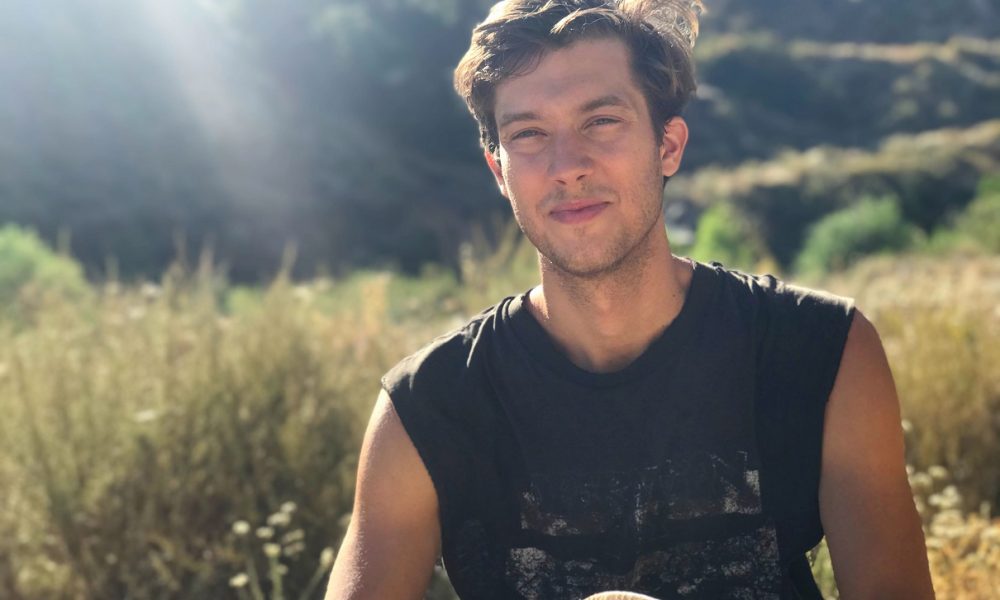
Today we’d like to introduce you to Robert Lydecker.
Thanks for sharing your story with us Robert. So, let’s start at the beginning and we can move on from there.
My love for the arts, stories and all things creative started when I was very young. While I focus today on music, I spent my early childhood drawing, making costumes with my sister, inventing stories and even writing a little screenplay. My mom’s father produced documentaries, was a stuntman in early Hollywood and wrote scripts and short stories. My grandmother and her brother also wrote and acted on Broadway. I didn’t know my grandparents, but my mother shared their passion and knowledge with me, pointing out great examples of filmmaking to me as a child. I think because of this, I was keen on film as a creative outlet early on, thinking concept art or painting backdrops could one day be a rewarding career.
Music didn’t enter the foreground for me until I was around 12. I spent my childhood with music on loop in my head, I’d make up melodies, and I sang in church choir and took up the drums in fifth grade, but I didn’t give music much thought until I discovered composing software on my family’s PC. Through a lot of fiddling, I slowly taught myself to write music with this program. As I began spending more and more time composing and less time drawing, I started wondering if art was still my calling. I remember contemplating how I felt looking at a painting vs listening to a piece of music. There wasn’t even a comparison. I thought, too, about history and culture, and how music is such a powerful force. I thought about how it couples itself with positive change and how it provides solace for many hurting people. These thoughts compelled me to embrace music as my mission.
I set my sights on becoming a composer, learning all I could about different genres and instruments, eventually writing some pieces for orchestra and string quartet. I must have found a niche most other teenagers weren’t as interested in because I sent three of my classical scores to the Thornton School of Music at USC, and they gave me a scholarship to pursue a degree in composition. USC was such a wealth of talent — a really inspiring place where I could always hear great music and great minds talk. Through a fifth-year focused on film-scoring, USC also helped me reconnect with my childhood interest in film and visual art.
The fifth-year also opened a lot of doors for me, giving me avenues to apply for jobs working with some of the best composers in the film business. A year or two after school, one of them hired me full-time as an assistant. This connection was a true breakthrough for me. It led to opportunities composing on huge projects and eventually, my boss started sharing credits with me, having me attend meetings, etc. With each little step, I was able to learn more and meet more people. And some of these relationships have led to more work and opportunities. I’m super grateful to some of the folks who’ve believed in and supported me along the way. Hopefully, I’ll be in a position to do the same thing one day!
Great, so let’s dig a little deeper into the story – has it been an easy path overall and if not, what were the challenges you’ve had to overcome?
When I was five, my paternal grandfather asked me what I wanted to be when I grew up. “An artist,” I said. “A starving artist,” he said. Film composing might be a bit more practical than “artist,” but the ups and downs of a career in entertainment can be challenging, especially starting out. I was fortunate to land an internship soon after finishing school, but trying to pay bills while spending so much time working for free was tough. I pinched pennies when I could — riding my bike everywhere, getting free food, or trying to drive at exactly 55 mph on my way too/from my internship to maximize my gas mileage. I also worked a lot of temporary, manual labor jobs, frequently loading trucks at LAX and in the downtown jewelry district.
Some of my bigger challenges have been within the film music industry. While it was the cornerstone of my success so far, a big personal trial was working as a composer’s assistant. For me at the time, the demands were intense and emotionally challenging. Sometimes I’d get up at 5 a.m. to get into the studio to teach myself what I needed to know for the job. Other times, after a day of assistant work (cleaning bathrooms, fixing computers, managing a schedule, answering phones, getting lunch, prepping sessions, etc.), I’d stay up until 4 a.m. helping to score a TV show or video game. On top of that, I felt like everything I did in that job was wrong. I’d get work messages on my phone at all hours, and when I’d hear that little alert sound, I’d feel sick to my stomach. It was a job that constantly evolved, and every day I needed to handle something I didn’t have any experience with. I remember some of my friends at the time telling me I should quit, but I knew if I could just stick it out, the job could lead to good things. I must have had really good timing or I was being too hard on myself because within a year, my boss hired someone to take over from me as an assistant and promoted me to doing music full-time with him.
Can you give our readers some background on your music?
My business is making music for film, TV, games and other media. I’m known for Sleepy Hollow, Iron Fist, Designated Survivor, Lethal Weapon, and xXx: Return of Xander Cage and my biggest achievements was probably being nominated for an Emmy for the main title music for Sleepy Hollow. I like to think my peers nominated that piece because it had a memorable melody and captured the essence of the Sleepy Hollow world.
There are so many talented, creative minds doing music, and our musical voices are all unique whether we try to be or not. Something I’d like to be known for, though, is an openness to experiment and collaborate in new ways. There is a standard way composers and filmmakers work together. Usually, a composer sequesters themselves, figuring out and realizing every musical detail into a recorded piece of music, which they show the director for feedback. This works well for many projects, but I’m always curious to see if there’s another way to do things. Is there a way the scoring process can be more hands-on for a filmmaker? What other ways can a musician and non-musician collaborate or make decisions together? I’ve been pushing myself to experiment more and find new ways to collaborate. It may sound simple, but the first breakthrough I had with this was getting a musician, director and myself into the same room to work out the score together.
I was working on a film where we wanted to feature live guitar. Instead of demoing the guitar music for the director on my computer, I had the guitarist play my music live, along with the scenes, with the director present. When the director wanted to try some different approaches, we made adjustments on the spot, with better results and less labor. I could tell the guitarist, “change this chord to A-major,” “play a little faster here,” and the director could talk to the musician the same way she’d talk to her actors “can you make it a little happier?” And the guitarist could interpret that non-musical direction in subtle ways I wouldn’t be able to do alone on my computer. Not only was it more hands-on for everyone, it was a way-more-fun way to work. Not every project is like this, but I’m always trying to experiment and find new and appropriate ways to collaborate. It can bring fresh results and be a more meaningful experience for everyone.
Contact Info:
- Website: www.lydeckermusic.com
- Email: lydeckermusic@gmail.com
- Instagram: https://www.instagram.com/robertlydeckermusic
- Facebook: https://www.facebook.com/RobertLydeckerMusic
- Other: https://soundcloud.com/bob-lydecker


Suggest a story: VoyageLA is built on recommendations from the community; it’s how we uncover hidden gems, so if you or someone you know deserves recognition please let us know here.
Popular
-

Portraits of the Valley
-

LA’s Most Inspiring Stories
-

JordanL on ‘Breathe,’ Belief, and Building a Movement Beyond the Music
-

Megan Birney Rudert on How Access to Light Is Powering a More Sustainable and Equitable Future
-

Linda Kneidinger on Building Lasting Change Through Small Steps and Self-Compassion
-

Jolana Nika on Redefining Modern Connection Through Intentional, Real-Life Experiences