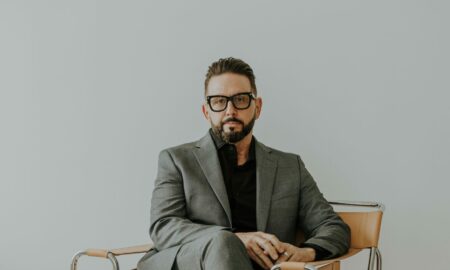



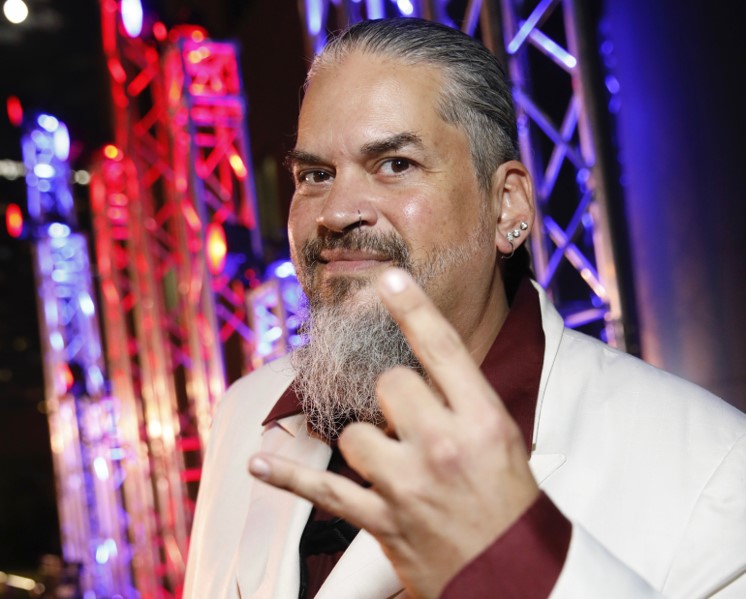
Today we’d like to introduce you to Geoff Gallegos.
So, before we jump into specific questions about the business, why don’t you give us some details about you and your story.
I started in public school band class and was blessed to have the influence of some great teachers, particularly Orlando Otis. In the pursuit of jazz, if one can come under the tutelage of a Louisiana trumpet player, it is like hitting the lottery. So much of jazz history can be traced to Louisiana trumpet players like Buddy Bolden, King Oliver, and Louis Armstrong.
I played baritone sax in a swing band in high school and had a great time with that. Mr. Otis talked me out chasing a psychology degree at UCLA, and going to Berklee College of Music in Boston instead. After getting my ass kicked at Berklee for a while, and getting a jazz composition degree, I ended up touring the country in the back of a van, playing in a rock band horn section.
That was pretty awesome. It was the first lesson showing how cool people can be found in any part of the USA. Because I played baritone sax and could write horn arrangements, producers were giving me lots of work in the recording studio in between tours. These sessions built a lot of friendships with capable musicians, provided for a wide range of writing opportunities, and got me on some good records as a conductor, arranger, and saxophonist.
In the early 1990s, there was a movement of DJs and horn players collaborating in creating an organic mashup of hip hop and jazz. I loved what Groove Collective was doing, and was expecting them to drop a hip hop big band record by 1994. They never did.
Around 1995, I started envisioning a large ensemble that would embrace not only jazz and hip hop, but also music from Brazil, Cuba, and European symphonic music. There were a few false starts, and they usually ended up feeling more like jam sessions. 1999 was the beginning of a life-changing experience, the genesis of daKAH Hip Hop Orchestra.
A friend and I got some sheet music together, made some phone calls, and the ensemble started with 23 musicians at the Temple Bar in Santa Monica. After a year and a half of adjustment, and lots of wrenching a huge band in to small clubs, the group had a big gig on a big stage in 2001 at Grand Performances in Downtown L.A.
A year later, I won a fat artist grant and put all of the money into recording our first studio CD, “Unfinished Symphony.” It’s one thing to show up at the studio, lay your tracks, and then bail out. It’s a whole other proposition to put up the cash, spend a few months in the studio, coordinate seventy musicians, and mix the record. Can’t be a producer until you PRODUCE.
“Unfinished Symphony” opened a lot of doors for the group, and for me personally. Once the first record was done, it was a little easier to convince people that I wouldn’t fuck it all up. Calls for high-profile sessions started rolling in. There’s a lot of “namedrops keep falling on my head” that sounds kinda boring when rattled off in sequence. Let’s just say I felt very lucky and was happy to work with artists that could really play.
Ironically, they were calling me to write music for string quartets, and full string sections. I don’t play a stringed instrument, nor would anyone want to sit around and hear me try. The beautiful thing about composing is that there are fewer limitations to the creative process. Limited technique on an instrument will not preclude an attempt to write some crazy shit for whatever instrument the composer can imagine.
The hard part is finding a cat that can play it. Virtuosity is a feature of daKAH (and the L.A. music community in general) that I’ve come to sincerely appreciate. It was the string players who taught me how to write (and how NOT to write) for strings. After grinding it out between 2002-2008, Montalvo Arts Center offered me the chance to produce a string quartet show.
Part of the Montalvo journey includes the privilege of staying in their badass artist studios on an arboretum in Saratoga, CA (near Los Gatos). I was in a bit of culture shock at first because I had been living in Boyle Heights for a while, and was used to a certain degree of sonic activity overhead. The silence and the trees generated a different style on music that had previously come through.
In 2009, my friends in the Sonus Quartet learned two hours of new string quartet music and performed it for an audience of chamber music aficionados. It felt like a musical black belt had been earned. I got to be an artist resident at Stanford University for a quarter, then the LA Opera called. In 2010, L.A. had a citywide Ring Festival, celebrating the Ring Cycle of operas written by Richard Wagner.
Lots of groups had the chance to put forth their take on the material. daKAH got to participate in this series with Grand Performances. The concept was “Gangsta Wagner,” which involved isolating the most sinister elements of the score, transforming it for daKAH, and have the MC section come with hard vocal delivery and street sensibility. Personally, I loved how it came out. Some people loved it, some people hated it.
Fortunately for me, LA Opera loved it. In the early 2010s, daKAH wasn’t playing as much, because the money was getting tough. We did get featured in the film “Icons Among Us,” and have a few records up on iTunes. In 2011, filmmaker Christine Lee assembled ten years worth of footage, and released a short film called “Hip Hop Maestro.”
This film ended up winning a few awards on the festival circuit between 2011-2013. It has not yet been widely released. I give thanks that at least we’ve been filmed, and there is evidence that during the 2000s, a hip hop orchestra thrived in L.A. My approach to dealing with the resulting disappointment in seeing something I thought was a no-brainer fading to the back was to write a bunch of music.
In 2011, Miguel Atwood-Ferguson and I collaborated on a string octet concert called Octetto Magnifico. In 2013, I debuted a big band, wrote the film score for “You Belong to Me,” and had another string quartet concert. There were lots of jazz jams, some short tours, and lots of writing music.
In 2014, the day after I got home from tour, I got another call from LA Opera. There was a libretto that needed a score underneath it. The next few months were spent listening to Bartok’s “Bluebeard’s Castle” and Puccini’s “Gianni Schicchi” on repeat. Around September of 2014, the muse started singing her ass off and got me out of bed on a regular basis. By November of 2014, the piano-vocal score was completed, and the opera “Another Perfect Day” was on paper. The next month, my younger brother died at age 41.
When my brother died, something shifted inside me. Since then, the muse has been relatively silent. I’ve had some gigs here and there, but composing hasn’t really been happening. Fortunately, I have friends who still call me to play for their groups when they need me. Recently, I’ve gotten to conduct the string and vocal choir for some of Kamasi Washington’s and Miles Mosley’s shows. My friends probably don’t realize how important these invitations were.
Sometimes all we need to know is that someone gives a fuck, so Miles & Kamasi, thank u. It is now 2019, and I’m three years into a law degree. I figured that something needed to happen if the music was arrested and silent. In 2007, I was on the road with Ghostface Killah and had gotten a book of LSAT practice tests to do like sudoku puzzles. The punchline is that some of the practice scores were pretty good, so I said, “fuck it,” and took the LSAT for real.
In 2016, Loyola Law School in L.A. opened the door for me. I thought law school might be like taking a swan dive into a douchebag, but the pleasant surprise is that my classmates are beautiful human beings. These are people who SHOULD be lawyers. It’s gonna be a great day when the light beings I know from the arts will meet the light beings I know from the law.
The graduation party is gonna be lit. And yes… I believe that I will be a kick-ass entertainment lawyer or tax lawyer someday. Or, there’s always that possibility that daKAH will finally get the global recognition that it deserves. Either way, the ride has been a gift.
We’re always bombarded by how great it is to pursue your passion, etc. – but we’ve spoken with enough people to know that it’s not always easy. Overall, would you say things have been easy for you?
Most musicians have a blue-collar existence. There is a grind to the path that can sometimes be exhilarating, and can also be cruel. The musician is wealthy is ways that aren’t always financial. For example, we get access to rooms that normal civilians won’t ever know.
We get lots of good wine for free. We get the juice from throwing down in front of fifty thousand people but may not feel the juice from holding fifty thousand dollars… Shelter is usually a stressful element. I pitched a Section 8-style housing program for artists in 2013, but nobody went for it. Traditionally, the content creators are the last to realize how much the content is worth.
Personally, I’ve sometimes felt that my musical efforts were like the tree falling in a forest with nobody to witness the sound. This sounds like some of the challenges is coming from inside the head. A tangible obstacle I’ve experienced is piercing the veil of the industry. It’s hard to get someone to return your call if they don’t know who in the hell you are.
So let’s switch gears a bit and go into the Double G or daKAH Hip Hop Orchestra story. Tell us more about the business.
I’m a musician, which means my business is offering alternatives to silence or noise. A musician is engaged to move people, either in the hearts or the hips. There are different combinations of instruments that can accomplish the task, based on what the needs of the situation are.
I am most proud of how the musicians I work with show up to the gig with the intention of putting forth the best effort to move people and play well.
I am also proud of how daKAH Hip Hop Orchestra managed to hit the stage with so many cats (sometimes 70) and managed to avoid a trainwreck. With as much improv as daKAH incorporates, there’s always the risk that it may not fly.
Has luck played a meaningful role in your life and business?
It has played a starring role in my life, usually on the good side.
Pricing:
- Single tracks are available for purchase on iTunes ($0.99)
- Albums are also available on iTunes ($2.49-$9.99)
- Bandcamp.com is also an option ($10)
Contact Info:
- Twitter: https://twitter.com/stravingus
 Image Credit:
Eriberto Oriol
Getting in touch: VoyageLA is built on recommendations from the community; it’s how we uncover hidden gems, so if you know someone who deserves recognition please let us know here.
Popular
-

What is something outside of work that is bringing you joy lately?
-

Local Highlighter Series
-
What did suffering teach you that success never could?
-

What are you most proud of building — that nobody sees?
-

Who were you before the world told you who you had to be?
-

If you could say one kind thing to your younger self, what would it be?