



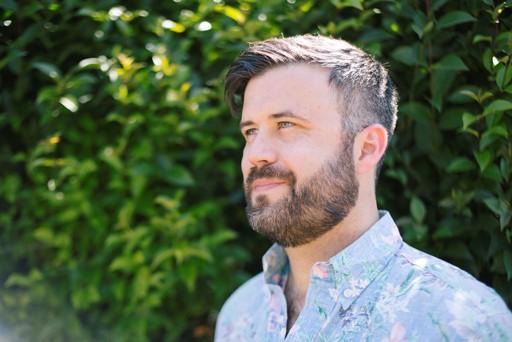
Today we’d like to introduce you to Peter Bayne.
Peter, let’s start with your story. We’d love to hear how you got started and how the journey has been so far.
I’m a composer, musician (piano, voice), producer, conductor, orchestrator, and DJ. I started out as a boy soprano when I was a little kid, singing in church choirs. I studied piano and music theory intensely at the same time from around the age of eight. When I got to high school, I started improvising on the piano instead of practicing and began writing some songs, some piano pieces, dipping my toes into the composition.
By the end of high school, I had written a large bank of songs, I was in a few rock bands. I wrote some bad music for orchestra. It was becoming clear I preferred writing music to actually performing as I was spending less and less time preparing for recitals or performances with ensembles. I went to college and then grad school for music composition and theory, diving deep into the avant-garde, contemporary classical field.
After grad school, I realized the only viable career path was to teach at the college or grad school level since arts commissions were dwindling at the time, and no peers around me seemed to be thriving, I also had done a fair bit of acting and theatre work in college, scoring a few plays, that I knew some folks in the theatre world who were willing to let me score their plays. So that’s how I got into music for media.
My college and grad school didn’t prepare me basically at all with music tech, engineering, mixing, etc or how to succeed in music for media from a career standpoint. I did get a great education in music itself, how to write, how to think critically, how to analyze harmonic and structural facets of music.
When I moved to LA, I started assisting for big name Hollywood composers, but couldn’t deal with being anyone’s errand boy, so I ended up scoring small films, lots and lots of theatres and starting doing music for advertising. Over time, advertising became a really fun, short process, with a potential for a great upside financially, so I decided to start a company with a fellow composer called West Channel in 2015.
I still score TV, Film, and Theatre when the project is right, but I love the way that West Channel has grown and I’m passionate about continuing to build it and advocate for the composers we have on our roster.
We’re always bombarded by how great it is to pursue your passion, etc. – but we’ve spoken with enough people to know that it’s not always easy. Overall, would you say things have been easy for you?
Not in the slightest. When I first got to LA, I waited tables, worked as a mover, worked on an urban farm which basically meant I was taking care of famous people’s gardens (trimming John C Reilly’s rosebushes, growing organic veggies for Patrick Dempsey most of which we just ate). It took me at least four or five years to be able to live financially solely off of music. And even then there’s always bumps in the road. You could have your best year and the next year could be your worst in five years in LA.
No one tells you this when you get here but, you never actually “make it.” It’s just always a daily battle to stay in the game. For me, it’s a non-stop balance of focusing on the project you’re on at the moment, giving it everything, and at the same time, with some sideways periphery looking for the next project. You have to hustle in LA in a social way, which is really difficult for artists who tend to not be as good at that kind of thing.
As a gun for hire kind of worker, no one wants to commit to you for anything until they’ve gotten everything they need from you. So you score entire films before getting a single check (don’t do this kids, don’t be like me). You do films or plays for free. You music direct a play without getting credit or an extra fee. In general with music and music composition, it’s very rare for collaborators (directors, editors, producers, etc) to feel confident enough to talk about music in a creative way.
There’s a huge chasm of knowledge there because understanding music isn’t taught in America almost at all anymore. As a result, you have to learn how to intuit what directors want before they say it. You have to read people’s minds. You have to listen to the dumbest possible note about your music and smile and just figure out what they MEANT to say. And most of all you have to make it seem enjoyable, even though writing music is an immensely difficult, emotional, highly rarefied skill.
So checking your ego, and being thankful you get to write music for a living is the most important lesson I’ve learned. Because the music industry doesn’t care about you, and fees are dropping, and no one wants to pay for music or talk to a musician or listen to music that isn’t perfect, or support you at all unless you’re solving a problem for them they don’t know how to solve. Once you get that, you just decide to step in there and be confident and say, here, this is the music you need for this. I know how to do it.
So, as you know, we’re impressed with West Channel – tell our readers more, for example, what you’re most proud of as a company and what sets you apart from others.
We do custom score and catalog licensing for all media – broadcast/online ads, films, docs, TV, industrials, you name it. We’re known for giving the full customized score experience in a super streamlined, fast-paced, easy process.
We also do a ton of needle-drop licensing for small budget projects, but we find that anytime you can let a capable composer work a piece of music to a video, the chance for the video to become something better increases massively. Not only that but from a business standpoint, it builds trust and deepens the relationship with the entire team including the agency or production house or director or whoever.
Once you’ve gone through that creative process together, you understand how each entity talks, thinks, feels, about music. And the next project that happens gets smoother and easier. That’s why some directors in Hollywood just use the same composer over and over again. Because they can speak the same language, they just intuit what’s needed.
I’m most proud of the scores for ads we’ve done recently. The level of production and sophistication from a compositional standpoint have really jumped in the last few years for us, and I feel we’re operating at a very high level if not at the top tier of creative music houses in this country.
So, what’s next? Any big plans?
I’m obsessed with television shows these days and how the scores for shows have become so detailed, so massive in their ambition. I would love to work on a show that really inspires me. I’m also planning a sabbatical next year to work on a bunch of personal projects including an electronic music record, and an opera. It’s important to keep your passion projects close even while focusing on developing your career in the industry. Keep the fire burning.
Contact Info:
- Address: 1423 Allison Ave Los Angeles CA 90026
- Website: westchannel.com
- Phone: 4159990123
- Email: peter@westchannel.com


Getting in touch: VoyageLA is built on recommendations from the community; it’s how we uncover hidden gems, so if you know someone who deserves recognition please let us know here.


