



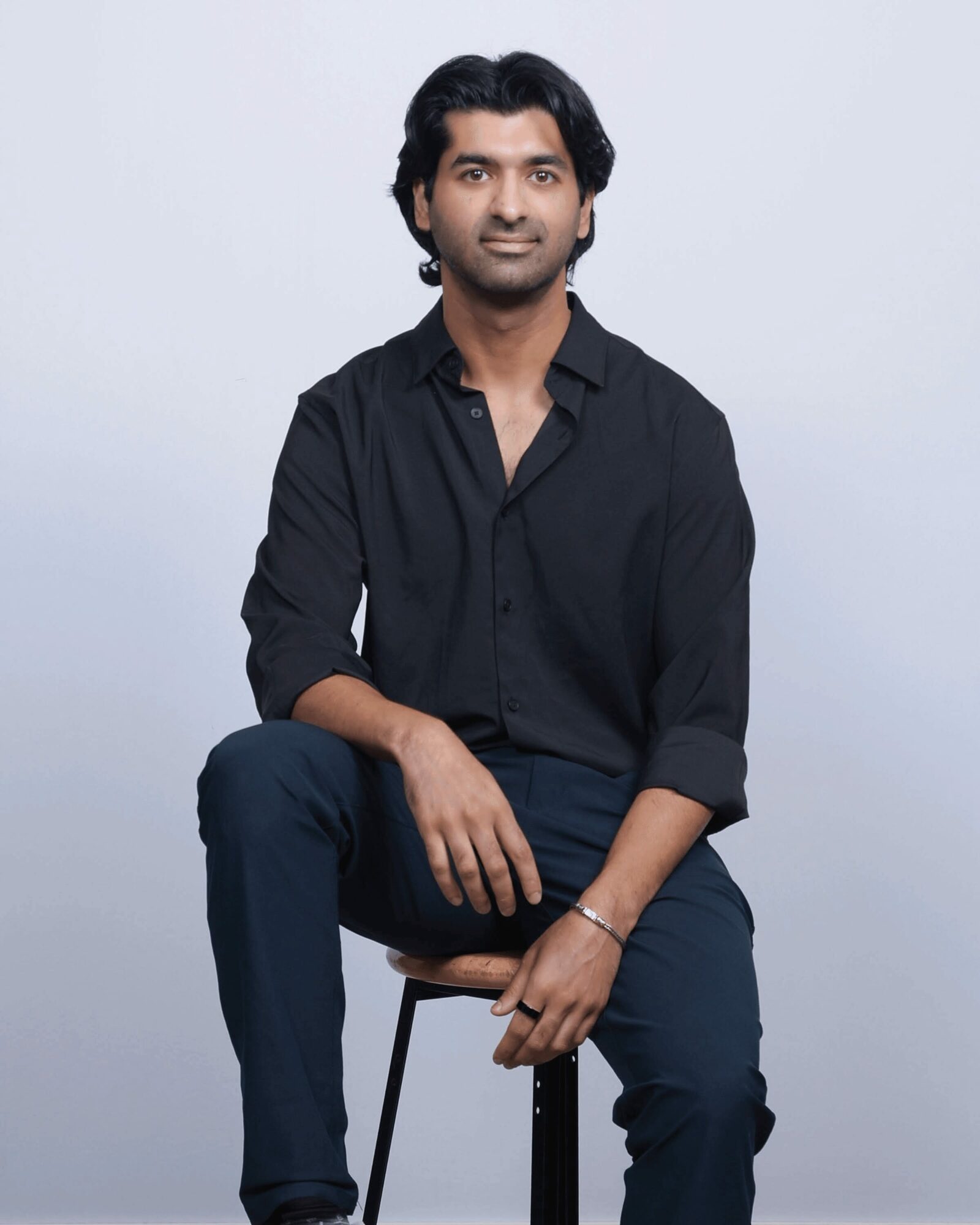
Today we’d like to introduce you to Neel Somani.
Neel, we appreciate you taking the time to share your story with us today. Where does your story begin?
I started my career in finance. I worked as a quantitative researcher at Citadel, focused on commodities and energy markets. That mindset still drives how I reason about problems today.
Eventually, I left in 2022 at the calling of friends who encouraged me to build in crypto. I started my first project on the Terra blockchain because of its rapid growth. Terra collapsed almost immediately. But I got connected with the smartest minds in the industry, and just a few months later, I raised capital for my next project.
That next chapter became Eclipse. I founded it to fix what I thought were the biggest failures in blockchain infrastructure, specifically performance and execution.
More recently, my work has shifted toward writing and research. A lot of my previous writing blends technology, philosophy, and economics, whether that’s rethinking customer acquisition costs in a world of AI agents, or thinking about how labor reallocates as AI takes over large parts of the economy. Lately I’ve been focused on formal methods and mechanistic interpretability.
Across all of it, I try to work on whatever is the most intellectually interesting to me at the time.
Can you talk to us a bit about the challenges and lessons you’ve learned along the way. Looking back would you say it’s been easy or smooth in retrospect?
No, it hasn’t been smooth.
One obvious struggle was building on Terra. I picked the chain for its rapid growth, and I didn’t fully account for the risk that the blockchain could go to zero. When Terra de-pegged and collapsed, that project ended. In hindsight, it reinforced a lesson I think about a lot, which is that when you build something, you want to make as few bets as possible.
Another ongoing struggle is structural. The software and startup environment itself is getting worse. Software has become fast and cheap to build, products are easily copied, and long-term defensibility is weaker than people want to admit. That makes traditional venture-backed paths much riskier. That reality forces hard decisions around whether something is even worth scaling.
Even in my more recent work, a lot of the friction comes from working on ideas that don’t fit cleanly into existing frameworks. Whether it’s AI agents breaking traditional customer acquisition logic or labor reallocating in ways people are uncomfortable with, the resistance is often conceptual. The hard part is reasoning through problems where the old models clearly don’t work anymore, but the new ones aren’t widely accepted yet.
I don’t really see these as setbacks so much as constraints you have to reason through carefully.
Alright, so let’s switch gears a bit and talk business. What should we know about your work?
My work sits at the intersection of technology, economics, and philosophy. Practically, that’s meant a few different things over time.
Earlier on, I worked on blockchain infrastructure. I founded Eclipse to focus on performance and execution, specifically building a more performant layer 2 by rethinking the execution layer. That work came directly out of how I think about systems, incentives, and constraints. I tend to start from first principles and reason from economics and engineering rather than narratives.
More recently, my focus has shifted toward writing and research. I spend a lot of time thinking about large language models, AI agents, and how traditional business concepts break down in a world where agents, not people, are the primary actors. I am interested in how various fields within machine learning will progress beyond their preparadigmatic current state.
I’m probably most proud of the ideas themselves. Whether it’s explaining Transformer attention from first principles, arguing that mechanistic interpretability should orient around formal methods, or defining a new ontology for traditional reinforcement learning methods, the goal is always the same. I want to help people see that the old models don’t hold, and that we need new ones.
What sets me apart is that I’m very driven by economics and first principles, and I’m comfortable working on ideas that don’t fit neatly into existing categories. I try to work on whatever is the most intellectually interesting to me, even if it’s uncomfortable or unpopular.
Any advice for finding a mentor or networking in general?
I don’t think about it as networking in the traditional sense.
What’s worked for me is writing and posting. Posting is how you build attention. When you put ideas out there consistently, the right people find you. That’s how I’ve met people who are far more accomplished than I am, including people running top companies or managing serious amounts of capital. None of that came from cold outreach or formal mentorship structures.
I also think a lot of important decisions should not be a group exercise. High-level strategic thinking is best done in isolation. After you reason through things on your own, you can align with people you respect. That’s how real mentorship happens for me. It’s not about asking for advice. It’s about having a clear point of view and engaging with people who operate at a high level.
If there’s one practical takeaway, it’s this. Build something interesting, think independently, and share your ideas publicly. The relationships follow naturally.
Contact Info:
- Website: https://www.neelsomaniblog.com/
- Facebook: https://www.facebook.com/neel.somani/
- LinkedIn: https://www.linkedin.com/in/neelsomani/
- Twitter: https://x.com/neelsomani
- Other: https://www.entrepreneur.com/author/neel-somani
Popular
-

What is the story you hope people tell about you when you’re gone?
-

What is something outside of work that is bringing you joy lately?
-

What did suffering teach you that success never could?
-

What are you most proud of building — that nobody sees?
-

What are the biggest lies your industry tells itself?
-

Who were you before the world told you who you had to be?


