



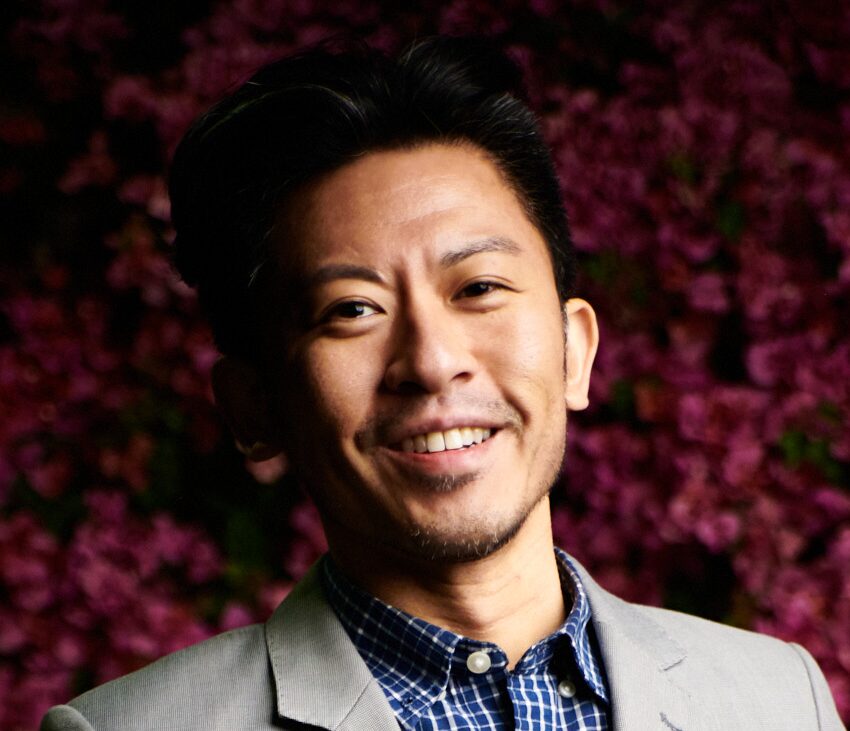
We’re looking forward to introducing you to Erik Scott Chan. Check out our conversation below.
Erik Scott, a huge thanks to you for investing the time to share your wisdom with those who are seeking it. We think it’s so important for us to share stories with our neighbors, friends and community because knowledge multiples when we share with each other. Let’s jump in: What are you most proud of building — that nobody sees?
I take silent pride in the behind-the-scenes development and personal rebuilding that has shaped my work. People often see the outcomes — successful retail operations, patented products, policy contributions, international art sales, and live music performances — but not the setbacks, resilience, and iterative problem-solving that made them possible. The part no one sees is the internal discipline it took to rebuild, refine, and stay committed when nobody was watching. That foundation is what I’m most proud of, because it’s the throughline behind everything I’ve built.
Can you briefly introduce yourself and share what makes you or your brand unique?
I’m a strategist, builder, and creative operator whose career has moved fluidly across consumer goods, civic innovation, and live experience design. For sixteen years I’ve led product development, market growth, and cross-sector partnerships, launching patented hardware, shaping public-sector policy frameworks, scaling multi-million-dollar retail operations, and building direct-to-audience music and art brands that now reach global buyers and live audiences throughout Southern California.
What makes my work unique is the through-line behind all of it: I build experiences around how people think, feel, and connect. Whether I’m designing public policy for a city, commercializing a physical product, performing live for hundreds, or crafting a market strategy, my focus is always on creating something that resonates emotionally and delivers meaningful, lasting impact.
Today my brand Oléha blends music, multisensory design, and audience psychology into what I describe as “vacation music for the soul” — a live jam experience shaped by the mood, emotion, and energy of the moment. In parallel, I create Japanese Kintsugi art that has grown into a global DTC brand. Together, these creative expressions are the latest chapter in a career built at the intersection of strategy, storytelling, and the human experience.
Now that I’ve established a strong foundation for my artistic work, I’m exploring new executive roles where I can bring this cross-disciplinary perspective to a broader mission. My aim is to contribute strategic clarity, creative problem-solving, and relationship-driven leadership to help an organization grow, innovate, and build experiences that improve people’s lives.
Amazing, so let’s take a moment to go back in time. Who saw you clearly before you could see yourself?
One of the first people who saw me more clearly than I saw myself was Mr. Haru Akenaga, Founder and President of Nippon Ichi Software of America, the Japanese game company where I held my first management and writing role as a Quality Assurance Manager and Script Editor. I was young, ambitious, and still learning how to lead and navigate professional conflict and responsibility.
During a difficult clash with my project director, I handled the situation with the intensity of someone who cared deeply but didn’t yet have the perspective that comes with experience. I was let go as a result, but the way it happened became one of the most formative lessons of my career.
Instead of a cold dismissal, Haru took me out to lunch. He asked me what I wanted to do in the game industry. I told him I wanted to be a video game producer. He then asked what I believed makes a good producer.
I still remember exactly what I told him:
“A good video game producer makes sure that his team has what they need to get their jobs done and that they feel valued for the work they do, because when people are happy at work, they will do good work.”
Haru paused, then told me my answer surprised him in the best way. He said it was far wiser than he expected from someone at my stage of career, and that he believed I would go very far. But he also said he couldn’t be the one to teach me what I needed to learn, and that letting me go was the best thing he could do for me.
That moment stayed with me because it validated something I instinctively understood even with limited experience: that empowering people and valuing their work isn’t just good practice — it is the foundation of performance and culture. It also revealed the part I hadn’t yet learned: how to navigate conflict with maturity, communicate with diplomacy, and manage the power dynamics that shape a real workplace.
It taught me that caring about people is one part of leadership, and guiding them through tension, ambiguity, and disagreement is the other. As I grew into roles where I led teams, mentored others, and shaped culture, I found myself returning to that lesson again and again.
Haru also gave me a second lesson that I didn’t fully appreciate until much later — that sometimes the most supportive act a leader can take is recognizing when an environment is no longer the right fit for someone’s growth. When I eventually became a founder and had to make those decisions myself, I understood the clarity and compassion behind the way he handled my departure. He wasn’t just letting me go; he was creating space for me to grow in a setting better aligned with my potential.
That early experience shaped the kind of leader I became: someone who values people, protects culture, communicates with intention, and makes difficult decisions with the long game in mind.
What did suffering teach you that success never could?
Success shows you what is possible. It teaches you how to enjoy the moment and celebrate progress. Suffering teaches you to persevere. It sharpens awareness, deepens empathy, and forces growth in ways comfort never will. It teaches you to appreciate the wins in ways success never could.
Throughout my career, I have taken on roles and challenges that required building something from nothing: new products, new markets, new policy frameworks, new creative practices. Those journeys were never linear. There were setbacks, uncertainty, and moments where I had to invent solutions without a roadmap. That tension between vision and reality created its own kind of suffering, yet it taught me resilience, patience, and the ability to stay calm while navigating ambiguity.
Most importantly, suffering taught me how to lead. It taught me to communicate with clarity and empathy, and to recognize when someone needs support versus when they need space to grow. Success alone could not have given me that perspective. The difficult chapters — the uncomfortable ones — shaped my emotional intelligence and allowed me to become a leader who can steady a team through both momentum and adversity.
Suffering didn’t just make me stronger; it made me more human. And that human understanding guides my leadership more than anything else.
I think our readers would appreciate hearing more about your values and what you think matters in life and career, etc. So our next question is along those lines. What would your closest friends say really matters to you?
My friends would say that authenticity is at the core of who I am. They know that I value genuine connections and always strive to align my actions with my words. Whether it’s in my professional endeavors or personal relationships, I’m committed to being transparent and true to myself.
They’d also say that justice and standing up for the underdog are deeply important to me. Throughout my career, from advocating for cannabis policy reform to supporting local, my friends know that I’m passionate about fairness and equity. They see me as someone who consistently champions the little guy and pushes for positive change.
Finally, my friends would say that people and genuine connection are at the heart of what matters to me. It is reflected in my music, where I aim to create experiences that resonate emotionally and give people a sense of escape, healing, or belonging. And it shows up just as strongly in how I lead. I believe deeply in fostering teams where people feel valued, supported, and able to bring their best selves to the work. Whether onstage or in an executive role, creating environments where people can thrive — together — is one of the things that matters to me most.
Okay, so let’s keep going with one more question that means a lot to us: If immortality were real, what would you build?
If immortality were real, I would devote my time to building systems that reduce income inequality at a structural level. I’ve seen firsthand, especially during my work with the 2020 Census Bureau, how many people are focused purely on day-to-day survival. When a society’s energy is concentrated on meeting basic needs, its ability to innovate and progress is limited. When people have stability, mobility, and opportunity, entire communities shift from crisis management to meaningful contribution, reducing crime and fostering creativity.
For example, metrics like the Gini coefficient and the income quintile ratio are critical in measuring income inequality. The Gini coefficient quantifies inequality on a scale from 0 to 1, while the income quintile ratio compares the income of the richest 20% to the poorest 20%. Numerous studies have shown that higher values in these metrics are associated with increased crime rates, highlighting the importance of addressing inequality to foster safer and more innovative societies.
Contact Info:
- Website: https://www.OlehaMusic.com
- Instagram: https://www.instagram.com/olehamusic
- Linkedin: https://www.linkedin.com/in/erikschan
- Facebook: https://www.facebook.com/olehamusic
- Youtube: https://www.youtube.com/@olehamusic
- Soundcloud: https://soundcloud.com/olehamusic
- Other: https://www,kintsugidecor.com
https://www.instagram.com/uke4peace
Popular
-

Local Highlighter Series
-

If you could say one kind thing to your younger self, what would it be?
-

Who taught you the most about work?
-

What is something outside of work that is bringing you joy lately?
-

Have any recent moments made you laugh or feel proud?
-

What fear has held you back the most in your life?


